
Review · OSAKA
Umami Town Street Food Tour
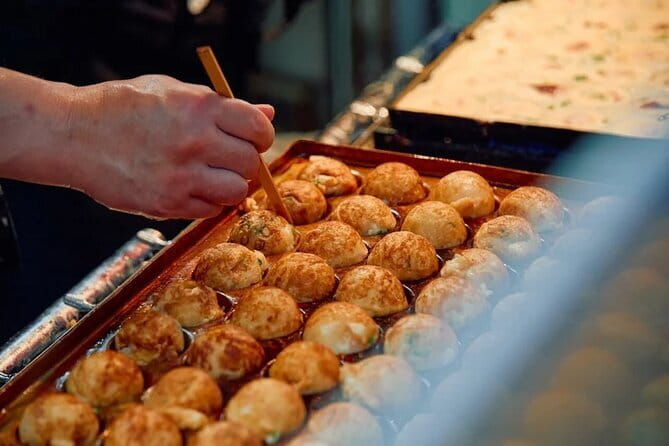
Osaka’s food culture makes the most sense one bite at a time, and this tour gives you a useful path through it. You move from the calm grounds of Osaka Tenmangu Shrine to Kuromon Market and on to the bright signs and food stalls of Dotonbori, tasting dishes such as takoyaki and okonomiyaki along the way.
I like the small group size, capped at seven, because it gives you room to ask questions and lets the guide adjust the day. I also like the guides’ personal touch. Miyo, Miso, and Yuka have been praised for explaining umami, sharing local recommendations, and helping with food preferences. The main drawback is the price: at $175 per person, this is not a cheap way to eat in Osaka, especially if you prefer choosing inexpensive stalls on your own.
Key things to know before you book
- Osaka food with context: You learn how ingredients and umami shape takoyaki, okonomiyaki, and other local dishes.
- A maximum of seven people: The small group makes conversation and food questions easier.
- Three useful Osaka areas: The route includes Osaka Tenmangu Shrine, Kuromon Market, and Dotonbori.
- Several guides have made a strong impression: Miyo, Miso, and Yuka are noted for warmth, flexibility, and practical advice.
- Food and drinks are included: The tour covers dinner, snacks, bottled water, and alcoholic beverages.
- A five-hour commitment: Start at 10:00 am at Minami-Morimachi Station, with the day ending back at the meeting point.
Why this Osaka food tour is more than a list of snacks
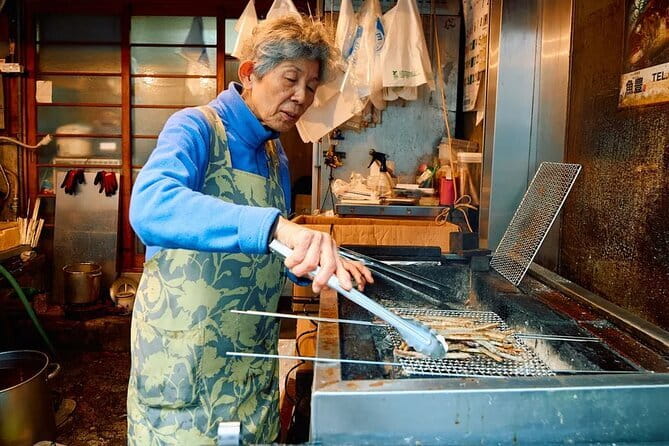
Osaka is often called Japan’s kitchen, and that nickname points to more than a large number of restaurants. Food is part of the city’s public life. You see it in market counters, small restaurants, street stands, neighborhood shops, and the signs competing for attention around Dotonbori.
This tour works best because it connects the food to the places where people eat it. Instead of simply handing you a plate and naming the dish, the guide can explain the ingredients and the role of umami in Japanese cooking. That gives you a better chance of understanding what you taste, not just remembering that it was good.
The day is also designed for visitors who find Osaka confusing at first. A guide handles the route through several busy districts, points out places you might otherwise pass, and answers questions as they come up. You still get the pleasure of walking through the city, but without having to plan every stop yourself.
The group limit matters here. Seven people is small enough for the guide to keep track of different tastes and comfort levels. One family with four children found that the guide could work around different levels of food curiosity and food allergies. That does not guarantee every request can be handled, so you should provide dietary information when booking, but the small format gives the guide a better chance to respond.
More street food walks around Japan:
- Hungry Osaka Street Food Tour:15 Tastings & 3 Drinks with a Local
★ 5.0 · 1,727 reviews - Tokyo: Tsukiji Fish Market Food and Culture Walking Tour
★ 4.7 · 757 reviews - Hungry Osaka Street Food Tour: 15 Dishes & 3 Drinks
★ 4.9 · 694 reviews
Starting at Osaka Tenmangu Shrine
The meeting point is Minami-Morimachi Station, at 2 Chome-1 Minamimorimachi in Osaka’s Kita Ward. The tour begins at 10:00 am, so you should allow time to reach the station and find the meeting point without rushing.
The first stop is Osaka Tenmangu Shrine, where you spend about an hour. The shrine is dedicated to Sugawara no Michizane, a Heian-period scholar and politician who became Tenjin, the spirit associated with learning, scholarship, and literature.
This is a smart opening for a food walk. The shrine gives you a quieter setting before the market and entertainment districts. It also lets the guide introduce a part of Osaka that is not simply about eating. You get a look at a place tied to Japanese religious and cultural life, then continue into neighborhoods where food takes center stage.
Admission is free, which is useful to know. The stop is not a separate paid attraction folded into the tour price. Its value comes from the setting, the explanation, and the contrast it creates with Kuromon Market and Dotonbori.
The itinerary assigns one hour here, but the complete experience lasts about five hours. That means the food tastings, walking time, and other stops fill much of the remaining schedule. Do not expect to spend all five hours inside the three named locations.
Kuromon Market, Osaka’s food corridor
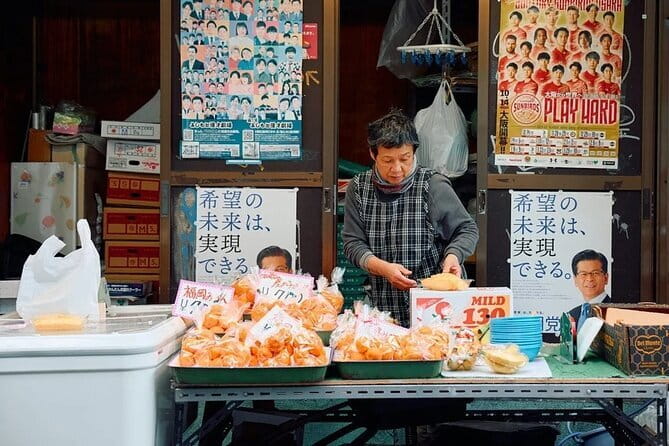
From Osaka Tenmangu, the tour continues to Kuromon Market for about 30 minutes. Kuromon is known as Osaka’s Kitchen, and it offers a concentrated look at the city’s food trade, with seafood, meat, sushi, and ready-to-eat items lining the route.
Thirty minutes is enough for a guided introduction, but it is not a long, leisurely market visit. That is both a strength and a limitation. You can focus on selected tastings and explanations instead of wandering without a plan, but you may wish you had extra time to browse every counter.
A guide is particularly useful at a market like this. The displays can be unfamiliar, and it is not always clear what is best eaten on the spot, what needs preparation, or how a dish fits into local food habits. The tour promises a variety of local dishes from street vendors and restaurants, so Kuromon serves as one part of a wider food route rather than the whole event.
You can expect the guide to discuss ingredients and help connect what you see with the flavors you taste. The focus on umami is important. In Japanese cooking, savory depth can come from ingredients such as seafood and fermented products, and the tour uses Osaka food to show how that flavor works in practice.
If you want a full market-shopping session, this tour may feel too guided and too short at Kuromon. If you want help deciding what matters and how to taste it, the limited time is more useful.
Dotonbori and the food theatre of Osaka
The final named stop is Dotonbori, including Dotonbori Tsuribori, for about an hour. This is the Osaka many people picture first: large signs, neon lights, entertainment, and food served in a setting built for people on the move.
Dotonbori is associated with Osaka staples such as takoyaki and okonomiyaki. Takoyaki are batter-based balls traditionally cooked with pieces of octopus, while okonomiyaki is a savory pancake with a wide range of possible toppings and additions. The guide explains these foods rather than leaving you to guess what is on the plate.
The district can feel crowded and loud, especially around its best-known signs and food businesses. That is part of its appeal, but it can also make conversation and movement less relaxed. Stay close to the guide and wear comfortable shoes. The tour is built around walking, and you will want both hands free for food, photos, and navigation.
The hour in Dotonbori is not just a photo stop. It gives you a chance to see how Osaka presents food as entertainment. The signs, counters, and restaurants all compete for attention, while the guide helps separate familiar tourist images from the dishes and places that matter to the local food story.
The exact balance of stops may vary with the guide and the group. One guide changed the final stop to suit the group, and guides have also helped arrange special food purchases, including a popular cheesecake. That flexibility is one of the better reasons to choose a small-group tour rather than a fixed coach-style outing.
Same streets, a different set of bites:
- Tsukiji Fish Market: Street Food & Culture Walking Tour
★ 5.0 · 669 reviews - Tsukiji Fish Market: Street Food & Culture Walking Tour
★ 4.8 · 259 reviews - Tokyo: Asakusa & Sensoji ー Oldest Temple Walking Tour (2hrs)
★ 5.0 · 213 reviews - [1 Group Only] Osaka Street Food Tour for Family
★ 5.0 · 208 reviews
What you are likely to eat and drink
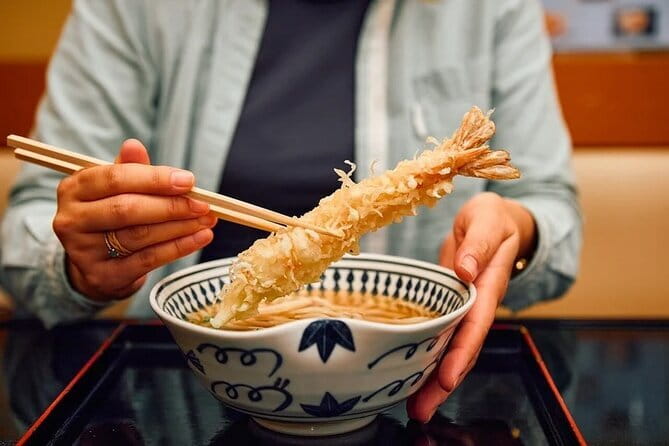
The tour includes dinner, snacks, alcoholic beverages, and bottled water. The description specifically points to Osaka favorites and explains dishes such as takoyaki and okonomiyaki. Past tour experiences have also included fugu and other treats, though you should not assume every food appears on every departure.
The wording matters. This is not presented as one large restaurant meal. You are sampling a range of foods over several hours, with stops at small shops, street stands, markets, and old-style restaurants possible. That format lets you compare textures, cooking methods, and settings.
A food tour can be poor value if the portions are tiny or if the guide simply takes you to places you could find in any guidebook. This experience aims at a higher level of food quality, with guides choosing places and explaining what makes each item worth trying. You should still arrive ready to eat, but do not plan a separate full lunch during the tour.
Alcohol is included, which may add value for some people and be irrelevant to others. If you do not drink, the listed inclusion should not be a major reason to book. Bottled water is a practical touch during a five-hour walk.
Food allergies and strong dislikes deserve advance attention. The small group allows some adjustment, and one family received help with allergies and different food comfort levels. Still, the available information does not promise a fully allergy-free menu or specific dietary substitutions. Ask before booking if your diet is strict.
The guides make the difference

The strongest part of this experience is not simply the number of dishes. It is the guide’s ability to turn food into a conversation about Osaka.
Miyo has been singled out for warmth, careful preparation, flexibility, and a clear love of the city’s food. She has helped families with different tastes, explained the idea of umami, and adjusted the plan when needed. She has also gone ahead to secure a popular cheesecake, a small effort that can make a busy food day feel personal.
Miso has been praised for combining food tastings with unusual local facts, including information about hidden tunnels in the area. That kind of detail is useful because it gives you something to notice between bites and helps the route feel tied to the city around you.
Yuka has led a five-to-six-hour food experience that included fugu, okonomiyaki, and other Osaka treats. Her care in making people comfortable was a major part of the experience, which is especially helpful when the group has mixed food preferences.
You cannot choose a particular guide from the information provided, so treat these names as examples of the style you may encounter, not a guarantee. The common thread is a guide who does more than recite facts. You get recommendations for later meals, help understanding menus, and a person to ask about the rest of your Osaka stay.
Is $175 a fair price?
At $175 per person, the tour asks you to pay a significant premium over eating independently. Osaka’s street food can be inexpensive, and you could sample takoyaki, okonomiyaki, and market food for much less if you are comfortable choosing places yourself.
The value comes from what surrounds the food. You get about five hours with a small group, a planned route, cultural context at Osaka Tenmangu, market guidance at Kuromon, and an introduction to Dotonbori. Dinner, snacks, alcohol, and bottled water are included, so the price is not simply a guiding fee with a few token samples.
I would consider it a good value if you have limited time in Osaka, want a friendly guide, or feel unsure about ordering unfamiliar food. It is also useful early in your stay because the guide can point you toward places and dishes to try later.
I would be less likely to recommend it to a confident Osaka eater who enjoys researching stalls, comparing prices, and building a route alone. For that person, the fixed schedule and high cost may outweigh the convenience.
Timing, walking, and practical details
The tour starts at 10:00 am and ends back at the meeting point. Since the listed stops total less than the full five-hour duration, expect walking and food stops between the named locations.
Private transportation is not included. The meeting point is near public transportation, and the route is designed around Osaka’s streets and stations. Wear shoes suited to several hours on foot, and avoid arriving hungry enough to feel rushed, since the day is built around repeated tastings rather than one immediate meal.
A mobile ticket is provided, and confirmation is sent at booking. Most people can participate, but the tour is not described as a private or fully customized experience. The maximum group size is seven.
You can cancel for a full refund up to 24 hours before the start time. Changes or cancellations made inside that window are not accepted, and the amount paid is not refunded. The tour also needs a minimum number of participants, so a cancellation by the operator would result in an alternative date or experience, or a full refund.
Who should book the Umami Town Street Food Tour?
You should book this tour if you want Osaka food explained as part of the city, not simply served as a series of samples. It suits first-time visitors, curious eaters, families who need some flexibility, and anyone who wants a local guide to handle the route.
It is especially appealing if you want to try dishes such as takoyaki and okonomiyaki but would like help understanding the ingredients. The mix of a shrine, market, and entertainment district also gives you more range than a tour that stays only in one food neighborhood.
Think twice if your top priority is a low food budget, a slow market morning, or total control over every dish. You are paying for guidance, access to a planned set of tastings, and the chance to ask questions. If that sounds useful, the five-hour format and small group make the price easier to justify.
FAQ
How long does the Umami Town Street Food Tour last?
The tour lasts approximately five hours, beginning at 10:00 am and ending back at the meeting point.
Where does the tour start?
The tour starts at Minami-Morimachi Station, at 2 Chome-1 Minamimorimachi, Kita Ward, Osaka, 530-0054, Japan.
Which places are included on the route?
The route includes Osaka Tenmangu Shrine, Kuromon Market, and Dotonbori Tsuribori in the Dotonbori area.
Is food included in the price?
Yes. Dinner, snacks, alcoholic beverages, and bottled water are included.
How many people can join the tour?
The tour has a maximum of seven participants.
Can I cancel for a refund?
Yes. You can cancel at least 24 hours before the start time for a full refund. Cancellations or changes made less than 24 hours before the start time are not accepted.
Newest street food walks around Japan
- Nagoya Castle and Local Flavor Samurai Tales and Street Food Walk★ 5.0 · 10 reviews
- Nagasaki Street Food Adventure: Private Walking Tour with a Local★ 5.0 · 26 reviews
- Nagoya Street Food Walking Tour of Osu★ 5.0 · 28 reviews
- The 10 Tastings of Tokyo With Locals: Private Street Food Tour★ 5.0 · 48 reviews
- Kyoto Nishiki Market Street Food Tour★ 5.0 · 9 reviews
- Private Nishiki Market Food & Sake Tour by Young Local Guides★ 5.0 · 12 reviews
- Tokyo: Sensoji Temple & Street Food: Private Tour with guide★ 4.6 · 8 reviews
- Tokyo: Shinjuku Local Eats, Street Food Tour & Culture Walk★ 5.0 · 2 reviews
Osaka street food tours, side by side.
Hungry Osaka Street Food Tour:15 Tastings & 3 Drinks with a Local
Read our review →
Hungry Osaka Street Food Tour: 15 Dishes & 3 Drinks
Read our review →
[1 Group Only] Osaka Street Food Tour for Family
Read our review →
Osaka: 2-Hour Local Street Food Tour – Dotonbori & Namba
Read our review →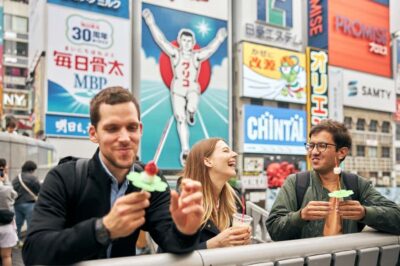
Eat Like a Local in Osaka – Private Custom Street Food Tour
Read our review →
Deep Dive: Osaka Food Markets from Local to Luxurious!
Read our review →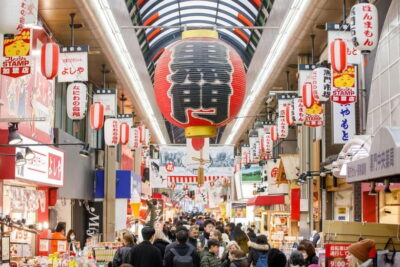
Osaka: Kuromon Market 1.5-Hour Seafood & Street Food Tour
Read our review →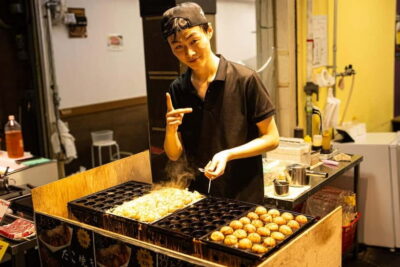
Osaka: Kuromon Market Street Food Tour with Pro Local Guide
Read our review →The lists this tour appears in