
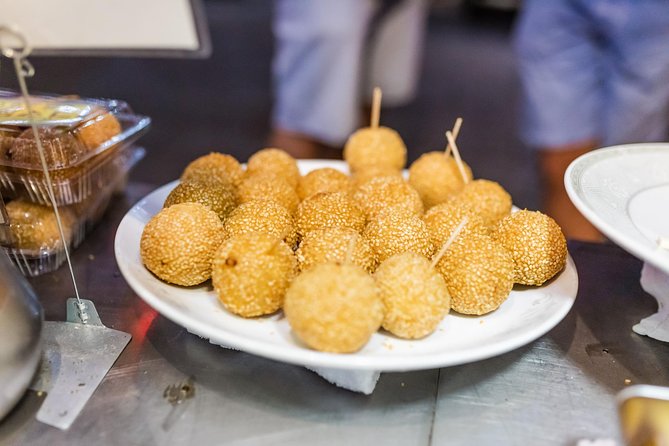
Review · JAPAN
Nagasaki Street Food Adventure: Private Walking Tour with a Local
Nagasaki’s best food experience may be the one that keeps you moving. This private walk links Chinatown, Hamanomachi Arcade, Maruyama, and a postwar-era underground market, with six to eight tastings along the way. You are not just sitting down for one meal. You are sampling the city in pieces while a local guide explains what you are eating and where to find it.
I like the personal setup, since your guide is matched to your interests before the tour begins. I also like the useful mix of food and place: guides such as Armand, Miki, Shin, Senyo, and Yuri have added history, shopping, temples, tea, and local advice when time and interests allowed. The main drawback is the pace. This is a walking tour, and past outings have involved brisk walking, so it may not suit anyone wanting a slow, seated afternoon.
Key points to know before booking
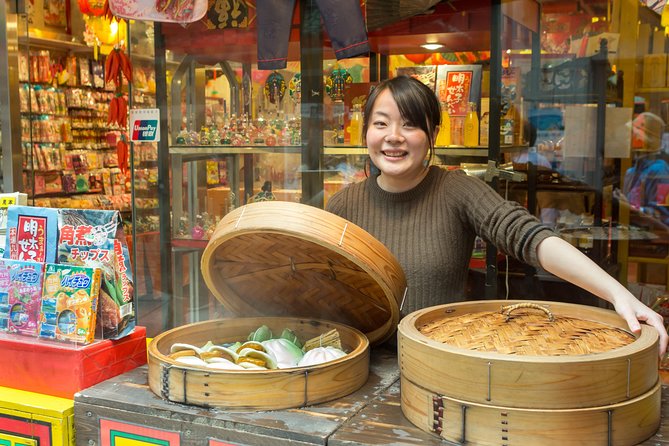
- Six to eight tastings: You visit two or three eateries and receive two drinks, alcoholic or nonalcoholic.
- A private route: Your guide uses a pre-tour questionnaire to shape the food, sights, and pace around your group.
- Four distinct areas: The walk can include Chinatown, Hamanomachi Arcade, Maruyama, and a retro underground market.
- Good for cruise calls: Guides have met cruise passengers at the terminal when arranged in advance, though the standard meeting point is the Nagasaki City Tourist Information Center.
- More than a food crawl: Depending on your wishes, the outing can include shopping, temples, a tea ceremony, or help planning transport.
- Plan for walking: The tour lasts about three hours and ends back at the meeting point.
Why this private Nagasaki food walk works
Nagasaki food has its own character, shaped by the city’s long contact with China and other parts of the world. This tour gives you a practical way to sample that mix without spending your limited time guessing which restaurant or stall is worth entering.
The private format matters here. Before you meet your guide, you receive a short questionnaire about your interests and preferences. That gives the guide a starting point. You might focus on local dishes, sweets, seafood, wagyu, sake, or a broad first taste of the city. If you have already seen the main sights, you can lean harder into food. If Nagasaki is a first stop in Japan, you can use the walk to get your bearings.
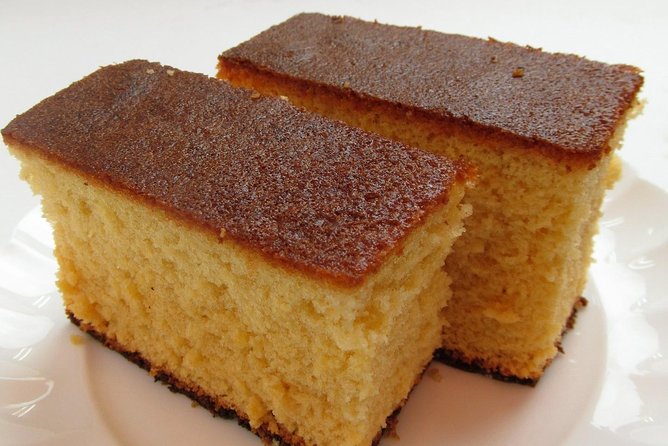
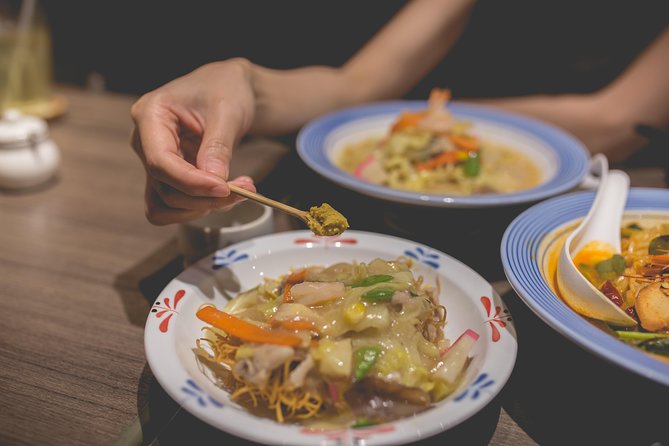
I would not treat the tour as a fixed restaurant menu. The route is designed to adjust as your guide gets to know you. Armand, for example, has arranged food around requests for wagyu, sashimi, Castella cake, and sake. Other outings have included champon, ice cream, and different local snacks. The exact dishes can vary, which is useful if you have strong preferences but less useful if you want a guaranteed menu.
The tour is private, so only your group participates. That makes conversation easier and lets you stop to ask about food, customs, or the city’s past without holding up a large group. It also gives the guide more room to change the route, though you should not assume every extra sight or activity is included in the basic three-hour plan.
More street food walks around Japan:
- Hungry Osaka Street Food Tour:15 Tastings & 3 Drinks with a Local
★ 5.0 · 1,727 reviews - Tokyo: Tsukiji Fish Market Food and Culture Walking Tour
★ 4.7 · 757 reviews - Hungry Osaka Street Food Tour: 15 Dishes & 3 Drinks
★ 4.9 · 694 reviews
Starting at Nagasaki’s Tourist Information Center
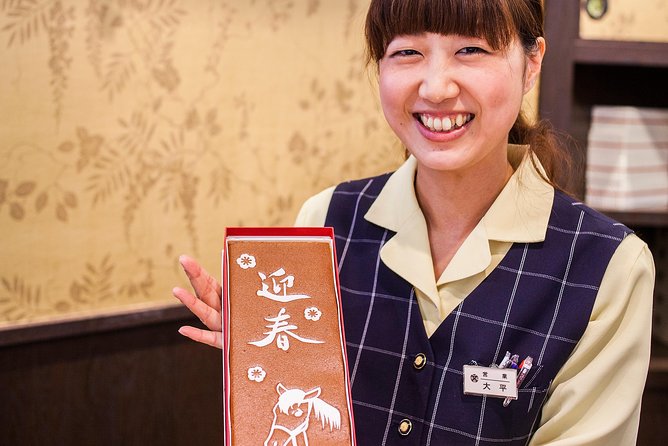
The listed starting point is the Nagasaki City Tourist Information Center at 1-60 Onouemachi. The walk ends back at the same meeting point, which gives you a clear finish and makes the experience easier to fit into a day of sightseeing.
Central locations are the simplest choice for a hotel meet-up, which may be available on request. Cruise passengers have also arranged meetings at the port with guides including Miki, Shin, and Armand. If you arrive by ship, contact the provider ahead of time rather than assuming the port meet-up is automatic. The standard meeting point remains the tourist information center.
The guide may help arrange public transport if walking alone does not fit your plan, but transportation is not included. This is primarily a walking experience. If you are using it during a short port call, allow enough time to return to the ship and confirm the meeting plan before booking.
Chinatown brings food and history together
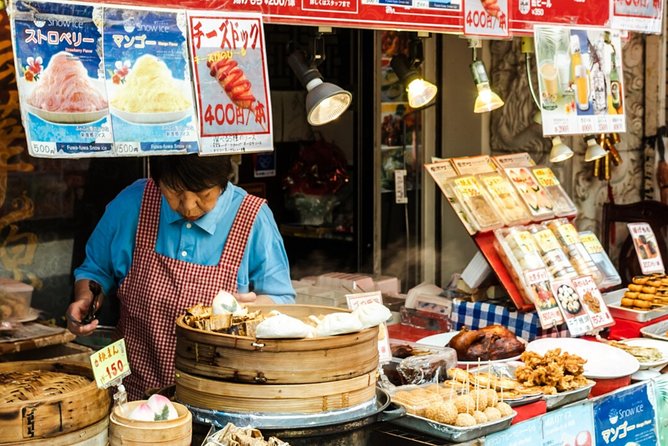
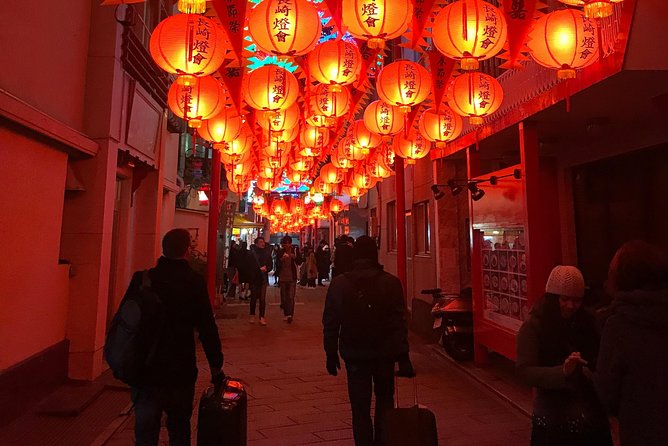
One of the central stops is Nagasaki’s Chinatown, described as Japan’s oldest Chinatown. Its streets are marked by lanterns, food stalls, and older storefronts, giving your guide plenty of context to explain how food and trade shaped this part of the city.
This is a strong place to begin tasting because you can see food being sold in a street setting rather than only in a formal restaurant. Your guide may point out regional favorites and explain how Chinese influence appears in Nagasaki cooking. The point is not simply to collect snacks. You learn why certain foods belong to this city and how a neighborhood can reflect its past through everyday eating.
Chinatown can also be busy and crowded. That is part of its appeal, but it means you should expect a walking-and-stopping rhythm rather than a quiet meal. If you want to photograph food or browse shops, tell your guide early so the route does not become a race.
Hamanomachi Arcade shows daily Nagasaki life
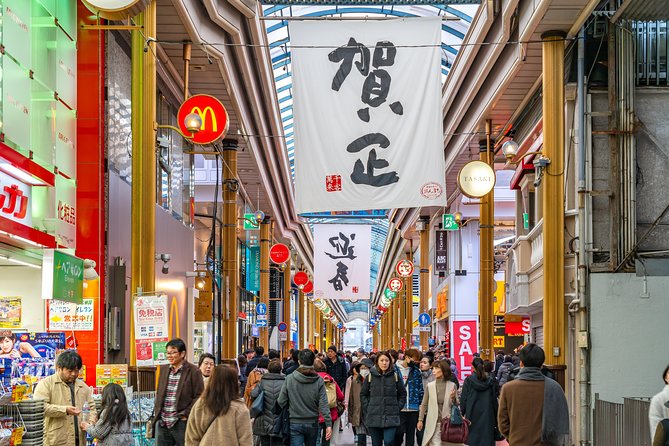
The covered Hamanomachi shopping street runs beside the Nakashima River and offers a different view of the city. Here, the food is tied to ordinary local routines: shopping, meeting friends, picking up sweets, and grabbing something to eat.
I like this part of the route because it puts the famous dishes into a wider setting. You are not only visiting a tourist food district. You are walking through a place where local people shop and socialize. The covered arcade is also practical in uncertain weather, though the tour still includes outdoor walking between areas.
This is one of the places where the private format can pay off. Your guide can point out a shop you might otherwise pass, explain an unfamiliar item, or suggest what to buy later. Some outings have included shopping, so mention that interest in your questionnaire or before the walk begins.
Same streets, a different set of bites:
- Tsukiji Fish Market: Street Food & Culture Walking Tour
★ 5.0 · 669 reviews - Tsukiji Fish Market: Street Food & Culture Walking Tour
★ 4.8 · 259 reviews - Tokyo: Asakusa & Sensoji ー Oldest Temple Walking Tour (2hrs)
★ 5.0 · 213 reviews - [1 Group Only] Osaka Street Food Tour for Family
★ 5.0 · 208 reviews
Maruyama adds an evening feel
Maruyama is a historic entertainment quarter with a more nostalgic mood, particularly later in the day. Its connection to food and nightlife gives your guide another way to explain how eating has long been part of Nagasaki’s social life.
Do not expect Maruyama to function like a single attraction with a set entrance. It is an area to walk through, observe, and discuss. The appeal comes from the change in atmosphere as you move from Chinatown and the shopping arcade into a quarter associated with evening activity.
The timing may shape your experience here. A daytime tour can show you the streets and architecture, while a later walk may offer more of the area’s evening energy. The supplied information does not promise a specific nightlife stop, so think of Maruyama as part of the neighborhood walk rather than a guaranteed bar visit.
The underground market gives the tour a local-food time capsule
Another stop takes you down into a retro underground market linked with postwar Nagasaki. This setting adds a different layer to the food tour. Instead of polished modern dining, you encounter a market space where sweet and savory foods reflect older local habits.
This may be the most distinctive stop for anyone interested in how cities preserve everyday culture. The market gives your guide a chance to connect food with the period after the war and with the practical traditions that survived through changing times.
Because the tour includes only two or three eateries, not every stop is necessarily a full sit-down meal. Think of the market as part of a sequence of tastes. You might sample something small here, then continue walking to another place for a more substantial dish.
What you may eat and drink
The included plan covers six to eight tastings of local food at two or three eateries. It also includes two drinks, which can be alcoholic or soft drinks. That is enough food to leave you full, but the experience is still a tasting walk rather than a restaurant dinner.
Possible foods mentioned through the experience include Nagasaki champon, fresh sashimi, wagyu, Castella cake, ice cream, gyoza, and sake. Some guides have also included a rose-shaped ice cream and drinks with local people. These examples show the range, but they are not a fixed promise for every booking.
Champon is especially worth flagging if you want a dish strongly tied to Nagasaki. It gives you a hearty contrast to small sweets or snacks. Sashimi and wagyu can add a more substantial Japanese food experience, while Castella cake offers a sweet connection to the city’s international past.
Tell your guide what you do and do not eat. The questionnaire is the right place to mention allergies, dislikes, children’s preferences, and interest in alcohol. Additional food and drinks cost extra, and the listed price does not cover every item you might decide to order beyond the inclusions.
The guides make the private format useful
The experience uses different local hosts, so the quality of your afternoon depends partly on the person assigned to you. Names associated with particularly memorable outings include Yuri, Armand, Miki, Shin, Senyo, and Maasaki.
Yuri has combined gyoza stops with explanations of Nagasaki’s past. Armand has been praised for adapting plans around food interests and for working well with children. Miki has handled cruise-terminal meet-ups and food-focused walks. Shin has adjusted a plan during the outing and met cruise passengers at the pier. Senyo has used the pre-tour questionnaire well and helped with directions for a later trip up Mount Inasa. Maasaki has added help with a cable-car visit after the food walk.
These examples also show an important limit. Some guides have stayed longer or added sights, but extra time and activities should not be treated as part of the standard promise. The official duration is about three hours. If you want a temple, tea ceremony, shopping, or a Mount Inasa plan, ask in advance and understand that tickets, transport, and extra food are not included.
The guide’s personality matters, too. This is a conversational walk, not an audio tour with a fixed script. You will get the most from it if you explain what you enjoy and take part in the discussion.
Is $228.18 per person good value?
At $228.18 per person, this is not a cheap way to grab lunch. The price makes more sense for a private experience that combines food, guiding, route planning, and local orientation.
You receive six to eight tastings, two drinks, a three-hour private walk, and a guide who can shape the route around your group. If you are traveling with several people, group discounts may improve the value. A private guide can also save you the cost of several wrong turns and disappointing meals, especially if you have only one day in Nagasaki.
The value is weaker if you mainly want a large, leisurely meal or if you are comfortable researching restaurants on your own. It is also important to remember that extra food, drinks, transport, attraction tickets, and gratuities are not included.
I would see the tour as a city introduction with food at its center. For a first day in Nagasaki, that can be worthwhile. You learn where the main food areas are, try dishes you might not order alone, and finish with a better sense of how to spend the rest of your stay.
Walking pace, families, and practical limits
The tour is listed as suitable for most participants and service animals are allowed. It is also near public transportation, which helps if you need to reach the starting point by train or another public service.
Still, prepare for real walking. One family outing covered food, temples, a tea ceremony, and an ice cream stop, but the group was advised to walk fast. A separate outing involved enough walking that the pace was a clear part of the experience. The route can be adapted, but do not book this expecting to remain seated between stops.
Families may find the private setup helpful because the guide can respond to children’s interests and food comfort. Armand has been described as engaging with children and selecting a wagyu stop that worked well for the family. Your own guide and route may differ, so give clear information about ages and needs before the tour.
The tour is also useful for couples, friends, solo visitors who want company, and cruise passengers with limited time. It is less suitable for someone who wants a quiet, slow meal or a fully fixed list of guaranteed dishes.
Book early, then use the questionnaire well
This experience is booked an average of 80 days ahead, so it is sensible to reserve early if you have a firm date. You receive confirmation when booking, and free cancellation is available up to 24 hours before the start time. Changes or cancellations inside that window are not accepted for a refund.
The most useful preparation is not packing a long wish list. Tell the provider what matters most: seafood, sweets, meat, alcohol, local specialties, shopping, family needs, or a particular pace. If you are arriving by cruise ship, state that clearly and ask about the meeting location.
I would also wear comfortable shoes and arrive ready to eat in stages. Six to eight tastings can add up quickly, especially when a dish such as champon or wagyu is more filling than a small street snack.
Who should book this Nagasaki food tour?
You should consider it if you want a private introduction to Nagasaki, prefer conversation over a large group, or have limited time to find good food. It is especially useful for cruise passengers, families, and people who want a guide to adjust the route instead of following a fixed script.
I would also recommend it to food-minded visitors who want more than a list of restaurants. The walk links Chinatown, the arcade, Maruyama, and the underground market, so you see how food fits into the city’s streets and neighborhoods.
Skip it if the $228.18 price feels high for a three-hour outing, if you want a guaranteed menu, or if brisk walking is a concern. For everyone else, the private format, flexible food choices, and chance to meet a guide such as Yuri, Armand, Miki, Shin, or Senyo make this a useful first look at Nagasaki. Book it early, state your priorities clearly, and treat the extra sights as possible additions rather than promises.
FAQ
How long does the Nagasaki Street Food Adventure last?
The walking tour lasts approximately three hours.
How many food tastings are included?
You receive six to eight tastings of local food at two or three eateries.
Are drinks included?
Yes. Two drinks are included, and they can be alcoholic or soft drinks.
Where does the tour start and finish?
The standard meeting point is the Nagasaki City Tourist Information Center at 1-60 Onouemachi. The tour ends back at the meeting point.
Can the guide meet me at my hotel or cruise terminal?
A hotel meet-up may be available for central locations on request. Cruise passengers have arranged pier or cruise-terminal meetings with guides, but you should confirm this before the tour because the standard meeting point is the tourist information center.
Is transportation included?
No. The tour is mainly on foot. Public transportation may be used, and the guide can help arrange transport, but transportation costs are not included.
What is the cancellation policy?
You can cancel up to 24 hours before the start time for a full refund. Cancellations or changes made less than 24 hours before the experience are not accepted for a refund.
Newest street food walks around Japan
- Nagoya Castle and Local Flavor Samurai Tales and Street Food Walk★ 5.0 · 10 reviews
- Nagoya Street Food Walking Tour of Osu★ 5.0 · 28 reviews
- The 10 Tastings of Tokyo With Locals: Private Street Food Tour★ 5.0 · 48 reviews
- Kyoto Nishiki Market Street Food Tour★ 5.0 · 9 reviews
- Private Nishiki Market Food & Sake Tour by Young Local Guides★ 5.0 · 12 reviews
- Tokyo: Sensoji Temple & Street Food: Private Tour with guide★ 4.6 · 8 reviews
- Tokyo: Shinjuku Local Eats, Street Food Tour & Culture Walk★ 5.0 · 2 reviews
- Tokyo: Explore Authentic Japanese Food Culture at Tsukiji★ 5.0 · 3 reviews
Japan street food tours, side by side.
Hungry Osaka Street Food Tour:15 Tastings & 3 Drinks with a Local
Read our review →
Tokyo: Tsukiji Fish Market Food and Culture Walking Tour
Read our review →
Hungry Osaka Street Food Tour: 15 Dishes & 3 Drinks
Read our review →
Tokyo: Asakusa & Sensoji ー Oldest Temple Walking Tour (2hrs)
Read our review →
[1 Group Only] Osaka Street Food Tour for Family
Read our review →
Takoyaki making experience ~Japan’s popular street food~
Read our review →
Osaka: 2-Hour Local Street Food Tour – Dotonbori & Namba
Read our review →The lists this tour appears in