
Review · OSAKA
Deep Dive: Osaka Food Markets from Local to Luxurious!
Osaka’s food culture makes the most sense when you see where the ingredients are bought. This private tour moves from the polished basement food hall at Takashimaya to local markets, Korea Town, Kuromon, and the kitchenware shops of Doguyasuji. You get a useful look at how Osaka shops, cooks, and eats, not just a parade of restaurant stops.
I like the range of neighborhoods, from a refined department-store market to a working wet market and Japan’s lively Korea Town. I also like the private format, which lets guides such as Ferdinand, Kevin, Thomas, Lito, Damian, and Alejandro answer questions, translate, and adjust the pace around your interests.
The catch is clear: food is not included, and the walking is substantial. The $91 price covers the guide, not snacks, meals, refreshments, souvenirs, or about 330 yen in transport. If you expect a classic tasting tour with a full meal, this may leave you hungry.
Key points to know before you book
- Seven Osaka stops in about four hours: The route can include Takashimaya, Pulala Tenma, Tenjinbashi-suji, Tsuruhashi, Kuromon, Doguyasuji, and Namba.
- A private guide makes a difference: You can ask questions, shop at your pace, and request help with ordering or translation.
- Food purchases are extra: You may buy snacks or meals along the way, but tastings are not part of the price.
- The route mixes polished and everyday Osaka: You see luxury food displays, local groceries, Korean products, tourist markets, and cooking tools.
- Expect plenty of walking: Children can participate with an adult, but the route requires stamina, especially in hot weather.
- The tour ends near Dotonbori: The final point is Ebisu Bridge, handy for continuing your evening in Namba.
Why this tour shows more than Osaka’s famous street food
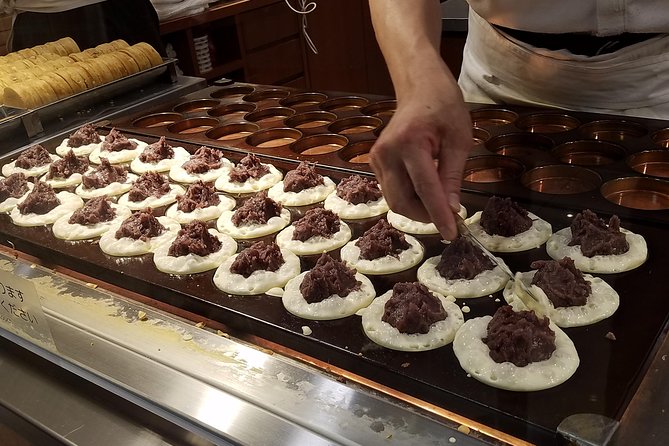
Osaka is often sold as a city of takoyaki, neon signs, and quick bites. Those foods matter, but they are only one piece of the picture. This tour takes you behind the finished dish and into the places where people buy seafood, meat, vegetables, sweets, prepared foods, tableware, and cooking tools.
I like that the route does not stay in one market. You move through several types of food-shopping space, each with a different purpose. Takashimaya shows the careful presentation of premium food. Pulala Tenma gives you a closer look at a local wet market. Tenjinbashi-suji adds the feel of a neighborhood shopping street. Tsuruhashi brings in Korean food and culture, while Kuromon shows Osaka’s most visitor-friendly market face.
The private setup is another strong point. A guide can explain unfamiliar products, help translate when you want to buy something, and pause for questions. Ferdinand, for example, has culinary training and has helped guests understand dishes, ingredients, knives, and the way different cuisines developed in Japan. Other guides, including Kevin and Alejandro, have been praised for clear communication and cultural explanations.
You should keep your expectations straight. This is best understood as a guided market and food-culture walk, not an all-inclusive eating tour. You may purchase food during the route, and some guides may help you find a restaurant or snack, but you pay for those items yourself.
More Food Market Tours in Japan
- Tokyo: Tsukiji Fish Market Food and Culture Walking Tour
★ 4.7 · 757 reviews - Tsukiji Fish Market: Street Food & Culture Walking Tour
★ 5.0 · 669 reviews - Tsukiji Fish Market: Street Food & Culture Walking Tour
★ 4.8 · 259 reviews
Takashimaya: Osaka’s polished underground food hall
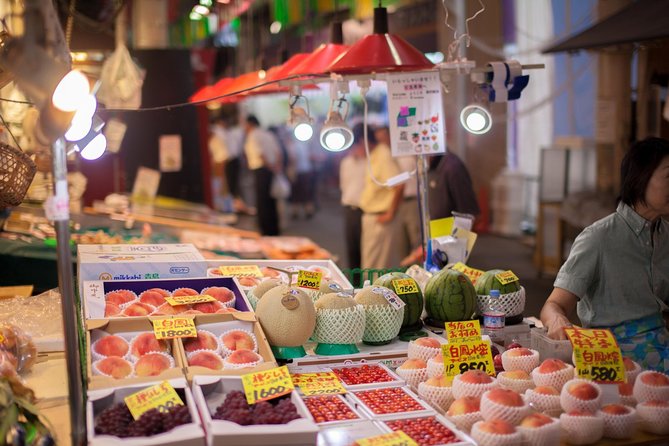
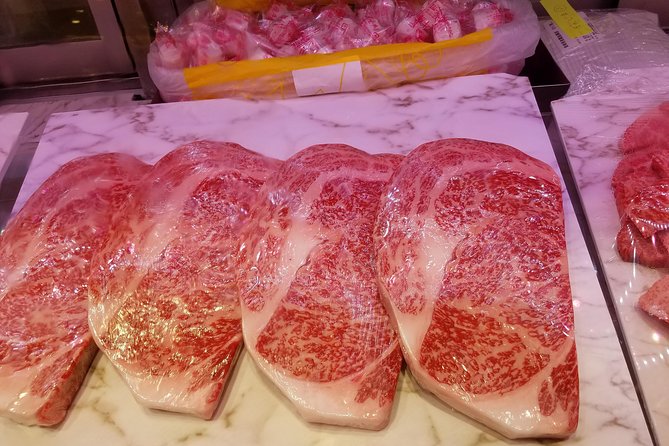
The first stop is the basement food hall at Takashimaya Osaka Store. Known in Japan as a depachika, this kind of department-store food floor is a useful introduction to the country’s approach to presentation and quality.
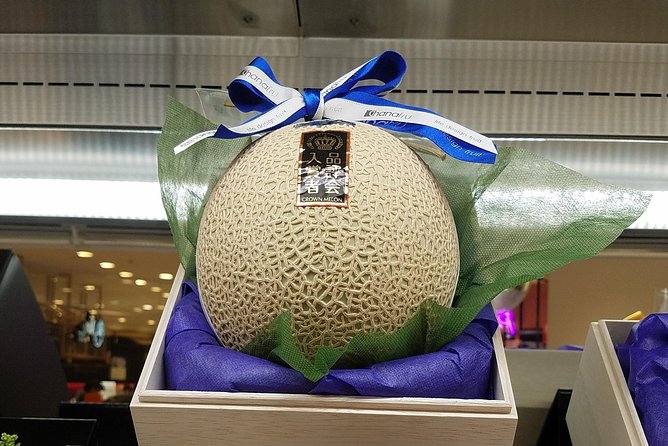
Here you can expect carefully arranged raw ingredients, prepared Japanese foods, sweets, and Western-style foods. The displays are often as precise as the products themselves. Your guide can help you understand what you are seeing and explain how a department-store food hall differs from a street market or neighborhood grocery.
This stop is free to enter, and the planned visit takes about 20 minutes. You may find premium items here, so it is a good place to look rather than buy on impulse. If you want a gift or a beautifully packed food item, this is one of the more practical places to ask your guide for advice.
The contrast with later stops gives the tour its shape. Takashimaya is refined and expensive-looking. The next markets are more functional and local.
Pulala Tenma: a closer look at everyday shopping
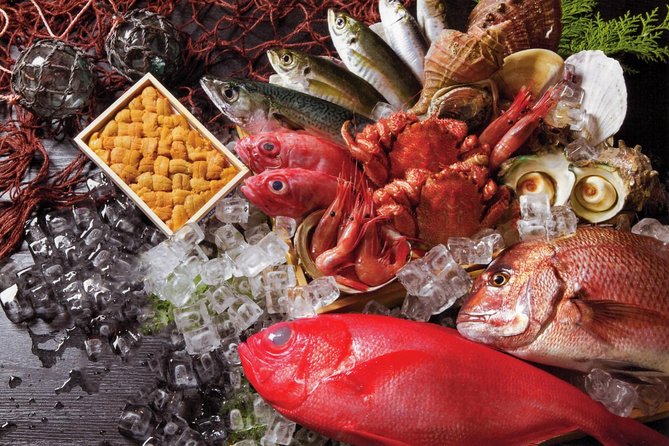
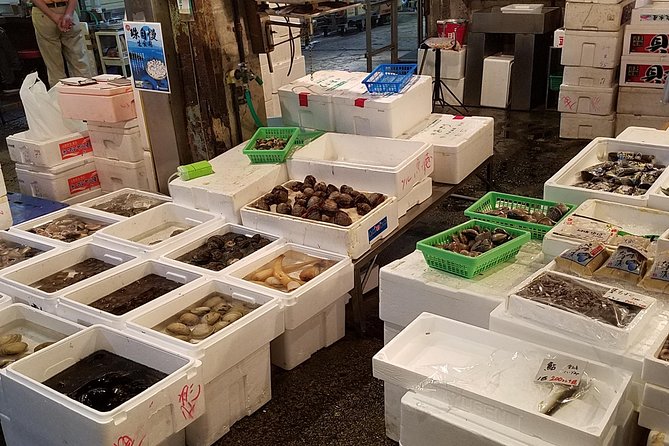
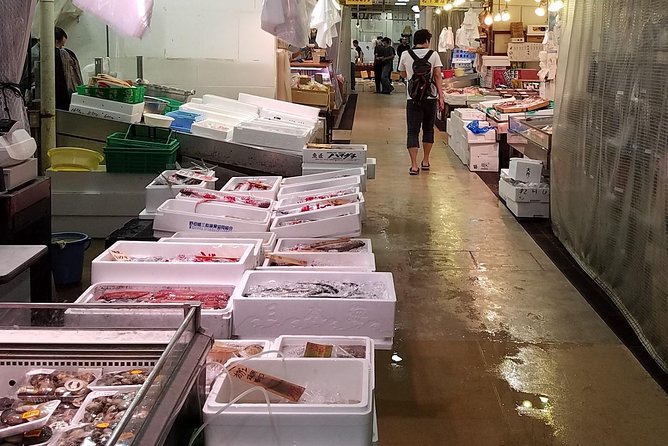
Pulala Tenma is a local wet market with seafood, meats, vegetables, and other ingredients on display. The stop lasts about 30 minutes and gives you a chance to see food before it becomes a restaurant meal or a neatly boxed department-store product.
This is where a guide’s explanations become especially useful. You can ask how Japanese shoppers use certain ingredients, what products are seasonal, and how various foods fit into home cooking. You may also get a clearer sense of the scale and rhythm of ordinary food shopping in Osaka.
The market is less designed for sightseeing than Kuromon, which is part of its appeal. It may feel less simple to navigate on your own, especially if you cannot read Japanese labels. With a private guide, you can stop at unfamiliar stalls without worrying that you are missing the point.
Do not assume every stop comes with a sample. You are free to buy food, but the tour price does not cover samples or refreshments.
Tenjinbashi-suji: shopping, history, and a very Osaka supermarket
Tenjinbashi-suji Shopping Street is described as Japan’s longest covered shopping arcade. The planned visit lasts about 40 minutes, making it one of the longer stops on the route.
The arcade helps connect food to daily life. It is not only a place for tourists to take photos. It also functions as a shopping district, and your guide explains its past and modern role. You will also visit a distinctly Osaka-style supermarket, which adds another useful comparison with Takashimaya and the wet market.
I like this part because it gives you room to notice ordinary details. You can see the kinds of products local shoppers buy, compare prices and presentation, and ask how a supermarket fits into the wider food system. It is less dramatic than Kuromon, but it may be more useful if you want to understand how residents shop.
Because the tour moves through working commercial areas, your pace may vary. If you stop often for photos or shopping, you may have less time at later sights. This is one reason a private tour helps, but it also means the route should not be treated as a rigid checklist.
Same streets, a different set of bites:
- Hungry Osaka Street Food Tour:15 Tastings & 3 Drinks with a Local
★ 5.0 · 1,727 reviews - Hungry Osaka Street Food Tour: 15 Dishes & 3 Drinks
★ 4.9 · 694 reviews - Tokyo: Asakusa & Sensoji ー Oldest Temple Walking Tour (2hrs)
★ 5.0 · 213 reviews - [1 Group Only] Osaka Street Food Tour for Family
★ 5.0 · 208 reviews
Tsuruhashi: Korean food and Osaka’s cultural mix
Osaka Tsuruhashi Ichiba takes you into one of the city’s best-known Korea Town areas. The planned visit takes about 30 minutes, and the focus is not limited to food. You will also see clothing and other goods connected with Korean culture.
This stop adds important context to Osaka’s food scene. Japanese cooking did not develop in isolation, and Tsuruhashi gives you a direct look at Korean influence in the city. Guides can explain cultural connections and help you understand why the neighborhood feels different from the other markets.
You may find a snack or food item to buy here. If you are curious about Korean ingredients, prepared foods, or sweets, this is a good time to ask questions and request translation. One guide has helped guests order foods they wanted to try, while another adapted the route around children interested in mochi and gaming.
Tsuruhashi also helps keep the tour from becoming a narrow survey of Japanese dishes. You see a broader Osaka, shaped by several communities and food traditions.
Kuromon Market: famous, photogenic, and often pricey
Kuromon Market is the best-known visitor stop on the route. It is visually strong, with food stalls and displays that make it easy to understand why the market attracts so much attention.
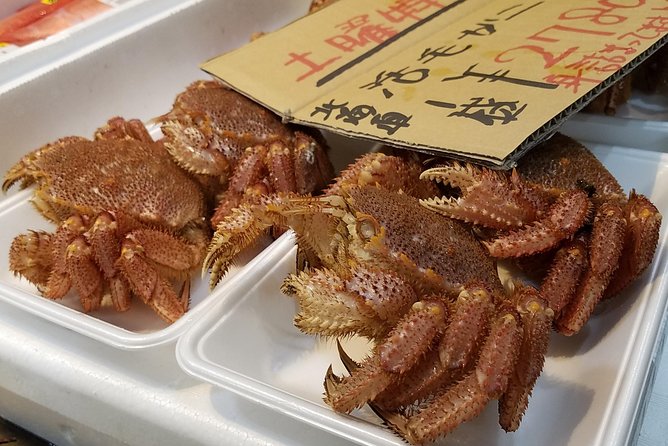
The planned visit takes about 25 minutes. Your guide can point out regional specialties and explain what is worth noticing. You will likely see seafood, prepared foods, and other items aimed at shoppers who want something ready to eat or easy to carry.
The practical warning is price. Kuromon is popular, and prices can be higher than at less visitor-focused markets. The quality can be good, but you should compare before buying. I would use this stop for atmosphere, questions, and careful selection rather than assuming every attractive item is a bargain.
This is also where the tour’s food policy matters most. You can purchase something to eat, but the cost is yours. Bring enough yen or a payment method accepted by the shop, and tell your guide if you want help choosing or ordering.
Doguyasuji: the best stop for cooks and kitchen gifts
Sennichimae Doguyasuji Shopping Street is devoted to kitchenware. The visit lasts about 25 minutes and offers a welcome change from edible goods.
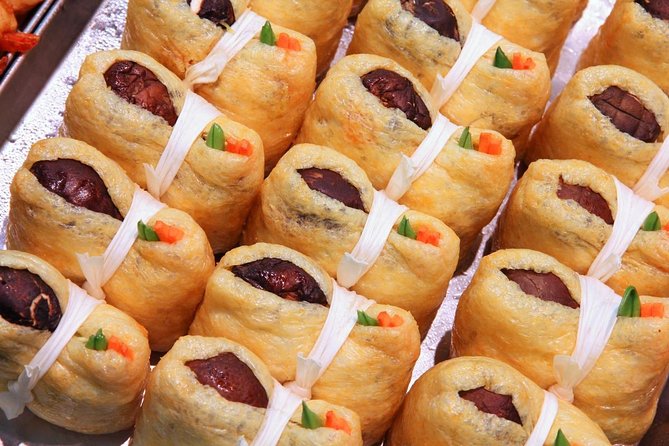
You can browse Japanese cooking knives, ceramics, serving dishes, lacquer chopsticks, tea cups, and the plastic or wax food models used outside restaurants. The models are amusing, but the real value is the chance to see the tools behind Japanese cooking.
This stop suits anyone who enjoys cooking or wants a useful souvenir. A guide can help explain what you are looking at, and translation may be useful if you are comparing knives or asking about materials. Remember to consider how you will transport a knife home and check your airline and customs requirements before buying. The tour does not include souvenirs, so every purchase is extra.
Doguyasuji also makes the food theme more complete. You have seen ingredients and prepared dishes. Now you see the equipment used to turn those ingredients into meals.
Namba and Dotonbori: finishing near the city’s bright center
If time remains, the guide takes you through Minami, the Namba and Dotonbori area. The planned visit lasts about 20 minutes, and the tour ends at Ebisu Bridge.
This is a convenient finish. After several markets and shopping streets, you are placed near one of Osaka’s most recognizable entertainment areas. You can continue your evening in Dotonbori, find a restaurant, or simply use the location as a base for the next part of your day.
The ending is less about detailed food instruction and more about orientation. If Osaka feels confusing when you arrive, finishing here can help you connect the market neighborhoods with the city center.
What the $91 price really buys you
At $91 per person, this is not a cheap way to find lunch. You must add the cost of all food, snacks, refreshments, souvenirs, and roughly 330 yen per adult for transportation during the tour.
The value is in the guide and the access to several different parts of Osaka in one organized route. You are paying for explanations, translation help, cultural background, and the ability to move between markets without working out every connection yourself. A private tour can be especially useful on a first visit, when labels, customs, and unfamiliar foods slow you down.
For a serious food enthusiast, the price may be reasonable because the tour teaches you how to continue exploring on your own. You leave with a better idea of where to shop, what different markets offer, and how to order or ask questions.
For a visitor with only one day in Osaka, the calculation is harder. You might prefer to spend the same money on a guided restaurant meal or a tour with included tastings. The most critical detail is the absence of included food. Plan a separate meal or budget for purchases during the route.
Walking, timing, and who will enjoy it most
The tour lasts about four hours and offers morning or afternoon departures. The starting point is the McDonald’s in front of Temma Station, at 4-chōme-12-1 Tenjinbashi. The listed end point is Ebisu Bridge in Dotonbori.
Transportation during the tour is not included. The stated cost is about 330 yen per adult, and the route uses public transportation between areas. Pickup is offered as a feature, but confirm the exact arrangement when booking because the published meeting point remains Temma Station.
You should wear comfortable shoes. The route covers multiple markets and shopping streets, and the walking can feel demanding in hot weather. Children must be with an adult, and families should consider the distance and the need to keep moving between stops.
The tour is private, so only your group participates. That makes it a good match for couples, families, and small groups with specific interests. You can ask for more attention to sweets, knives, Korean food, cultural history, or shopping, though the exact flexibility depends on the guide and the time available.
Guide quality is central to the experience
This tour rises or falls with the person leading it. The strongest guide names associated with the experience include Ferdinand, Kevin, Thomas, Lito, Damian, Alejandro, and Oshi.
Ferdinand has been noted for culinary training, broad food knowledge, and help with translation. Kevin has provided detailed explanations of Japanese, Chinese, and Korean cultures, while Alejandro has been appreciated for clear English and a willingness to customize the route. Thomas adapted the outing for children interested in mochi and gaming.
Lito has been flexible with timing and personal needs. Damian has taken time for questions, shopping, and photographs. Oshi has guided guests through the markets with a pleasant manner, including a stop at a local eatery and a cool drink on a hot day.
You cannot choose the guide’s personality with certainty, but the private format gives any guide more room to respond to your interests. Tell the operator what you care about before the tour. If you want tastings, clarify that you mean purchases along the way, since the tour does not provide included samples.
Should you book this Osaka market tour?
Book it if you want to understand Osaka through its food shops rather than simply eat a few famous dishes. It is especially useful for first-time visitors, food shoppers, cooks, families who want a private pace, and anyone curious about Japanese and Korean food culture.
Skip it if you want a generous set of included tastings, a seated meal, or a short walking route. The price is harder to justify if you plan to spend little on food and do not care about supermarkets, ingredients, or kitchenware.
My practical advice is simple: eat a light meal before you start, bring money for food and transport, wear good shoes, and tell the guide what interests you. With those expectations, this becomes a useful introduction to Osaka’s markets and a solid way to learn how to explore the city independently.
FAQ
How long does the Osaka food market tour last?
The tour lasts approximately four hours.
What markets and neighborhoods does the tour visit?
The route can include Takashimaya Osaka Store, Pulala Tenma, Tenjinbashi-suji Shopping Street, Osaka Tsuruhashi Ichiba, Kuromon Market, Sennichimae Doguyasuji Shopping Street, and Minami in the Namba and Dotonbori area.
Is food included in the tour price?
No. Samples, food items, refreshments, and snacks are not included. You are responsible for anything you choose to purchase during the tour.
How much does the tour cost?
The listed price is $91 per person.
Is transportation included?
No. Transportation during the tour costs about 330 yen per adult.
Is this a private tour?
Yes. Only your group participates in the activity.
Where does the tour start and finish?
The listed starting point is the McDonald’s in front of Temma Station. The tour ends at Ebisu Bridge in Dotonbori.
Can children join the tour?
Yes, but children must be accompanied by an adult. The tour involves a moderate amount of walking.
Can I cancel for a full refund?
Yes. You can cancel at least 24 hours before the experience start time for a full refund. Changes or cancellations made less than 24 hours before the start time are not accepted for a refund.
Newest street food walks around Japan
- Nagoya Castle and Local Flavor Samurai Tales and Street Food Walk★ 5.0 · 10 reviews
- Nagasaki Street Food Adventure: Private Walking Tour with a Local★ 5.0 · 26 reviews
- Nagoya Street Food Walking Tour of Osu★ 5.0 · 28 reviews
- The 10 Tastings of Tokyo With Locals: Private Street Food Tour★ 5.0 · 48 reviews
- Kyoto Nishiki Market Street Food Tour★ 5.0 · 9 reviews
- Private Nishiki Market Food & Sake Tour by Young Local Guides★ 5.0 · 12 reviews
- Tokyo: Sensoji Temple & Street Food: Private Tour with guide★ 4.6 · 8 reviews
- Tokyo: Shinjuku Local Eats, Street Food Tour & Culture Walk★ 5.0 · 2 reviews
Osaka street food tours, side by side.
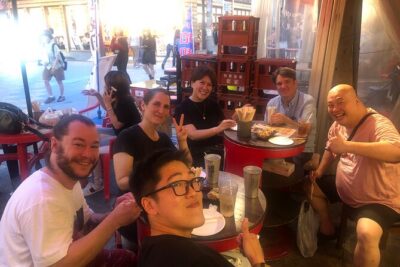
Hungry Osaka Street Food Tour:15 Tastings & 3 Drinks with a Local
Read our review →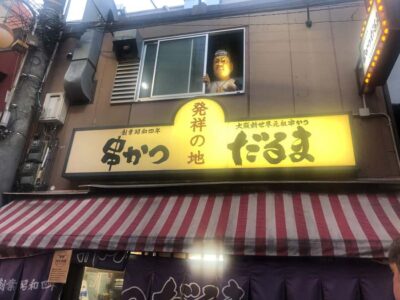
Hungry Osaka Street Food Tour: 15 Dishes & 3 Drinks
Read our review →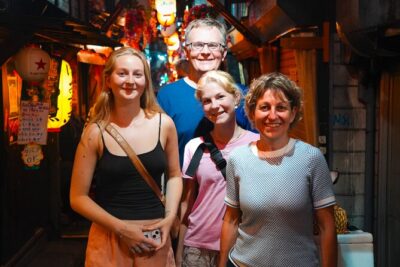
[1 Group Only] Osaka Street Food Tour for Family
Read our review →
Osaka: 2-Hour Local Street Food Tour – Dotonbori & Namba
Read our review →
Eat Like a Local in Osaka – Private Custom Street Food Tour
Read our review →
Osaka: Kuromon Market 1.5-Hour Seafood & Street Food Tour
Read our review →
Osaka: Kuromon Market Street Food Tour with Pro Local Guide
Read our review →The lists this tour appears in