
Review · JAPAN
Nagoya Street Food Walking Tour of Osu
Osu is one of Nagoya’s best places to see daily life up close, and this tour gets you into it through food. You begin at Osu Kannon, compare Buddhist and Shinto traditions, then follow your guide through arcades, temples, food stalls, and shops for five local bites.
I especially like the private format and the range of tastes. You get red miso with meat, grilled rice, fried chicken, shrimp rice balls, and sweets, while guides such as Patricia, Erica, and Lena add useful local context. The main catch is that the tour may be a poor fit for strict dietary needs, and Saturday crowds can make Osu slow going.
Key points at a glance
- Five street foods included: Expect local favorites such as miso kushi katsu, gohei mochi, karaage, and tenmusu, with exact items subject to change.
- Private tour for your party: You do not share the walk with a large scheduled group.
- Osu Kannon sets the scene: The tour begins by explaining the difference between a Buddhist temple and a Shinto shrine.
- Food and culture work together: You learn about Nagoya’s customs while eating your way through the district.
- An omikuji adds a small ritual: A Japanese fortune slip is included in the price.
- Plan around the pace: The listed duration is about two hours, though some tours have taken closer to three.
Why Osu is a smart place for a food walk
Osu is not just a row of snack counters. It is a large shopping district with temples, shrines, secondhand shops, inexpensive food, and more polished stores mixed together. That odd combination is what makes the area useful for a first look at Nagoya.
On your own, you could easily spend the afternoon wandering without knowing which stall serves a local specialty and which one is simply familiar fast food. A private guide gives the visit shape. You move from one bite to the next, with short explanations about the neighborhood and Japanese customs along the way.
I also like the scale of the experience. Two hours is enough time to sample several foods without turning the day into a formal cooking lesson. You are walking, stopping, tasting, and moving on. The format suits you if you want an introduction to Osu before exploring it independently.
The private setup matters for families and couples. You can ask questions, slow down for a photo, or spend more time on a point that interests you. It also means the outing is not built around keeping up with strangers.
More street food walks around Japan:
- Hungry Osaka Street Food Tour:15 Tastings & 3 Drinks with a Local
★ 5.0 · 1,727 reviews - Tokyo: Tsukiji Fish Market Food and Culture Walking Tour
★ 4.7 · 757 reviews - Hungry Osaka Street Food Tour: 15 Dishes & 3 Drinks
★ 4.9 · 694 reviews
Beginning at Osu Kannon
The meeting point is outside the 7-Eleven at 2-chōme-23-32 Ōsu, near the Osu Kannon area. The first formal stop is Hosho-in, commonly called Osu Kannon, a Buddhist temple that gives the tour its cultural starting point.
This is a useful place to begin because many visitors see Japanese religious buildings but are unsure what they are looking at. Your guide explains the difference between a Buddhist temple and a Shinto shrine, including the basic distinction the tour is designed to clarify.
That short lesson adds value to the food stops. You are not simply eating your way through a commercial district. You begin to understand how religious sites, shopping streets, and neighborhood traditions sit side by side in Japan.
The included omikuji, or fortune slip, gives you a small hands-on ritual. It is a simple extra, but it helps turn the temple stop into more than a quick photo break. If your fortune is not favorable, you can follow the usual custom of leaving it at the temple rather than carrying the bad luck onward.
First tastes: miso kushi katsu and gohei mochi
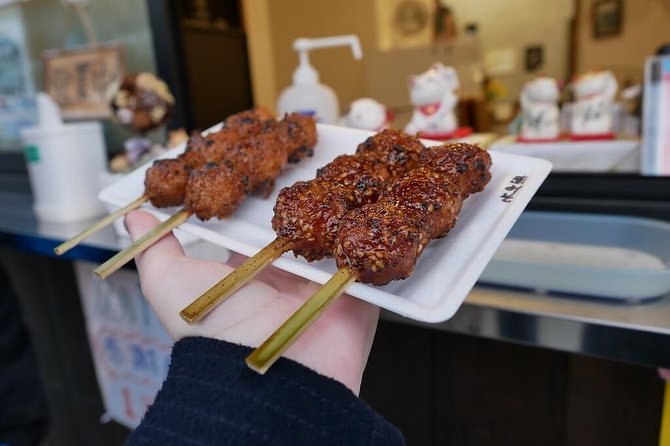
The first major food stop features miso kushi katsu, skewered meat covered with Nagoya-style red miso sauce. Kushi katsu is often associated with fried skewers, while Nagoya’s version gets its local identity from the hearty miso coating.
This is a strong introduction to the city’s food character. Red miso has a deeper, more forceful taste than the lighter sauces many visitors expect, and it appears again in the next snack.
Gohei mochi is grilled rice pressed around a stick and coated with miso sauce. Its texture is different from the fried meat, but the flavor links the two stops. It is the sort of snack you might not order from a menu without help, which is precisely where a food guide earns the fee.
I would not expect small dainty samples here. One participant specifically advised arriving hungry because the food adds up. That is practical advice. Avoid a large meal before the tour, especially if you want to enjoy every stop rather than pick at the later ones.
Karaage, tenmusu, and changing food stops
Karaage, Japanese fried chicken, comes from one of the well-regarded shops in Osu. It is a familiar food for many people, but the point is to try it in the setting your guide considers worthwhile, rather than treating the stop as a generic fried-food break.
Later, you visit a popular local shop for tenmusu. Tenmusu combines a small rice ball with fried shrimp, giving you a compact snack that is easy to eat while walking. It also shows how Japanese food often balances a plain staple such as rice with a strongly flavored filling or topping.
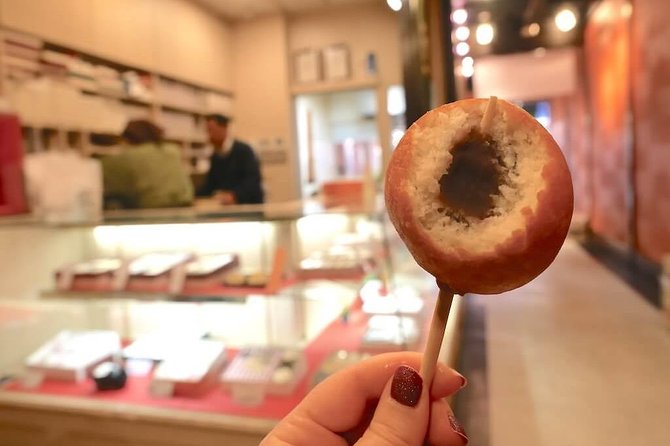
The tour description also names uiro and agemanbo among local specialties you may encounter. Uiro is a traditional steamed confection, while agemanbo is a fried sweet associated with the area. Exact dishes can change between departures, so do not book this expecting a rigid five-item menu.
That flexibility is mostly a benefit. Osu’s food scene changes from shop to shop, and a guide can choose what is available and appealing that day. The tradeoff is that you cannot guarantee every item named in the description.
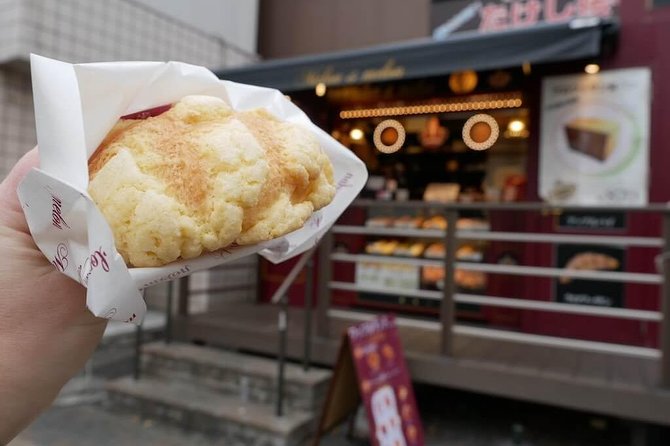
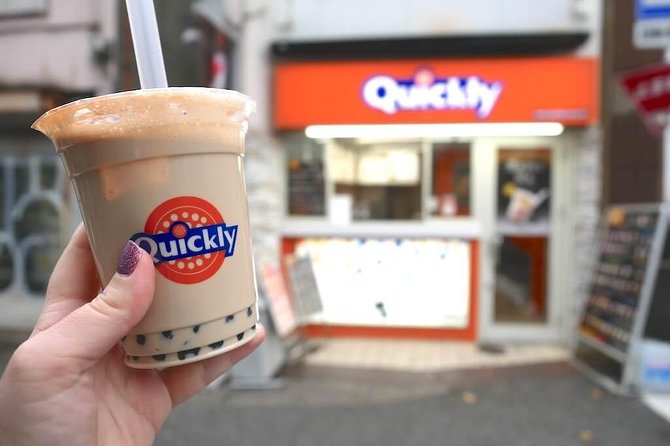
Past food stops have also included bubble tea, melon pan, and a sweet curry paste on a stick. Those additions show how the experience can move beyond the best-known Nagoya staples. If you have a strong sweet tooth, ask your guide early which sweet item is planned.
Same streets, a different set of bites:
- Tsukiji Fish Market: Street Food & Culture Walking Tour
★ 5.0 · 669 reviews - Tsukiji Fish Market: Street Food & Culture Walking Tour
★ 4.8 · 259 reviews - Tokyo: Asakusa & Sensoji ー Oldest Temple Walking Tour (2hrs)
★ 5.0 · 213 reviews - [1 Group Only] Osaka Street Food Tour for Family
★ 5.0 · 208 reviews
Bansho-ji Temple and the Osu back streets
Bansho-ji Temple is another listed stop, giving the walk a second religious site and another chance to compare temples with the shrine and shopping district around them. The guide’s role here is less about ticking off a famous sight and more about showing how Osu’s past remains part of its present-day streets.
The route can include secondhand upmarket shops, a burial site, and small places you might pass without noticing. Those details matter because they give Osu a more layered feel than a simple food arcade. You get old religious sites beside retail, informal snack shops beside more expensive goods, and local history folded into an active commercial neighborhood.
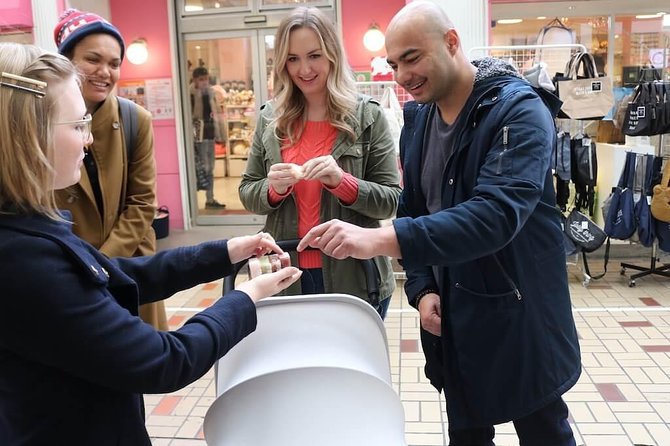
This is also where the private format helps. If you are curious about Japanese funeral customs, temple practices, or how foreigners are treated in Japan, you can ask directly. One guide was praised for offering that kind of perspective, which suggests the conversation can reach beyond memorized sightseeing facts.
Do not expect a quiet temple tour. Osu is a working shopping district, and Saturday can be especially crowded. You may need to wait at a counter, walk carefully through narrow spaces, or pause while the group gathers. That is part of the setting, but it can make the outing feel less relaxed at peak times.
What the guides add
The experience is sold through the food, but the guide can make or break it. Patricia has led tours that combined local history, unusual shops, temples, and a burial site. Erica has been praised for explaining Japanese traditions clearly, including the difference between shrines and temples. Lena has led food-focused walks in clear English and introduced dishes ranging from karaage to melon pan.
Guide assignments vary, so you should not assume you will receive a particular person. Still, these examples show the intended style: a walking conversation with food attached, not a silent route between restaurants.
English ability is especially important in Osu because the context is easy to miss. A guide can explain why a building matters, what a snack is made from, or how a religious custom differs from what you might see at the next stop. You get more from the same streets when you understand what you are seeing.
The best approach is to arrive with questions. Ask about Nagoya’s red miso, the role of Osu Kannon, the fortune slip, or the mix of old and new shops. Since the tour is private, you have a better chance to shape the conversation around your interests.
Is $101.47 good value?
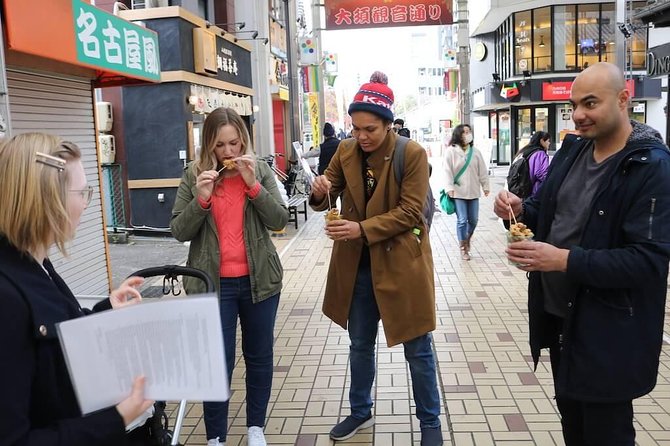
At $101.47 per person, this is not a cheap way to buy five snacks. You are paying for the private guide, the cultural explanation, the route planning, the included food, the omikuji, and the convenience of not having to research every stop yourself.
The value is strongest for a first visit to Nagoya, especially if you have only a short time in the city. You get an introduction to one of its most distinctive districts and a list of foods you can seek out later. A private booking also makes the price easier to justify for a small group that would rather have its own guide than join a larger food walk.
The price is less compelling if you already know Osu well or are comfortable choosing food stalls on your own. Street food in Japan can be inexpensive, and you could spend far less by simply wandering and buying one item at a time.
For me, the deciding question is not how much food you receive. It is how much you value explanation and direction. If you want five snacks with no context, this costs too much. If you want a guided introduction to Osu’s food, temples, shopping streets, and customs, the private format makes the fee more reasonable.
Timing, walking, and practical limits
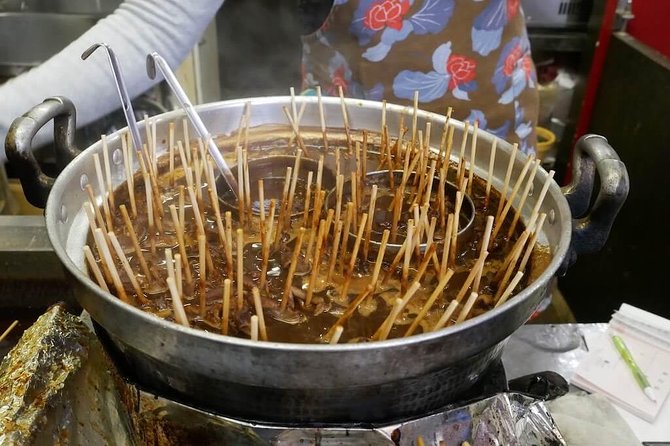
The listed duration is approximately two hours. Several descriptions of the experience have run closer to three hours, so I would not schedule a tight train departure immediately afterward. Food service, crowd levels, conversation, and walking pace can all affect the finish time.
The tour starts and ends at the same meeting point, which keeps the logistics simple. Transportation to and from the meeting point is not included, so you need to arrange your own way to Osu.
A mobile ticket is provided, and confirmation arrives within 48 hours of booking, subject to availability. The listed operating period runs through February 8, 2027, with Monday hours shown as 11:00 a.m. to 4:00 p.m. Check the offered date and start time carefully when booking.
Most people can take part, and service animals are allowed. The biggest practical concern is food restriction. The experience is not recommended for people with dietary restrictions unless they contact the provider before booking. Since the food items can change, do not assume that every ingredient can be removed or replaced.
Free cancellation is available up to 24 hours before the start time. Changes or cancellations made inside that window are not accepted for a refund.
Who should book this Osu food tour?
I would choose this for a first-time visitor who wants a quick, guided introduction to Nagoya rather than a long restaurant meal. It suits couples, families, and small private groups that enjoy trying several foods in one outing.
It is also a good fit if you want help with Japanese religious customs. The opening comparison between Osu Kannon and Shinto shrines gives you a foundation that can improve visits to other sites in Japan.
Food-first visitors should arrive hungry and open-minded. Some stops may be familiar, such as fried chicken, while others, such as uiro or agemanbo, may be new to you. The changing menu is part of the fun, but it means you should not treat the listed foods as a strict promise.
I would think twice if you have serious dietary restrictions, dislike busy shopping streets, or prefer to explore at your own pace. Saturday crowds can be heavy, and a private guide cannot remove the basic noise and movement of Osu.
Should you book it?
Book this tour if you want local food plus clear cultural context in a compact private walk. The strongest reasons are the five included snacks, the temple and shrine explanations, the chance to find less obvious shops, and the freedom to ask your own questions.
Skip it if your main goal is the lowest possible food cost or if you need a carefully controlled menu. For everyone else, especially a first-time visitor with limited time in Nagoya, this is a useful way to get oriented before returning to Osu on your own.
FAQ
Where does the tour start?
Meet at the 7-Eleven at 2-chōme-23-32 Ōsu, Naka Ward, Nagoya, Aichi 460-0011, Japan.
Where does the tour end?
The activity ends back at the meeting point.
How long does the tour last?
The listed duration is approximately two hours. Some descriptions of the experience have lasted closer to three hours, so allow extra time if your schedule is tight.
Is this a private tour?
Yes. Only your party participates in the activity.
How many street foods are included?
Five street foods are included. The exact items may differ slightly between tours.
Which foods might be served?
Possible foods include miso kushi katsu, gohei mochi, karaage, tenmusu, uiro, and agemanbo. Other examples associated with the tour include bubble tea and melon pan.
Is the omikuji included?
Yes. An omikuji fortune slip is included, along with the snacks and all fees and taxes.
Is transportation included?
No. Transportation to and from the tour is not included.
Can I join if I have dietary restrictions?
The experience is not recommended for people with dietary restrictions. Contact the provider before booking to ask about your needs.
Newest street food walks around Japan
- Nagoya Castle and Local Flavor Samurai Tales and Street Food Walk★ 5.0 · 10 reviews
- Nagasaki Street Food Adventure: Private Walking Tour with a Local★ 5.0 · 26 reviews
- The 10 Tastings of Tokyo With Locals: Private Street Food Tour★ 5.0 · 48 reviews
- Kyoto Nishiki Market Street Food Tour★ 5.0 · 9 reviews
- Private Nishiki Market Food & Sake Tour by Young Local Guides★ 5.0 · 12 reviews
- Tokyo: Sensoji Temple & Street Food: Private Tour with guide★ 4.6 · 8 reviews
- Tokyo: Shinjuku Local Eats, Street Food Tour & Culture Walk★ 5.0 · 2 reviews
- Tokyo: Explore Authentic Japanese Food Culture at Tsukiji★ 5.0 · 3 reviews
Japan street food tours, side by side.
Hungry Osaka Street Food Tour:15 Tastings & 3 Drinks with a Local
Read our review →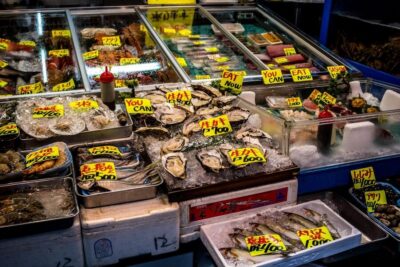
Tokyo: Tsukiji Fish Market Food and Culture Walking Tour
Read our review →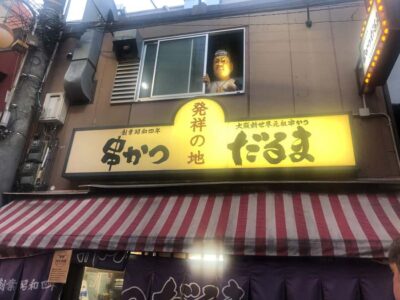
Hungry Osaka Street Food Tour: 15 Dishes & 3 Drinks
Read our review →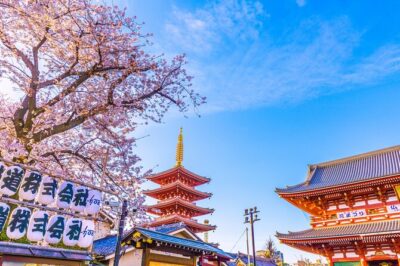
Tokyo: Asakusa & Sensoji ー Oldest Temple Walking Tour (2hrs)
Read our review →
[1 Group Only] Osaka Street Food Tour for Family
Read our review →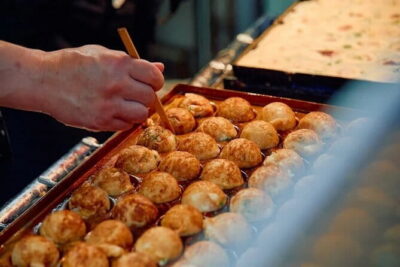
Takoyaki making experience ~Japan’s popular street food~
Read our review →
Osaka: 2-Hour Local Street Food Tour – Dotonbori & Namba
Read our review →The lists this tour appears in