
Review · JAPAN
Fukuoka: Nakasu Food Stall Private Guided Tour with Tastings
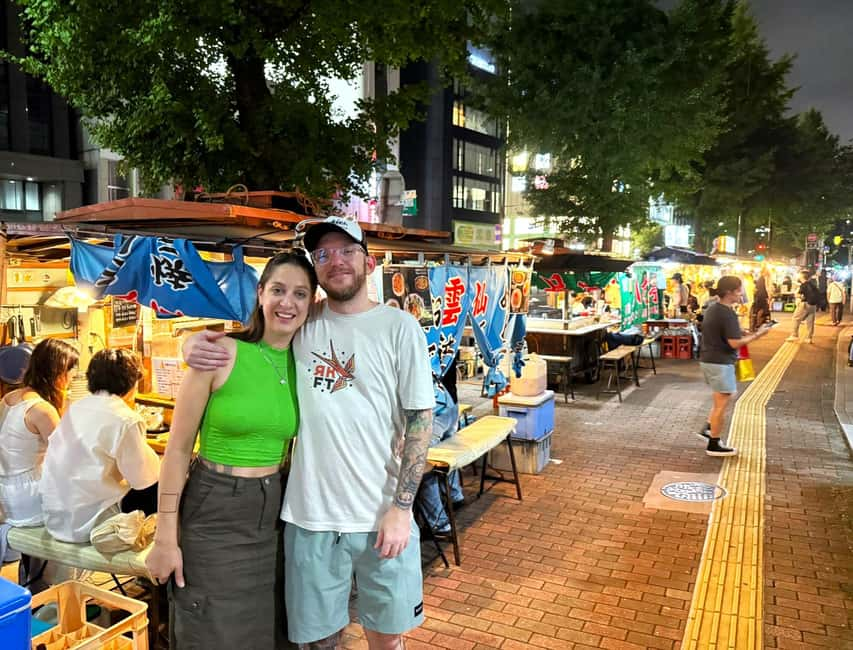
Fukuoka’s famous yatai food stalls are small, casual places where a few diners share a counter, eat quickly, and chat with the people beside them. This tour makes that compact scene much easier to enter, especially if you do not speak Japanese. Your guide leads you from FamilyMart Tenjin 1-chome to Nakasu, then helps you order and explains what is in front of you.
I like two things here. First, the private format gives you room to ask questions and shape the evening around your appetite. Second, the 1,000 yen food and drink subsidy at each stall takes some guesswork out of ordering. The main catch is timing: an early start can be too soon for some stalls, and two hours usually means two stalls rather than a full crawl through the district.
Key points at a glance
- Two yatai stops in Nakasu: Taste several local dishes, including ramen, oden, yakitori, and stewed food.
- English-speaking private guide: Guides such as Morry, Manabu, Rie, Aya, and Shota help with ordering and conversation.
- 1,000 yen per stall: Use the included food and drink allowance at each stall, with extra spending possible if you order beyond it.
- Local stories with the meal: Learn about Fukuoka, Hakata, Tenjin, and the role of yatai in the city.
- A useful first-night tour: You get a feel for how stalls work before trying them on your own.
- Weather and opening times matter: Rain can move the experience indoors, and some stalls open later than the earliest tour time.
Starting at Tenjin and walking toward Nakasu

Meet your guide in front of FamilyMart Tenjin 1-chome. Look for the yellow DeepExperience sign. From there, the tour heads toward Nakasu, the entertainment district set along the river between the historic city areas of Hakata and Fukuoka.
This starting point works well for a short evening food outing. You do not begin with a long transfer or a formal lecture. You meet your guide, get a quick plan for the night, and move into the streets where the food stalls gather.
That first conversation matters more than it may seem. Yatai have their own rhythm. Seating is tight, menus may not be obvious to an English speaker, and a stall can fill while you are still deciding. A guide helps you settle in without spending your first few minutes wondering what to do.
Morry, one of the most frequently praised guides, is known for explaining the plan clearly and keeping people entertained while waiting. His close-up magic and mentalist tricks are an unusual extra, not the reason to book the tour, but they can make a queue feel shorter. Other guides named by guests include Manabu, Rie, Aya, and Shota. The experience may feel different depending on who leads it, but the central benefit remains the same: someone local is beside you at the counter.
More street food walks around Japan:
- Hungry Osaka Street Food Tour:15 Tastings & 3 Drinks with a Local
★ 5.0 · 1,727 reviews - Tokyo: Tsukiji Fish Market Food and Culture Walking Tour
★ 4.7 · 757 reviews - Hungry Osaka Street Food Tour: 15 Dishes & 3 Drinks
★ 4.9 · 694 reviews
Nakasu yatai: small stalls, quick meals, shared counters
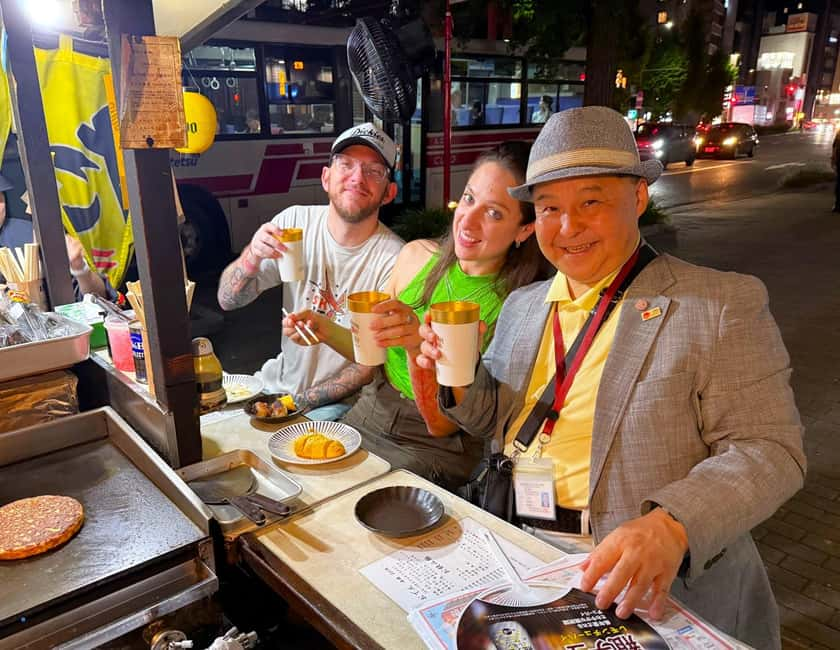
The yatai are not spacious restaurants. Think of a compact food stall with limited seats, a busy cooking area, and dishes arriving as soon as they are ready. You sit close to other diners, which is part of the appeal. The setting is social without requiring a formal introduction.
The tour takes you to two stalls. At each one, you receive a 1,000 yen food and beverage subsidy. That allowance gives you a useful starting point, though you should bring cash for anything beyond the included amount. The experience information specifically asks you to bring cash, comfortable shoes, and a camera.
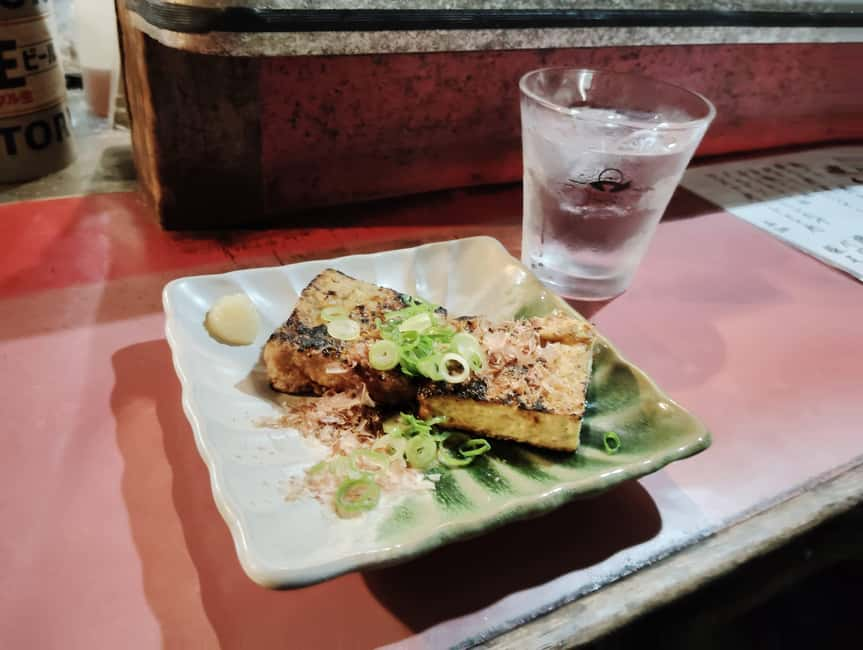
The food comes in smaller, practical portions rather than as one large restaurant meal. You may taste oden, a selection of ingredients simmered in broth; yakitori, grilled skewers; ramen; and other stewed dishes. The exact mix depends on the stalls open that evening and what suits your group.
I like this format because it lets you compare styles. One stall may be strongest for noodles, while another gives you a better sense of cooked snacks or simmered food. At the same time, two stops are not enough for a complete survey of Fukuoka’s food scene. If you arrive very hungry, you may want to budget for extra orders.
What makes the food special
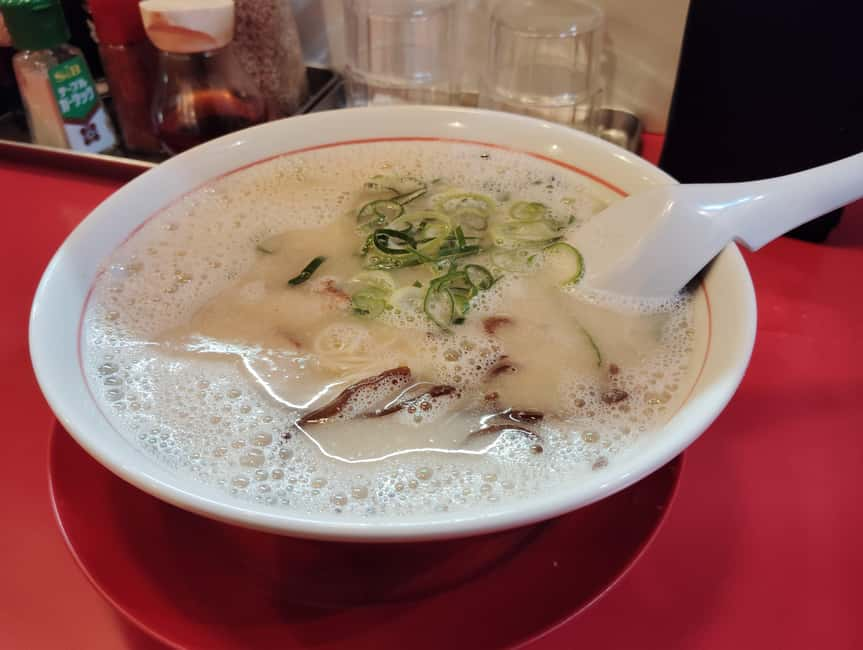
Fukuoka is closely associated with ramen, and the tour gives you a chance to try it in the setting where the meal feels most natural: a small stall, a short order, and a warm bowl served without fuss. One guest described the ramen as the best part of a rainy evening, which is easy to understand. A hot bowl can become the high point of the night when the weather is poor.
Oden gives you something different. It is slower, softer, and built around ingredients held in broth. Yakitori brings grilled flavor and a more snack-like pace. Stewed dishes add another layer to the tasting, especially if you want to move beyond the familiar image of Fukuoka as a ramen city.
The food is not necessarily the sole reason to book. One detailed account found the ramen excellent but felt that the other food was less memorable. That is useful advice. The yatai experience is as much about atmosphere and access as it is about a perfect meal. You are paying for help choosing, ordering, and understanding the setting, not for a fine-dining tasting menu.
Vegetarian diners should speak up early. One guide adapted the meal for a guest following a non-strict vegetarian diet, but the tour information does not promise a vegetarian menu. Your guide can help explain options, yet you should not assume every stall can meet strict dietary needs.
The value of having a local guide
The strongest part of this tour is the human help. A guide can explain how the stalls fit into Fukuoka’s food culture, introduce you to stall owners, and translate when you need to ask a question. That removes a real barrier for first-time visitors.
The guides also bring different strengths. Morry is described as cheerful, organized, and entertaining, with magic tricks to fill waiting time. Manabu is noted for his thoughtful approach. Rie is fluent in English and personable. Aya has worked at a yatai, which gives her a direct connection to the stall world. Shota has tailored outings around food interests and offered restaurant suggestions beyond the stalls.
Those details make the private format more valuable. You can ask where to eat on another night, what dish to try next, or how the local food scene differs from the tourist center. The information is most useful when it stays practical, such as which dishes to order or how to approach a crowded stall.
A guide cannot guarantee that every stall will be open or that every dish will suit your taste. Weather, queues, and the evening schedule still affect the experience. But you have a much better chance of making a good choice when someone familiar with the area is making decisions with you.
Same streets, a different set of bites:
- Tsukiji Fish Market: Street Food & Culture Walking Tour
★ 5.0 · 669 reviews - Tsukiji Fish Market: Street Food & Culture Walking Tour
★ 4.8 · 259 reviews - Tokyo: Asakusa & Sensoji ー Oldest Temple Walking Tour (2hrs)
★ 5.0 · 213 reviews - [1 Group Only] Osaka Street Food Tour for Family
★ 5.0 · 208 reviews
Timing, queues, and bad weather

Check the available starting times carefully. The early slot has been noted as too early for some stalls, with setup still underway past 6 p.m. If you choose that time, you may begin with fewer open options and adjust the plan as stalls start serving.
A later start may fit the yatai schedule better, though the exact availability changes. Since the activity lasts two hours, timing also affects how much time you have to eat, wait, walk, and talk. You are not signing up for a long, all-night food expedition.
Queues are part of the deal. Small stalls have limited seats, so a popular place can require patience. This is where a good guide earns the fee. Morry, in particular, has used magic and conversation to make waits feel less like wasted time.
Rain can change the plan. One wet evening led to an indoor stall, and the group felt the setting was still good but less satisfying than visiting more than one outdoor yatai. Another rainy outing moved into a nearby underground area. The tour can continue in poor weather, but the classic open-air feel may be reduced.
Bring comfortable shoes because you will walk between stops. Bring a camera if you want photographs of the evening scene, but remember that the stalls are working businesses with limited room. Be considerate when taking pictures, and do not smoke during the activity.
The atmosphere between Hakata and Fukuoka
Nakasu has a different feel from a standard restaurant street. The river, narrow food counters, bright signs, and steady movement create a setting that is more immediate than a meal in a large dining room. You see the city’s evening habits at close range.
Your guide also gives the area a sense of place. The tour includes background on Fukuoka’s past and on how yatai became part of local food life. This is not a long history lesson. It comes in short explanations while you walk, wait, and eat, which is the right pace for a two-hour outing.
I especially like this kind of context because it helps you notice details you might otherwise miss. A stall is not just a convenient place to buy noodles. It is also a tiny social room, a workplace, and a meeting point where locals and visitors share a counter.
Still, expectations should be realistic. Some people imagine yatai as a completely untouched local secret. In practice, the stalls are a well-known Fukuoka attraction, and you may meet other international visitors. The atmosphere can still feel local, particularly when your guide takes you away from the most obvious tourist choices, but it is not an undiscovered corner of the city.
Is $101 a fair price?
At $101 per person, this is not a cheap way to eat two quick meals. You are paying for a private English-speaking guide, local interpretation, planning, and the 1,000 yen food and drink allowance at each stall. The value depends on how much you want help with the setting.
For a confident Japanese speaker who already knows where to go, booking independently will cost less. You can walk around Nakasu and choose a stall on your own. You may also enjoy the freedom of ordering as much or as little as you like.
For a first visit, the price makes more sense. You avoid the awkward first attempt at entering a small stall, reduce the language problem, and gain two hours with a local person who can answer questions. The private format is also useful for couples, families, and small groups who want to eat together rather than join a large tour.
The allowance helps, but it will not necessarily cover every order. Consider it part of the tour’s value rather than a promise of an unlimited meal. Bring cash and plan to pay extra if you want additional dishes or drinks.
Who will get the most from this tour
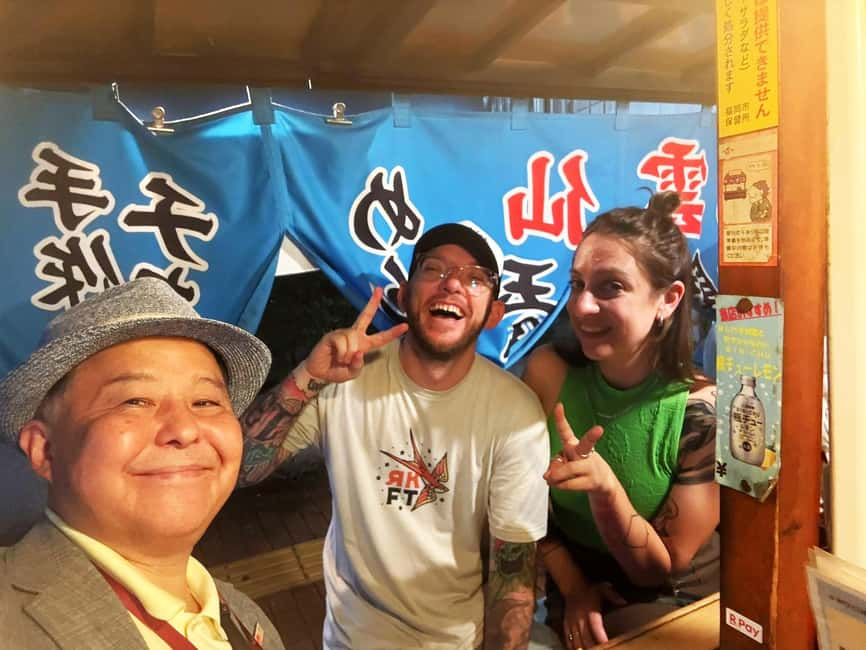
I would choose this tour for a first evening in Fukuoka, especially if you are curious about yatai but unsure how to start. It suits solo visitors particularly well, since eating alone at a tight counter can feel easier with a guide beside you.
It also works for people who enjoy conversation and local background as much as food. The guides have offered restaurant suggestions, explained food customs, and adjusted choices around individual interests. If you want a quiet, private meal with lots of personal space, this is not the right setting.
Food-focused visitors should come with flexible expectations. You will taste several local dishes, but the tour is short and limited to two stalls. If your priority is a long list of tastings, a larger food tour may offer more variety. If your priority is learning how to use the yatai scene and enjoying a relaxed introduction, this format is a better fit.
Practical details before you book
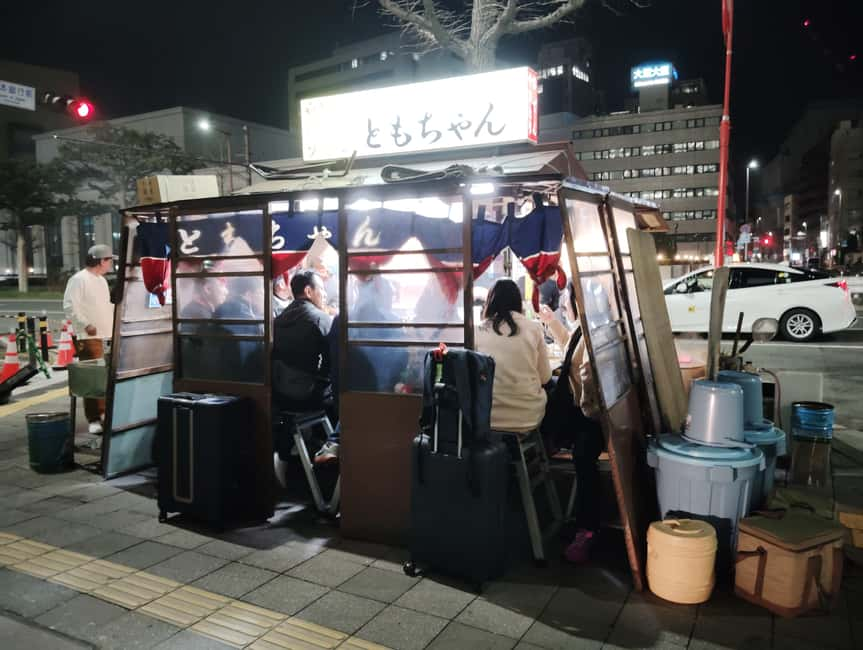
The tour lasts two hours and returns to FamilyMart Tenjin 1-chome. It is a private group activity with an English-speaking live guide. The guide meets you in front of the store and carries a yellow DeepExperience sign.
Free cancellation is available up to 24 hours before the activity for a full refund. You can also reserve now and pay later, which helps if your Fukuoka schedule is still shifting.
Wear comfortable shoes, bring cash, and prepare for some standing or waiting. Smoking is not allowed. The tour is designed around local interaction, so keep your questions ready and tell the guide about food preferences at the start.
Should you book the Nakasu yatai tour?
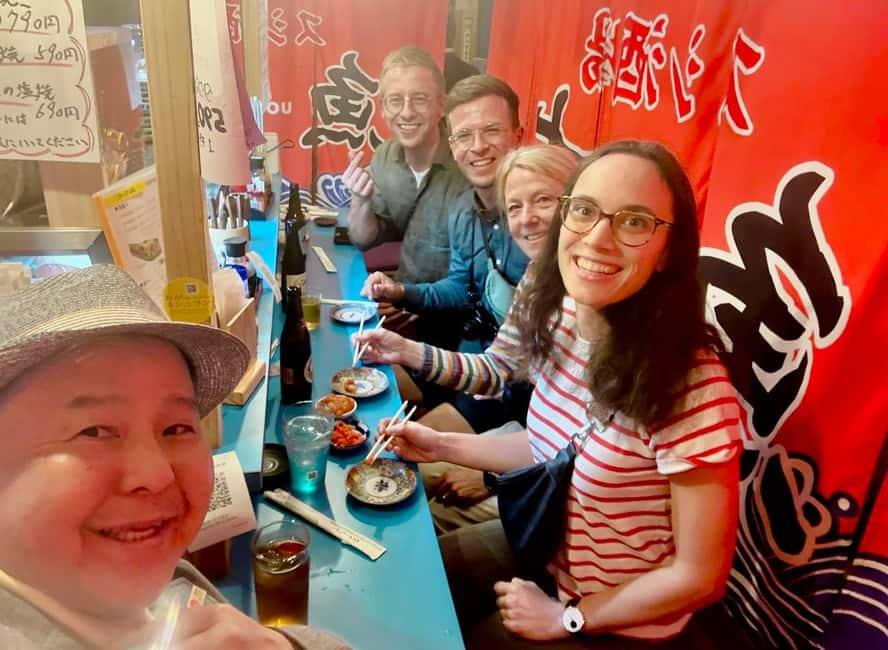
Book it if you want a friendly introduction to Fukuoka’s food stalls without handling the language and seating customs alone. The best reasons are the private guide, the chance to visit two stalls, and the useful local context. Guides such as Morry, Rie, Aya, Manabu, and Shota can turn a simple meal into a more personal evening.
Skip it if you already know Nakasu, speak Japanese comfortably, or want to control every dish and every stop yourself. Also think twice about the earliest starting time if your main goal is to visit fully open outdoor stalls.
For most first-time visitors, I see this as a good orientation rather than the final word on Fukuoka food. You get a taste of yatai culture, learn how the stalls work, and leave better prepared to return on your own.
FAQ
Where does the tour meet?
Meet in front of FamilyMart Tenjin 1-chome. The guide will hold a yellow sign marked DeepExperience.
Where does the tour take place?
The tour takes place in Nakasu, along the food stall area between the Hakata and Fukuoka city districts.
How long does the experience last?
The tour lasts two hours.
How many food stalls will I visit?
The tour information says you will visit two food stalls.
What food might I taste?
Possible dishes include oden, yakitori, ramen, and stewed specialties. The exact dishes depend on the stalls visited.
Is food included in the price?
A 1,000 yen food and beverage subsidy is provided at each stall. Bring cash for anything beyond that allowance.
Is the tour private?
Yes. It is offered for a private group.
Is the guide available in English?
Yes. The tour has a live English-speaking guide.
What should I bring?
Bring comfortable shoes, a camera, and cash.
Can I cancel for a full refund?
Yes. You can cancel up to 24 hours in advance for a full refund.
Newest street food walks around Japan
- Nagoya Castle and Local Flavor Samurai Tales and Street Food Walk★ 5.0 · 10 reviews
- Nagasaki Street Food Adventure: Private Walking Tour with a Local★ 5.0 · 26 reviews
- Nagoya Street Food Walking Tour of Osu★ 5.0 · 28 reviews
- The 10 Tastings of Tokyo With Locals: Private Street Food Tour★ 5.0 · 48 reviews
- Kyoto Nishiki Market Street Food Tour★ 5.0 · 9 reviews
- Private Nishiki Market Food & Sake Tour by Young Local Guides★ 5.0 · 12 reviews
- Tokyo: Sensoji Temple & Street Food: Private Tour with guide★ 4.6 · 8 reviews
- Tokyo: Shinjuku Local Eats, Street Food Tour & Culture Walk★ 5.0 · 2 reviews
Japan street food tours, side by side.
Hungry Osaka Street Food Tour:15 Tastings & 3 Drinks with a Local
Read our review →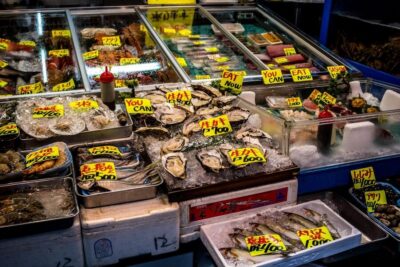
Tokyo: Tsukiji Fish Market Food and Culture Walking Tour
Read our review →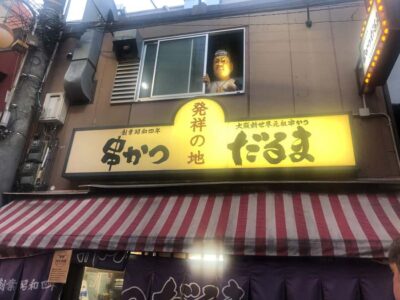
Hungry Osaka Street Food Tour: 15 Dishes & 3 Drinks
Read our review →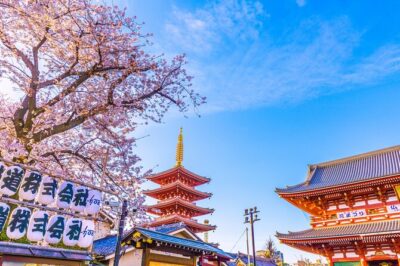
Tokyo: Asakusa & Sensoji ー Oldest Temple Walking Tour (2hrs)
Read our review →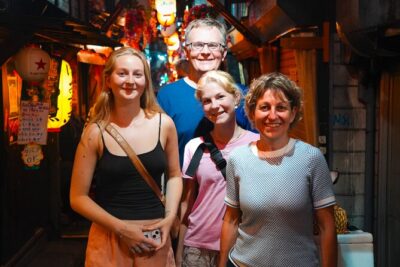
[1 Group Only] Osaka Street Food Tour for Family
Read our review →
Takoyaki making experience ~Japan’s popular street food~
Read our review →
Osaka: 2-Hour Local Street Food Tour – Dotonbori & Namba
Read our review →The lists this tour appears in