
Review · OSAKA
Deep Dive: Osaka Food Markets from Local to Luxurious!
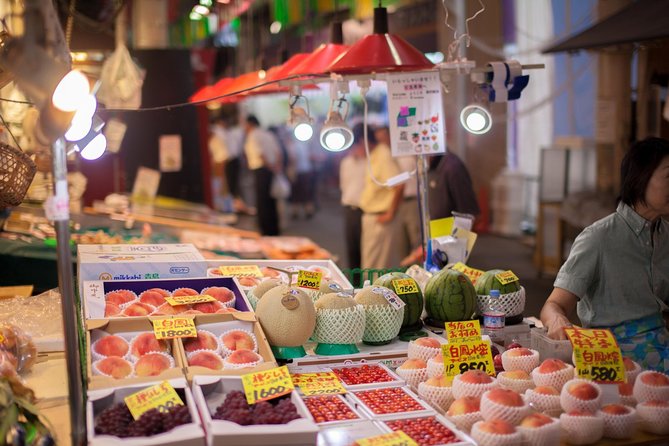
Osaka’s food culture makes the city feel wonderfully direct: the best sights may be fish on ice, neatly arranged vegetables, sizzling snacks, or a shop selling tools for the people who cook them. I like that this tour moves from upscale department-store food to everyday markets, then into Tsuruhashi’s Japanese-Korean food world. I also like the small group, limited to eight, since market lanes are easier to handle with a guide than with a parade of 30 people.
The main thing to watch is cost creep. The $59 price covers the guide, but food samples, drinks, souvenirs, and snacks are extra, as is 330 yen per adult for transportation during the tour. Bring comfortable shoes, a little spending money, and an appetite that can survive four hours of looking at food before deciding what to buy.
Key points
- Start at Tenma Station: Meet your guide at the McDonald’s directly in front of the station.
- Compare local and luxurious food shopping: See how an upscale department store differs from Tenma’s neighborhood markets.
- Visit six major Osaka food and shopping areas: Stops include Takashimaya, Pulala Tenma, Tenjinbashisuji, Tsuruhashi, Kuromon Ichiba, and Doguyasuji.
- Tsuruhashi adds Korean influence: This area offers a different food and cultural angle from the central Osaka markets.
- Buy your own snacks: Nothing edible is included, so you choose what to taste and how much to spend.
- Ask questions freely: Guides explain food customs, local life, and the markets’ place in Osaka culture.
Why Osaka’s Markets Make a Better Food Lesson Than a Restaurant Crawl
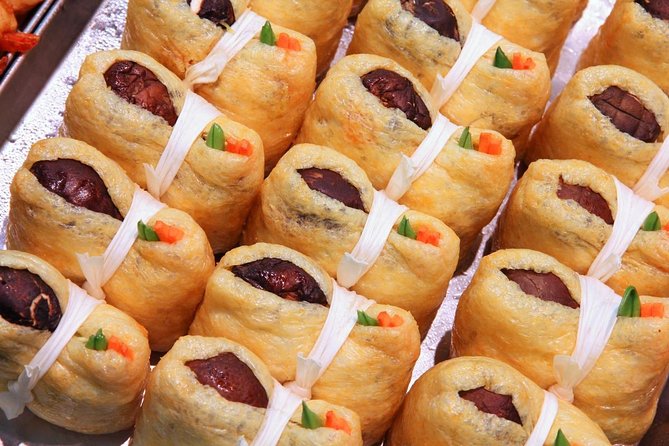
A restaurant tour can give you a good meal. This walk gives you a look at the machinery behind the meal: the produce, fish, meat, prepared foods, market stalls, kitchen equipment, and shopping habits that shape Osaka cooking.
That difference matters. You are not simply seated and handed a finished plate. You see food in several forms, from polished department-store displays to neighborhood staples and ready-to-eat market items. I like this approach because it lets you compare how food is sold to different customers.
The tour lasts four hours and covers several parts of Osaka. The pace is built around walking and sightseeing, with roughly 25 minutes listed at each stop. That is enough time for an introduction and orientation, but not enough for a slow, detailed visit to every stall. Think of this as a guided survey with chances to buy food, not an all-day market study.
Your guide is central to the experience. The tour is offered in English, Spanish, and French by a native or near-native speaker. Ferdinand, who guides in French and has lived in Japan, brought together market explanations, local customs, and personal observations about life in Japan. If you enjoy asking questions about food etiquette, shopping habits, or the difference between Japanese and Korean market culture, this format should suit you.
More Food Market Tours in Japan
- Tokyo: Tsukiji Fish Market Food and Culture Walking Tour
★ 4.7 · 757 reviews - Tsukiji Fish Market: Street Food & Culture Walking Tour
★ 5.0 · 669 reviews - Tsukiji Fish Market: Street Food & Culture Walking Tour
★ 4.8 · 259 reviews
Beginning at Tenma Station and Pulala Tenma
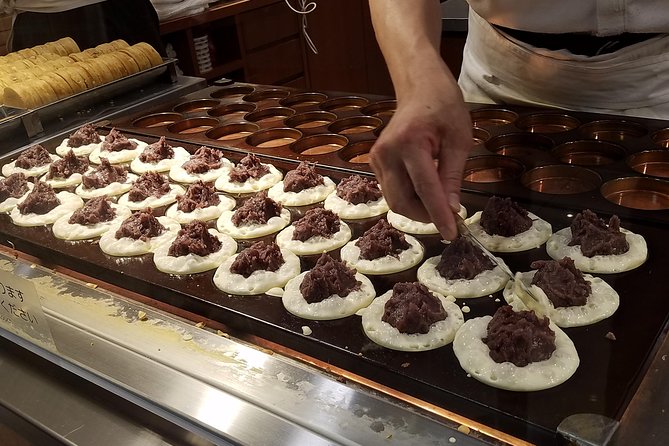
The meeting point is the McDonald’s directly in front of Tenma Station. That is specific and easy to identify, but give yourself enough time to find the correct station exit and settle in before the four-hour clock starts.
From there, the route visits Pulala Tenma, also called the Tenma Ichiba Market Building. This is one of the places where the tour shifts away from Osaka’s polished shopping image and toward local food buying. You can expect a market setting focused on meats, fish, produce, and everyday supplies.
This stop is useful early in the tour because it gives you a point of comparison. Instead of seeing only famous food attractions, you get a look at the kind of market that serves local routines. Your guide can help explain what you are seeing, which matters when a display looks familiar but functions differently from a supermarket or market at home.
The listed visit time is about 25 minutes. That is a quick look, so keep your expectations in check. You probably will not inspect every counter or linger over several purchases here. The value comes from the explanation and from noticing the range of goods before moving on.
Walking Tenjinbashisuji, Osaka’s Long Shopping Corridor
Tenjinbashisuji Shopping Street adds a different kind of food experience. Here, the market feeling stretches into a shopping street, giving you more context about how food businesses fit into ordinary city life.
The tour presents this area as one of the historic neighborhoods with meats, fish, vegetables, staples, and less familiar items. That mix is important. Osaka food culture is not only about famous dishes or eye-catching snacks. It also depends on the shops that sell ingredients and practical goods to people who cook and eat at home.
I would use this part of the walk to ask questions. What is commonly bought for home cooking? Which foods are meant to be eaten right away? How do shoppers choose fish or produce? The supplied tour details do not promise specific tastings at this stop, so treat it as a guided market walk and plan to pay for anything you want to try.
Tenjinbashisuji also helps break up the food focus with ordinary street life. You get to watch the neighborhood operate, rather than seeing only a destination designed for sightseeing. For me, that local scale is one of the strongest reasons to book a guide instead of simply visiting a famous market alone.
Tsuruhashi and the Japanese-Korean Food Connection
Tsuruhashi brings one of the tour’s most distinctive changes of mood. It is described as a Japanese-influenced Korea Town, and the route uses it to introduce food and customs that differ from the other Osaka markets.
This stop is especially valuable if you want more than a standard Japanese food checklist. Tsuruhashi shows how food culture can cross borders and take on a local identity. Your guide can explain the area’s Japanese and Korean influences, while you look at the shops, smells, ingredients, and prepared foods around you.
A French guide such as Ferdinand can also offer a useful outside perspective on life in Japan, while still speaking from personal experience. The description of his guiding style points to history, customs, and everyday life, not just names of dishes. That makes the conversation part of the tour as important as the shopping.
Again, the stop is listed at about 25 minutes. Tsuruhashi deserves attention, but this tour is not designed for an extended food crawl here. If you find something you want to buy, remember that all food and drinks are on your own tab.
Same streets, a different set of bites:
- Hungry Osaka Street Food Tour:15 Tastings & 3 Drinks with a Local
★ 5.0 · 1,727 reviews - Hungry Osaka Street Food Tour: 15 Dishes & 3 Drinks
★ 4.9 · 694 reviews - Tokyo: Asakusa & Sensoji ー Oldest Temple Walking Tour (2hrs)
★ 5.0 · 213 reviews - [1 Group Only] Osaka Street Food Tour for Family
★ 5.0 · 208 reviews
Takashimaya for the Upscale Side of Osaka Food
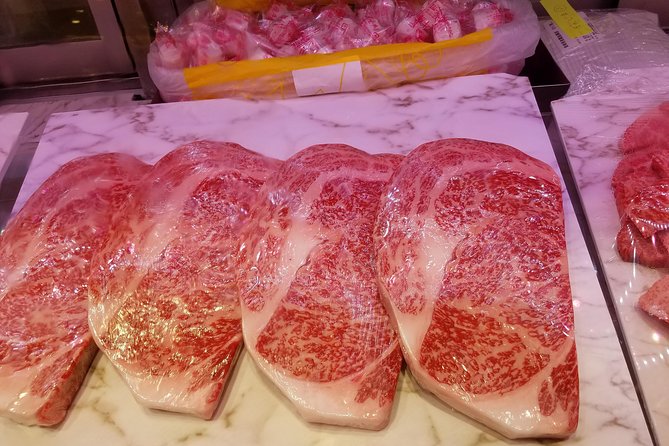
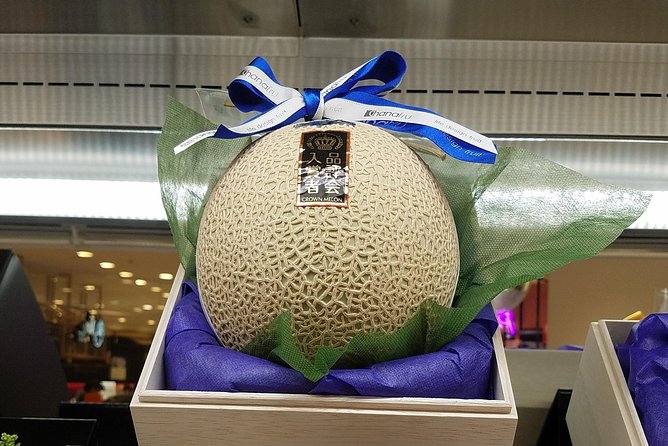
The Takashimaya stop gives the route its polished counterpoint. The itinerary identifies the TUMI Takashimaya Osaka Store, while the experience description presents this part as an upscale department-store marketplace. The important point for you is the contrast between refined presentation and the more practical neighborhood markets.
Japanese department-store food floors are known for careful displays and a strong emphasis on presentation. This tour uses that setting to show a different side of Osaka’s food economy. You can compare the way products are arranged, presented, and sold with what you saw in Tenma and Tsuruhashi.
The visit is listed at about 25 minutes, so you should see it as an introduction rather than a full shopping session. If you plan to buy edible gifts or prepared foods, ask your guide for help understanding what you are looking at. The tour details do not specify which products or tastings are included, and no food is covered in the price.
This stop will appeal to you if you enjoy comparing levels of shopping, from everyday market counters to department-store displays. It may appeal less if you want only cheap street food. The tour is strongest because it includes both ends of that range.
Kuromon Ichiba, Osaka’s Famous Food Market
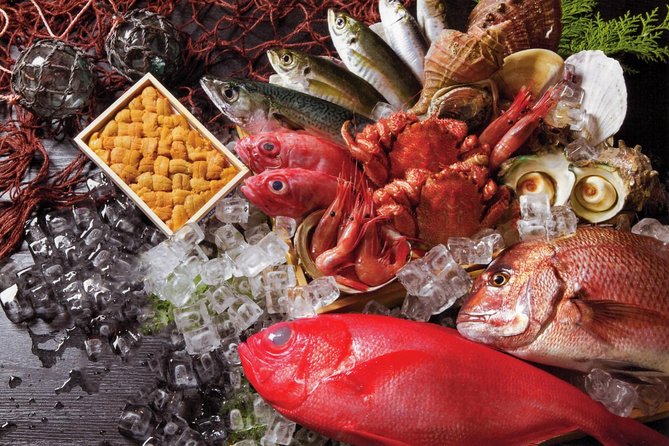
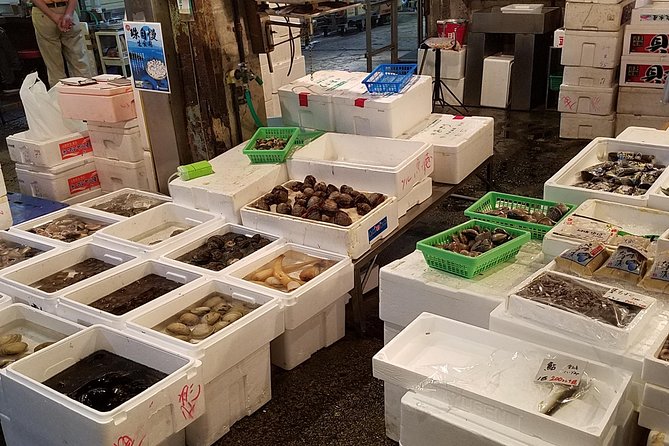
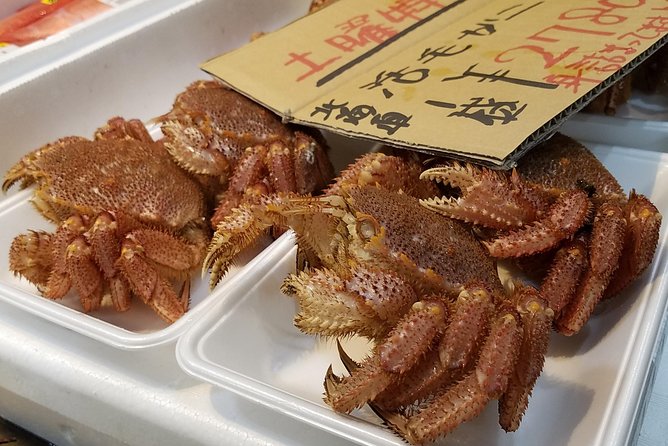
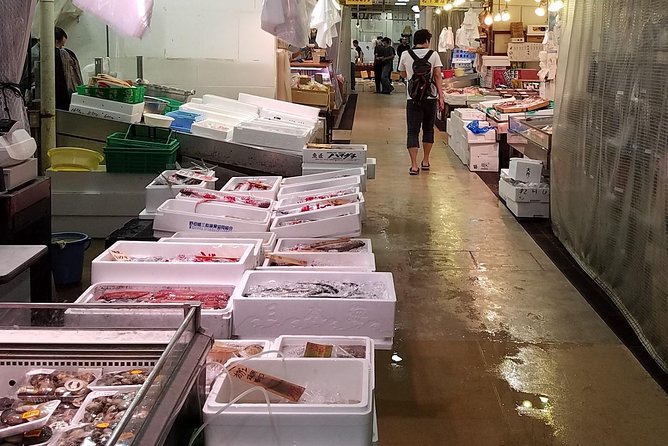
Kuromon Ichiba is the best-known food stop on the route. The market offers both raw and cooked delicacies, with seafood, produce, meats, and prepared foods competing for your attention.
You should arrive here ready for visual overload. Fish, meat, and produce are the main attraction, but the cooked food makes Kuromon a natural place to spend some of your snack budget. Since samples and refreshments are not included, you can choose the items that look most appealing instead of paying for a fixed tasting menu.
That flexibility is useful. Some people want to sample several small bites. Others prefer to buy one item and keep walking. Here, you control the cost. Just remember that the $59 tour price does not include any food purchases.
Kuromon is also where a guide can save you time. A market can be fun to wander alone, but it can be hard to understand what you are seeing or how to approach a stall. A small group gives you room to pause and ask questions without the logistics of a large crowd.
The limitation is time. About 25 minutes is enough to get oriented and buy a snack, but not enough to inspect the whole market slowly. If Kuromon is your main reason for booking, keep your expectations realistic. You are getting a guided introduction as part of a larger route, not several hours devoted only to this market.
Doguyasuji and the Tools Behind Osaka’s Food
Sennichimae Doguyasuji Shotengai shifts the focus from ingredients to the equipment used to prepare and serve food. The area is associated with kitchen and restaurant supplies, making it a useful bridge between Osaka’s markets and its dining culture.
This is a smart inclusion. Food experiences often stop at the plate, but cooking depends on knives, dishes, utensils, signs, and other practical tools. Here, you can see the supply side of the restaurant world and understand that Osaka’s food identity is supported by far more than stalls selling snacks.
The stop lasts about 25 minutes, giving you time to browse and ask questions. The tour does not promise specific purchases or demonstrations, so do not expect a hands-on cooking lesson. Instead, use this section to look at the objects and ask your guide how they fit into Japanese kitchens or restaurants.
For shoppers, this may be the most tempting stop for souvenirs. Any purchases are separate from the tour fee, and you will need to carry what you buy for the rest of the walk. Pack light if you think kitchen goods might follow you home.
Finishing in Namba
The tour ends in Namba, one of Osaka’s central areas and a natural place to continue eating or sightseeing afterward. Since the route finishes after visits to markets, shopping streets, and food supply stores, you should have a better sense of where to spend more time on your own.
Namba works well as an ending because it keeps your plans flexible. You might continue shopping, find a meal, or return to a market that caught your attention. The tour details do not specify a particular final restaurant or included meal, so plan to arrange your own food after the walk.
The route’s use of public transport costs 330 yen per adult, and transportation during the tour is not included in the $59 price. Confirm the exact movement between stops when you meet your guide, and keep that small extra cost ready.
What the $59 Price Really Covers
At $59 per person, the main purchase is the guide’s time and interpretation. You are paying for a four-hour route across several food districts, not for a meal or a package of tastings.
That can be good value if you want context. A guide helps you connect an upscale department-store market with local Tenma shopping, Tsuruhashi’s Japanese-Korean character, Kuromon’s famous stalls, and Doguyasuji’s food equipment. You get a broad picture of Osaka’s food world in one outing.
It is weaker value if you expect a long list of included dishes. Food, samples, drinks, souvenirs, and snacks all cost extra. I would budget separately for at least a few things you want to try, but the exact amount depends entirely on your appetite and shopping habits.
The small group helps justify the price. With no more than eight participants, you should have a better chance to hear the guide and ask questions than you would on a large coach tour. The route is also practical for first-time visitors who want several market areas connected in one plan.
Who Will Enjoy This Market Walk
I would recommend this experience to you if you want food culture explained in context. It suits curious eaters, first-time visitors to Osaka, and anyone who likes markets more than formal sightseeing stops.
It is also a good match if you want to compare different parts of the city. You see luxury retail, neighborhood shopping, a Japanese-Korean food district, a famous market, and a street devoted to restaurant supplies. That range gives you more than a single market visit.
You may want another type of tour if you need a full meal included, prefer a cooking class, or want long tastings at every stop. The four-hour schedule is active, and comfortable shoes are essential. You will be walking between stops and spending much of the time on your feet.
The language choice is another strength. English, Spanish, and French are available, and Ferdinand is a useful option for French speakers who want explanations of history, customs, and life in Japan alongside the food.
Should You Book It?
Book this tour if you want Osaka explained through the places where food is sold, prepared, and used. The best parts are the range of stops, the small group, and the guide’s ability to connect Japanese and Korean food culture with everyday life.
Skip it if your priority is an included feast or a slow visit to one famous market. Bring comfortable shoes and extra yen for transport and snacks, then let your guide help you make sense of the city’s food scene. Free cancellation is available up to 24 hours before the tour, and you can reserve now and pay later, which makes it easier to fit into a changing Osaka schedule.
FAQ
Where does the tour meet?
The meeting point is the McDonald’s directly in front of Tenma Station.
How long does the experience last?
The tour lasts four hours.
What is the price?
The price is $59 per person.
Which languages are available?
The tour is offered in English, Spanish, and French.
Is the tour private?
No. It is a small-group tour limited to eight participants.
Are food and drinks included?
No. Samples, food, refreshments, snacks, and souvenirs are not included. You pay for anything you choose to buy.
Is transportation included?
Transportation during the tour is not included. The stated transportation cost is 330 yen per adult.
Which places does the tour visit?
The route includes Takashimaya, Pulala Tenma, Tenjinbashisuji Shopping Street, Tsuruhashi, Kuromon Ichiba Market, Sennichimae Doguyasuji Shotengai, and Namba.
What should I wear?
Wear comfortable shoes because the experience includes walking between several market and shopping areas.
Newest street food walks around Japan
- Nagoya Castle and Local Flavor Samurai Tales and Street Food Walk★ 5.0 · 10 reviews
- Nagoya Street Food Walking Tour of Osu★ 5.0 · 28 reviews
- Nagasaki Street Food Adventure: Private Walking Tour with a Local★ 5.0 · 26 reviews
- The 10 Tastings of Tokyo With Locals: Private Street Food Tour★ 5.0 · 48 reviews
- Kyoto Nishiki Market Street Food Tour★ 5.0 · 9 reviews
- Private Nishiki Market Food & Sake Tour by Young Local Guides★ 5.0 · 12 reviews
- Tokyo: Sensoji Temple & Street Food: Private Tour with guide★ 4.6 · 8 reviews
- Tokyo: Shinjuku Local Eats, Street Food Tour & Culture Walk★ 5.0 · 2 reviews
Osaka street food tours, side by side.
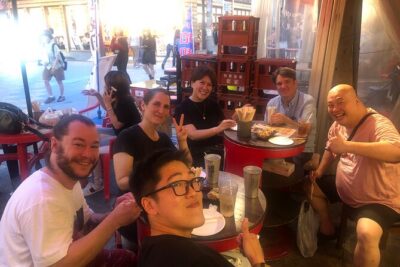
Hungry Osaka Street Food Tour:15 Tastings & 3 Drinks with a Local
Read our review →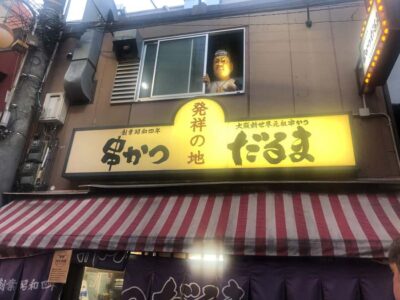
Hungry Osaka Street Food Tour: 15 Dishes & 3 Drinks
Read our review →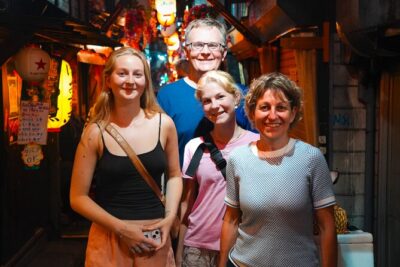
[1 Group Only] Osaka Street Food Tour for Family
Read our review →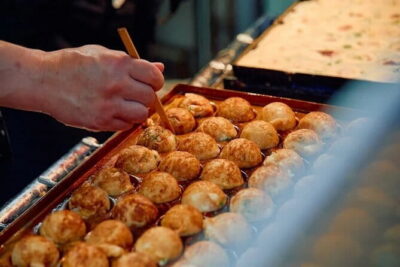
Osaka: 2-Hour Local Street Food Tour – Dotonbori & Namba
Read our review →
Eat Like a Local in Osaka – Private Custom Street Food Tour
Read our review →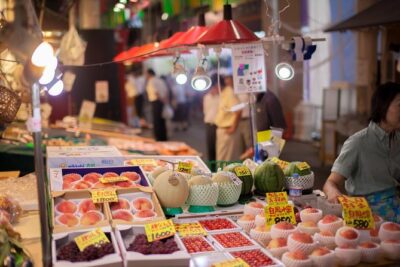
Deep Dive: Osaka Food Markets from Local to Luxurious!
Read our review →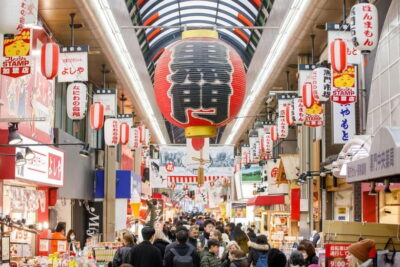
Osaka: Kuromon Market 1.5-Hour Seafood & Street Food Tour
Read our review →The lists this tour appears in