
Review · JAPAN
Nagoya Castle and Local Flavor Samurai Tales and Street Food Walk
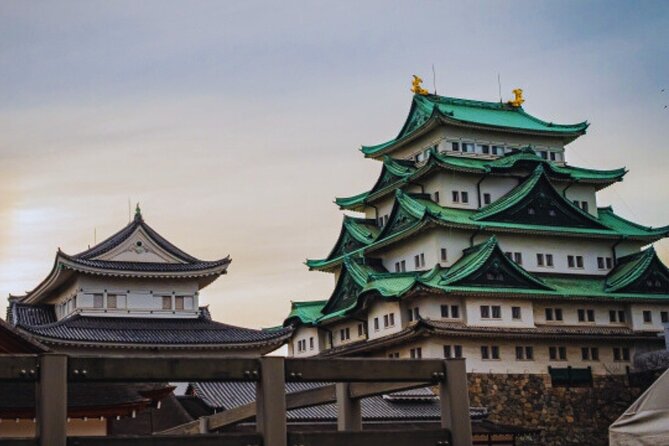
Nagoya Castle gives this short tour a strong start: golden shachihoko, broad stone walls, gardens, watchtowers, and the reconstructed Honmaru Palace put you right into the world of the Tokugawa rulers. I especially like the small group limit of 12 and the way the walk links castle history with local food instead of stopping at a single sight. The main consideration is time. Two and a half hours goes quickly, and you will need to keep moving.
I also like the personal touch provided by guides such as Toshi and Shu. Toshi has been praised for his patience, professionalism, and care with timing, while Shu is known for warm conversation about Japanese culture. Arrive early, though. One late start meant more crowds and longer lines for the group.
Key points to know before booking
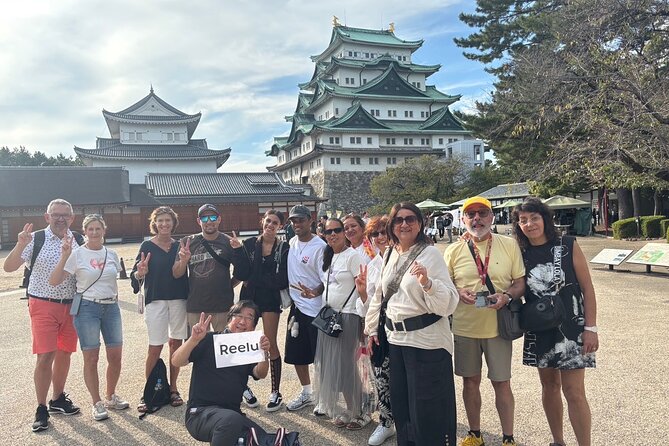
- Nagoya Castle is the main event: Allow about 1 hour 40 minutes for the castle grounds, gardens, palace interiors, walls, and samurai-era stories.
- The East Gate is the starting point: The meeting location is by Nagoya Monument in Ninomaru, near the castle’s East Gate.
- Kinshachi Yokocho adds local flavor: The final 30 minutes introduce Nagoya specialties, traditional-style buildings, shops, and food options.
- The group is capped at 12 people: That gives the guide a better chance to answer questions and keep the walk together.
- Food is not included: You can browse and taste local dishes, but meals and purchases are your responsibility.
- Check the admission wording: The tour details both list castle admission as included and mark the admission ticket as not included, so confirm this before paying.
Why Nagoya Castle makes a good first stop
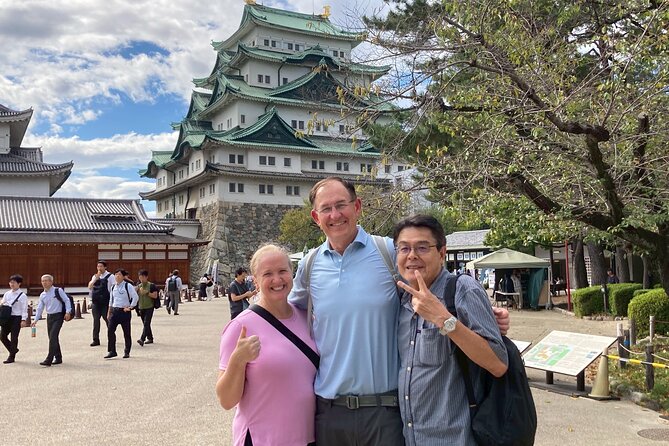
Nagoya Castle is an efficient introduction to the city because it brings together military power, architecture, gardens, and local identity in one visit. The route begins at the East Gate and leads into the castle grounds, where your guide explains how the site connected to the Tokugawa clan and the feudal order.
The first impression is scale. Nagoya Castle was built to project authority, and the wide grounds and heavy stone defenses make that clear. You will see carefully fitted stone walls, watchtowers, and open spaces designed for both protection and ceremony.
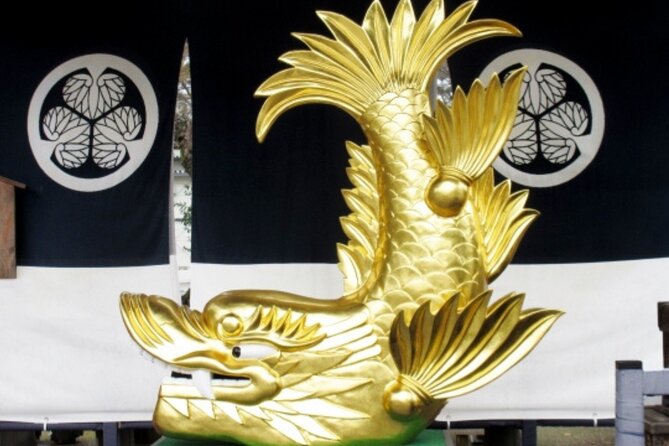
The famous golden shachihoko are another reason the castle is so recognizable. These mythical fish-shaped roof ornaments are tied to protection from fire and have become one of Nagoya’s best-known symbols. Your guide can give them more meaning than you would get from a quick photograph alone.
I like the fact that the tour does not treat the castle as a pile of old stones. The route connects the buildings and defenses to samurai society and Edo-era construction. That context helps you understand why the palace was decorated so carefully and why the castle needed such formidable outer walls.
More street food walks around Japan:
- Hungry Osaka Street Food Tour:15 Tastings & 3 Drinks with a Local
★ 5.0 · 1,727 reviews - Tokyo: Tsukiji Fish Market Food and Culture Walking Tour
★ 4.7 · 757 reviews - Hungry Osaka Street Food Tour: 15 Dishes & 3 Drinks
★ 4.9 · 694 reviews
Inside Ninomaru Garden and Honmaru Palace
Ninomaru Garden offers a quieter change of pace after the castle’s grand outer defenses. You will stroll through the garden while hearing about the way feudal lords used these grounds. The garden is not simply a pretty pause. It helps show the contrast between public power and the controlled calm of elite life.
The reconstructed Honmaru Palace is one of the tour’s most rewarding sections. Inside, you can see traditional sliding screen paintings and woodwork that reflect the formal world of the ruling class. The palace rooms were meant to impress, and the decoration tells you as much about status and ceremony as the castle walls tell you about defense.
Because the palace has been reconstructed, it is important to set your expectations correctly. You are seeing a careful recreation rather than an entirely untouched building. Still, the scale, painted screens, and architectural details give you a clear sense of how official rooms were designed.
A guide is especially useful here. It is easy to admire a screen painting without knowing why it was placed in a particular room or how palace spaces were used. Toshi and Shu are both noted for making the visit conversational, which suits this kind of stop better than a rushed lecture.
Samurai stories behind the stone walls
The castle’s value is not limited to architecture. This was a place built around rank, control, and defense, and the tour uses the site to explain samurai culture. You will hear about the Tokugawa connection and the role of the castle in the wider Edo-era order.
The stone walls deserve your attention. Look at how the walls shape the grounds and guide movement through the site. They are impressive in their own right, but they also show how the castle was arranged to slow an attacker and protect the people inside.
Reconstructed watchtowers add another layer to the visit. They help you picture how the castle was monitored and defended. The tour is not a battlefield reenactment, and it does not promise an exhaustive military history. Instead, it gives you enough background to read the site with more understanding.
I would not expect every minute to be spent on samurai tales. The experience also includes gardens, palace rooms, city views, and walking between sections. That balance is useful for a first visit, especially if you want cultural context without signing up for a long academic tour.
The castle walk takes real time
The Nagoya Castle portion is listed at about 1 hour 40 minutes. That is a substantial share of the experience, but it is not a leisurely full-day castle visit. You will cover a lot of ground, and the walking matters more than the short total duration might suggest.
One direct tip comes from the experience itself: be ready to walk. The route crosses castle grounds and includes several different areas. Wear comfortable shoes, and arrive before the scheduled start so the guide does not need to shorten the route while waiting.
Timing also affects crowd levels. Starting late by 33 minutes led to more people and longer lines. That is a useful warning for anyone arriving from a cruise ship, train connection, or another sightseeing stop. The tour works best when you treat the meeting time as firm, not approximate.
The meeting point is at Nagoya Monument in Ninomaru, Naka Ward, by the East Gate area. One person found the purple subway line convenient because it drops you close to that gate. The supplied details do not identify the station name, so check your map carefully rather than relying only on the color of the line.
Same streets, a different set of bites:
- Tsukiji Fish Market: Street Food & Culture Walking Tour
★ 5.0 · 669 reviews - Tsukiji Fish Market: Street Food & Culture Walking Tour
★ 4.8 · 259 reviews - Tokyo: Asakusa & Sensoji ー Oldest Temple Walking Tour (2hrs)
★ 5.0 · 213 reviews - [1 Group Only] Osaka Street Food Tour for Family
★ 5.0 · 208 reviews
What the final 30 minutes at Kinshachi Yokocho add
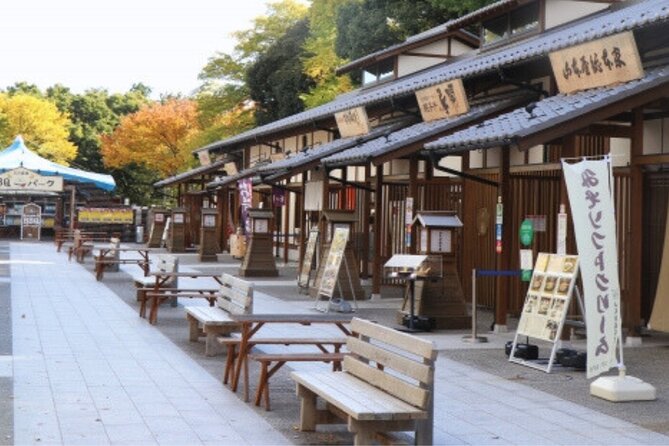
After the castle, the group finishes at Kinshachi Yokocho, in the Yoshinao Zone near the Front Gate area. This is a sensible ending because it shifts from formal history to everyday Nagoya food culture.
You will stroll among traditional-style buildings, browse souvenir shops, and learn about local specialties from your guide. The food portion is more of an introduction than a full restaurant meal. You can look at the choices and decide what you want to try, but meals are not included in the tour price.
That arrangement can work well. You get recommendations and local context without being locked into a set menu. If you are curious about Nagoya food, use this final half-hour to ask what is distinctive to the city and what might suit your appetite.
The drawback is that 30 minutes is brief. You should not expect a long food crawl with several seated tastings. The stop is best viewed as a practical orientation to Kinshachi Yokocho, with time to choose a snack or continue exploring after the official walk ends.
The tour finishes at Kinshachi Yokocho rather than returning you to the castle entrance. That is convenient if you want to keep eating, shop, or continue sightseeing nearby. It also means you should plan your next move from the ending point.
Guides who shape the experience
The guide can make a major difference on a compact cultural walk. Toshi has been praised for patience and professionalism, qualities that matter when a group is moving through a popular site. He has also led a private-feeling visit when group size was small.
Shu brings a friendly, warm style and is willing to discuss Japanese culture beyond the basic castle facts. That can be valuable if you want to ask questions about customs, architecture, or daily life rather than simply follow a fixed script.
The tour details do not promise a particular guide, so you should not book on the assumption that Toshi or Shu will lead your departure. Their names do show the sort of guide interaction you may receive: direct conversation, cultural explanation, and help making sense of the site.
The group limit of 12 is another plus. It is not a private tour, but it is small enough for questions to be practical. A small group also helps the guide point out details without needing to project to a large crowd.
Is $52.12 a fair price?
At $52.12 per person, this is not the cheapest way to walk around Nagoya Castle. The value depends on how much you want from the visit.
If you only want to enter the grounds, take photographs, and read signs at your own speed, you can likely spend less by visiting independently. The tour earns its price through the guide, the organized route, the samurai and Tokugawa context, and the handoff to local food culture.
The compact length also helps with planning. You are not committing an entire day, and the castle plus Kinshachi Yokocho gives you two different kinds of sightseeing in one booking. For a first visit to Nagoya, that combination has practical value.
There is one important cost question to settle before booking. The information supplied says the Nagoya Castle admission fee is included, but the castle itinerary also says the admission ticket is not included. Since those statements conflict, confirm the current booking terms before you pay. Meals and food purchases are clearly not included.
Free cancellation is available if you cancel at least 24 hours before the local start time. Changes or cancellations inside that window are not accepted for a refund.
Who will enjoy this walk most
I would recommend this experience to a first-time Nagoya visitor who wants an organized introduction without spending half a day on a single attraction. It also suits anyone who enjoys asking questions and prefers a local guide to a printed history panel.
It should work well for most people because the activity is a walking tour rather than a demanding outdoor excursion. Still, the castle section covers large grounds, so comfortable footwear is important. Service animals are allowed, and the tour is near public transportation.
Families and mixed-age groups may appreciate the variety. Children who lose interest in palace details may perk up at the golden roof ornaments, towers, walls, and food stop. Adults get the cultural background and a clear starting point for exploring Nagoya on their own.
You may want a different plan if you prefer long meals, extensive food tastings, or a slow photographic visit. The 30-minute food stop is short, and the castle route follows the guide’s pace. Likewise, serious castle enthusiasts may want more time than this compact tour provides.
Practical details that affect your day
The activity lasts about 2 hours 30 minutes. About 1 hour 40 minutes is devoted to Nagoya Castle, followed by roughly 30 minutes at Kinshachi Yokocho, with the remaining time allowing for movement and the guided flow between stops.
A mobile ticket is provided, and booking confirmation is received at the time of booking. The tour operates near public transportation and has a maximum group size of 12.
The starting location is Nagoya Monument in Ninomaru, Naka Ward, Nagoya. The tour ends at Kinshachi Yokocho, at 1-chōme-2-4 Sannomaru. Since the start and end points differ, plan your return route before you set out.
Arrive early. This is the simplest way to avoid losing castle time, encountering heavier lines, or making the guide adjust the route for a late arrival. Bring money or a payment method for anything you want to eat at Kinshachi Yokocho.
Should you book Nagoya Castle and Local Flavor?
Book it if you want a well-paced first look at Nagoya with a guide who can connect castle architecture, Tokugawa power, samurai culture, and local food. The small group, thoughtful guide interaction, and finish at Kinshachi Yokocho make the tour more useful than a castle visit without context.
Skip it if you want a full food tour or several hours to explore every corner of Nagoya Castle. The price is reasonable for guided access and orientation, but the schedule is tight, food is extra, and the admission policy needs clarification before booking.
For most first-time visitors with limited time, I would choose it, arrive early, wear good shoes, and treat Kinshachi Yokocho as a starting point for further eating rather than the final word on Nagoya cuisine.
FAQ
How long does the Nagoya Castle and food walk last?
The experience lasts approximately 2 hours 30 minutes. About 1 hour 40 minutes is scheduled for Nagoya Castle, followed by about 30 minutes at Kinshachi Yokocho.
Where does the tour start?
The meeting point is Nagoya Monument in Ninomaru, Naka Ward, Nagoya, Aichi 460-0032, Japan. The route begins near Nagoya Castle’s East Gate.
Where does the tour end?
The tour ends at Kinshachi Yokocho, at 1-chōme-2-4 Sannomaru, Naka Ward, Nagoya, Aichi 460-0001, Japan.
Is Nagoya Castle admission included?
The supplied details conflict. The included-items section says the Nagoya Castle admission fee is included, while the castle itinerary says admission is not included. Confirm the current admission terms before booking.
Is food included at Kinshachi Yokocho?
No. Meals are not included. Your guide introduces local specialties and the food area, but you pay separately for anything you choose to eat or purchase.
How many people can join the tour?
The maximum group size is 12 people.
Can I cancel for a full refund?
Yes, if you cancel at least 24 hours before the experience start time. Cancellations or changes made less than 24 hours before the local start time are not accepted for a refund.
Newest street food walks around Japan
- Nagasaki Street Food Adventure: Private Walking Tour with a Local★ 5.0 · 26 reviews
- Nagoya Street Food Walking Tour of Osu★ 5.0 · 28 reviews
- The 10 Tastings of Tokyo With Locals: Private Street Food Tour★ 5.0 · 48 reviews
- Kyoto Nishiki Market Street Food Tour★ 5.0 · 9 reviews
- Private Nishiki Market Food & Sake Tour by Young Local Guides★ 5.0 · 12 reviews
- Tokyo: Sensoji Temple & Street Food: Private Tour with guide★ 4.6 · 8 reviews
- Tokyo: Shinjuku Local Eats, Street Food Tour & Culture Walk★ 5.0 · 2 reviews
- Tokyo: Explore Authentic Japanese Food Culture at Tsukiji★ 5.0 · 3 reviews
Japan street food tours, side by side.
Hungry Osaka Street Food Tour:15 Tastings & 3 Drinks with a Local
Read our review →
Tokyo: Tsukiji Fish Market Food and Culture Walking Tour
Read our review →
Hungry Osaka Street Food Tour: 15 Dishes & 3 Drinks
Read our review →
Tokyo: Asakusa & Sensoji ー Oldest Temple Walking Tour (2hrs)
Read our review →
[1 Group Only] Osaka Street Food Tour for Family
Read our review →

Takoyaki making experience ~Japan’s popular street food~
Read our review →
Osaka: 2-Hour Local Street Food Tour – Dotonbori & Namba
Read our review →The lists this tour appears in