
Review · JAPAN
Tokyo: Asakusa & Sensoji ー Oldest Temple Walking Tour (2hrs)
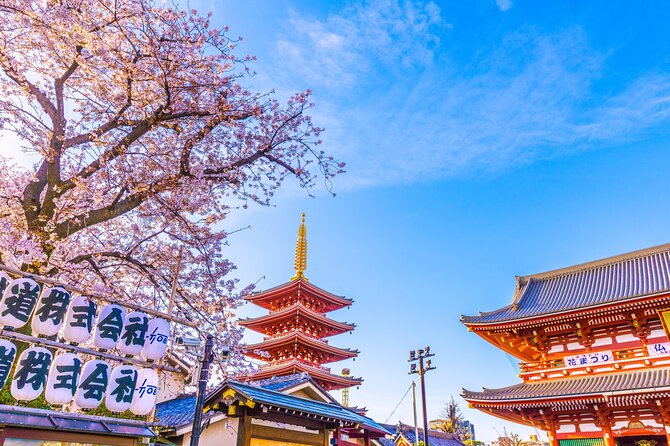
Asakusa gives you old Tokyo in a compact walk. You pass beneath the giant Thunder Gate, follow a souvenir street toward Sensoji Temple, learn how to pray and draw a fortune, then wander into snack shops and streets where sword stores, kimono shops, and daytime drinking spots still share the same neighborhood.
I like two things here: the guide helps you make sense of customs that are easy to miss, and the route mixes major sights with ordinary shopping streets. The main drawback is that the advertised food tasting may not always happen, so book this for the cultural walk first and treat the snacks as a bonus.
Key points
- Kaminarimon and Sensoji in one easy route: Learn the meaning behind Tokyo’s famous Thunder Gate before entering the city’s oldest Buddhist temple.
- Practical temple customs: Try water purification, incense, fortune drawing, and a traditional prayer with guidance.
- Old Asakusa beyond the main temple: Hoppy Street, retro storefronts, sword shops, kimono stores, and local snack stands add character.
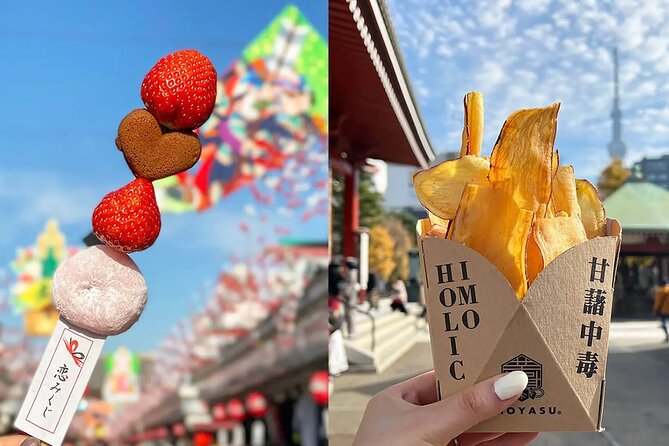
- Small food stops: Expect matcha sweets, melon bread, menchi-katsu, skewers, and a supermarket stop, with food tasting dependent on the day.
- Friendly local guiding: Guides including Keiko, Yui, Josh, Nono, Nanami, and Naoto are praised for clear explanations and personal attention.
- Good value at $19.90: Two hours, a maximum group of 15, and free cancellation up to 24 hours before departure make this an easy addition to a Tokyo plan.
Starting beneath Asakusa’s Thunder Gate
Meet at the Kaminarimon Police Box at 1-chome-3-1 Asakusa. This is a useful meeting point because the police box is easy to identify, and the tour starts directly at the outer gate of Sensoji Temple rather than wasting time on a long transfer.
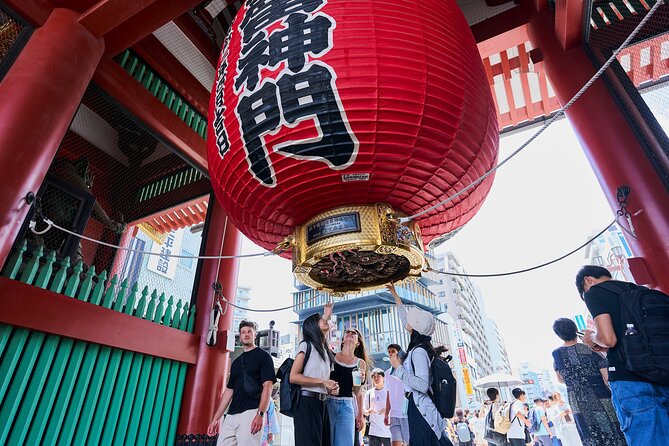
Kaminarimon means Thunder Gate, but your guide explains its formal name and the story behind the gate’s famous features. The huge lantern and guardian figures are not just photo props. A local guide can point out what you are looking at before the crowd and excitement carry you toward the temple grounds.
The first stop lasts about 20 minutes. That is enough time for an introduction without making you linger too long at one entrance. I like this opening because it gives you a little context before the shopping and temple rituals begin.
Asakusa can feel confusing on a first visit. Several streets lead toward Sensoji, and the area changes quickly from major sightseeing route to small storefronts and snack counters. A guide helps you get your bearings early.
More street food walks worth an empty stomach in Japan:
- Hungry Osaka Street Food Tour:15 Tastings & 3 Drinks with a Local
★ 5.0 · 1,727 reviews - Tokyo: Tsukiji Fish Market Food and Culture Walking Tour
★ 4.7 · 757 reviews - Hungry Osaka Street Food Tour: 15 Dishes & 3 Drinks
★ 4.9 · 694 reviews
Nakamise Street is part shopping lane, part history lesson
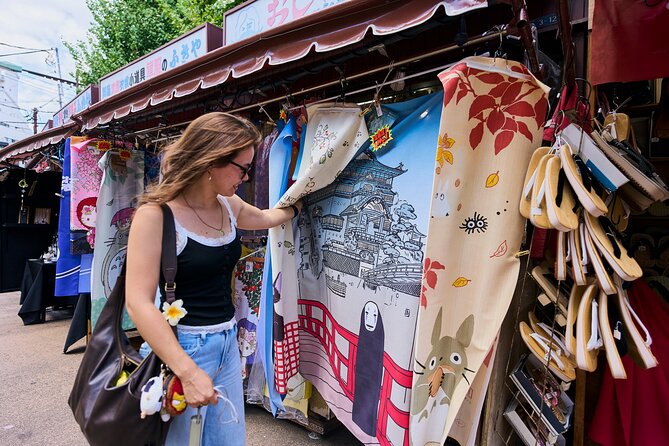
From Kaminarimon, you continue along Nakamise Shopping Street. This is the classic approach to Sensoji, lined with souvenir shops and food stands. You have about 20 minutes here, so the stop is more about learning what to look for than conducting a serious shopping expedition.
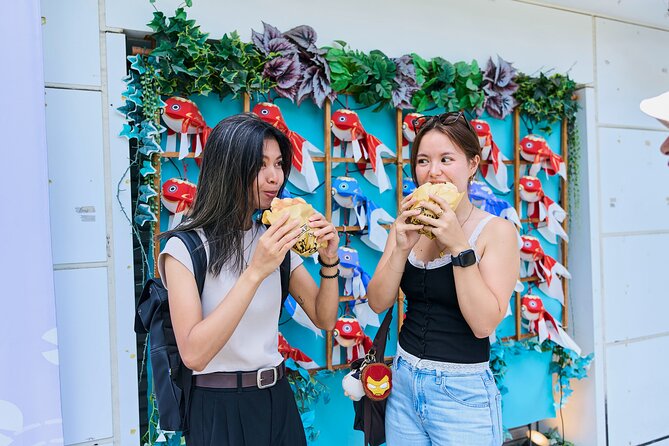
You might find traditional souvenirs, small gifts, sweets, and familiar Tokyo snacks. The guide can also steer you toward local food to try and explain how certain items fit into Japanese street food culture. The route includes famous melon bread and other snacks later, so keep a little room in your stomach.
This is one place where the two-hour limit matters. Nakamise can tempt you to stop at every shop, but the tour keeps moving. If you want time to browse every stall or buy several gifts, return on your own after the tour. The activity ends back at the meeting point, which makes a second visit simple.
The crowd level can vary, and the street is a public shopping area rather than a private tasting venue. Keep your pace close to the guide, especially if the route is busy.
Learning temple customs at Sensoji
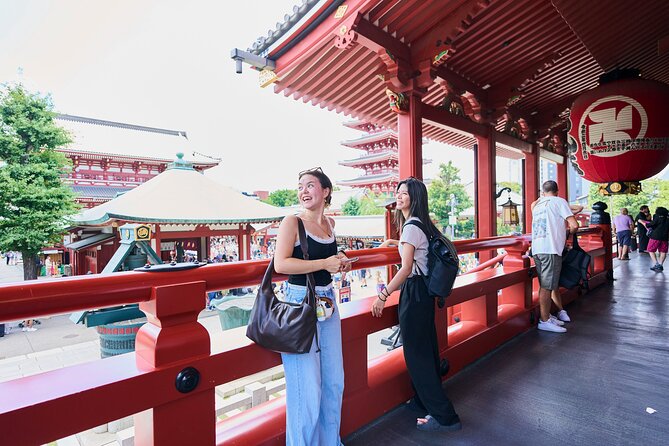
Sensoji is the main reason to choose this walk. It is known as Tokyo’s oldest and most sacred Buddhist place of worship, and the tour sets aside about 20 minutes for the temple itself.
You can take part in several customs:
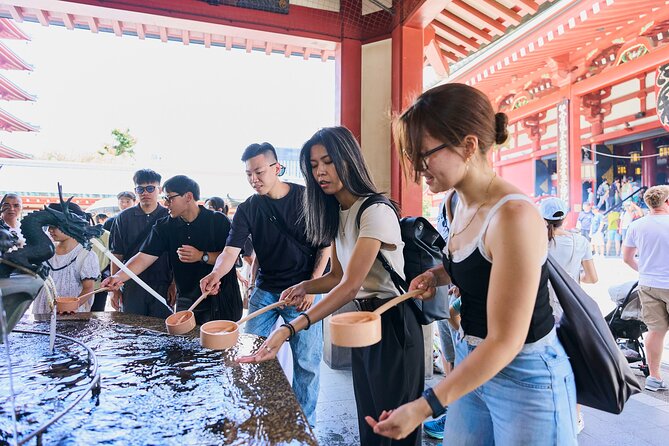
- Purify your hands with water
- Enjoy the scent of burning incense
- Draw a fortune
- Offer a traditional prayer
These actions are easy to copy, but their meaning is less obvious when you are alone. Your guide shows you what to do and explains the purpose behind each step. That makes this more useful than simply taking a quick photograph of the temple hall.
The tour also points out the unusual relationship between Buddhist and Shinto traditions in the area. Sensoji is a Buddhist temple, while Asakusa also includes Shinto worship nearby. The experience presents this coexistence as part of what makes the neighborhood special.
You should keep your tone respectful here. This is an active religious site, not only a sightseeing stop. The guide’s presence helps you observe local customs without turning the ritual into a performance.
A quieter corner with koi and Jizo statues
After the main temple area, the route moves to Sensoji Temple Yogodo for about five minutes. This is a short stop, but it changes the pace.
Here you can see a goshuin desk, a pond with koi fish, and rows of Jizo statues. The statues have a well-known story connected with them, which gives your guide another chance to explain local beliefs and temple life.
This area is also used as a photo spot. Five minutes will not allow much time for careful photography if the area is busy, but it is enough to see the pond and statues and hear the explanation. If you want a goshuin, ask the guide about the desk, though the tour information does not promise that a seal is included or that there will be time to obtain one.
Same streets, a different set of bites:
- Tsukiji Fish Market: Street Food & Culture Walking Tour
★ 5.0 · 669 reviews - Tsukiji Fish Market: Street Food & Culture Walking Tour
★ 4.8 · 259 reviews - [1 Group Only] Osaka Street Food Tour for Family
★ 5.0 · 208 reviews - Umami Town Street Food Tour
★ 5.0 · 120 reviews
Matcha sweets at Kaminari Issa
The stop at Kaminari Issa lasts about five minutes. This local sweets shop focuses on matcha flavors, with possible treats including matcha soft serve, matcha truffles, and seasonal desserts.
It is a quick taste of Asakusa’s sweeter side. You may find this more useful as a recommendation stop than a full dessert break, since five minutes is brief and the price does not state that food purchases are included.
The tour description includes local street food with tasting, but one experience report specifically noted that the food tasting did not take place. I would plan to buy your own snack if you want to be certain of eating during the walk. That small change in expectation makes the tour easier to enjoy.
Hoppy Street and old-style Asakusa
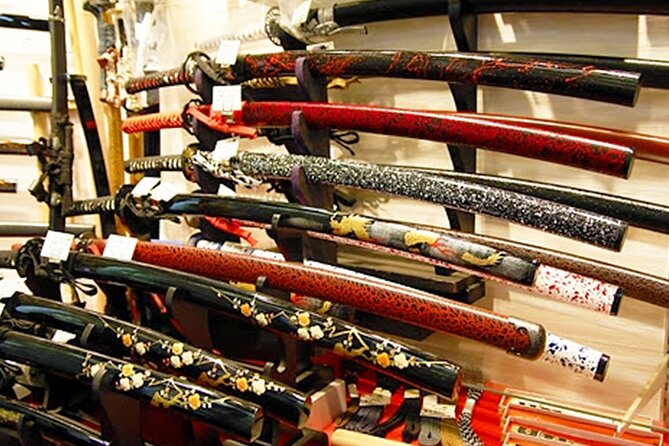
The route then turns toward Hoppy Street, where the mood shifts from temple grounds to casual local nightlife. You will see people enjoying daytime drinks and shops that recall the Edo period, including sword stores and kimono shops.
This is one of the strongest parts of the walk for anyone who wants more than Tokyo’s famous landmarks. The area shows how Asakusa functions as a neighborhood, not just a temple entrance. Restaurants, small retailers, and long-running specialty shops share the same streets.
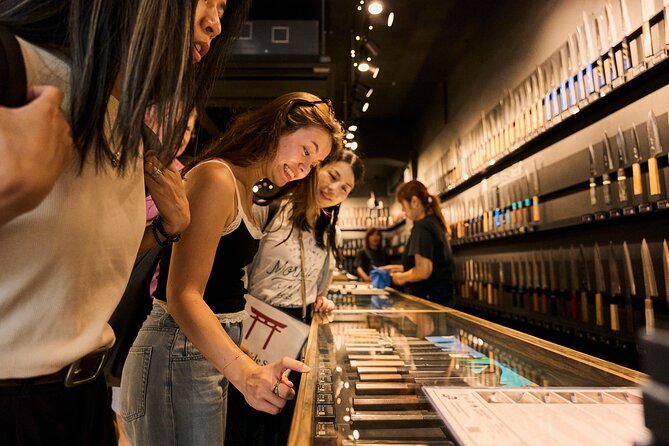
The guide may also point out a pro chef knife shop. Japanese knives are known for precision and careful sharpening, and the tour can include a look at traditional sharpening in action. This is particularly useful if you are considering buying a knife, though the information does not say that a demonstration or purchase is guaranteed on every departure.
You will also pass a street styled after old Edo, with playful storefronts, retro touches, unusual vending machines, and snack stands. Possible foods include menchi-katsu, a fried minced-meat cutlet, and skewers.
This section has a casual feel, but you are not given a long free period for eating. Think of it as a guided introduction to places you may want to revisit later.
Finishing at a Japanese supermarket
The final planned stop is Ozeki Asakusa Kaminarimon Grocery and Supermarket. You have about 10 minutes to look at everyday Japanese groceries and choose possible souvenirs.
A supermarket is a smart finish. It shows you what local shopping looks like beyond department stores and formal souvenir shops. You might see packaged snacks and other food items that are easier to take home than fresh street food.
Ten minutes is enough for a quick look, not a full grocery trip. If you spot something you want, act promptly. The activity ends back at the meeting point, so you can return to the area later if you want more shopping time.
What the guides add to the experience
The guide is the most important variable in a short walking tour. The people leading this experience are praised for clear explanations, good English, warmth, and the ability to adjust the pace.
Keiko is described as making the walk fun for children by using handwritten food cards and stickers. Yui is noted for detailed explanations of Sensoji and useful food suggestions. Josh is praised for speaking English well, keeping the route informative, and sharing local insight.
Nono is described as patient and attentive, especially with a parent and daughter who were dealing with jet lag. Nanami is praised for showing the more authentic restaurant and shrine side of the area. Naoto is described as professional, engaging, and good at making a private-feeling walk from beautiful sites.
Naruto and Aiko are also mentioned as friendly and helpful guides. You cannot select a particular guide from the information provided, so treat these names as examples of the guiding style rather than a promise about who will lead your walk.
The group can contain up to 15 people. That is small enough for a guide to answer questions, though not so small that you should expect a fully private tour. Some departures may be much smaller, and at least one person received a solo departure rather than having it canceled.
Is $19.90 good value for two hours?
At $19.90 per person, this is a reasonable price for a short orientation to one of Tokyo’s most useful sightseeing districts. Entry to the listed stops is free, so you are paying mainly for the guide’s time, explanations, route planning, and local suggestions.
The value is strongest if you are visiting Asakusa for the first time. You learn temple customs, get a quick introduction to food streets, and see several areas that are easy to miss when you only walk from Kaminarimon to the main hall and leave.
The price is less compelling if you already know Sensoji well or want a long food tour with substantial portions. The walk includes food-related stops, but purchases are not clearly included, and the tasting may not take place.
At two hours, it also fits neatly into a larger Tokyo day. You could use it as a morning introduction, then continue shopping or return to a favorite snack shop afterward.
Who should book this Asakusa walk?
I would choose this tour if you want cultural explanations without a long, tiring day on foot. Several parts of the route are close together, and the walk is described as informative without too much walking.
It suits first-time Tokyo visitors, families, curious food shoppers, and anyone who wants help with temple etiquette. It is also useful for people staying near Asakusa who want a quick local introduction before exploring alone.
Families may appreciate the guide’s ability to keep the walk engaging. Children can watch the incense, fortune drawing, koi pond, snacks, and unusual shops, though the food and shopping streets can be busy.
You should look elsewhere if your main goal is a full meal, a long stop at each shop, or a specialist religious tour. This experience offers a broad taste of Asakusa rather than an expert lecture on one subject.
Practical details before you go
You receive confirmation when booking, and the activity uses a mobile ticket. It is near public transportation, and most people can participate.
Wear comfortable shoes, even though the walk is not described as strenuous. There are several short stops, and you may want to return to the shopping streets after the official two hours.
The meeting point is the Kaminarimon Police Box, and the activity ends back there. Free cancellation is available up to 24 hours before the start time. Inside that 24-hour window, the fare is not refunded and changes are not accepted.
My verdict: book it for culture first, snacks second
I recommend this walk if you want a clear introduction to Sensoji and the older side of Asakusa. The guide makes temple customs easier to understand, and the route adds Hoppy Street, matcha sweets, sword and knife shops, retro storefronts, and a supermarket to the famous temple approach.
Book it with realistic expectations. The food element is more of a guided look at local snacks than a guaranteed tasting menu. If you treat the $19.90 as payment for local context and a well-planned route, it offers good value. If you require included food, confirm that point before booking or bring money for your own snacks.
FAQ
How long does the Asakusa and Sensoji tour last?
The tour lasts approximately two hours.
Where does the tour begin?
It begins at the Kaminarimon Police Box at 1-chome-3-1 Asakusa, Taito City, Tokyo 111-0032, Japan.
Where does the tour end?
The activity ends back at the meeting point.
Is admission to Sensoji Temple included?
The listed stops have no admission charge. The tour information lists admission as free for the temple and other stops.
Does the tour include food tasting?
The experience includes local street food with tasting in its description, but food tasting may not take place on every departure. Food purchases are not stated as included.
What food might I see or try?
Possible food and sweets include matcha soft serve, matcha truffles, melon bread, menchi-katsu, skewers, and seasonal matcha treats.
How large is the group?
The maximum group size is 15 people.
Is the tour near public transportation?
Yes, the meeting point is near public transportation.
Can most people participate?
The activity information says most people can participate.
What is the cancellation policy?
You can cancel at least 24 hours before the start time for a full refund. Cancellations and changes made less than 24 hours before the start time are not accepted, and the amount paid is not refunded.
Newest street food walks around Japan
- Nagoya Castle and Local Flavor Samurai Tales and Street Food Walk★ 5.0 · 10 reviews
- Nagasaki Street Food Adventure: Private Walking Tour with a Local★ 5.0 · 26 reviews
- Nagoya Street Food Walking Tour of Osu★ 5.0 · 28 reviews
- The 10 Tastings of Tokyo With Locals: Private Street Food Tour★ 5.0 · 48 reviews
- Kyoto Nishiki Market Street Food Tour★ 5.0 · 9 reviews
- Private Nishiki Market Food & Sake Tour by Young Local Guides★ 5.0 · 12 reviews
- Tokyo: Sensoji Temple & Street Food: Private Tour with guide★ 4.6 · 8 reviews
- Tokyo: Shinjuku Local Eats, Street Food Tour & Culture Walk★ 5.0 · 2 reviews
Japan street food tours, side by side.
Hungry Osaka Street Food Tour:15 Tastings & 3 Drinks with a Local
Read our review →
Tokyo: Tsukiji Fish Market Food and Culture Walking Tour
Read our review →
Hungry Osaka Street Food Tour: 15 Dishes & 3 Drinks
Read our review →
[1 Group Only] Osaka Street Food Tour for Family
Read our review →

Takoyaki making experience ~Japan’s popular street food~
Read our review →
Osaka: 2-Hour Local Street Food Tour – Dotonbori & Namba
Read our review →
Fukuoka: Nakasu Food Stall Private Guided Tour with Tastings
Read our review →The lists this tour appears in