
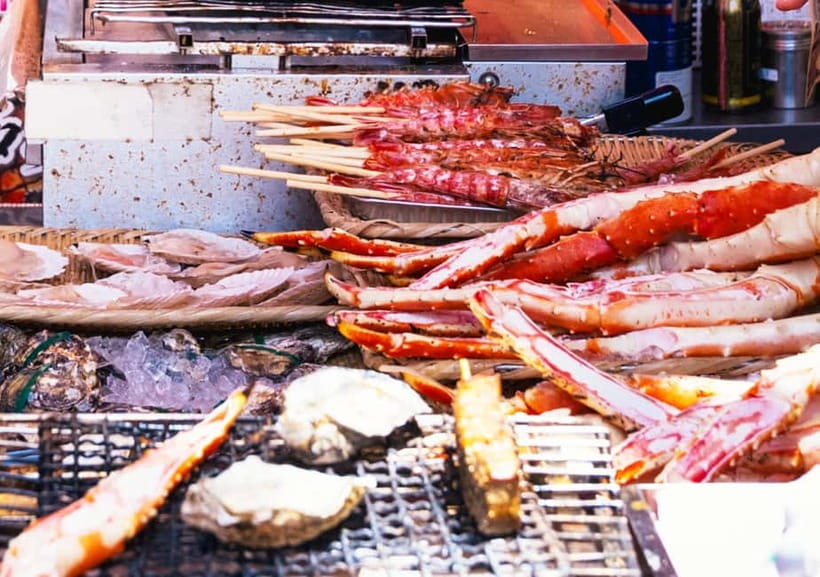
Review · TOKYO
Tsukiji Fish Market: Street Food & Culture Walking Tour
Tsukiji is best understood through its food. This two-hour walk takes you from street-food stalls to a traditional fish-cutting demonstration, then into the working market and Tsukiji Hongwanji Temple. Guides such as George and Tomo have earned strong praise for explaining the food and local customs clearly.
I like the mix of tasting and context, especially the chance to watch a whole fish being prepared before eating a fresh seafood bowl. I also like that the tour is wheelchair and stroller accessible. The main caution is crowd control: the group can reach 30 people, and some stops may involve waiting or standing in the sun.
Key points to know
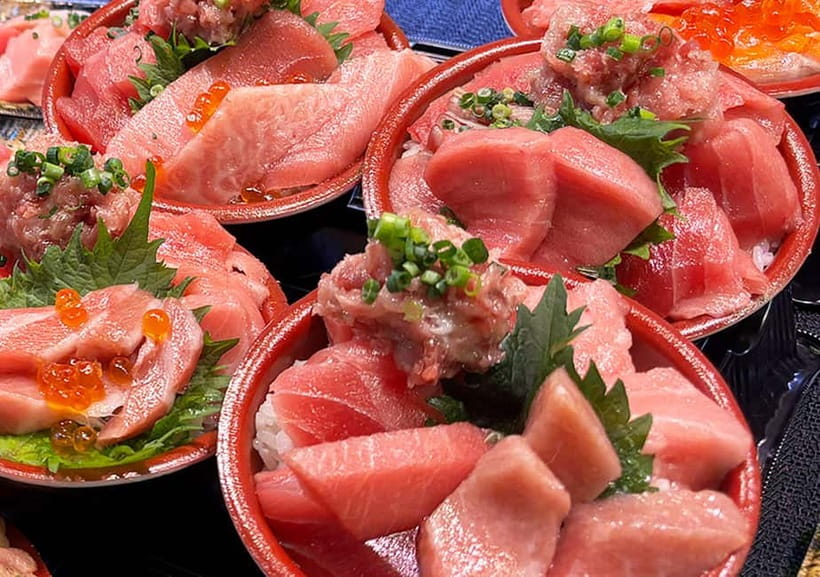
- A fish-cutting demonstration is the tour’s signature moment: Watch a chef fillet a whole fish using traditional techniques, then enjoy a seafood bowl.
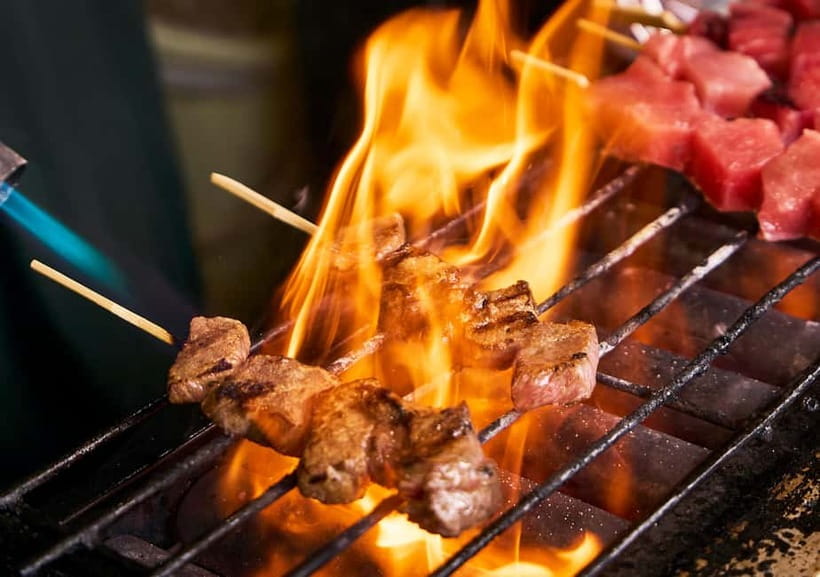
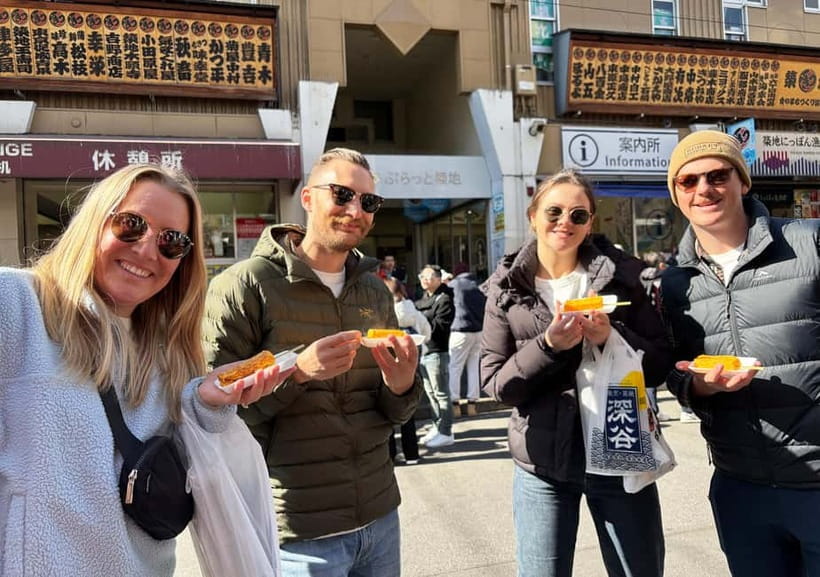
- The food stalls are the main event: Your guide helps you choose places to try Japanese snacks, ingredients, and market specialties.
- The route includes Tsukiji Hongwanji Temple: You get a short introduction to Buddhist culture before or after the market visit.
- The listed price is $33.16 per person: That is fair if you want help choosing food and explanations, but extra meals are not generally included.
- The group may be larger than the phrase small-group suggests: The maximum is 30 people, so staying near the guide matters.
- The tour lasts about two hours: It gives you a useful first look, but not a slow, all-day market study.
What this Tsukiji walk is really about
Tsukiji is no longer Tokyo’s main wholesale fish market. The wholesale auction and much of the large-scale trading moved to Toyosu, but Tsukiji’s outer market remains a lively place to explore food. Here, narrow lanes hold seafood counters, kitchen shops, produce stands, snacks, and small places serving quick meals.
This tour focuses on that outer market, known as Tsukiji Jogai Market. You are not simply led past stalls while the guide recites facts. The practical purpose is to help you understand what you are seeing and decide what is worth trying.
That makes the tour especially useful on a first visit. Japanese food markets can feel confusing at first. Signs may be difficult to read, portions may look unfamiliar, and some foods are designed to be eaten quickly while standing. A local guide can remove some of that guesswork.
The tour also adds a short temple visit and a fish-cutting show. Those extras give the food a wider cultural setting. Still, this is mainly a food walk, not a full course in Tokyo history or Japanese Buddhism.
More Food Market Tours in Japan
- Tokyo: Tsukiji Fish Market Food and Culture Walking Tour
★ 4.7 · 757 reviews - Tsukiji Fish Market: Street Food & Culture Walking Tour
★ 4.8 · 259 reviews - Deep Dive: Osaka Food Markets from Local to Luxurious!
★ 5.0 · 31 reviews
Starting at Tsukiji Hongwanji Temple
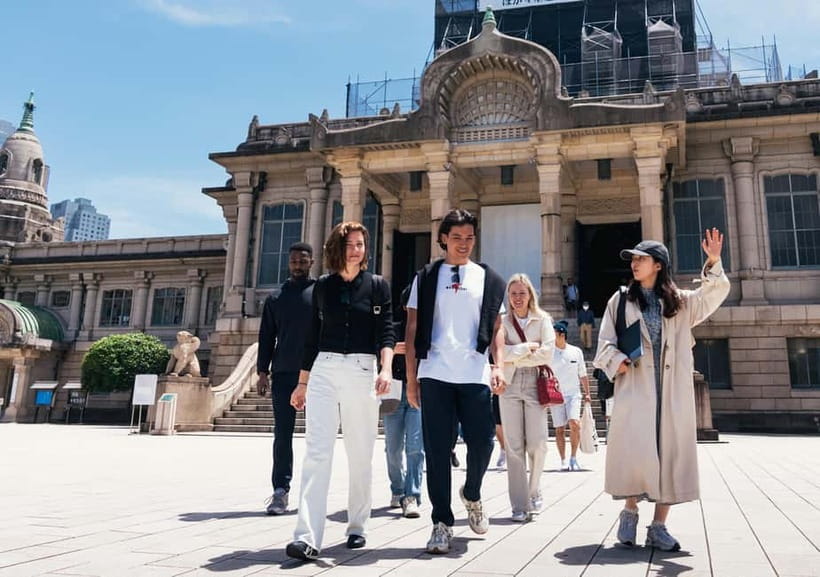
The meeting point is the main hall of Tsukiji Hongwanji Temple at 3-chōme-15-1 Tsukiji, Chuo City. The temple is near public transportation, making the start fairly easy to reach.
The temple portion lasts about 15 minutes. You enter with the guide and learn about the building’s appeal, Japanese culture, and Buddhist traditions. This is a short stop, so think of it as an introduction rather than a full temple tour.
I like the placement of this visit because it gives you a quiet cultural note before the market’s food stalls take over. It also helps explain that Tsukiji is more than a place to buy seafood. On the other hand, the temple stop may feel light if your main goal is food. One direct assessment found that it did not add much value, so visitors with little interest in religious sites may prefer to spend more time at the market.
The tour ends back at the meeting point, which makes the route simple to combine with the rest of your day.
Tsukiji Jogai Market and the first food stops
The first market segment lasts about 45 minutes. Your guide leads you through Tsukiji Jogai Market, pointing out Japanese ingredients and places to buy street food.
This is where the guide’s value depends most on communication and market conditions. A good guide can steer you toward food worth trying, explain unfamiliar ingredients, and tell you how Japanese cooking uses seafood, seasonings, and fresh produce. George has been praised for taking people to several of the best spots and helping them find food they wanted to try. Tomo has also received strong praise for explaining food, culture, and market details in clear English.
You should expect movement at a relaxed but practical pace, not a long sit-down meal. The market is made for shopping and quick eating. You may stop at several stands, but the exact food choices can change with availability and the day’s conditions.
The tour price does not cover all meals. Bring extra money if you want to buy more food beyond what is arranged as part of the route. This matters because the best value may come from treating the tour as a guided introduction, then returning later to buy the foods you liked.
There is one clear weakness here. Some people may find that the tour consists mainly of visiting food stands and encouraging the group to taste things, with less historical explanation than expected. If you want a serious lecture on Tokyo’s past, this is not the right format. If you want help making sense of market food, it makes more sense.
The whole-fish cutting show
The 30-minute fish-cutting session is the most distinctive part of the experience. A skilled chef fillets a whole fish using traditional techniques, allowing you to see the care and precision behind Japanese seafood preparation.
This is more useful than a simple cooking demonstration because it connects the market to the meal in front of you. You see how a fish is handled, cut, and prepared, then get a seafood bowl afterward. The show gives you something to watch, while the bowl gives you something concrete to taste.
The scheduled seafood bowl is part of this section, but the general food allowance is limited. Do not assume every snack or meal during the tour is covered. The safest plan is to treat the arranged bowl as one included element and budget separately for anything else you want from the market.
The fish-cutting display also gives the tour a sense of craft. Japanese food culture often places value on knife work, freshness, and presentation, and this stop lets you see those ideas rather than only hear about them.
The drawback is timing. Thirty minutes is enough for a demonstration and a meal, but not for a detailed cooking lesson. If the group is large, you may not have the best view at every moment. Stay close to the guide and keep your attention on the demonstration rather than drifting toward nearby stalls.
Same streets, a different set of bites:
- Hungry Osaka Street Food Tour:15 Tastings & 3 Drinks with a Local
★ 5.0 · 1,727 reviews - Hungry Osaka Street Food Tour: 15 Dishes & 3 Drinks
★ 4.9 · 694 reviews - Tokyo: Asakusa & Sensoji ー Oldest Temple Walking Tour (2hrs)
★ 5.0 · 213 reviews - [1 Group Only] Osaka Street Food Tour for Family
★ 5.0 · 208 reviews
Seeing the market at work
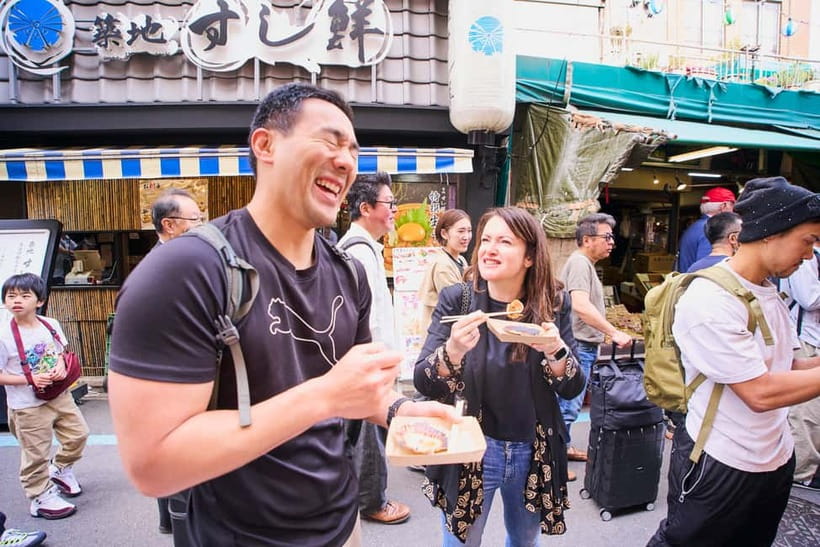
Another 30-minute section takes you through Tsukiji Fish Market, where professional traders operate. This is the part that gives the walk its working-market feel.
You can expect a more practical look at how the market functions, rather than only a row of tasting stops. The guide can help explain the relationship between the stalls, the seafood trade, and the food served in Tokyo. That context is valuable because Tsukiji can otherwise look like a collection of unrelated shops.
Crowds are an important factor. Around busy periods, including the days close to New Year, movement can become difficult. One account describes missed regrouping and skipped stalls when the market became too crowded. Another describes a tour that involved too much stopping and waiting.
These points do not make the tour a bad choice, but they affect your expectations. Keep the group’s guide in sight, listen for instructions, and avoid assuming that every stop will run exactly on schedule. If you dislike crowded markets or want to explore at your own pace, an independent visit may suit you better.
How much history and culture will you get?
The tour promises Japanese culture through food, and it does deliver some of that. You learn about ingredients, cooking, traditional preparation, the market, and Buddhism at the temple.
The amount of history depends heavily on the guide. George and Tomo have been praised for explaining culture and background well, while other experiences have suffered from quiet speaking or limited explanation. In a market filled with voices and movement, volume matters. A guide who speaks too softly can be difficult to follow, especially if you are not standing close.
I would treat the cultural material as useful context, not the central product. The best reason to book is the combination of food guidance and access to the fish-cutting session. The temple and market explanations add value, but they do not turn this into a detailed history walk.
That balance is important when comparing tours. If you mainly want Tokyo history, choose a history-focused route. If you want to understand what you are eating at Tsukiji, this format is more suitable.
Group size, access, and timing
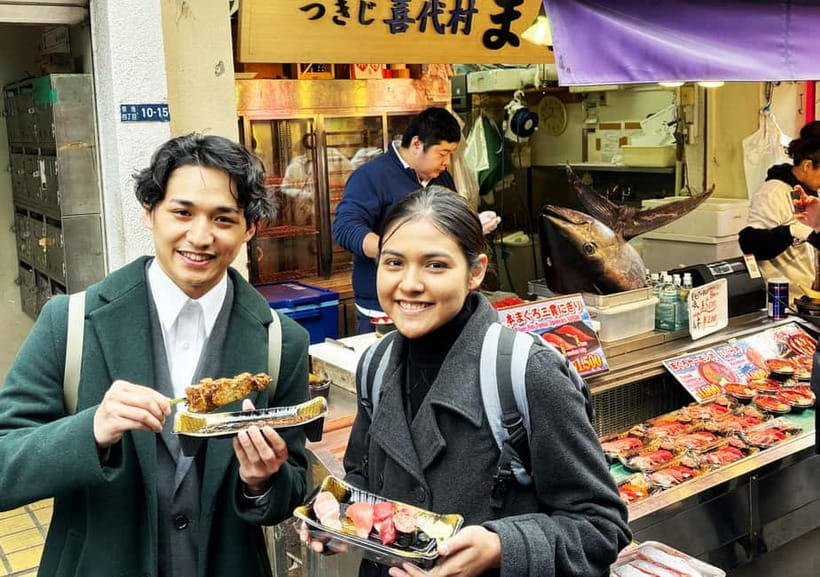
The tour lasts about two hours and has a listed maximum of 30 people. That is not a tiny private walk, even if the experience is described as small-group. A group of this size can work in open areas, but narrow market lanes make it harder to stay together.
The activity is wheelchair and stroller accessible, which is a useful feature for families and anyone who needs a more manageable route. The market can still be crowded, so accessibility does not guarantee easy movement at every moment. You should also be prepared for some standing and exposure to the weather.
The experience requires good weather. If poor weather forces cancellation, you are offered another date or a full refund. You can cancel for a full refund up to 24 hours before the start time. Changes or cancellations inside that window are not accepted.
Mobile tickets keep the booking simple. The meeting point at Tsukiji Hongwanji Temple is near public transportation, and the activity returns there at the end.
Is $33.16 a fair price?
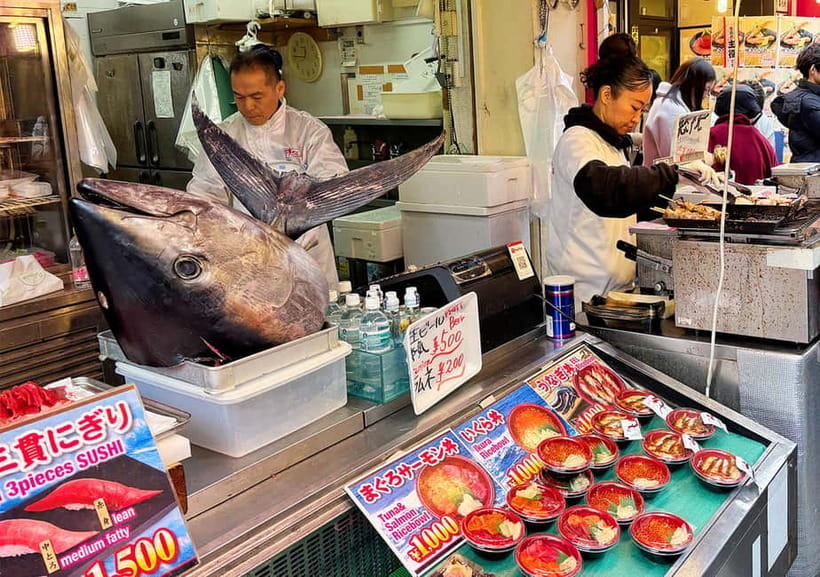
At $33.16 per person, the tour is reasonably priced if you want three things at once: a local guide, help choosing market food, and the fish-cutting demonstration. The seafood bowl adds practical value, although extra food is not covered.
The price is less attractive if you are comfortable walking through Tsukiji on your own. The market itself is free to enter, and you can browse stalls independently. The guide fee is paying for interpretation, food suggestions, organization, and the arranged demonstration.
Your value depends on how much you use that help. First-time visitors who are unsure what to order may get more from the tour than experienced Tokyo diners. Families may also appreciate having someone explain unfamiliar foods and keep the route moving.
The group limit is the key qualification. A smaller group would make it easier to ask questions and see each stop. With as many as 30 people, the experience may feel less personal, especially when the lanes are crowded.
Who should book this experience?
I would recommend it to you if you:
- Are visiting Tsukiji for the first time
- Want to sample Japanese market food without choosing every stop alone
- Like seeing traditional food preparation
- Want a short introduction rather than a full-day food tour
- Appreciate a route that includes a temple and cultural explanation
- Need wheelchair or stroller access
I would be more cautious if you:
- Want a quiet, slow-paced walk
- Expect a detailed account of Tokyo’s history
- Dislike crowds and standing
- Prefer to select every food stop yourself
- Need a guide who can accommodate special needs in the sun, since this is not guaranteed by the supplied details
- Want a very small or private group
You should also keep the timing in mind. Two hours gives you a useful orientation, but it will not cover everything at Tsukiji. If you enjoy the market, you may want to return afterward and explore independently.
Should you book the Tsukiji food tour?
Book it if you want a practical introduction to Tsukiji, especially the fish-cutting demonstration and seafood bowl. The strongest part of the experience is the way food, preparation, and market customs fit together. Guides such as George and Tomo have shown how much a clear, engaged guide can add.
Skip it if your ideal market visit is simply wandering, choosing your own snacks, and spending as long as you like at each stall. The tour can involve waiting, crowding, and uneven historical detail. At $33.16, it is a fair shortcut into Tsukiji, but not a must-buy for independent eaters.
FAQ
How long does the Tsukiji Fish Market tour last?
The tour lasts approximately two hours.
Where does the tour begin?
It begins at the main hall of Tsukiji Hongwanji Temple, 3-chōme-15-1 Tsukiji, Chuo City, Tokyo 104-0045, Japan.
Where does the tour end?
The activity ends back at the meeting point.
Is food included in the tour?
A seafood bowl follows the fish-cutting demonstration. The general tour information says meals are not included, so you should budget separately for additional food from the market.
Is the tour wheelchair and stroller accessible?
Yes. The experience is described as wheelchair and stroller accessible.
What happens if the weather is poor?
The experience requires good weather. If it is canceled because of poor weather, you can choose another date or receive a full refund.
Newest street food walks around Japan
- Nagoya Castle and Local Flavor Samurai Tales and Street Food Walk★ 5.0 · 10 reviews
- Nagasaki Street Food Adventure: Private Walking Tour with a Local★ 5.0 · 26 reviews
- Nagoya Street Food Walking Tour of Osu★ 5.0 · 28 reviews
- The 10 Tastings of Tokyo With Locals: Private Street Food Tour★ 5.0 · 48 reviews
- Kyoto Nishiki Market Street Food Tour★ 5.0 · 9 reviews
- Private Nishiki Market Food & Sake Tour by Young Local Guides★ 5.0 · 12 reviews
- Tokyo: Sensoji Temple & Street Food: Private Tour with guide★ 4.6 · 8 reviews
- Tokyo: Shinjuku Local Eats, Street Food Tour & Culture Walk★ 5.0 · 2 reviews
Tokyo street food tours, side by side.
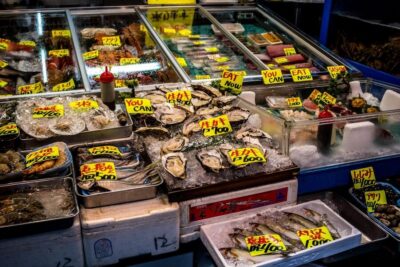
Tokyo: Tsukiji Fish Market Food and Culture Walking Tour
Read our review →
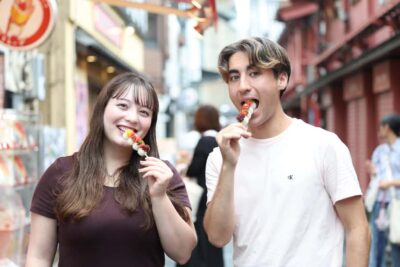
Tokyo: Sensoji Temple & Street Food: Private Tour with guide
Read our review →
Tokyo: Explore Authentic Japanese Food Culture at Tsukiji
Read our review →
Tokyo: Shinjuku Local Eats, Street Food Tour & Culture Walk
Read our review →The lists this tour appears in