
Review · TOKYO
Tokyo: Togoshi Ginza Street Food Tour
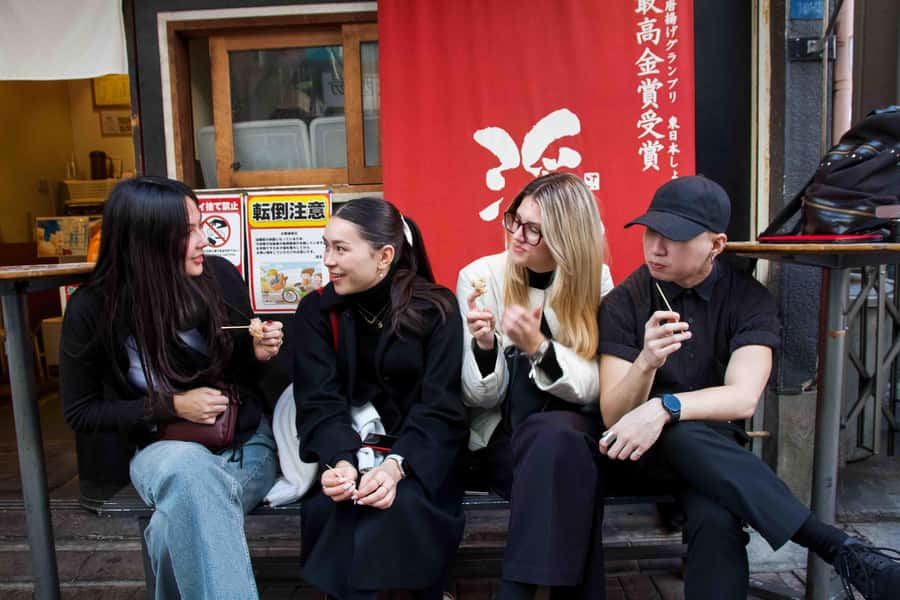
Tokyo’s best food finds are not always tucked beside the famous sights. This two-hour walk takes you through Musashi Koyama and Togoshi Ginza, two local shopping districts where you can eat charcoal-grilled yakitori, award-winning karaage, creative onigiri, curry bread, and pudding.
I like the mix of seven tastings and neighborhood wandering, since you get a meal and a look at ordinary Tokyo life in one outing. I also like the small group limit of eight, which makes it easier to ask questions and follow your guide through unfamiliar food stalls. The main drawback is the pace: three kilometers of walking and a large amount of food can feel like work if you have low stamina or arrive after a big meal.
Key points at a glance
- Yakitori from a long-running shop: Start with charcoal-grilled chicken skewers from a shop that has been around since 1929.
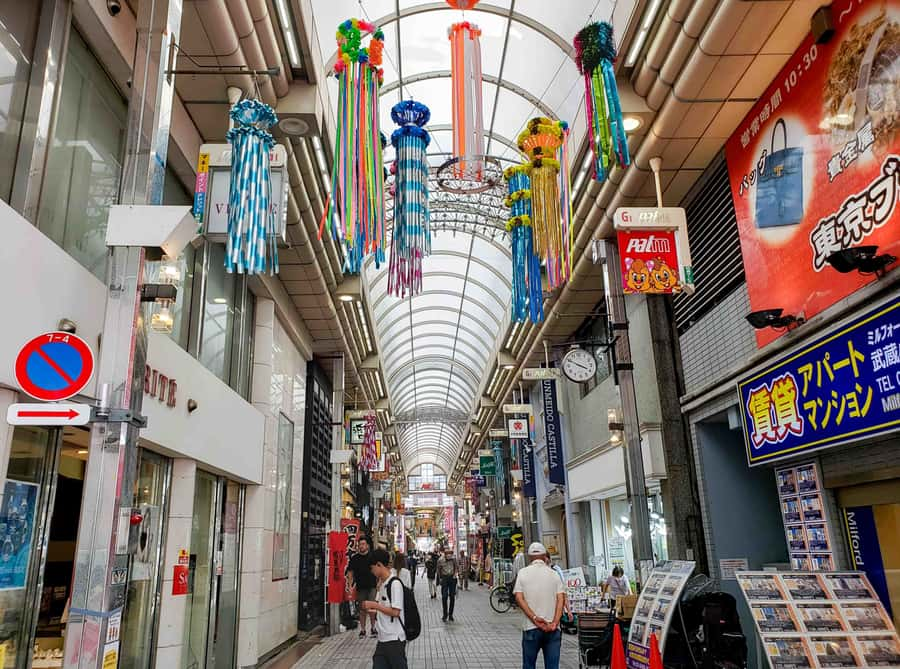
- Togoshi Ginza’s 400 shops: Walk through Tokyo’s longest shopping street, a lively local strip with far fewer international tourists than central Tokyo.
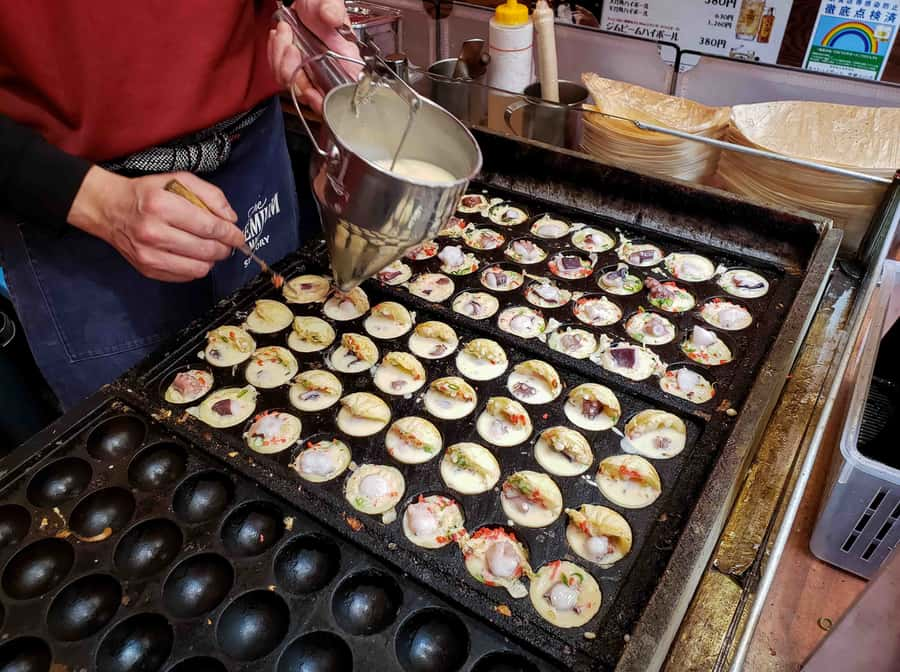
- More than 40 onigiri fillings: Choose from familiar and unusual combinations, including bacon with cream cheese and spicy tuna.
- Seven tastings in two hours: Expect a filling route that includes karaage, curry bread, pudding, and another sweet.
- Small English-speaking group: The tour is limited to eight people, with guides including Sahori, Daisy, Bunga, and Brian.
- A practical introduction to local food: Your guide explains each dish and helps with food choices in areas where English may be limited.
Why this food walk feels different from central Tokyo
Many Tokyo food outings focus on major markets, neon districts, or famous restaurant names. This one heads into residential neighborhoods where people shop for everyday meals. That change in setting is the real point of the experience.
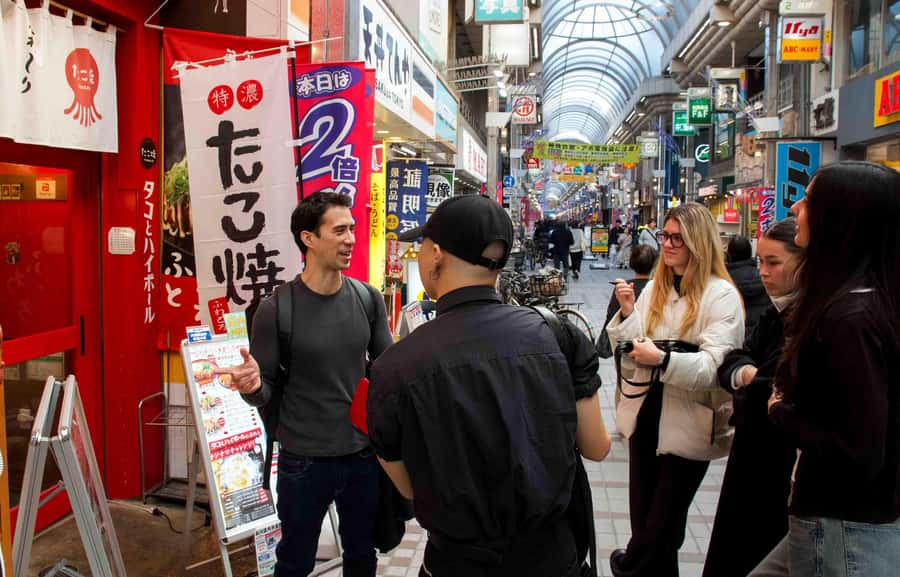
You begin at the entrance to Musashi Koyama Palm Shopping Street, meeting outside Starbucks. The guide carries a Food Tours Tokyo sign. From there, you start eating almost at once, with the route gradually leading toward Togoshi Ginza.
I like this setup because the food is tied to the places that sell it. You are not sitting in one restaurant while someone talks about Japanese cuisine in general. You are walking into shops, trying one specialty at a time, and seeing the kind of shopping streets that are easy to miss on a first visit to Tokyo.
The route also suits you if you are unsure how to order in smaller Japanese shops. Louise, from Germany, said she would not have felt comfortable trying some of the stalls alone because of the language barrier. That is a useful reason to book, even if you already know Japanese food. A guide can point you toward items you might otherwise overlook.
More street food walks around Japan:
- Hungry Osaka Street Food Tour:15 Tastings & 3 Drinks with a Local
★ 5.0 · 1,727 reviews - Tokyo: Tsukiji Fish Market Food and Culture Walking Tour
★ 4.7 · 757 reviews - Hungry Osaka Street Food Tour: 15 Dishes & 3 Drinks
★ 4.9 · 694 reviews
First stop: charcoal-grilled yakitori in Musashi Koyama
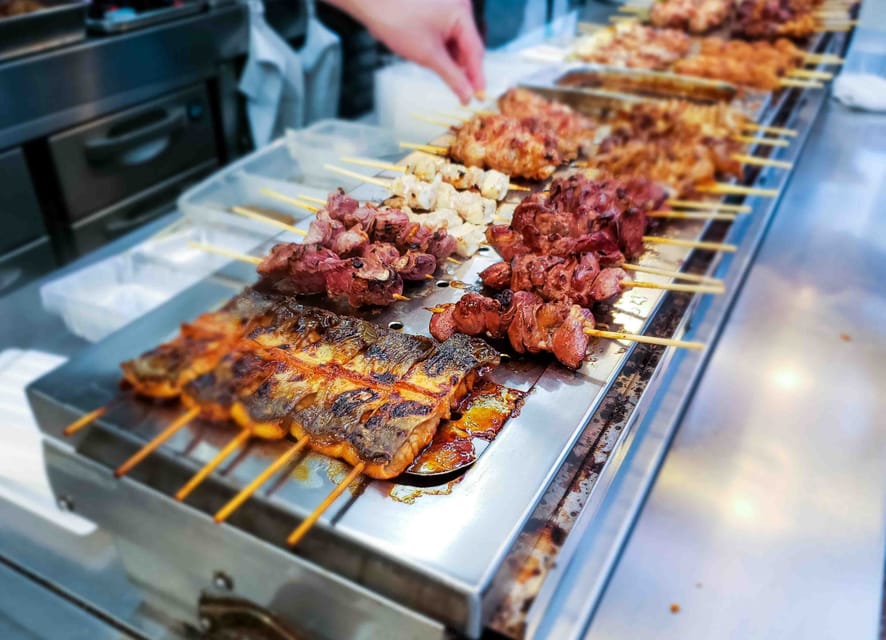
The opening tasting is yakitori, chicken grilled over charcoal on skewers. The shop has been serving customers since 1929, giving this first bite a clear connection to the neighborhood.
Yakitori is simple food, but small details matter. Charcoal adds a smoky edge, and different parts of the chicken can have different textures and flavors. The tour gives you a chance to eat it in the place where locals buy it, rather than treating it as just another item on a large restaurant menu.
This is also a good first stop because it gets you moving and eating without a long explanation. You can ask your guide about the dish, the shop, and the area while taking in the sounds of the shopping street. If you have never ordered yakitori from a neighborhood shop, having a guide nearby removes much of the guesswork.
The tour is not built around sitting down for a long meal. You should expect a walk with food stops, often eating outdoors or in brief pauses along the route. One participant specifically advised dressing warmly on a cold day because much of the experience takes place outside. In summer, the same outdoor format may feel more tiring in heat, so comfortable shoes and sensible clothing matter.
Walking from Musashi Koyama to Togoshi Ginza
After the first tasting, the route heads toward Togoshi Ginza. The two-hour schedule includes roughly 1.86 miles, or 3 kilometers, of walking. That is not a major hike, but the food makes the distance useful. You will have time to digest one tasting before the next arrives.
Togoshi Ginza is known as Tokyo’s longest shopping street, with about 400 shops. The appeal is not a single grand sight. It is the steady run of small businesses, food counters, and local shopping activity. You get a better sense of how a residential part of Tokyo works when you are walking through a district where people actually buy lunch, snacks, and groceries.
This part of the tour is especially useful early in a Tokyo visit. It gives you a quieter counterpoint to places such as Shibuya, Shinjuku, and Asakusa. It also shows why Tokyo is more than its headline attractions. Neighborhood shopping streets can tell you plenty about daily life without asking you to spend half a day in a museum.
The group size helps here. With no more than eight participants, you can stay close to your guide and hear explanations without the feel of a large bus tour. Some bookings may be even smaller. Daisy led a tour with only two participants and made it feel personal, while another outing became a private experience for two sisters.
Karaage: the stop that makes this a serious lunch
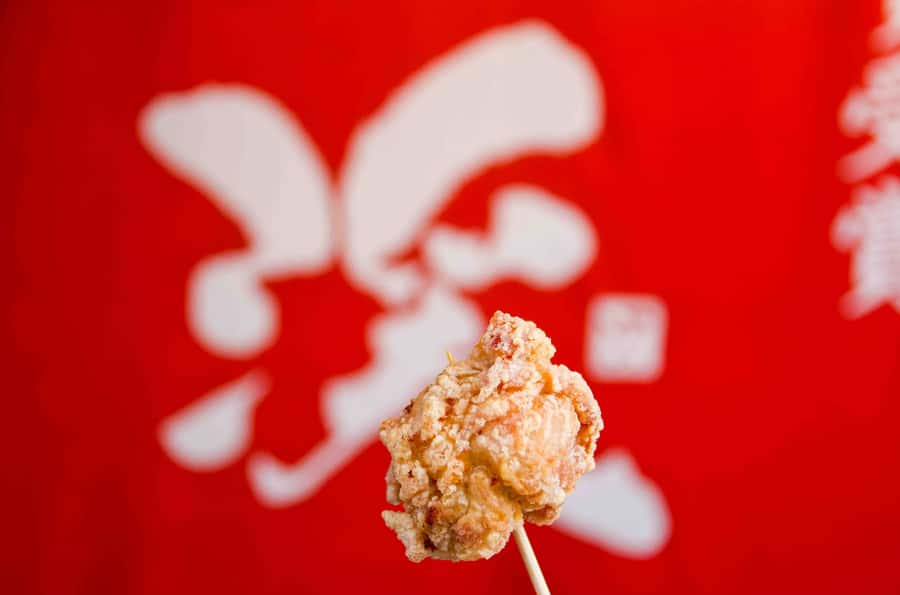
At Togoshi Ginza, you try Japanese fried chicken, or karaage. This is described as award-winning, and it is one of the heartier tastings on the route.
Karaage is usually marinated before being coated and fried, so the flavor goes beyond plain fried chicken. The outside should give you crunch, while the inside stays juicy. On a food walk, this is the point where the meal begins to feel substantial rather than snack-sized.
Arrive hungry. Salina finished the tour feeling full, and Jason appreciated the walking partly because there was so much food to eat. You are not signing up for seven tiny samples that leave you searching for lunch afterward. The portions are intended to add up to a proper meal, though exact serving sizes can vary.
I also like that karaage appears after the walk to Togoshi Ginza. You have already seen the setting and tasted yakitori, so you can compare two familiar Japanese foods prepared in different ways. The guide can explain how the dishes fit into everyday eating, rather than presenting each one as an isolated novelty.
Same streets, a different set of bites:
- Tsukiji Fish Market: Street Food & Culture Walking Tour
★ 5.0 · 669 reviews - Tsukiji Fish Market: Street Food & Culture Walking Tour
★ 4.8 · 259 reviews - Tokyo: Asakusa & Sensoji ー Oldest Temple Walking Tour (2hrs)
★ 5.0 · 213 reviews - [1 Group Only] Osaka Street Food Tour for Family
★ 5.0 · 208 reviews
Choosing from more than 40 onigiri fillings
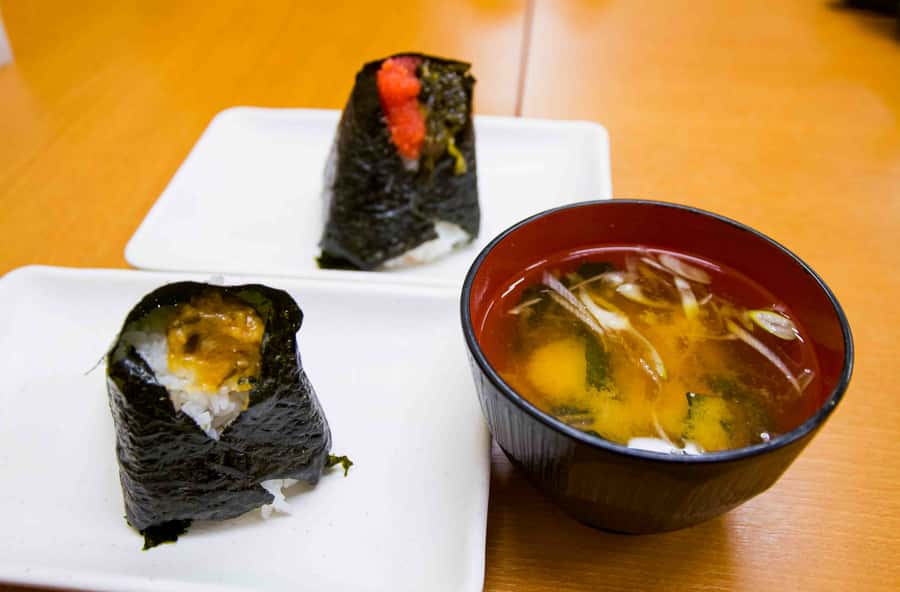
The onigiri stop gives you one of the most distinctive choices of the tour. These rice balls come with more than 40 possible fillings. Options include spicy tuna, bacon with cream cheese, and other combinations that range from classic to playful.
This is where the guide becomes especially useful. A huge menu can be fun, but it can also slow you down when you cannot read every option or do not know what suits your taste. You can ask for help, choose something familiar, or take a small risk with a filling you would not have ordered alone.
Onigiri is one of Japan’s most practical foods. It travels well, fills you up, and appears in many everyday settings. Eating it from a specialist shop gives you a better feel for the food than picking up a packaged rice ball at a convenience store. You also get to see how much variety can fit inside a dish that looks modest at first glance.
Families may enjoy this stop because the choice is broad. Sumbul specifically found the guide, Sahori, good with children, and the range of fillings gives younger eaters some control over what they try. Still, do not expect every option to suit every palate. If you are particular about textures or seafood, ask your guide before choosing.
Fresh curry bread for a savory finish
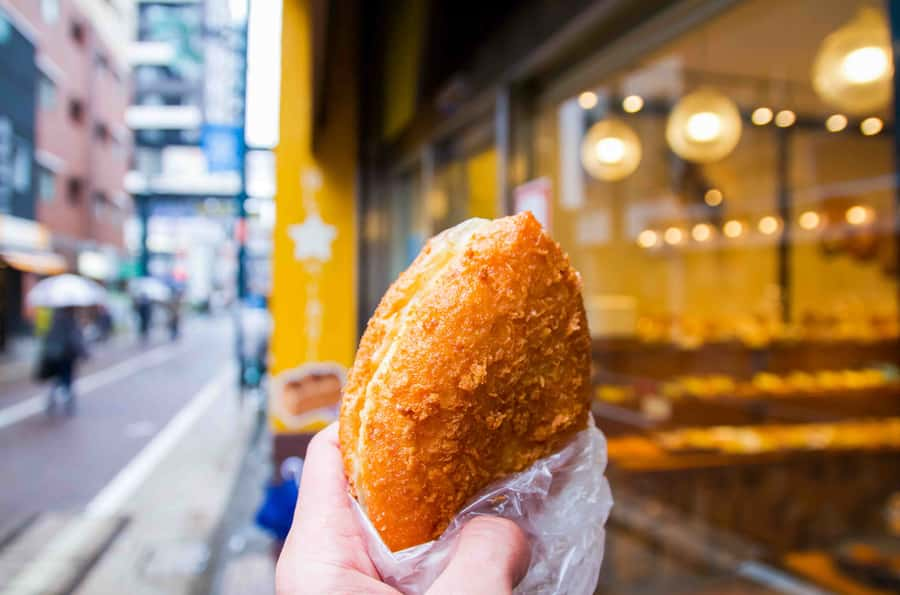
Next comes bread filled with beef curry. Japanese curry bread is a useful reminder that Japanese comfort food does not fit neatly into one category. It combines a crisp or tender bread exterior with savory curry inside, making it easy to eat while continuing along the shopping street.
This tasting adds a different texture to the route. You have had grilled meat, fried chicken, and rice. The curry bread shifts the focus to bakery food and the way Japanese shops adapt familiar flavors into portable snacks.
It is also a practical stop for anyone who thinks Japanese food means only sushi, ramen, or tempura. The tour’s strength is its range. You get food that feels recognizably Japanese, but the lineup includes modern combinations and everyday bakery fare too.
Because the tour packs several tastings into two hours, you may want to pace yourself. The curry bread arrives before the desserts, and it can be filling. If you are traveling with a companion, sharing some items may help you taste everything without feeling uncomfortable, though the tour includes seven tastings rather than a formal list of individual full portions.
Pudding and a final dessert
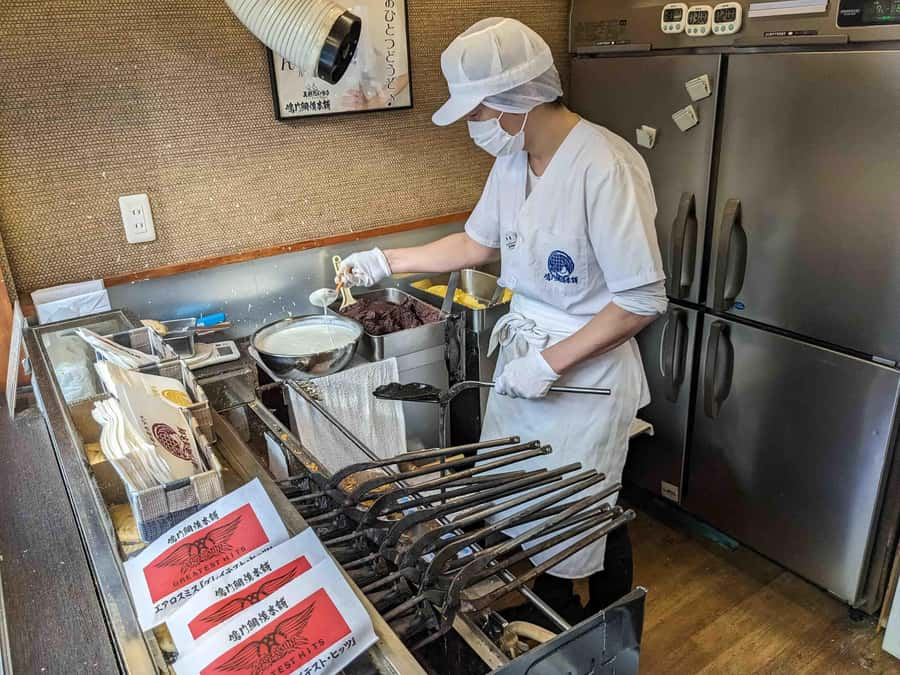
The last planned food is extra-rich Japanese pudding, followed by another dessert if you still have room. By this point, you will likely understand why an empty stomach is the best preparation.
Japanese pudding often has a soft, custard-like texture, with a caramel note that makes a gentle finish after fried foods and curry. The added dessert keeps the ending flexible. If you are still hungry, you get another sweet. If you are full, the guide can help you judge how much to take on.
I like ending with dessert because it gives the route a clear shape. You begin with charcoal-grilled chicken, move through savory local specialties, and finish with something sweet. It is a small meal, but it covers a wide range of textures and flavors.
The drawback is obvious: this is not a light tasting stroll. Danni counted six or seven stops and described the amount as generous. You should not book it directly after a large breakfast or lunch.
What the guides add to the experience
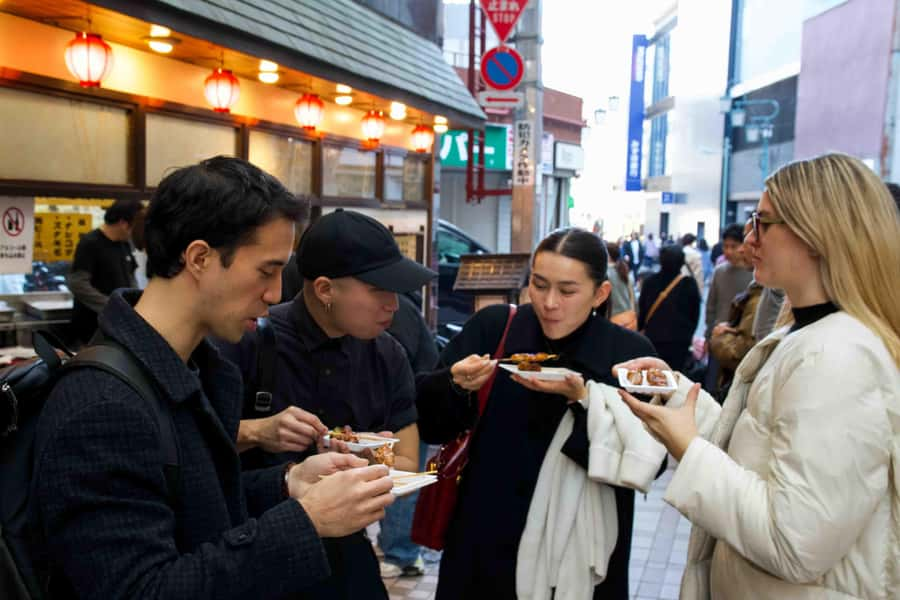
The guide is more important here than on a tour where you simply follow a fixed route. Food shops in local Japanese neighborhoods may have limited English, and your guide explains what you are eating, how each dish fits into Japanese food culture, and what makes the area worth visiting.
Several guides have led this experience, including Sahori, Daisy, Bunga, Brian, and Frank. Sahori was praised for her warm manner, local explanations, and even helping with Tokyo’s complicated train system after the tour. Brian, though not Japanese, spoke Japanese fluently and explained the customs and quirks of the neighborhood clearly.
You should not assume you will receive a particular guide unless that is confirmed at booking. The important point is the small-group format and English-language support. Bunga led a tour on a cold day, so the practical advice about wrapping up is worth remembering. Daisy made a very small group feel relaxed and personal. Frank was described as easygoing, which helped a group of friends enjoy the route at its own pace.
A good guide also helps you understand what you are seeing between tastings. The tour is not only a list of foods. It is a way to notice the shops, streets, and habits of a part of Tokyo you might otherwise pass by.
Is $95 a fair price?
At $95 per person, this is not the cheapest way to eat in Tokyo. You could buy yakitori, karaage, onigiri, curry bread, and dessert on your own for less, especially if you are comfortable ordering in Japanese and finding the shops.
The value comes from the combination. You receive seven tastings, one alcoholic or non-alcoholic drink, a two-hour guided route, English explanations, and help choosing food. You are also paying for access to a neighborhood food plan that would take time and trial and error to assemble alone.
I think the price makes the most sense for a first visit, for anyone nervous about ordering, or for people who want a social food outing instead of a self-guided snack hunt. It is less compelling if you already know Togoshi Ginza, speak Japanese well, and prefer to choose every dish independently.
The small group limit of eight improves the value. You are not paying for a large group transfer or a staged performance. You are paying for a compact walking route with enough personal attention to ask questions.
Practical details before you book
The tour lasts two hours and begins outside Starbucks at the entrance to Musashi Koyama Palm Shopping Street. Look for the guide holding a Food Tours Tokyo sign. Hotel pick-up and drop-off are not included.
Wear comfortable walking shoes. The route covers about 3 kilometers, and most of the experience takes place outside. It is not recommended if you have a low level of fitness.
Bring a strong appetite, but not a full stomach. The seven tastings are substantial enough that you may not need another meal right afterward. If you have dietary restrictions, the supplied details do not specify how substitutions are handled, so ask before booking rather than assuming.
The tour is offered in English and uses a small group format. You can cancel up to 24 hours before the start for a full refund, and the reserve-now, pay-later option lets you keep your plans flexible.
Who should book this Tokyo food tour?
You should book it if you want to see a local shopping district and eat foods that are easy to miss on your own. It suits first-time visitors, curious eaters, families who enjoy trying several small dishes, and anyone who wants help ordering outside the main tourist zones.
It is also a good choice if you have already visited Tokyo’s famous districts and want a different side of the city. The route does not depend on a major landmark. Its appeal is the ordinary setting, the variety of food, and the chance to ask a guide what you are looking at.
You may want to skip it if walking 3 kilometers is difficult, if you prefer a seated meal, or if you do not enjoy eating several rich foods in a short period. It is also not the best match for someone who wants a tightly controlled private itinerary, since the experience follows a set food route and the guide assigned can vary.
Should you book it?
I would book this tour for the neighborhood access and the food variety, not simply for the promise of street snacks. Yakitori from a shop dating to 1929, a choice of more than 40 onigiri fillings, award-winning karaage, curry bread, and rich pudding make the route much more interesting than a standard tasting menu.
Book it early in your Tokyo stay if you want ideas for other local foods and shopping streets. Come hungry, wear good shoes, and leave room for dessert. If you want a quieter, more personal look at Tokyo than the usual sightseeing circuit provides, this two-hour outing earns its place on your schedule.
FAQ
Where does the tour meet?
Meet outside Starbucks at the entrance to Musashi Koyama Palm Shopping Street. Your guide will be holding a Food Tours Tokyo sign.
How long does the tour last?
The tour lasts two hours.
How much walking is involved?
The route includes about 1.86 miles, or 3 kilometers, of walking. It is not recommended for people with a low level of fitness.
How many people are in the group?
The tour is limited to eight participants.
What food is included?
The tour includes seven tastings, including yakitori, karaage, onigiri, beef curry bread, Japanese pudding, and another dessert if you have room. One alcoholic or non-alcoholic drink is also included.
Is the tour offered in English?
Yes. The tour has a live English-speaking guide.
Is hotel pick-up included?
No. Hotel pick-up and drop-off are not included.
Can I cancel for a refund?
Yes. You can cancel up to 24 hours in advance for a full refund.
Newest street food walks around Japan
- Nagoya Castle and Local Flavor Samurai Tales and Street Food Walk★ 5.0 · 10 reviews
- Nagasaki Street Food Adventure: Private Walking Tour with a Local★ 5.0 · 26 reviews
- Nagoya Street Food Walking Tour of Osu★ 5.0 · 28 reviews
- The 10 Tastings of Tokyo With Locals: Private Street Food Tour★ 5.0 · 48 reviews
- Kyoto Nishiki Market Street Food Tour★ 5.0 · 9 reviews
- Private Nishiki Market Food & Sake Tour by Young Local Guides★ 5.0 · 12 reviews
- Tokyo: Sensoji Temple & Street Food: Private Tour with guide★ 4.6 · 8 reviews
- Tokyo: Shinjuku Local Eats, Street Food Tour & Culture Walk★ 5.0 · 2 reviews
Tokyo street food tours, side by side.
Tokyo: Tsukiji Fish Market Food and Culture Walking Tour
Read our review →
Tokyo: Sensoji Temple & Street Food: Private Tour with guide
Read our review →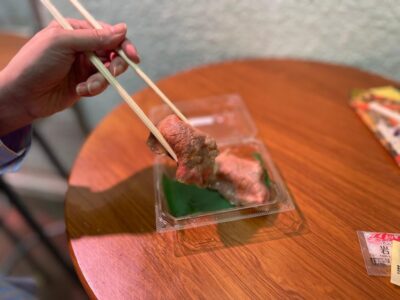
Tokyo: Explore Authentic Japanese Food Culture at Tsukiji
Read our review →
Tokyo: Shinjuku Local Eats, Street Food Tour & Culture Walk
Read our review →The lists this tour appears in