
Review · TANZANIA
Arusha: Traditional Tanzania Cooking Class & Food Market Tour
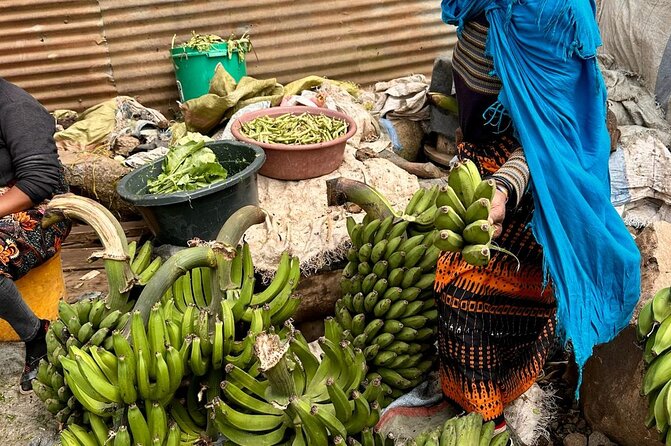
Arusha’s best food lesson begins before you reach the cooking room. You first walk through the central market, meet vendors, study local ingredients, and choose two dishes to prepare. I like that the meal starts with shopping and food culture, not a polished demonstration. I also like the ride to Sanawari on ordinary local transport, which adds a useful glimpse of daily life.
The main consideration is comfort. This is a working local kitchen, not a cooking school with high counters, spotless display stations, and restaurant equipment. You may cook at a low table with charcoal burners, a gas burner, tubs, and basic tools. That is part of the point, but it will not suit everyone.
Key points to know before booking
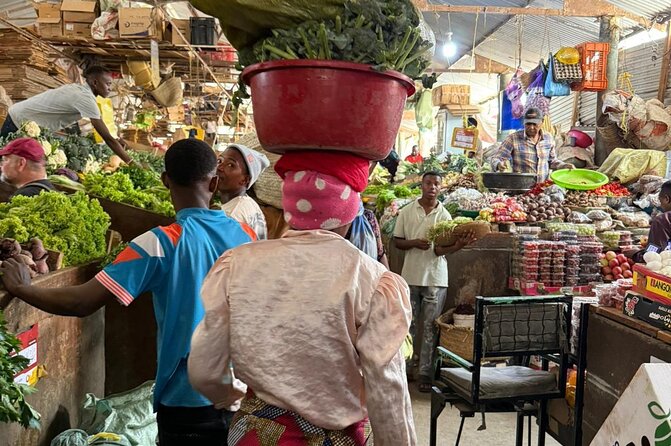
- The market comes first: Spend about 30 to 45 minutes in Arusha’s central food market, where the guide explains local produce, meat, spices, and cooking traditions.
- You choose two dishes: After seeing the available foods, you select two for the lesson. Ugali and ndizi are examples mentioned by past participants.
- The kitchen is genuinely local: Expect a simple setup with low work surfaces, charcoal burners, a gas burner, tubs, and basic utensils.
- Your cooked meal is included: You eat what you prepare as lunch or dinner, and takeaway food may be available afterward.
- Local transport is part of the day: The journey from the market to Sanawari uses common public transport rather than a private tourist-only transfer.
- Hotel pickup is included near central Arusha: Pickup and drop-off are offered for hotels near the city center, with confirmation sent by WhatsApp or email after booking.
From Arusha market stalls to a meal you prepare
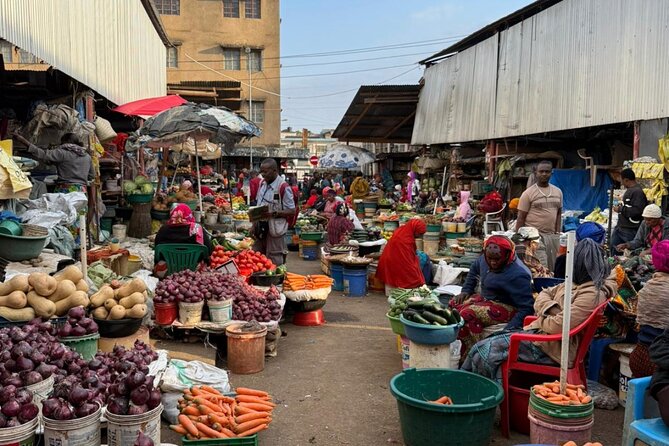
This four-hour experience gives you a practical introduction to Tanzanian food. You are not simply shown a plate and told its name. You see ingredients in the market, hear how they are used, help buy them, and then work with a local chef to turn them into lunch or dinner.
That order matters. Food makes more sense when you see it in its everyday setting first. A pile of produce at a market stall is not just a colorful photo opportunity. Your guide can explain which foods are common in Tanzania, how local cooks use them, and what might be imported rather than grown in the country.
The activity costs $42 per person. For that price, you receive hotel pickup and drop-off near central Arusha, the market walk, ingredient shopping, transport to Sanawari, cooking instruction, and the meal. Drinks are not included, and you buy water, soda, or beer separately if you want one. Tips are optional.
I see the price as fair if you value contact with local life more than restaurant polish. A standard meal can cost less, but it will not give you the market visit, cooking lesson, or chance to work with a local family and chef. The value drops if you mainly want a formal class with printed recipes and modern equipment.
More Cooking Classes in the world:
- Athens: Food Market Visit and Cooking Class with Wine
★ 4.9 · 1,087 reviews - Mexican Cooking Class with Food Market Visit in Mexico City
★ 5.0 · 506 reviews - Florence: Cooking Class with Local Food Market Tour
★ 4.9 · 407 reviews
A first look at Arusha’s central food market
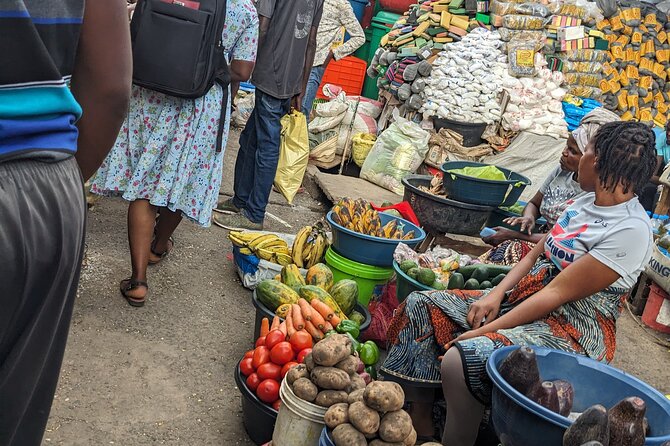
The market visit lasts about 30 minutes in the stated schedule, although the timing may run closer to 45 minutes depending on the pace of the group. You walk through the central food market with your guide, who points out the foods sold there and explains their everyday uses.
Expect a sensory stop rather than a quiet, organized food hall. You may encounter fresh produce, meat, spices, and other local goods. The experience is about seeing what people buy for home cooking and understanding how those ingredients fit into Tanzanian meals.
This is where the guide matters most. Guides named in past experiences include Israel, Jack, James, Lameck, Bariki, Magret, and Fen. Your assigned guide may be different, but the best part of the role is not simply leading you between stalls. It is explaining what you are looking at and helping you ask sensible questions.
The market is also a social setting. You meet local sellers and see ordinary shopping taking place around you. Be polite about photographs, keep your belongings secure, and stay close enough to hear the guide. A short market visit can feel rushed if you stop at every stall, so let the guide set the rhythm.
You then choose two dishes from the foods discussed. That choice gives the class a personal touch, though you should not expect a long menu or a fully customized cooking plan. The available dishes depend on the ingredients and the day’s arrangements.
The trip to Sanawari on everyday transport
After the market, you travel to Sanawari, the area used for the cooking lesson. The description specifically includes a chance to use a popular form of public transport from the market to Sanawari.
I like this part because it connects the food activity to the city around it. You are not whisked from one private vehicle to another behind closed doors. You get a small look at how local people move through Arusha.
There is also a practical trade-off. Public transport can be less predictable than a private car, and it may feel crowded or basic. The tour includes hotel pickup and drop-off, but the middle part of the route uses normal local transport. If you need a completely private, controlled transfer, ask before booking.
The journey also means the day is more than a cooking demonstration. You see the change from central market to residential area, then arrive at a place where food is prepared in an everyday setting. The ride is brief in the larger four-hour schedule, but it helps the activity feel connected to real Arusha life.
What cooking in a local kitchen really means
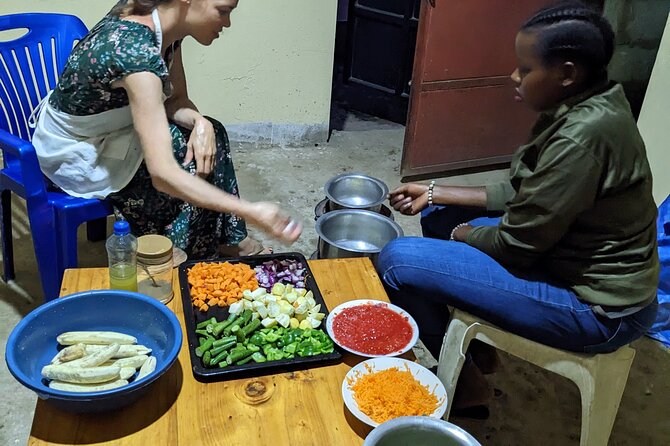
The cooking lesson in Sanawari lasts about 1 hour and 30 minutes in the stated plan, with the rest of the four hours taken up by pickup, transfers, market time, preparation, and eating.
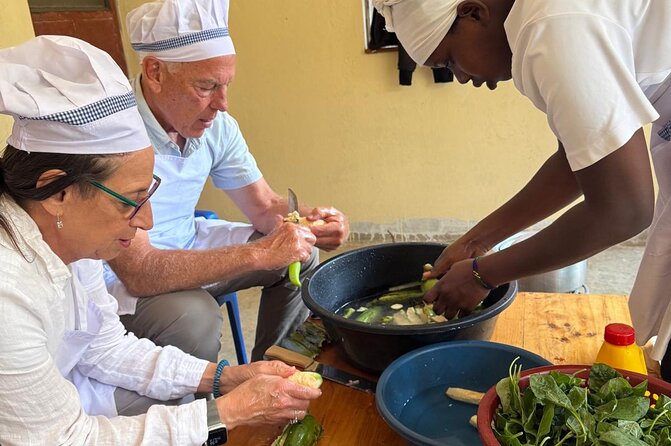
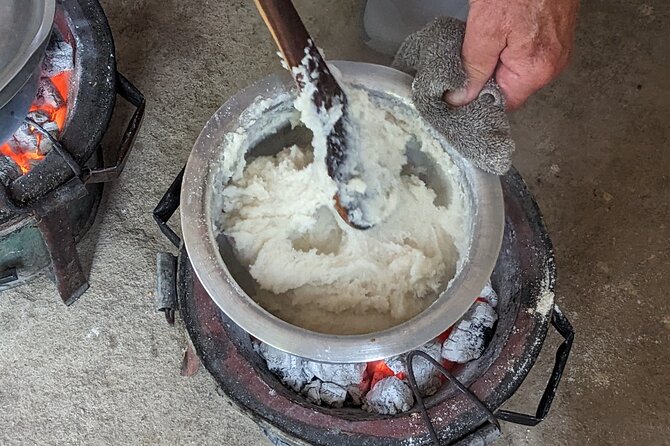
Do not picture stainless-steel counters or several induction hobs. The cooking space may have a low table, two charcoal burners, a gas burner, large tubs, and basic cooking tools. One person described the setup as lacking the benches, sinks, and full stove you might expect at home.
That simplicity is both the attraction and the limitation. You see how food can be prepared with equipment used in daily life, rather than with a kitchen built for tourists. You may handle ingredients, prepare them, cook with the chef, and learn how local meals are put together.
It can also be less comfortable. Low work surfaces may be awkward if you have back or knee problems. Charcoal cooking can produce smoke and heat. Washing facilities and utensils will be basic. The supplied information says most people can participate, but it does not promise a modern kitchen or specialized support.
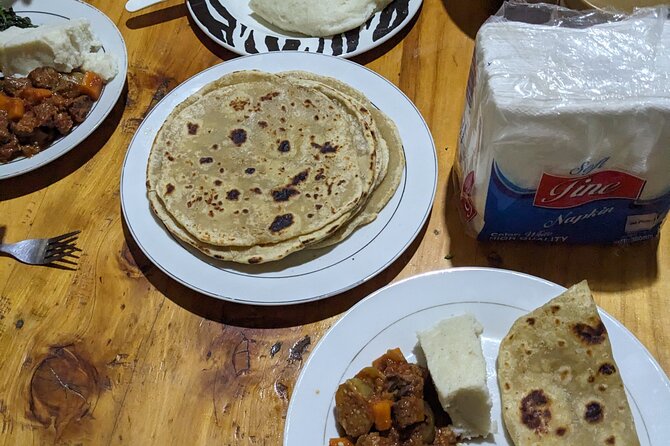
You select two dishes from the foods introduced at the market. Ugali and ndizi are specifically mentioned as examples. Ugali is a staple maize-based dish, while ndizi refers to bananas used in Tanzanian cooking. The exact menu is chosen on the day, so you should not book this expecting a fixed recipe list.
The chef leads the practical work, while the guide helps connect the food to local customs and daily routines. That division is useful: the chef can focus on preparing the meal, while the guide can explain the wider cultural context.
More Food Market Tours in the world:
- Seoul Street Food Market Tour
★ 5.0 · 1,226 reviews - Seoul: Night Market Food Tour with Local Guide
★ 4.9 · 943 reviews - Venice Street Food Tour with Local Guide with Local Food Market Visit
★ 5.0 · 822 reviews - Tokyo: Tsukiji Fish Market Food and Culture Walking Tour
★ 4.7 · 757 reviews
Eating what you cook in Arusha
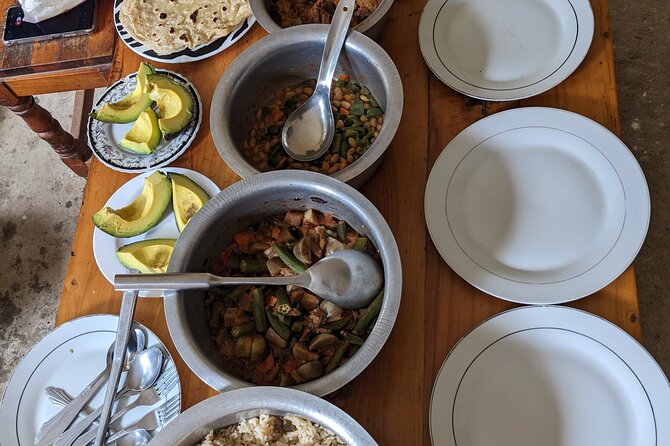
The meal you prepare is included for you and the people taking part in the class. It can be served as lunch or dinner, depending on the start time. One booking began at 5:00 p.m., so an evening session is possible.
The meal is not an afterthought. It is the payoff for the market choices and the work at the stove. You get to taste the finished food with a better sense of where the ingredients came from and how the preparation works.
The portion and final dishes can depend on the ingredients selected and the day’s plan. Drinks are not included, so bring or buy water as needed. You can purchase water, soda, or beer along the way, but the cost is separate.
Takeaway food may also be available after the meal. Since this is not guaranteed as a formal inclusion, ask the guide what can be packed before you count on taking food back to your hotel.
What the strongest parts of the experience are
The most praised feature is the combination of market and kitchen. Either part alone would be useful, but together they create a clearer picture of Tanzanian food. You see the ingredients in place, hear how they are used, and then help turn them into something you can eat.
The guides also receive strong attention for warmth and enthusiasm. Israel is repeatedly associated with the market explanation and cooking activity, while Jack, James, Lameck, Bariki, and Magret are also named as friendly and helpful guides in different sessions. Guide assignments can change, but the experience depends heavily on having someone who explains rather than simply escorts.
The class is also praised for its connection to local people. You spend time in a market and a neighborhood setting instead of remaining in a hotel restaurant. That gives you a more grounded view of food shopping, public transport, and home-style preparation.
The 5-star rating across 34 submitted ratings and a 100 percent recommendation figure suggest strong satisfaction, but I would still read the format carefully. High praise here reflects cultural contact, friendly instruction, and good food. It does not mean luxury comfort or a polished culinary school.
Who will enjoy this, and who may not
I would recommend this activity to you if you like food as a way to understand a place. It suits curious first-time visitors to Arusha, couples, families, and small groups who want a half-day activity beyond the usual sightseeing route.
It is especially good for people who enjoy asking questions, handling ingredients, trying unfamiliar dishes, and accepting a little uncertainty. You do not need to be an experienced cook. The point is participation, not technical mastery.
You may want to skip it if you need a strict timetable, private transport throughout, or a fully equipped kitchen. It may also be a poor fit if you dislike markets, smoke, basic washing facilities, low work surfaces, or public transport.
The activity is listed for groups of up to 200 people. That is a large possible maximum, so the atmosphere could vary. A small group would make it easier to hear the guide and take part in each cooking step. Ask about the expected group size if this matters to you.
Timing, pickup, and practical planning
The total duration is about four hours. Pickup and drop-off are offered at hotels near Arusha’s city center. After booking, you should receive confirmation by WhatsApp or email, which is useful for checking the pickup time and meeting details.
Wear clothes and shoes that can handle a market and a cooking area. The supplied information does not promise protective clothing, modern sinks, or a clean-up service in the style of a Western cooking school. Comfortable clothing is the sensible choice.
Plan around the weather. The activity requires good weather, and poor conditions can lead to a different date or a full refund. Free cancellation is available if you cancel at least 24 hours before the start time. Cancellation inside that period is not refundable, and changes made within 24 hours are not accepted.
The experience is available near public transportation, and most people can participate. No special accessibility details are provided, so contact the operator if you need specific arrangements.
Is $42 a good value?
At $42, this is a good buy for a four-hour cultural activity that includes food. You are paying for more than a lesson: the price covers the market walk, ingredients, local transport, the chef, the cooked meal, and hotel transfers near the center.
It is less compelling if you only want to learn a recipe. In that case, a shorter class might be cheaper and more focused. Here, the market and transport take time, but they are what give the lesson its local character.
I would also budget for drinks and perhaps a tip. Tips are not required, but you can leave one based on the service you receive. Spices from the market are not included, so ask before buying any to take home.
Should you book the Arusha cooking class?
Book it if you want to connect a meal with the people, places, and routines behind it. The market visit, local transport, simple cooking room, and shared meal offer a fuller picture of Arusha than a restaurant dinner alone.
Go in with the right expectations. This is not a polished studio class. It is a practical, hands-on introduction to Tanzanian food in a working local setting. If that sounds appealing, $42 is a reasonable price for the experience. If you want comfort, privacy, and precise culinary instruction, choose something more formal.
FAQ
How long does the Arusha cooking class and market tour last?
The experience lasts approximately four hours, including hotel pickup and drop-off, the market visit, transport to Sanawari, cooking, and the meal.
What does the market portion include?
You visit Arusha’s central food market for about 30 minutes in the stated schedule. A guide explains local foods, how they are used, and what you can choose for the cooking lesson.
Which dishes will I cook?
You choose two dishes from the local foods discussed at the market. Ugali and ndizi are examples mentioned, but the exact selection is made on the day.
Is the meal included in the price?
Yes. The food you cook is included for the people taking part, and it may be served as lunch or dinner. Drinks are not included.
Is hotel pickup available?
Yes. Pickup and drop-off are offered at hotels near Arusha’s city center. Booking confirmation is sent by WhatsApp or email.
Will I use public transport?
Yes. The experience includes a chance to use normal local public transport between the central market and Sanawari.
What happens if the weather is poor?
The activity requires good weather. If it is canceled because of poor conditions, you can receive a different date or a full refund. You can also cancel for a full refund if you do so at least 24 hours before the start time.
Newest street food walks around the world
- Old Delhi Cultural, Temples, Heritage Walking Street Food Tour★ 5.0 · 57 reviews
- Old and New Delhi Street Food Sampling★ 5.0 · 3 reviews
- Old Delhi Tour by Tuk-Tuk Street Food and Shopping Experience★ 5.0 · 12 reviews
- Customized Half Day and Full Day Delhi Shopping, Street Food Tour★ 5.0 · 52 reviews
- Delhi: Street Food Crawl (2 Hours Guided Food Tasting Tour)★ 3.5 · 18 reviews
- Taste Famous & Best Street Food of Old Delhi (Jama Masjid)★ 3.0 · 2 reviews
- Spice & Stories: 3-Hour Old Delhi Heritage Food Walk Guided Tour★ 4.5 · 36 reviews
- Old Delhi Street Food and Spice Market Tour★ 5.0 · 81 reviews
Tanzania street food tours, side by side.
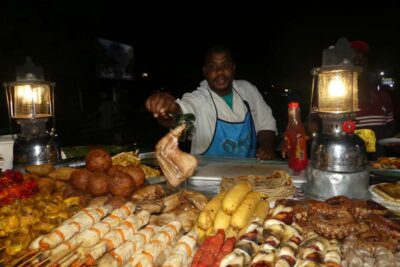
Stonetown: Food Markets and Street Food Walking Tour
Read our review →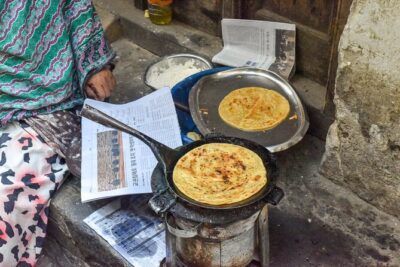
Authentic Street Food Tours in Stone Town, Zanzibar
Read our review →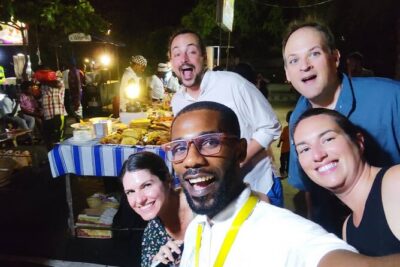
Stone Town Evening Walk Tour With Visit Food Markets
Read our review →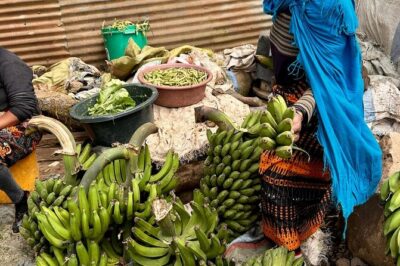
Arusha: Traditional Tanzania Cooking class& Food Market Tour
Read our review →
The lists this tour appears in