
Review · TANZANIA
Street Food and Community Walking Tour
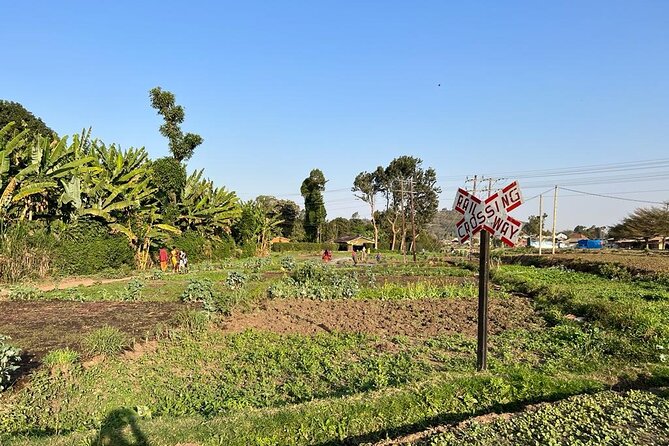
Sinoni gives you a side of Arusha that a standard city visit can easily miss. You walk south of the center with a local guide, taste simple foods from neighborhood vendors, and see how ordinary work and community life fit together. The stops include urban farming, recycling, maize milling, and carpentry, not just photo-friendly streets.
I like two things here. First, the small group limit of 10 keeps the walk personal and leaves room for questions. Second, the tour supports Jamii Imarika Foundation, with all profits directed toward education, basic needs for disadvantaged children, women’s empowerment, and youth education. The main consideration is that this is a real neighborhood walk, not a polished attraction, so expect uneven pacing and everyday surroundings rather than a tightly staged food crawl.
Key points at a glance
- A two-and-a-half-hour walk through Sinoni: See local work, homes, churches, and community spaces south of Arusha’s center.
- Sweet and salty tastings along the way: Food comes from different local vendors and is included in the $25 price.
- Jackson and Given may lead the walk: They are named as friendly, helpful guides who share practical insight into the neighborhood.
- A small group of no more than 10 people: This makes it easier to ask questions and engage with people you meet.
- All profits support a local foundation: Your booking helps fund work with children, women, and young people.
- The walk finishes in Sinoni: Private transportation is not included, but the team helps you get back to your hotel.
Starting near the Maasai Market
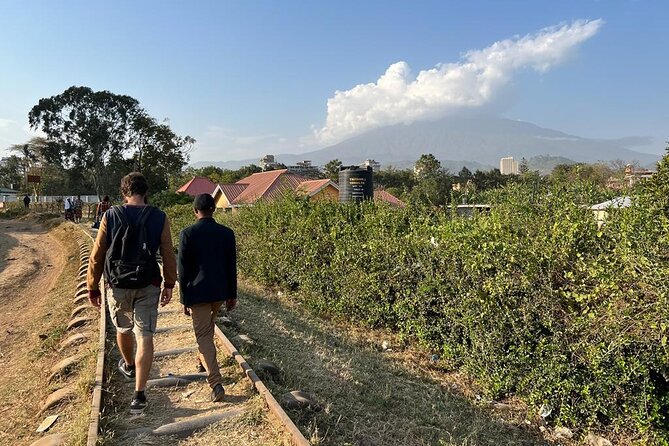
The meeting point is Kajo Art Gallery on Tanesco Road, near the Maasai Market in Arusha. This gives you a clear city starting point before the tour moves into Sinoni, a district just south of the city center.
You should allow a little time to find the exact starting spot. The experience uses a mobile ticket, and confirmation is sent at booking, so keep the ticket easy to access on your phone. No private transfer is included. That matters if your hotel is outside the central area, since you will need to arrange your own way to the meeting point.
The tour then heads into Sinoni on foot. The roughly 2 to 3 hour duration, with about 2 hours and 30 minutes devoted to the walk, is long enough to see several parts of daily life without taking up an entire day. It also leaves room in your Arusha schedule for a market visit, a meal, or preparations for a safari.
More street food walks around the world:
- Dubai: Old Town, Creek, Museums, Souks, & Street Food Tour
★ 4.8 · 10,816 reviews - Ho Chi Minh City Street Food Tour & Sightseeing By Motorbike
★ 5.0 · 9,413 reviews - Medellin: Comuna 13 Graffiti Tour, Cable Car & Street Food
★ 4.8 · 9,046 reviews
Walking into Sinoni with local guides
The strength of this experience is its local scale. Instead of moving from one major sight to another, you spend time noticing the work and routines that keep a neighborhood going.
Jackson and Given are named as guides for the experience. Their role is more than leading the route. They explain Tanzanian culture and everyday life in Arusha, answer questions, and help you engage with people in the community. One direct account of the walk praises both guides for being friendly, helpful, and generous with information.
That personal contact is important. You are not simply passing through Sinoni with a guide pointing at buildings. You have a chance to ask why things are done in a certain way, how local work functions, and what you are seeing as you walk. The exact conversation will depend on your group and the people available that day, but the format encourages exchange rather than a one-way speech.
The group limit is 10 people. That is a useful size for narrow streets and informal stops. It also gives you a better chance to hear the guide and ask questions without holding up a large crowd. If you prefer private, highly customized tours, this is not a private booking, but the small group keeps it from feeling anonymous.
Tasting sweet and salty food from local vendors
Food is woven into the walk rather than treated as a separate restaurant visit. You stop at different vendors and try sweet and salty local foods along the way.
The food is included, along with taxes and other tour fees. At $25 per person, that makes the price easier to assess. You are paying for a local guide, a structured walk, several tastings, and a contribution to a community foundation. You are not paying for a full meal, so plan to eat before or after if you need something substantial.
The lack of a fixed dish list can be both a benefit and a limitation. It allows the food stops to reflect what is available in Sinoni on the day of your visit. It also means you should not book this expecting a carefully designed menu or a formal cooking demonstration. The experience is better suited to curious eaters who enjoy trying small portions and asking about what they are given.
If you have allergies or strict dietary needs, contact the provider before booking. The available information does not specify vegetarian, vegan, halal, gluten-free, or allergy-friendly options. Since the food comes from different vendors, you should explain your needs clearly to the guide at the start.
Seeing work that visitors often pass by
The route includes several practical community stops. Each one gives the walk a different focus.
Urban farming shows how food production can happen within a city neighborhood. You may find this stop especially useful if you want to understand how residents use available space and resources rather than seeing only formal parks or commercial farms.
Recycling brings attention to another side of daily work. It is a useful reminder that community economies are built through many kinds of labor, including work that visitors rarely notice. The guide can place this activity in the wider setting of life in Arusha.
At a maize mill, you get a look at a basic service tied to a common food staple. The stop helps connect the food you taste with the work needed to process it. That link gives the food portion more meaning than a quick snack bought without context.
Carpentry adds a craft and work element to the route. You can see how making and repairing things fits into local commerce. This is the kind of stop where your questions can add a lot, since the guide can explain what you are seeing and how the work serves the neighborhood.
The route also includes mud houses and churches. These stops give you a sense of local building methods and community institutions. The tour does not present Sinoni as a museum. You are seeing homes and places that remain part of everyday life, so a respectful manner matters. Ask before photographing people or private property, and follow the guide’s lead.
Same streets, a different set of bites:
- Dubai: Old Town, Souks, Street Food, Guided Tour & Abra Ride
★ 4.9 · 7,170 reviews - Naples: Street Food Walking Tour with Local Guide
★ 4.9 · 4,976 reviews - Small Group Hanoi Street Food Tour with a Real Foodie
★ 5.0 · 4,682 reviews - Rome: Street Food Tour with Local Guide
★ 4.8 · 4,077 reviews
What the walk feels like in practice
This is an active experience. You spend most of the time walking outdoors, moving between food vendors, work sites, homes, and community places. Wear comfortable shoes and bring water, since the supplied details do not indicate that transportation or refreshments beyond the tastings are provided.
The tour requires good weather. If rain or other poor conditions cancel the experience, you are offered another date or a full refund. The tour also requires a minimum number of participants. If that minimum is not reached, you can choose a different date or experience, or receive a full refund.
Most people can take part, and service animals are allowed. The activity is near public transportation. Still, anyone who finds extended walking difficult should ask the provider for current route details before booking, because the information does not state the distance, pavement conditions, or number of rest breaks.
The pace may vary. Food stops, conversations, and visits to working places are not always as predictable as a museum timetable. I would treat that as part of the point, while keeping your later plans flexible.
A community visit with a clear purpose
The tour is offered by Jamii Imarika Foundation, a local nonprofit organization. Its work focuses on education and basic needs for disadvantaged children, empowering women, and educating young people.
The promise that 100 percent of tour profits go to the organization gives the $25 price a second layer of value. You still need to judge the tour by the experience itself, but your booking also helps fund work in the community you are visiting. That is a more direct connection than simply buying a souvenir or taking a standard sightseeing excursion.
You should keep the purpose in perspective. A short walking tour cannot explain every part of life in Arusha, and it should not be treated as a complete picture of Tanzania. It offers a limited, local view through one neighborhood and the people who guide you. Its value comes from that close focus.
The format also calls for sensitivity. Sinoni is a lived-in district, not a set built for visitors. Listen to the guide, ask thoughtful questions, and remember that the people you see are not part of a performance. The best experience is one where you remain curious without turning everyday life into a spectacle.
How the $25 price measures up
At $25 per person, this is a reasonable half-day activity if you value local contact and community benefit. The price includes the guide, sweet and salty tastings, all fees, and taxes. The maximum group size of 10 adds value because the guide can give more attention to each person.
The price does not include a tip. Gratuity is optional, but you may want to carry some cash if you feel the guide did a good job. Private transportation is also not included, so add the cost of reaching the start and returning from the finish when planning your day.
The tour ends at Sinoni, at the listed location JM7M+65W in Arusha. The team helps you return to your hotel, but the supplied details do not promise a vehicle or cover the fare. Ask the guide about the best return option when the walk ends.
Booking about 42 days ahead is the average pattern for this experience. That does not guarantee that every date sells out, but it is a good reason to reserve early if your Arusha schedule is fixed. Confirmation arrives at booking, so you can keep the details on your phone.
Who should choose this Arusha food walk?
I would recommend this tour to you if you want to see ordinary community life, try small local tastings, and support a local organization at the same time. It suits first-time visitors who want context for Arusha beyond hotels, safari offices, and central shopping areas.
It is also a good fit if you enjoy asking questions. The guide-led format gives you a chance to learn about culture and daily routines directly, rather than simply following a route with little explanation. The small group helps keep that conversation manageable.
Families and mixed-age groups may find the short duration useful, provided everyone is comfortable walking. Most people can participate, and service animals are allowed. Still, the lack of detailed route information means you should confirm suitability for anyone with mobility concerns.
You may want a different activity if your priority is a large meal, a cooking class, private transport, or a tightly scheduled sightseeing route. You should also think twice if you are uncomfortable with informal food stops or with visiting an active residential neighborhood.
Should you book the Sinoni community tour?
Book it if you want a modestly priced, people-focused experience with a clear local purpose. The combination of food tastings, community work sites, and guides such as Jackson and Given gives you a useful view of Arusha that a standard city tour may not provide.
Go in with realistic expectations. You are paying for a guided neighborhood walk, not a full lunch or a polished attraction. The route can depend on weather, local activity, and the natural pace of conversation.
For many visitors, the strongest reason to book is the balance of direct community contact and practical support for Jamii Imarika Foundation. If that matches the way you like to travel, this two-and-a-half-hour walk is a worthwhile addition to an Arusha stay.
FAQ
Where does the tour start?
The tour starts at Kajo Art Gallery near the Maasai Market on Tanesco Road in Arusha, Tanzania.
Where does the tour finish?
The walking tour finishes in Sinoni at the listed location JM7M+65W, Arusha. The team helps you return to your hotel.
How long does the experience last?
The tour lasts approximately 2 to 3 hours, with the Sinoni walk listed at about 2 hours and 30 minutes.
What food is included?
Sweet and salty food from different local vendors is included. A specific menu is not provided.
Is transportation included?
Private transportation is not included. The experience is near public transportation, and the team helps you get back to your hotel after the walk.
How many people can join?
The tour has a maximum of 10 participants.
Can I cancel for a full refund?
Yes. You can cancel at least 24 hours before the local start time for a full refund. Cancellations or changes made within 24 hours are not refunded or accepted. If poor weather or an insufficient minimum group causes cancellation, you are offered another date or experience, or a full refund.
Newest street food walks around the world
- Old Delhi Cultural, Temples, Heritage Walking Street Food Tour★ 5.0 · 57 reviews
- Old and New Delhi Street Food Sampling★ 5.0 · 3 reviews
- Old Delhi Tour by Tuk-Tuk Street Food and Shopping Experience★ 5.0 · 12 reviews
- Customized Half Day and Full Day Delhi Shopping, Street Food Tour★ 5.0 · 52 reviews
- Delhi: Street Food Crawl (2 Hours Guided Food Tasting Tour)★ 3.5 · 18 reviews
- Taste Famous & Best Street Food of Old Delhi (Jama Masjid)★ 3.0 · 2 reviews
- Spice & Stories: 3-Hour Old Delhi Heritage Food Walk Guided Tour★ 4.5 · 36 reviews
- Old Delhi Street Food and Spice Market Tour★ 5.0 · 81 reviews
Tanzania street food tours, side by side.

Stonetown: Food Markets and Street Food Walking Tour
Read our review →
Authentic Street Food Tours in Stone Town, Zanzibar
Read our review →
Arusha: Traditional Tanzania Cooking Class & Food Market Tour
Read our review →
Stone Town Evening Walk Tour With Visit Food Markets
Read our review →
The lists this tour appears in