
Review · COLOMBIA
Street Food Tour in Bogotá with Tastings
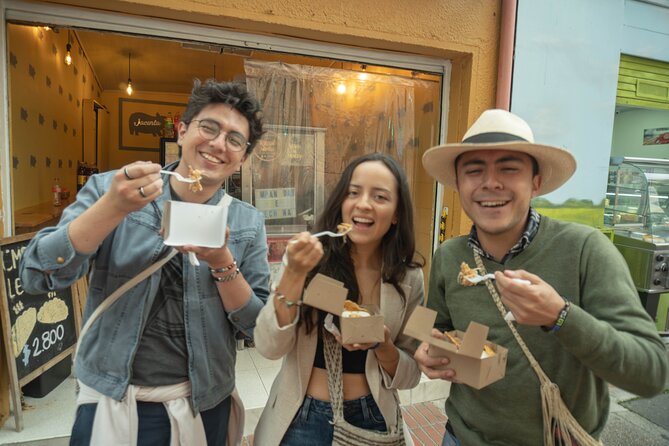
Bogotá’s best introduction may come one bite at a time. This two-and-a-half-hour walk moves from the National Museum toward La Macarena and La Perseverancia, mixing pandebono, buñuelos, empanadas, fruit, coffee, and dessert with stories about the city’s food traditions.
I like two things here: all food is included, and guides such as Camila and Camilo bring the history behind each dish to life. I also like the small maximum of 10 people, which gives the walk a personal feel. The one thing to consider is simple: come very hungry, because the tastings can add up to a full lunch and dinner.
Key points to know before booking
- A full meal in small portions: The food is not limited to one or two samples. Expect pastries, fried corn empanadas, fruit, coffee, roscón, and oblea, with lechona also mentioned as part of the food experience.
- A walk through central Bogotá: The route links the National Museum, Carrera 7, Plaza de Toros Santa María, Torres del Parque, La Macarena, La Perseverancia, and Calle Bonita.
- A strong guide-led experience: Camila and Camilo explain the background of Colombian food and adjust their approach to the group.
- Small groups: The tour accepts no more than 10 people, although a smaller booking may sometimes become a private-feeling outing.
- Good value at $20: All listed food tastings and coffee or tea are included, while transportation to and from the meeting point is not.
- Plan for the afternoon: Meet at the National Museum of Colombia at 1:30 p.m. and expect a walking tour that finishes back at the meeting point.
Why this Bogotá food walk works so well
A good food tour should do more than hand you snacks. It should help you understand why those foods belong to a place. This one connects the dishes to Bogotá’s streets, public spaces, buildings, and neighborhoods, so you get a compact introduction to both the city and its table.
The route is especially useful early in your stay. You can sample foods you might otherwise pass by, learn their names, and then return later on your own. One participant even found the tour useful on a first afternoon in Bogotá after arriving without luggage. That is a reminder of how practical a food walk can be when you want an easy first activity that still feels local.
At $20, the price is modest for a 2.5-hour outing with all food included. You are not paying for a formal restaurant meal. Instead, you are paying for a sequence of tastings, a guide, and the work of finding and explaining each stop. Since the food can be enough for lunch and dinner, the value is better than the low price first suggests.
The tour is not designed for someone who wants to sit down for a long meal. You will walk between stops, eat in several settings, and keep moving. That pace is part of the appeal, but anyone with limited mobility or a strong preference for a restaurant table should consider the format carefully.
More street food walks around Colombia:
- Medellin: Comuna 13 Graffiti Tour, Cable Car & Street Food
★ 4.8 · 9,046 reviews - Medellín: Comuna 13 True Story and Street Food Tour
★ 4.9 · 1,779 reviews - Cartagena: Guided Street Food Tour with Tastings
★ 4.9 · 833 reviews
Starting at the National Museum at 1:30 p.m.
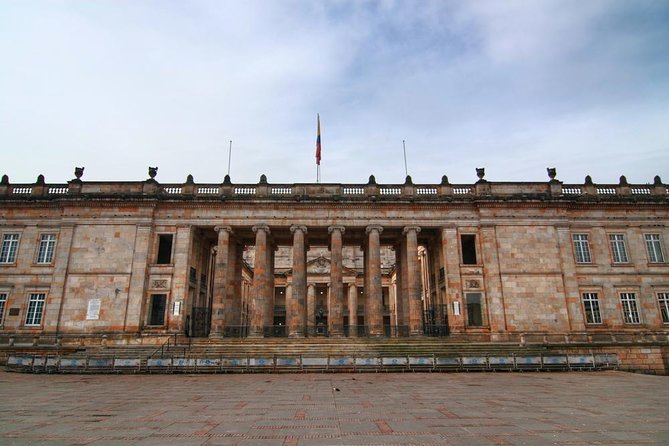
The meeting point is the Museo Nacional de Colombia at Ak 7 #28-66. The opening ten minutes are used for introductions and basic information, so you have a chance to understand the route before the eating begins.
Starting at the National Museum gives the tour a clear central landmark and places you near Carrera 7, one of Bogotá’s main routes. You are not collected from your hotel, so plan your own way to the museum. Public transportation is nearby, but pickup and drop-off are not included.
The 1:30 p.m. start also suits people who want a relaxed morning before eating. It is less useful if you have only a short stop in Bogotá and need an early finish, since the tour lasts around two and a half hours.
Carrera 7: pandebono and buñuelo
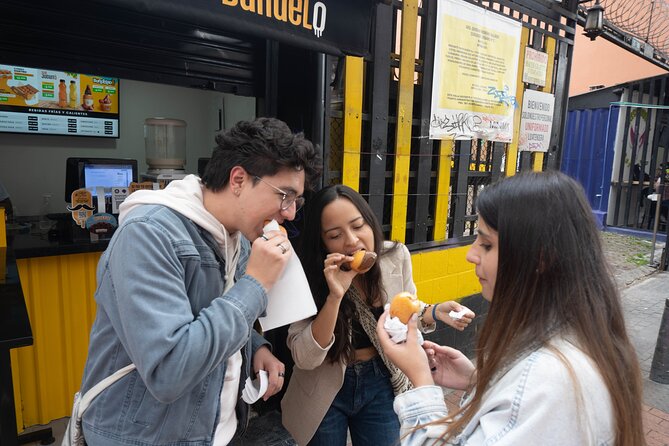
The first food stops come along Carrera 7, where you try pandebono and buñuelo. These are familiar Colombian bakery foods, but they are different enough from one another to make a good opening pair.
Pandebono is a cheese bread with a pleasant chew, while buñuelo is a fried cheese ball with a lighter, puffed texture. Sampling both side by side helps you notice how much variety can come from simple ingredients such as corn, flour, and cheese.
This is also a useful point for asking questions. If you are unsure how to pronounce a food or how it is normally eaten, this is the time to ask. The guides are praised for explaining the dishes and responding carefully to questions, which matters more on a food tour than a long speech delivered without discussion.
The practical warning is to pace yourself. These first tastings may look small, but there are many more stops ahead. Do not treat the opening foods as a quick snack before the real meal. They are already part of a substantial progression.
Plaza de Toros Santa María and Bogotá’s public spaces
The route then passes the Plaza de Toros Santa María, the planetarium, and Torres del Parque. This section is not primarily about eating. It gives the guide room to show how food fits into the city around it.
Historical buildings and public spaces provide a break between tastings, which is welcome when the menu is this generous. You are not simply moving from one counter to the next. The walk uses Bogotá’s streets as part of the lesson, linking architecture, neighborhoods, and local habits.
The ten-minute stop is brief, so do not expect a full visit inside each attraction. The value is in seeing these places from the route and hearing why they matter. If you want detailed museum or architectural tours, you will need to arrange those separately.
Same streets, a different set of bites:
- Medellin: Street Food and Poblado Rooftop Tour with a Local
★ 4.8 · 317 reviews - Medellin: Party Bus with DJ & Street Food Tastings
★ 4.5 · 112 reviews - The Cali Street Food Walking Tour
★ 5.0 · 81 reviews - Street Food Tour in Medellín with Tastings
★ 5.0 · 76 reviews
Torres del Parque and Colombian empanadas
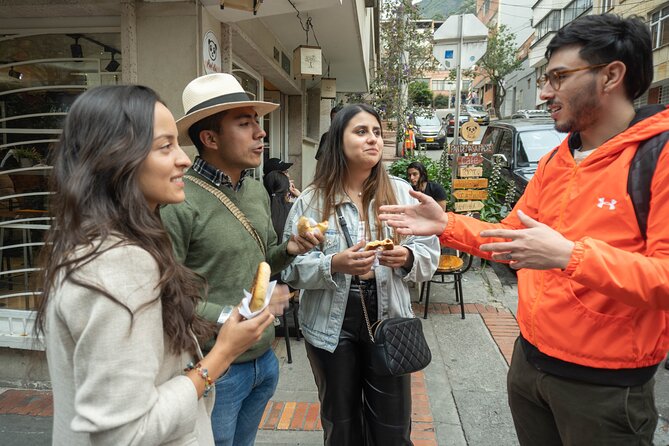
Near Torres del Parque, the tour stops for Colombian empanadas. These are different from the baked or folded versions many people know elsewhere. Colombian empanadas are generally corn-based and fried, giving them a crisp shell and a hearty filling.
This can be one of the more useful tastings for first-time visitors because the word empanada covers many different foods across Latin America. Trying Bogotá’s version here gives you a clear local reference point.
You may want to ask about fillings and sauces at the stop, since the data provided does not specify every ingredient. The guide can explain what you are eating on the day, and the small group limit should make that conversation easier.
The setting also helps. Torres del Parque is more than a food stop, and the surrounding buildings give the snack a sense of place. You get a little sightseeing without turning the tour into a standard landmark circuit.
La Luvina and coffee with orange
At the former La Luvina bookstore, now called Matorral bookstore, the food walk takes a surprising turn. You stop for coffee, but not the usual hot cup. The featured drink is cold coffee with orange.
This is one of the tour’s more unusual ideas. Colombia is closely linked with coffee, yet the drink here is presented in a fresh, citrusy form rather than as a routine café serving. It also gives you a pause from heavier fried foods.
The bookstore is described as an important cultural space in Bogotá, so this stop combines a drink with a look at the city’s literary side. It is a small detail, but it keeps the route from feeling like a checklist of snacks.
Coffee preferences can be personal, and a cold coffee with orange will not suit every palate. That is not a flaw, but it is worth knowing that the tasting is meant to offer something different. You are sampling a local interpretation, not ordering your usual coffee.
La Macarena and the toasted roscón
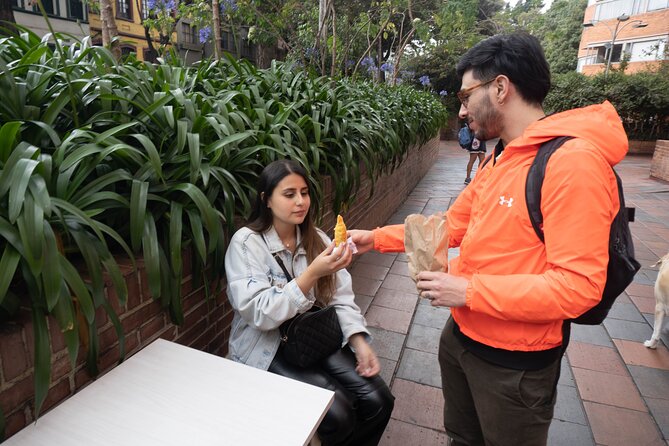
In La Macarena, you try roscón resobado. Roscón came to Colombia through Spanish influence, but Bogotá gives it a local treatment by toasting it. The result is a familiar pastry with a different texture and a more pronounced toasted quality.
The neighborhood is described as one of the city’s restaurant-filled streets, so this portion of the walk shifts into an area where food is part of the everyday scene. You can look around as you eat, rather than stopping in an isolated tasting room.
This is a good example of the tour’s wider theme: Colombian food is not presented as frozen tradition. Older influences are adapted, changed, and made local. The guide’s explanation helps you see that process in a simple pastry.
By this point, you may already be full. The route is still not finished, so take small portions when possible and tell the guide if you need a slower pace. The guides are described as attentive to how people feel after each tasting.
La Perseverancia market and tropical fruit
The Plaza de Mercado La Perseverancia brings the tour to one of Bogotá’s market settings. Here, the focus is tropical fruit, an obvious choice in a country with such a wide range of produce.
For many visitors, this is where the food tour becomes most educational. Fruit names and flavors can be unfamiliar, and a guide can explain what you are trying without making you guess at a market stall. You might find sweet, tart, creamy, or fragrant flavors, depending on what is available that day.
The market also adds a different rhythm to the route. Bakery foods and fried snacks show one side of Colombian eating. The fruit stop brings in freshness and color, and it helps balance the heavier dishes that came earlier.
Specific fruit choices are not fixed in the information provided, so you should expect variety rather than a guaranteed list. That flexibility is normal for a market visit and means the tasting can reflect what is available.
Calle Bonita and the final oblea
The final stop is on Calle Bonita, where the tour ends with an oblea. This is a familiar Colombian dessert made from thin wafers with sweet filling, and it is common across the city.
An oblea is a fitting finish because it is simple, portable, and widely associated with Colombian street food. After savory snacks, pastries, fruit, and coffee, the sweet wafer gives the walk a clear ending.
The activity ends back at the meeting point, so you are not left searching for a final hotel transfer. Still, the route does not include drop-off. From there, you can continue exploring central Bogotá or arrange your own ride.
What the guides add to the food
Camila and Camilo are repeatedly singled out for their warmth, care, organization, and strong grasp of Colombian food and culture. Their role is not just to identify each dish. They explain how food arrived, changed, and became part of Bogotá’s daily life.
Camila is also described as tailoring the experience to the individual. When a group is very small, she asks what you have already seen and eaten in Bogotá, then adjusts the focus. That can make the same route feel less mechanical, especially if you have already tried some standard Colombian foods.
Camilo is praised for answering questions and giving background at each stop. He also helped one participant feel like a local by pointing out places worth returning to. That is useful beyond the two-and-a-half-hour tour because you leave with ideas for later meals.
The guide quality is important here. The food itself may be inexpensive, but the explanations turn a string of purchases into a coherent experience. If you simply want to eat as much as possible, you can do that cheaply on your own. The reason to book this walk is the combination of food, context, and direction.
Who should book this tour
I would recommend it to first-time visitors who want a fast introduction to Bogotá’s food culture without committing to a formal dining experience. It also suits curious eaters who enjoy trying several modest portions rather than ordering one large dish.
It is a strong choice for solo visitors and couples because the maximum group size is 10, and the guide can make a smaller booking feel personal. It also works well for anyone arriving in the afternoon and wanting an activity that combines eating with a walk.
Families may enjoy the variety, though individual tastes differ, especially with fried foods, coffee, and unfamiliar fruit. People with dietary restrictions should confirm what can be provided before booking, since no dietary menu is specified.
You should skip it if you dislike walking, prefer a fixed restaurant meal, or want a tour focused only on major sights. This is a food-led route, and the buildings and neighborhoods support the tasting rather than replace it.
Timing, group size, and cancellation details
The tour begins at 1:30 p.m., lasts about 2 hours and 30 minutes, and accepts a maximum of 10 people. A mobile ticket is provided, and confirmation arrives at booking.
Service animals are allowed, and the activity is near public transportation. Most people can participate, though the route involves walking between stops and the tour requires good weather.
You can cancel for a full refund up to 24 hours before the local start time. Cancellations or changes made within 24 hours are not refunded or accepted. If poor weather or an insufficient number of bookings causes cancellation, you are offered another date or a full refund.
Should you book the Bogotá street food tour?
Book it if you want a generous tasting menu on foot, clear explanations from Camila or Camilo, and a route that shows more than isolated food stalls. At $20, the included food makes this a particularly strong value, especially since the portions may cover much of your day’s eating.
Come with an empty stomach, comfortable expectations, and a willingness to try foods you may not recognize. If you want a leisurely restaurant lunch or a fixed list of guaranteed ingredients, choose something else. For a friendly, practical first taste of Bogotá, this tour earns its place on your afternoon plan.
FAQ
Where does the Bogotá street food tour start?
The tour starts at Museo Nacional de Colombia, Ak 7 #28-66 in Bogotá.
What time does the tour begin?
The stated start time is 1:30 p.m.
How long does the tour last?
The experience lasts approximately 2 hours and 30 minutes.
Where does the tour finish?
The activity ends back at the meeting point.
What food is included?
All food tastings are included. The route lists pandebono, buñuelo, empanadas, coffee with orange, roscón resobado, tropical fruit, and oblea. Lechona is also mentioned as part of the food experience.
Are drinks included?
Coffee and/or tea are included. The route specifically includes a cold coffee with orange.
Is hotel pickup included?
No. Pickup and drop-off are not included.
How many people can join?
The tour has a maximum group size of 10 people.
Can I cancel for a full refund?
Yes. You must cancel at least 24 hours before the experience start time for a full refund. Cancellations within 24 hours are not refunded.
Newest street food walks around Colombia
- Street Food Tour in Medellín with Tastings★ 5.0 · 76 reviews
- Private Cartagena city and street food tour.★ 5.0 · 31 reviews
- The Cali Street Food Walking Tour★ 5.0 · 81 reviews
- Street Food Tour – Live A Unique Gastronomic Experience★ 5.0 · 34 reviews
- Cali: Street Food Tour★ 4.8 · 71 reviews
- Santa Marta Street Food Tour★ 4.4 · 2 reviews
- Santa Marta A Historical & Street food Experience★ 4.7 · 41 reviews
- Medellín: Street Food Tour with Local Tastings★ 4.9 · 14 reviews
Colombia street food tours, side by side.
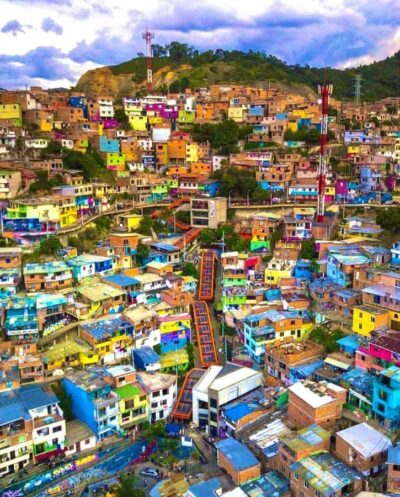
Medellín: Comuna 13 True Story and Street Food Tour
Read our review →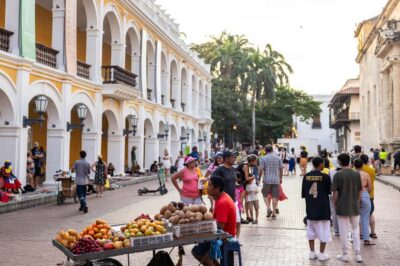
Cartagena: Guided Street Food Tour with Tastings
Read our review →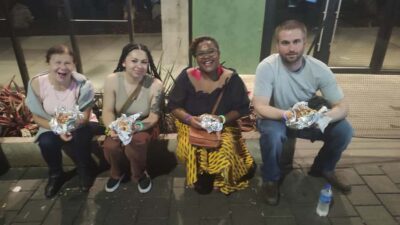
Medellin: Street Food and Poblado Rooftop Tour with a Local
Read our review →
Medellin: tasting Street Food with Rooftops of El Poblado
Read our review →
Santa Marta A Historical & Street food Experience
Read our review →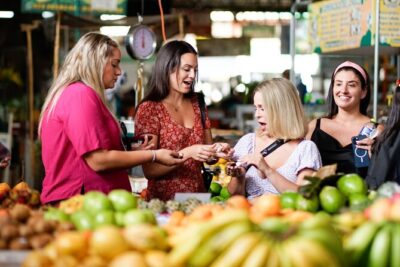
Street Food Tour – Live A Unique Gastronomic Experience
Read our review →The lists this tour appears in