
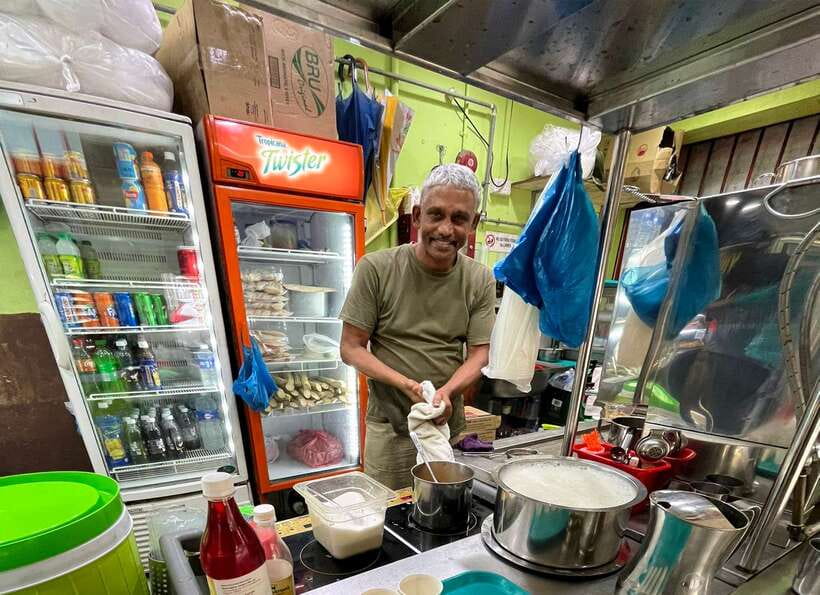
Review · SINGAPORE
Singapore: Little India Hawker Street Food Tour
Little India is best understood with something tasty in your hand. This three-hour walk takes you through hawker centres and side streets for eight Indian street-food tastings, from crunchy pani puri to South Indian thosai and the sweet-savory mix of Indian rojak. You get food, local context, and a close look at how the neighborhood eats.
I like the wide food range within Indian cuisine, and I like that the guide adds street art and local history instead of treating lunch as a simple checklist. Guides including Kyanta Yap and Corliss have been praised for making the walk lively and personal. The main caution is that the food selection may feel less varied if you hoped for dishes from many unrelated cuisines, and the exact number of substantial dishes can vary.
Key points at a glance
- Eight planned tastings: Expect Indian rojak, thosai, pani puri, North Indian dishes, drinks, and other local favorites.
- Food beyond famous stalls: The route includes well-known hawker centres as well as lesser-known alleys.
- A Sunday with extra street life: Indian and Bangladeshi workers often fill Little India on their day off, creating a particularly busy, local scene.
- History between bites: The walk includes local history and street-art stops, not just food counters.
- Three hours on foot: Meet at Little India MRT Exit C and prepare to eat steadily during the tour.
- Good guide potential: Kyanta Yap, Corliss, and other English-speaking guides bring different personalities and local knowledge to the route.
Starting at Little India MRT Exit C
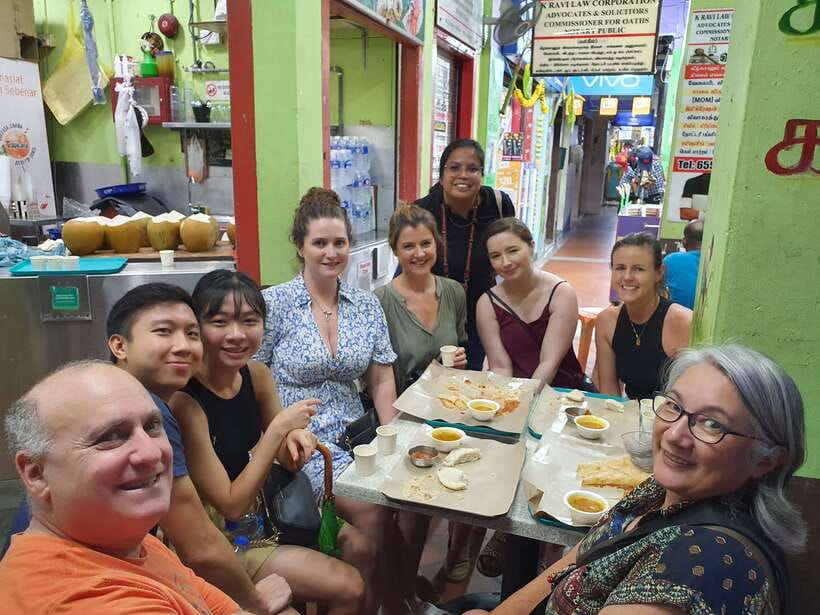
The meeting point is Little India MRT Exit C, a useful place to begin because you can arrive by public transport and meet your guide right in the neighborhood. The tour lasts three hours, so give yourself enough time to arrive before the stated start. Once the food begins, the pace is designed to keep you moving from one stop to the next.
This is a walking food tour rather than a seated meal. You will weave through hawker centres, food stalls, and side streets, stopping to taste dishes as the route unfolds. That format lets you see how food is bought and served in Singapore, but it also means you should wear comfortable shoes and avoid eating a large meal beforehand.
Your guide leads in English. The best part of having a guide here is not simply ordering food. It is learning what you are looking at, how different Indian traditions appear on the plate, and why hawker food matters in daily Singaporean life.
The group size is not stated, and the tour requires at least two people to operate. If that minimum is not reached, the experience may be rescheduled. That is a small planning point, but it matters if you are arranging a tight Singapore schedule.
More Hawker Centre Food Tours in Singapore:
- Small Group: Michelin and Local Hawker Food Tour with 9 tastings
★ 5.0 · 1,890 reviews - Small-Group Food Tour With Hawker Center: Eat Like A Local
★ 5.0 · 420 reviews - Singapore: Local Hawker Food Tour with Tastings
★ 4.7 · 181 reviews
Indian rojak: a surprising first taste
Indian rojak is one of the most interesting dishes on the route because it does not fit a simple sweet or savory label. The dish is known for bringing together different textures and flavors with a sauce that gives the plate its identity.
You may find pieces that are crisp, soft, sweet, and savory in the same serving. Your guide can help explain what you are eating and how the dish fits into Singapore’s food culture. For a first-time visitor, this is exactly the kind of stop that makes a food tour more useful than a restaurant menu.
The portion is a tasting rather than a full meal, which is helpful here. Rojak can be unfamiliar, and a small serving lets you try it without committing to a large plate. I would pay attention to texture as much as flavor. The fun is in the contrast.
Thosai and the craft of South Indian cooking
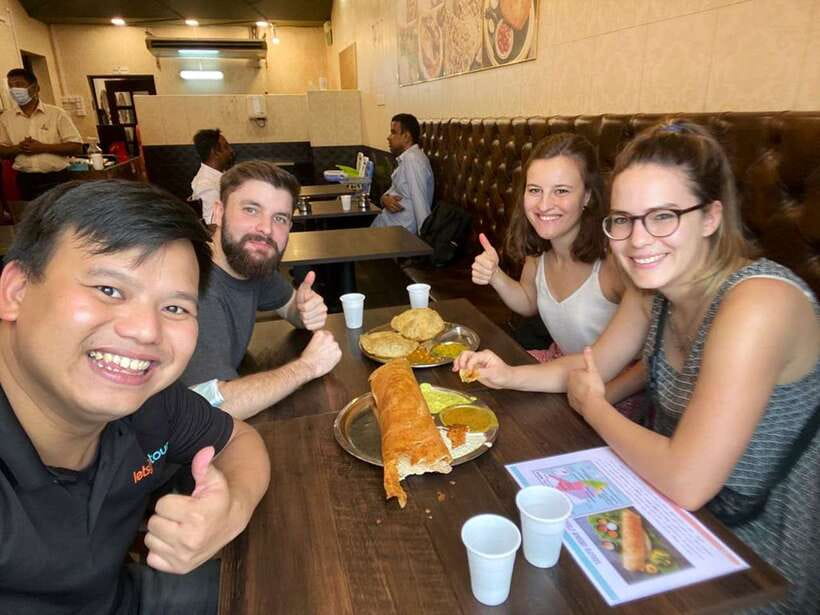
Thosai gives the tour a chance to show the skill behind South Indian food. This thin, crisp-edged dish is made from fermented batter, and its texture can change from delicate to hearty depending on how it is cooked and served.
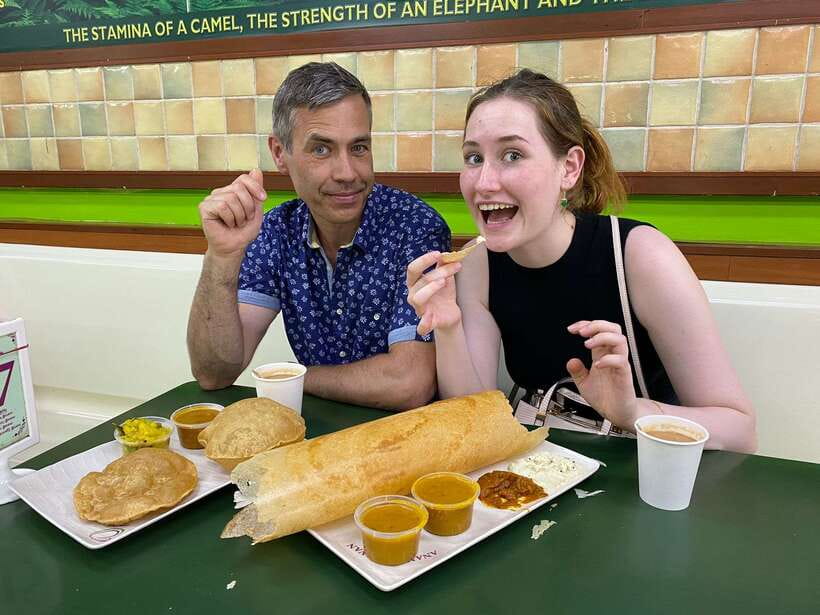
The appeal is not just the taste. You get to see how a simple batter becomes a complete street-food item through heat, timing, and technique. Your guide can place thosai within South Indian cooking, helping you understand why it is different from the North Indian dishes you may try later.
Do not expect every stop to be an elaborate sit-down presentation. Hawker food is direct and practical. You may be standing, sharing space with other customers, and eating in a setting where speed matters. That is part of the point. This tour shows the food in the environment where people actually buy it.
Pani puri brings the street-food drama
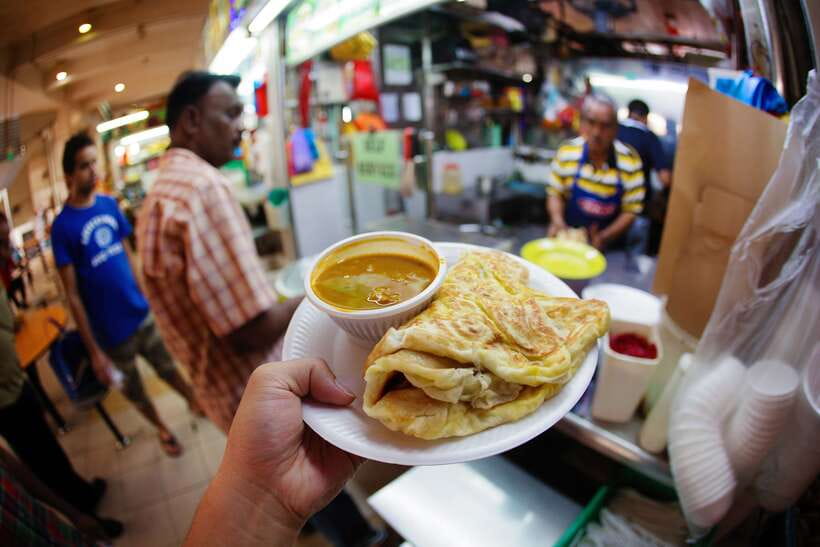
Pani puri is one of the route’s more playful bites. The small shell is filled and eaten quickly, often with a burst of flavor and liquid. It is a street-food staple, and it gives you a very different experience from thosai or rojak.
This is a dish best approached with a sense of humor. It can be messy, fast, and slightly unpredictable, which makes it memorable. Ask your guide how to eat it before taking your first bite, especially if you have never tried it.
Because the tour includes several tastings, you are not expected to order a full plate at every stop. That makes it easier to sample dishes that might be new to you. You can focus on learning and tasting rather than worrying about wasting a large portion.
More street food walks around Singapore:
- Small Group: Singapore Street Food & Night Tour with 9 tastings
★ 5.0 · 1,240 reviews - Singapore: UNESCO Street Food & Cultural Experience
★ 5.0 · 524 reviews - Singapore: Guided Street Food Tour at Night
★ 4.5 · 393 reviews - Singapore Street Food Tour with a Local: A Feast for Foodies 100% Personalized
★ 5.0 · 169 reviews
North Indian flavors in Singapore
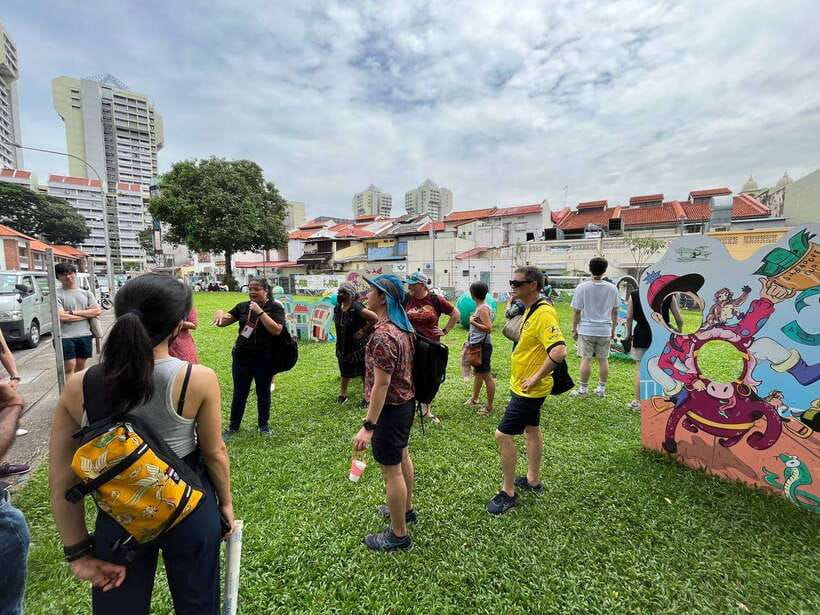
The route also includes a Singapore version of North Indian cuisine. That detail matters because Little India is not one single food tradition. South Indian dishes such as thosai sit alongside North Indian cooking, and the tour uses the contrast to show a wider picture of the neighborhood.
You should expect the food to vary in style, texture, and seasoning as you move between stops. The experience is less about identifying one perfect dish and more about seeing how several Indian traditions appear in Singapore’s hawker culture.
One point to keep in mind is the balance of the menu. The advertised experience includes eight food and drink tastings, but one detailed account described six dishes along with visits to two Michelin-recognized hawker venues. If you are counting on eight full-size plates, that may not be the right expectation. Think of the package as a sequence of tastings, with the exact mix shaped by the route and the day.
Hawker centres beyond the headline names
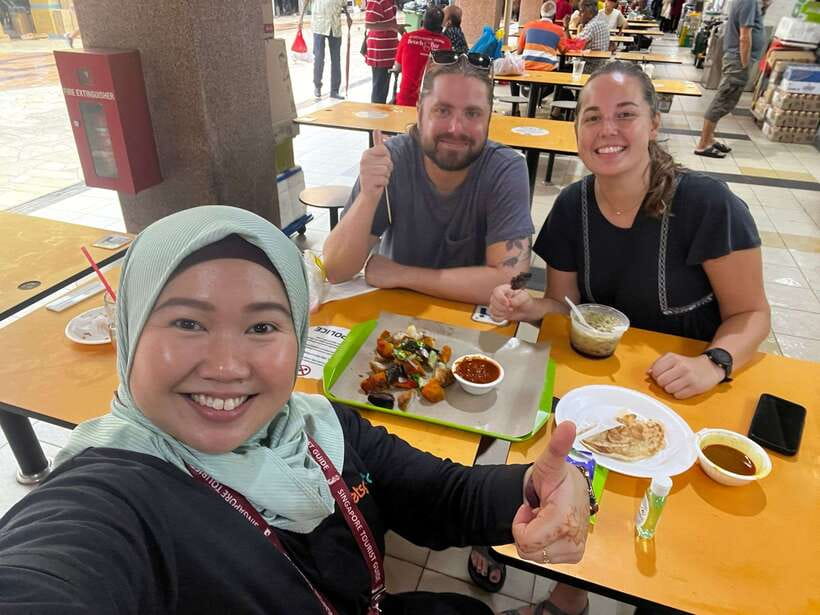
Singapore’s famous hawker stalls attract plenty of attention, but this tour aims to show more than the best-known counters. You will visit established hawker centres and also pass through less prominent lanes on the way to local food stops.
That gives you a better sense of the area than a single meal at one famous stall. A hawker centre is not just a collection of restaurants. It is a shared eating space where many food traditions operate side by side, usually at prices that fit everyday life.
The route may also include two Michelin-recognized hawker venues. That is a useful bonus for food-focused visitors, though the tour’s purpose is not to chase awards. The stronger idea is learning how famous food fits into a larger local scene.
You should also expect the pace and noise of a working food district. Little India can be crowded, particularly on Sundays. Indian and Bangladeshi workers often spend their only day off in the streets, so Sunday can bring a packed, energetic atmosphere that feels especially connected to the neighborhood’s present-day life.
If you dislike crowds, choose another day if the schedule allows. If you want to see Little India when local social life is especially visible, Sunday may be the more revealing choice.
Street art and local history between meals
Food is the main reason to book, but the stops away from the stalls help give the tour shape. The route includes street art and local history, so you are not simply walking from one counter to the next.
This is where a good guide can make a major difference. Kyanta Yap has been singled out for exceptional guiding, while Corliss has been praised for answering questions, adapting to requests, and bringing warmth to the afternoon. Yap has also been noted for explaining Singapore’s local history and how everyday systems work.
Those details are valuable because Little India can look like a collection of colorful signs, temples, shops, and food stalls if you walk through without context. A guide helps connect what you see to the people who use the neighborhood.
The experience is not a formal history lecture. It is more conversational, with information fitted around the food stops. That works well for most visitors, though anyone seeking a serious architectural or religious tour should choose a different experience.
What the $86 price really covers
At $86 per person, this is not the cheapest way to eat in Singapore. You could order individual hawker dishes for much less if you already know where to go and what to choose.
The value comes from the combination of eight tastings, a licensed guide, and route planning. You are paying to find the food without doing the research yourself, to taste several dishes in one sitting, and to get explanations that are hard to pick up from a menu.
The price makes more sense if you are new to Singapore, curious about Indian food, or have only a short stay. It also suits people who want a structured introduction before returning to Little India on their own.
It is less compelling if you already know the neighborhood well, prefer to eat at your own pace, or want large portions. This is a tasting tour, not an inexpensive substitute for lunch and dinner. You should still arrive hungry, but do not expect eight full restaurant meals.
The inclusion of Michelin-recognized hawker stops may add interest for food fans, yet I would not book solely for the awards. The best value is the full route and the explanation around it.
Who will enjoy this Little India walk
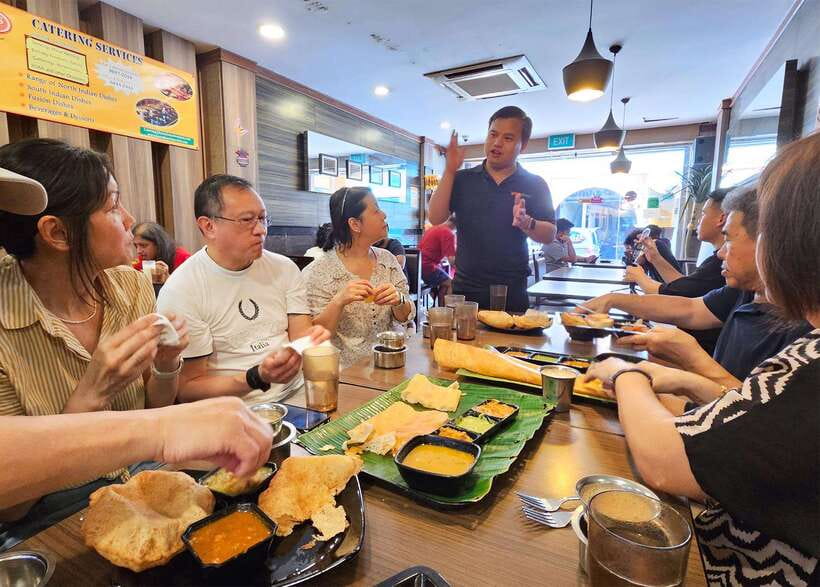
I would recommend the tour to first-time Singapore visitors who want a practical introduction to Little India. It also fits solo visitors who prefer company while trying unfamiliar foods, couples who enjoy walking and sampling, and anyone who wants more context than a quick meal can provide.
It is a particularly good match for people who have never visited India but want a taste of Indian food and street life in a well-organized setting. One participant described the experience as a safe way to get a glimpse of India, and that is a fair way to think about it. You get selected flavors and a local neighborhood setting without pretending that three hours in Singapore can represent the whole of India.
The tour may be less suitable for picky eaters, people who need a quiet meal, or anyone looking for broad international variety. The focus is strongly Indian, with the Singapore hawker setting providing the local connection. That focus is a strength, but it is worth knowing before you book.
Dietary details are not provided, so you should ask the operator before reserving if you have allergies or strict food requirements. The available information confirms eight food and drink tastings, but it does not specify every ingredient or substitution.
Practical tips for a better afternoon
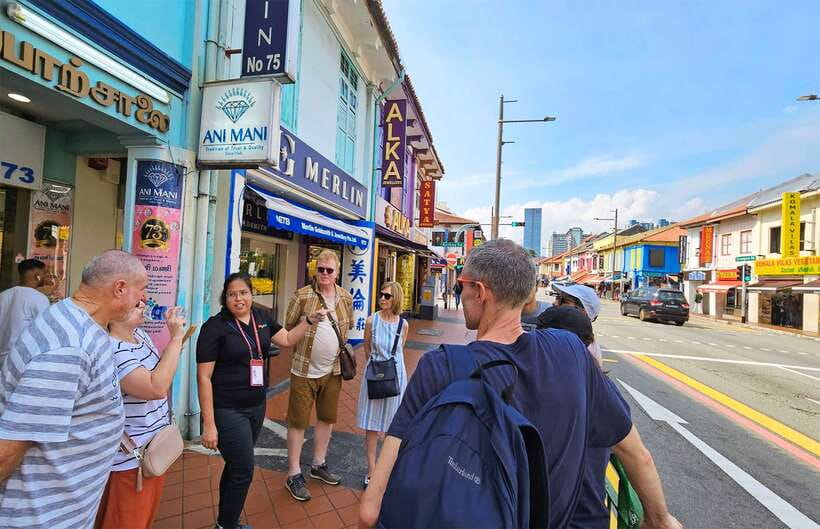
Arrive at Little India MRT Exit C with room in your schedule. You do not want to rush into the first tasting, and the tour may be more enjoyable if you have not just finished a large meal.
Wear shoes suited to three hours of walking. You will move through hawker centres and side streets, with stops that may involve standing rather than sitting.
Keep an open mind about texture. Indian rojak, thosai, and pani puri do not all deliver the familiar flavors or formats that many visitors expect from Indian restaurants. The guide can explain each dish, but your best approach is to taste first and compare later.
If you are offered a choice of dates, consider what kind of Little India you want to see. Sunday brings a larger local crowd, especially among Indian and Bangladeshi workers enjoying their day off. That can make the streets feel more authentic and social, but it also means more congestion.
The tour allows cancellation up to 24 hours before departure for a full refund, and you can reserve while paying later. Those terms are useful if your Singapore plans are still shifting. Check the available start times before booking because the three-hour duration can affect other sightseeing.
Should you book the Little India food tour?
Book it if you want a guided introduction to Little India built around Indian hawker food rather than a standard restaurant meal. The strongest reasons are the range of tastings, the mix of popular and less obvious stops, and the chance to ask questions while you eat.
The experience is especially worthwhile with a guide such as Kyanta Yap or Corliss, whose reported styles combine local information with easy conversation. Still, the exact guide is not guaranteed, and the food may feel less diverse than expected if you were hoping for many non-Indian cuisines.
At $86, this is a convenience and context purchase, not a bargain meal. For a first visit, I think the structure earns its price. For confident Singapore eaters, I would spend the money on individual hawker meals instead.
FAQ
How long does the Little India food tour last?
The tour lasts three hours.
Where does the tour meet?
The meeting point is Little India MRT Exit C.
How many food tastings are included?
The experience includes eight food and drink tastings. The exact dishes may vary, and one detailed account described six dishes along with visits to two Michelin-recognized hawker venues.
Which foods might I try?
The listed examples include Indian rojak, thosai, pani puri, Singapore-style North Indian cuisine, and other local dishes.
What language is the tour conducted in?
The tour is conducted in English with a live English-speaking guide.
What is included in the price?
The price includes a licensed tour guide and eight food or drink tastings.
Can the tour be canceled for a refund?
Yes. You can cancel up to 24 hours in advance for a full refund. You can also reserve now and pay later.
Newest street food walks around Singapore
- Singapore: Local Street Food Tasting Tour★ 4.8 · 36 reviews
- Street Food, Cultural & Historical Tour of 3 Ethnic Quarters★ 5.0 · 23 reviews
- Singapore: Lau Pa Sat Night Street Food with Marina Bay Walk★ 4.4 · 4 reviews
- Singapore Limousine Van Tour: ️ Shopping & Street Food Trail★ 5.0 · 2 reviews
- Singapore: Street Food & Ethnic Quarters Kick Scooter Tour★ 5.0 · 10 reviews
- Singapore: Chinatown Street Food Tour★ 5.0 · 3 reviews
- Singapore: Hawker Culture Food Tour and Sightseeing★ 4.8 · 23 reviews
- Singapore: Chinatown Hawker Guided 8-Dish Tasting Tour★ 4.9 · 41 reviews
Singapore street food tours, side by side.
Small Group: Michelin and Local Hawker Food Tour with 9 tastings
Read our review →
Small Group: Singapore Street Food & Night Tour with 9 tastings
Read our review →
Singapore: UNESCO Street Food & Cultural Experience
Read our review →
Small-Group Food Tour With Hawker Center: Eat Like A Local
Read our review →
Singapore: Local Hawker Food Tour with Tastings
Read our review →
Singapore Street Food Tour with a Local: A Feast for Foodies 100% Personalized
Read our review →
A Taste of Singapore: Hawker Center Private Customized Food Tour
Read our review →The lists this tour appears in