
Review · KENYA
Diani: Market and Street Food Walking Tour
Diani’s market and street-food walk gives you a quick look at daily life beyond the beach hotels. You’ll wander through Ibiza Market, learn how local traders work, visit a tailor, taste several Swahili dishes, and finish with palm wine at a neighborhood bar. I like the market access and the generous food lineup, especially the chance to try dishes you may not order on your own.
I also like the small group, limited to 10 people, and the personal touch of trying on a traditional dera, a loose Swahili dress. The main drawback is the heat: this is an outdoor walk, and the final stops are deliberately local rather than polished tourist venues. Wear good shoes, carry water, and expect a simple setting.
Key points to know before booking
- Ibiza Market comes first: Spend about 30 minutes seeing how local people buy and sell food and goods.
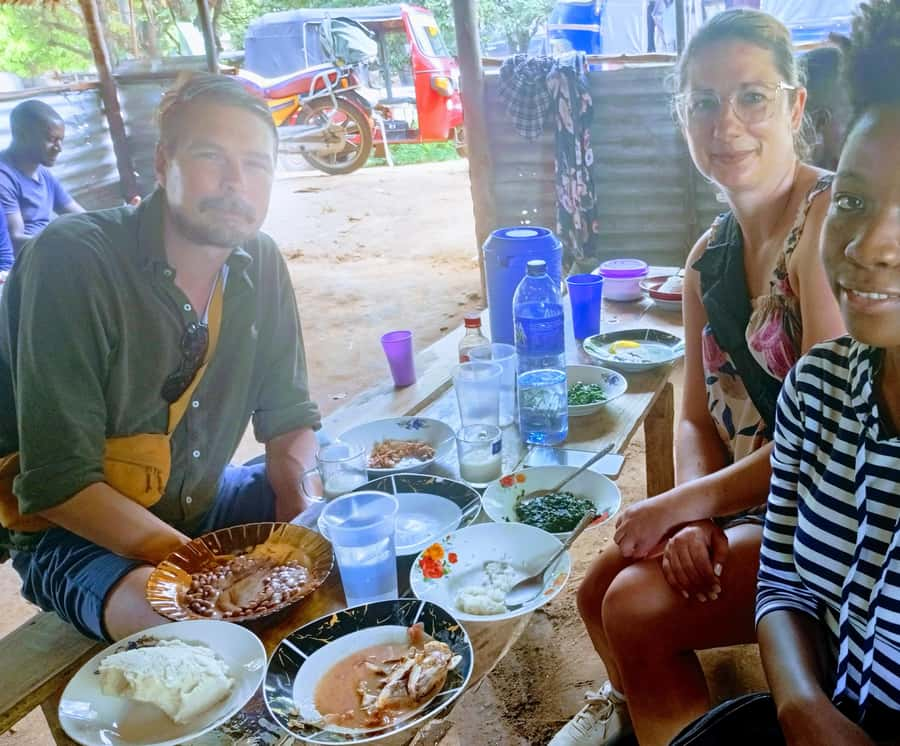
- The tasting is a real meal: Try Swahili porridge, chapati or coconut rice, coconut beans, ugali, sukumawiki, and viazi karai.
- A tailor visit adds context: Sample a traditional dera and learn how the garment is made and sold.
- Palm wine closes the walk: The final 30 minutes take place at a local bar near Diani Beach.
- Tina may be your guide: Recent tour feedback specifically praises Tina’s friendly explanations.
- The price is $30 per person: That is fair if you value a guide, several food samples, and a small-group introduction to local life.
Starting at Tsunami Garden Cafe
Your meeting point is Tsunami Garden Cafe. A woman will wait in front of the cafe and greet you by name, so look for the person expecting your party rather than simply joining the first group you see.
The tour lasts 90 minutes, split into three roughly equal parts: the market, the food tasting, and palm wine at a local bar. That short format works well if you have only part of a day in Diani, but it also means the walk keeps moving. You will not have time for long shopping stops or a slow meal.
The guide speaks English, and the group is limited to 10 people. I consider that a useful size for a market walk. You can ask questions without calling across a crowd, and the guide can explain what you are seeing as you move through narrow or busy areas.
The meeting point is not a hotel pickup point. You need to make your own way to Tsunami Garden Cafe, and hotel transfers are not included. If you are staying elsewhere in Diani, allow time to reach the cafe before the scheduled start.
More street food walks around the world:
- Dubai: Old Town, Creek, Museums, Souks, & Street Food Tour
★ 4.8 · 10,816 reviews - Ho Chi Minh City Street Food Tour & Sightseeing By Motorbike
★ 5.0 · 9,413 reviews - Medellin: Comuna 13 Graffiti Tour, Cable Car & Street Food
★ 4.8 · 9,046 reviews
Walking through Ibiza Market for 30 minutes
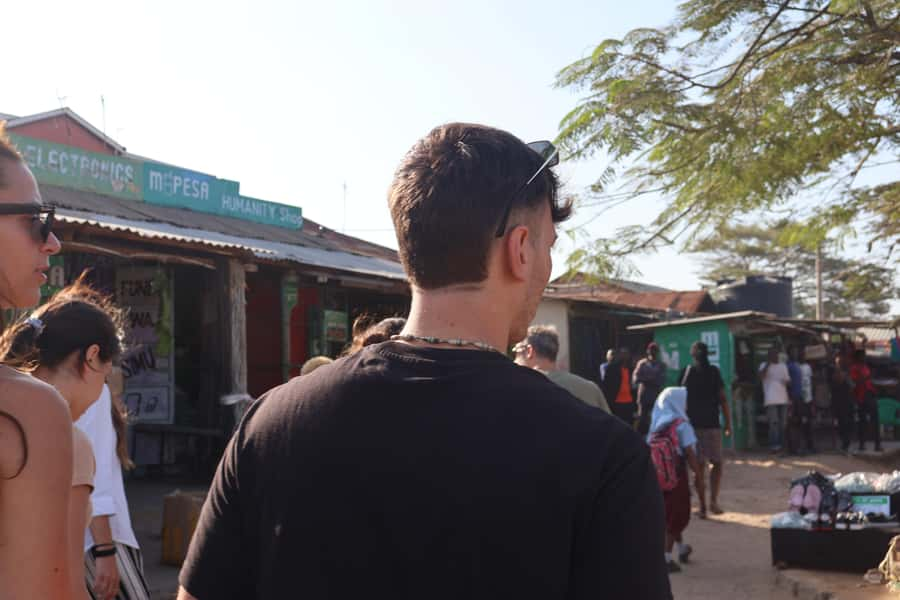
The first main stop is Ibiza Market. Here, the guide explains how people trade and gives you a closer look at ordinary buying and selling in Diani. This part is less about famous sights and more about understanding the practical rhythm of local commerce.
I like starting with the market because food makes more sense when you first see where ingredients and everyday goods change hands. You can ask about the people working there, how the market began, and the role it plays for local residents. The tour is designed to provide that background instead of sending you straight from a resort to a plate of food.
Bring your camera if you want photographs, but use it with care. A market is a workplace, not just a backdrop. Ask before taking close-up pictures of people, and follow your guide’s lead about what is appropriate.
The market stop lasts about 30 minutes. That is enough for an introduction, not enough for a full shopping expedition. You will have a chance to browse and may find a souvenir shopping opportunity, but personal purchases are your responsibility.
The walk can be hot. One participant specifically advised preparing for a warm outing, and that is sensible advice for any daytime stroll in coastal Kenya. A hat, water, and light clothing will make the difference between enjoying the market and counting the minutes until shade.
Meeting a tailor and trying on a dera
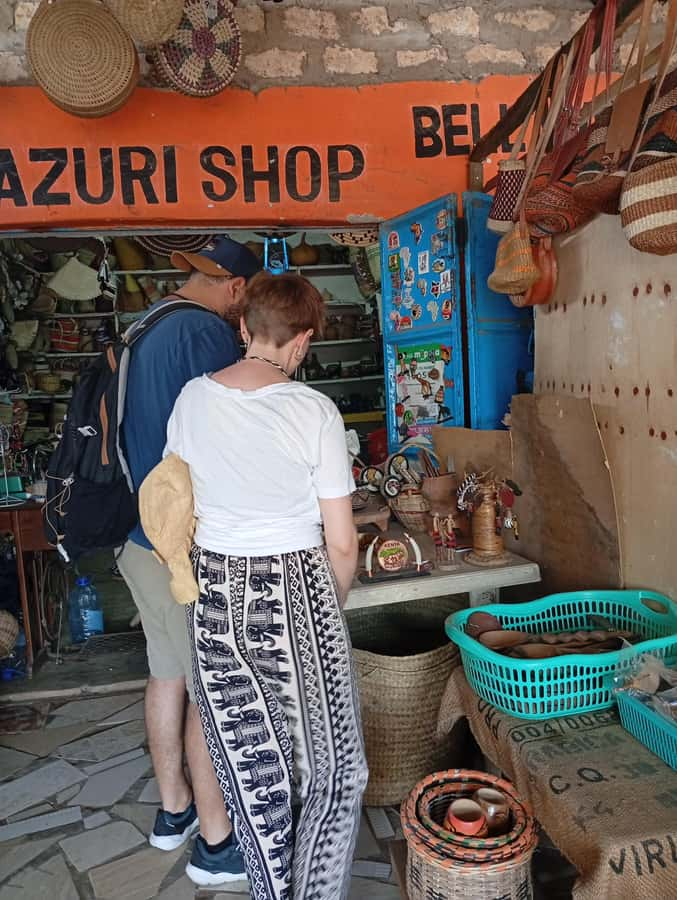
Along the route, you pass a souvenir shop and a tailoring shop. The tailor stop gives the outing a useful human angle. You can sample a dera, a loose Swahili dress for women, and learn how the local tailoring work began.
This is a small part of the tour, but it may be one of the most memorable. You are not only looking at finished clothing. You are also getting an explanation of how fabric becomes something people wear, sell, and identify with.
The information provided does not promise a full tailoring lesson or a custom-made garment, so keep your expectations in check. Think of it as a short introduction and a chance to try on traditional clothing. If you want to buy a souvenir, you can ask about prices and available items, but purchases are not included in the tour price.
This stop also gives you a break from the market traffic before the food portion begins. It is a good time to ask questions about the dress, the tailoring process, and local clothing styles.
Eating a full set of Swahili dishes
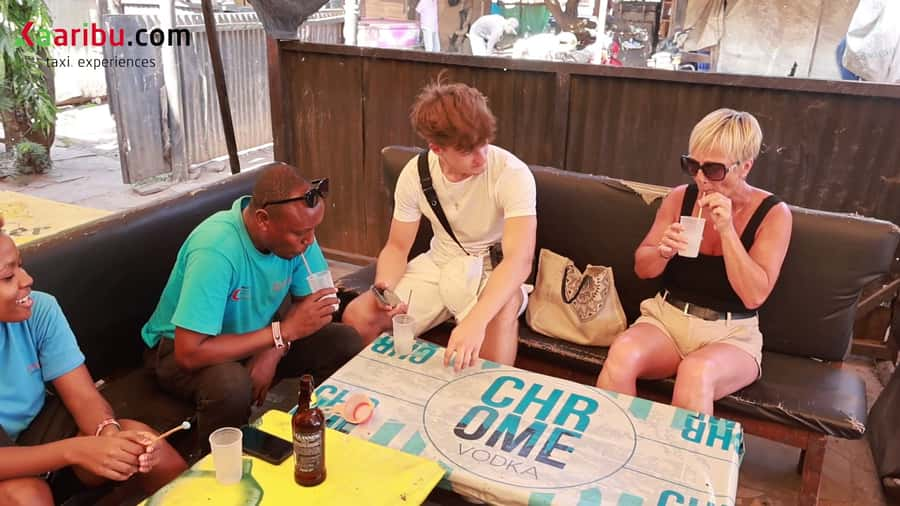
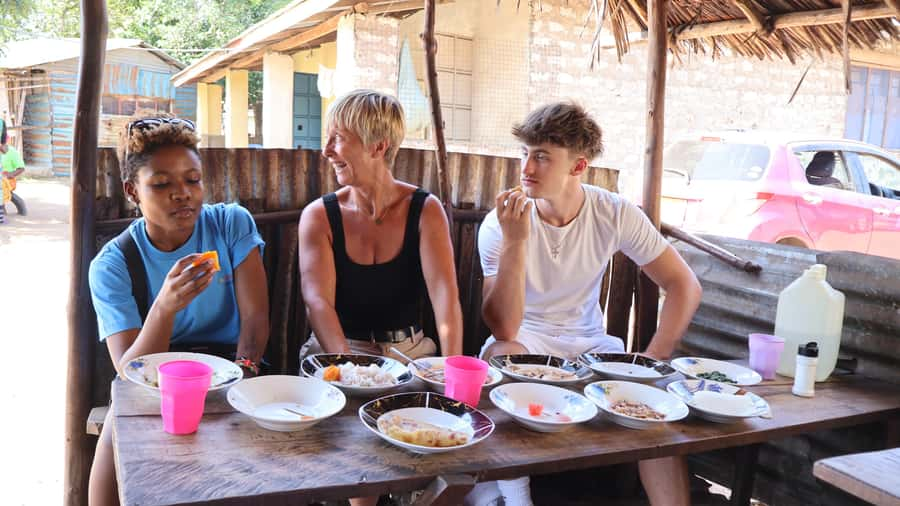
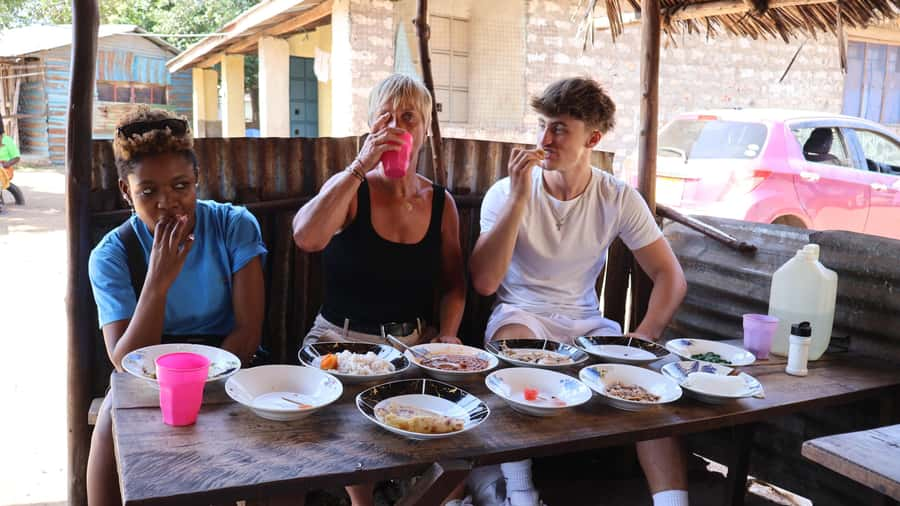
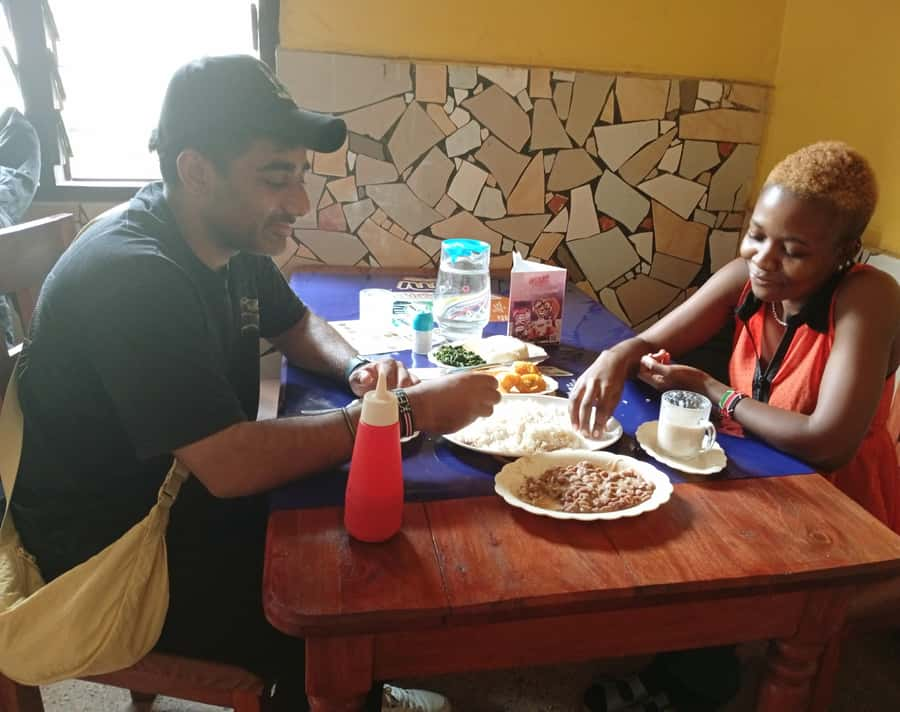
The local restaurant is the heart of the experience. You do not get just one token sample. The meal moves through several dishes and flavors, giving you a broad introduction to home-style coastal cooking.
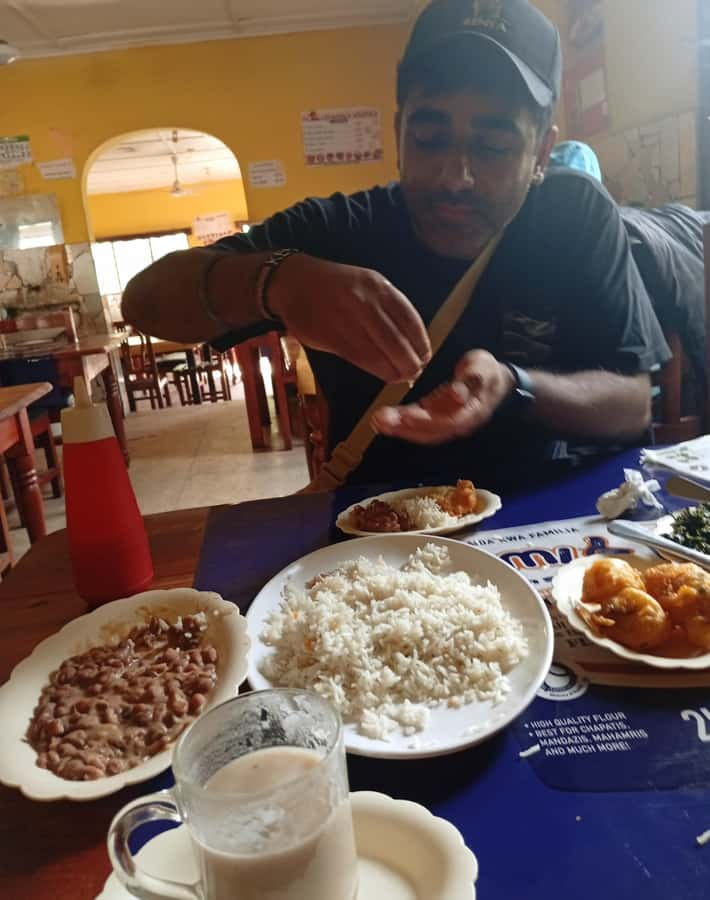
You start with a cup of Swahili porridge made from wheat, cardamom, and coconut milk. The coconut gives it a soft, sweet note, while cardamom adds fragrance. It is a gentle beginning before the more filling dishes arrive.
For the main food, you try chapati or coconut rice with coconut beans, then ugali with sukumawiki. Chapati brings a familiar flatbread texture, while coconut rice and beans show the coastal use of coconut in everyday cooking. Ugali, a firm maize staple, is paired with sukumawiki, a leafy vegetable dish.
You finish with viazi karai, a fried potato snack. The progression works well: a warm drink, filling staples, greens, beans, and a fried bite at the end. I would not think of this as a series of delicate tasting portions. It is closer to a compact local meal served in several parts.
That distinction matters. If you want restaurant food designed for tourists, this may feel basic. If you want to understand what people eat in a regular local setting, the simplicity is part of the point.
The tour information warns that it is not suitable for people with food allergies. No allergy-safe substitutions are promised, so you should not book expecting the guide or restaurant to adapt the menu. The experience also may not suit very young children. Children under 3 are not considered suitable, and babies under 1 are excluded.
Same streets, a different set of bites:
- Dubai: Old Town, Souks, Street Food, Guided Tour & Abra Ride
★ 4.9 · 7,170 reviews - Naples: Street Food Walking Tour with Local Guide
★ 4.9 · 4,976 reviews - Small Group Hanoi Street Food Tour with a Real Foodie
★ 5.0 · 4,682 reviews - Rome: Street Food Tour with Local Guide
★ 4.8 · 4,077 reviews
Trying palm wine at a local bar
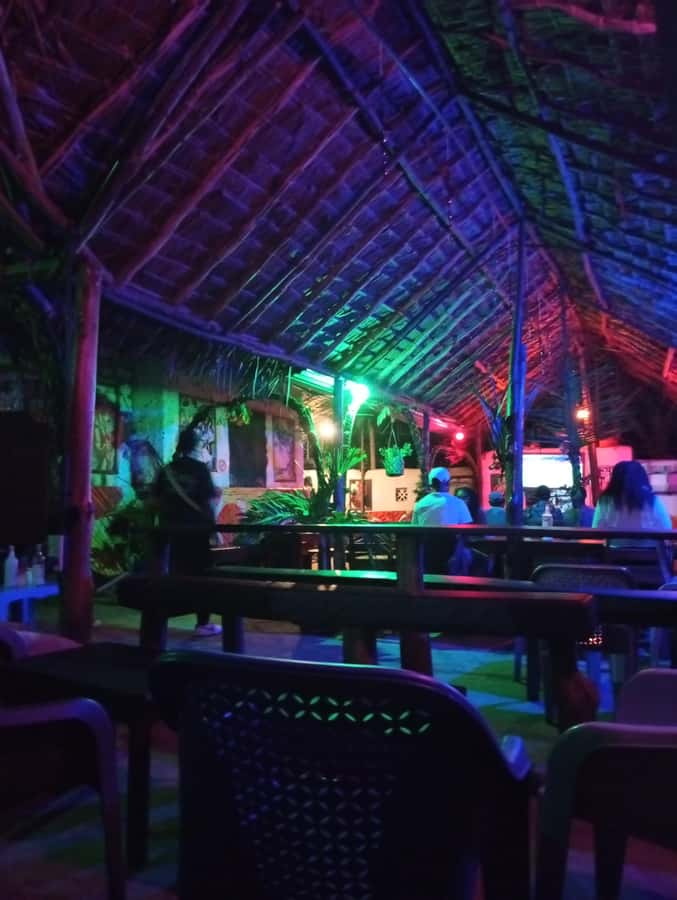
The final 30 minutes take you to a local bar for palm wine tasting. This is a change of pace from the market and restaurant. Instead of simply learning about a drink, you can taste it in the type of neighborhood setting where it is served.
Palm wine is a traditional drink made from the sap of palm trees. The tour provides a tasting, while extra drinks are not included. If you want more after the sample, you can purchase it yourself, as long as you follow the venue’s rules.
The bar is described as extremely local rather than tourist-oriented. That can be a strength if you want an ordinary social setting, but it also means you should not expect resort-style service or decoration. One useful piece of advice is to treat this as cultural observation as much as refreshment.
Alcohol and drugs are not allowed as part of the tour rules, even though palm wine is included for tasting. Follow the guide’s instructions, drink responsibly, and remember that the tasting is only one portion of a short walking experience.
The tour then returns to Tsunami Garden Cafe. Since the schedule allocates about 30 minutes to the bar, you should not count on a long evening there. Any additional food or drinks, along with personal expenses, cost extra.
What the $30 price really covers
At $30 per person, the cost is reasonable for a 90-minute experience if you want several things bundled together: an English-speaking local guide, entry into the market experience, food tasting, palm wine tasting, and a small-group format.
The value is not in the length. Ninety minutes is brief. The value comes from the range of stops packed into that time. You see a market, meet a tailor, eat a substantial selection of dishes, and visit a local bar without having to arrange each part yourself.
I would compare the price with what you want from the outing. If you only want a snack and a quick look at a market, $30 may feel high. If you would otherwise struggle to find the market, identify the dishes, ask questions, and locate a suitable local bar, the guide adds practical value.
The food tasting is a particularly important part of the calculation. Since you receive porridge, several main dishes, and viazi karai, this is more than a single street-food bite. Still, additional meals, drinks, souvenirs, and transport to and from Tsunami Garden Cafe are not included.
The small-group limit also matters. With no more than 10 people, the guide can give explanations and keep the walk organized without the feel of a large bus excursion. The booking terms add flexibility: you can reserve and pay later, and cancellation is free up to 24 hours before the activity for a full refund.
The practical side of the walk
Wear comfortable walking shoes. The route includes a market and several local stops, and the ground may not be as smooth or predictable as a hotel path. Comfortable footwear is more important here than dressing up for the restaurant or bar.
Carry water even though the tour includes drinks and food. You will be walking outdoors, and the heat can be strong. A sun hat is also useful, especially during the market portion.
Bring a camera if you want to record the clothing, food, and market scenes. Use common courtesy with people working and shopping. Respect local customs, follow any instructions from the guide, and avoid smoking during the experience.
The activity is not suitable for wheelchair users. The information also excludes children under 3, babies under 1, and people with food allergies. Those restrictions are worth taking seriously because the tour combines walking, local venues, and a set food menu.
Weather can affect your comfort. The tour advises you to be ready for changing conditions, but no indoor replacement route is provided. If you are sensitive to heat, an earlier starting time may be more comfortable, so check the available departure times before booking.
The guide makes the difference

A good guide matters on a market tour because the stalls alone do not explain how the place works. Your guide connects the food, clothing, trading, and social setting. The recent feedback specifically names Tina and praises her friendly manner and clear explanations.
You may not have Tina on your departure, so treat her name as useful information rather than a guarantee. The activity is offered with a live English-speaking guide, and the strongest part of the format is the chance to ask questions in real time.
The guide also helps you approach the less familiar parts of the meal. Ugali, sukumawiki, coconut beans, and viazi karai may not be dishes you recognize from a hotel menu. An explanation of how they are served and eaten adds more value than a printed list of ingredients.
The same is true at the bar. Palm wine tasting can feel random if you simply receive a glass and leave. With a guide explaining the drink and the setting, the stop becomes part of the story of local food and social life.
Who will enjoy this Diani experience
I would recommend this tour to you if you want a short introduction to Diani away from the beach. It suits curious eaters, first-time visitors, couples, solo visitors, and small groups who want direct contact with local food and trading life.
It is also a good fit if you prefer guided access over independent searching. You do not need to work out which market to visit, which dishes to order, or where to taste palm wine. The guide brings those pieces together in a compact route.
You may want to skip it if you dislike heat, walking, simple local restaurants, or unfamiliar food. It is not a polished culinary workshop, and it does not promise a long market visit or detailed cooking instruction.
The tour can work well early in a Diani stay. After 90 minutes, you will know more about the market, local dishes, Swahili clothing, and palm wine. You can then return to the places that interested you most on your own, although any later visits and purchases would be separate.
Should you book the Diani market and street-food walk?
Book it if you want a friendly, efficient taste of local life and are happy with a hot walk, a simple restaurant, and a very local bar. The strongest features are the varied food tasting, the market context, and the chance to try on a dera rather than only observe from the roadside.
At $30, I think the experience offers fair value for a small group, especially if Tina or another engaged guide gives the clear explanations the tour is built around. Pack water, wear comfortable shoes, and do not book if you need allergy accommodations or step-free access.
FAQ
Where does the tour start?
The meeting point is Tsunami Garden Cafe. A woman will wait in front of the cafe and greet you by name.
How long does the experience last?
The tour lasts 90 minutes. The planned stops allow about 30 minutes for the market, 30 minutes for food tasting, and 30 minutes for palm wine tasting.
What food will I taste?
You will start with Swahili porridge made from wheat, cardamom, and coconut milk. The meal also includes chapati or coconut rice with coconut beans, ugali with sukumawiki, and viazi karai.
Is palm wine included?
Yes. Palm wine tasting is included. Additional drinks are not included, but you may purchase more at the local bar.
Is hotel pickup included?
No. Hotel pickup and drop-off are not included, so you need to reach Tsunami Garden Cafe yourself.
What language is the tour offered in?
The live tour guide speaks English.
How large is the group?
The tour is limited to 10 participants.
Can I cancel for a full refund?
Yes. You can cancel up to 24 hours in advance for a full refund. You can also reserve now and pay later.
Newest street food walks around the world
- Old Delhi Cultural, Temples, Heritage Walking Street Food Tour★ 5.0 · 57 reviews
- Old and New Delhi Street Food Sampling★ 5.0 · 3 reviews
- Old Delhi Tour by Tuk-Tuk Street Food and Shopping Experience★ 5.0 · 12 reviews
- Customized Half Day and Full Day Delhi Shopping, Street Food Tour★ 5.0 · 52 reviews
- Delhi: Street Food Crawl (2 Hours Guided Food Tasting Tour)★ 3.5 · 18 reviews
- Taste Famous & Best Street Food of Old Delhi (Jama Masjid)★ 3.0 · 2 reviews
- Spice & Stories: 3-Hour Old Delhi Heritage Food Walk Guided Tour★ 4.5 · 36 reviews
- Old Delhi Street Food and Spice Market Tour★ 5.0 · 81 reviews
Kenya street food tours, side by side.

Nairobi Food Tour – Street Food Experience Lunch
Read our review →
Nairobi: 1 Hour Gastronomic and Street Food tour of Nairobi
Read our review →
The lists this tour appears in