
Review · NEW DELHI
14 Days Golden Triangle with Wildlife Safari & Heritage Rajasthan
The most striking thing about this 14-day private circuit is its range. You start with Delhi’s Mughal and colonial monuments, see the Taj Mahal, track wildlife at Ranthambore, then continue through Jaipur, Udaipur, Jodhpur, Pushkar, and Mandawa. It is a long road journey, but it gives you a broad look at northern India without changing tour groups every few days.
I like the door-to-door transport, since long Indian road days are far easier with your own driver and an air-conditioned car. I also like the two safari drives at Ranthambore, plus a Jhalana safari near Jaipur. The main drawback is the pace: several days involve five to eight hours on the road, and monument tickets, meals beyond breakfast, tips, and personal expenses are extra.
Key points to know before booking
- Two safari drives at Ranthambore: Morning and evening outings are included, with a canter or jeep.
- A private vehicle for your group: Cars range from a four-seat sedan to a larger minivan, depending on party size.
- 13 hotel nights and daily breakfast: These are included only when you choose the package with accommodation.
- The Taj Mahal appears twice: You visit at sunset or later on arrival day, then return for a sunrise visit.
- Rajasthan goes beyond Jaipur: Udaipur, Jodhpur, Pushkar, and Mandawa add palaces, temples, markets, and village life.
- The price needs careful checking: The advertised $835.72 per person is attractive, but entry fees and many meals are not included.
Delhi begins with Sikh devotion and Mughal-era monuments
Your arrival starts at Indira Gandhi International Airport, where a representative and driver meet you at Terminal 3. The first day is deliberately light, which is sensible after an international flight. You transfer to your hotel, then visit Gurudwara Bangla Sahib and Agrasen Ki Baoli, with some free time in the evening.
Gurudwara Bangla Sahib is one of Delhi’s most welcoming religious sites. The gold-domed gurdwara is connected with the eighth Sikh Guru and is known for its sacred water tank. You should dress modestly and expect a calm visit rather than a standard monument stop.
Agrasen Ki Baoli is a short but memorable stop. This protected stepwell drops below street level in a series of stone steps. It is easy to visit, though admission is not included. The contrast is part of Delhi’s appeal: a quiet old structure can sit close to noisy modern streets.
Day two packs in much more. Qutub Minar, a 73-meter UNESCO-listed tower, gives you a strong introduction to the Delhi Sultanate. Allow the full hour suggested in the program. The complex is not only about the tower, so do not rush straight to the photo point.
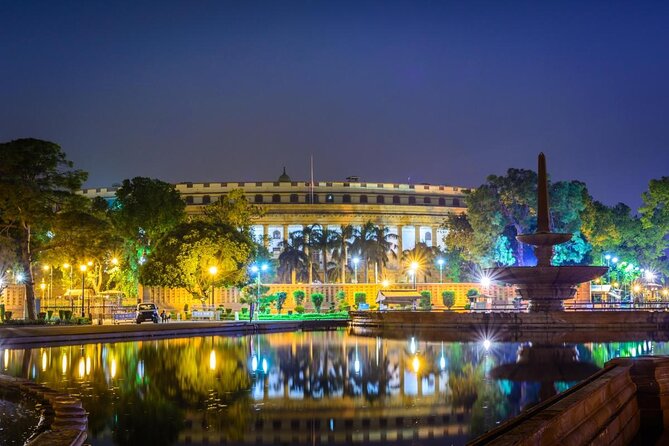
The Lotus Temple offers a change of mood and design. Its flower-shaped structure opened in 1986 and welcomes people of all faiths. India Gate and Parliament House then bring you into the ceremonial heart of modern Delhi. India Gate is a war memorial, while Parliament House is the seat of the two national assemblies.
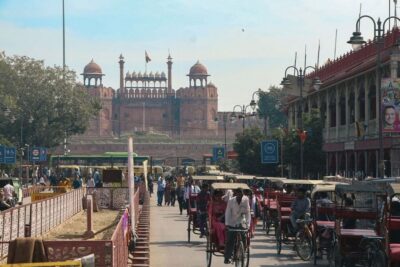
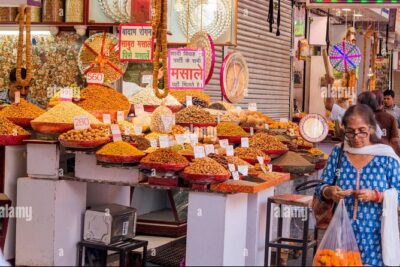
Jama Masjid takes you back to the Mughal period. Built under Shah Jahan between 1650 and 1656, it is one of India’s major mosques. From there, Chandni Chowk gives you a taste of Old Delhi’s trading streets, with spices, dried fruit, jewelry, saris, and small shops.
Humayun’s Tomb is one of the day’s best stops. Commissioned in 1558 by Humayun’s chief consort, Empress Bega Begum, it is an important Mughal tomb and a useful preview of the architectural ideas later seen at the Taj Mahal. Admission is extra, as it is at Qutub Minar and several other major monuments.
More street food walks worth an empty stomach in New Delhi:
- Old Delhi Street Food Tour
★ 5.0 · 497 reviews - Delhi: Old Delhi Street Food Tour with Rickshaw Ride
★ 4.9 · 403 reviews - Old Delhi Street Food Tour – Explore Spices in Chandni Chowk
★ 5.0 · 334 reviews
Agra delivers the tour’s biggest visual moment
The drive from Delhi to Agra is about 222 kilometers and takes roughly four hours. With a private car, you can stop when needed, but this is still a transfer day. After checking in, you visit the Taj Mahal, Agra Fort, Itmad-ud-Daula, and Mehtab Bagh.
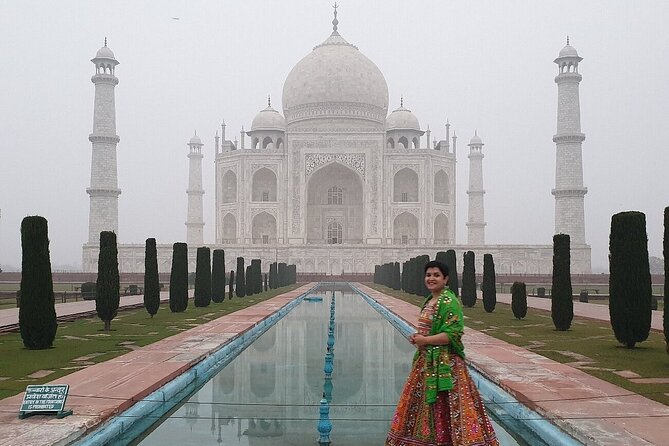
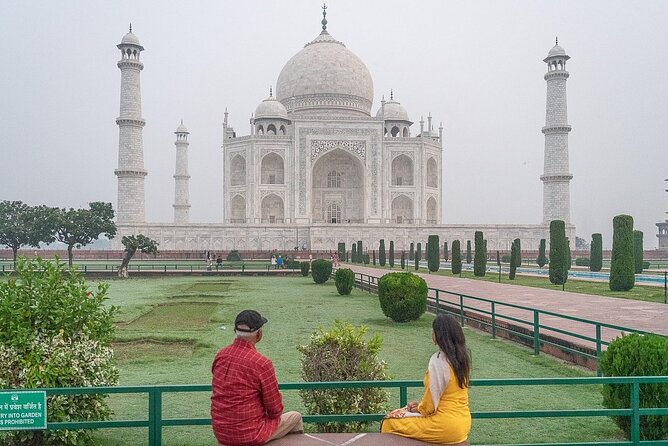
The Taj Mahal needs no sales pitch, but timing matters. The first visit gives you a chance to see the monument without rushing. The white marble mausoleum was commissioned by Shah Jahan in memory of Mumtaz Mahal, and the setting beside the Yamuna River adds to its effect.
A battery bus takes you from the Taj Mahal parking area to the monument. The entry fee is not included, so budget for it separately. Your guide is scheduled to explain the building and lead the visit inside, with about two hours at the site.
Agra Fort gives the story more political weight. This UNESCO site was used by Mughal rulers including Akbar and Shah Jahan. Its courtyards, walls, and palace areas help explain how the Mughal court lived and governed.
Itmad-ud-Daula is often called the Baby Taj or jewel box. It is smaller than the Taj Mahal but detailed, and it gives you a quieter look at Mughal decorative work. Mehtab Bagh, across the river, is planned for a sunset view of the Taj. Entry to both sites is extra.
The following morning returns you to the Taj Mahal for sunrise. That repeat visit is not wasted. Early light changes the color of the marble, and the cooler conditions are easier than the middle of the day. If your schedule is tight, this is one of the places where keeping the full two hours pays off.
Fatehpur Sikri and Chand Baori lead into safari country
After the sunrise visit, you leave Agra for Fatehpur Sikri. Emperor Akbar built this former capital in the late sixteenth century, and it served as the Mughal capital for about a decade. The complex includes grand courtyards and buildings, so a one-hour stop gives you an overview rather than a slow study.
Chand Baori at Abhaneri is another strong architectural stop. This stepwell reaches about 30 meters below ground and is made from repeated flights of stairs. It is an excellent place for photographs, but the visit is also worthwhile for seeing how old water systems shaped daily life in Rajasthan.
You then continue to Ranthambore, with about five hours allowed for the transfer and arrival. The overnight stay matters because the safari schedule begins early and includes a second outing later in the day.
Ranthambore gives the itinerary its wildlife edge
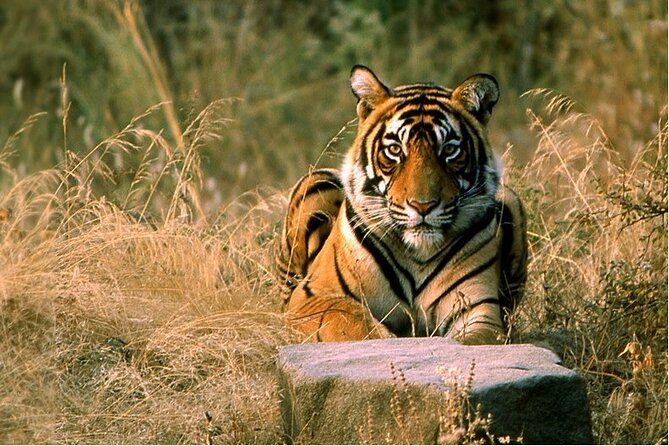
Day five is built around two safari drives in Ranthambore National Park. One takes place after breakfast and lasts about three hours. The second is scheduled for the evening and also lasts about three hours.
The safari entrance and the canter or jeep are included, which makes this section easier to price than the monument days. Still, wildlife sightings cannot be promised. The park is known for sightings, but animals follow their own schedules. Your best approach is to treat the drives as time in a large natural area rather than as a guaranteed tiger search.
The two outings are a real strength. A morning drive and an evening drive give you two different chances to see the park, and the break between them lets you rest. You spend the night in the area before continuing toward Jaipur.
Day six combines the road to Jaipur with Galtaji Temple, Birla Mandir, and a Jhalana safari. Galtaji is also called the Monkey Temple and includes three sacred pools. The setting and temple buildings make it different from the grand royal sites elsewhere in Jaipur.
Birla Mandir is a Hindu temple on raised ground near Moti Dungari. The schedule lists it as a stop, though the supplied timing is unusually long and should not be read as a full-day visit. Your driver takes you onward to Jaipur, where you check in before the Jhalana safari.
Jhalana is a useful addition because it keeps wildlife in the program after Ranthambore. The safari entrance is included, and the outing lasts about three hours. It also breaks up what could otherwise be several straight days of forts and palaces.
Food walks with the history told around New Delhi:
- Old Delhi Cultural, Temples, Heritage Walking Street Food Tour
★ 5.0 · 57 reviews - Spice & Stories: 3-Hour Old Delhi Heritage Food Walk Guided Tour
★ 4.5 · 36 reviews - Old Delhi Temples, Cultural, Heritage Walking Street Food Tour
★ 5.0 · 19 reviews - Old Delhi Heritage and Street Food Walk with a Local
★ 5.0 · 8 reviews
Jaipur combines royal buildings with clever astronomy
Jaipur’s sightseeing begins with Panna Meena Ka Kund, a stepwell near the Amber area. It is a brief stop, but its symmetrical stairs make it one of the most distinctive small sights in the city.
Amber Fort receives about two hours. Built by Raja Man Singh I, the fort is known for its decorative details, courtyards, and hilltop position. You should expect some walking and steps. The fort is one of the day’s main attractions, so the private guide is useful for giving order to a large complex.
Jal Mahal is a quick photo stop beside Man Sagar Lake. The palace sits in the water, but the visit is mainly for the view rather than an extended interior tour. City Palace then gives you a longer look at Jaipur’s royal center, with about an hour to explore.
Jantar Mantar is one of Jaipur’s most unusual monuments. Built in 1734 by Sawai Jai Singh II, it contains 19 large astronomical instruments. You get more from it if your guide explains how the structures measured time and tracked the sky. Admission is extra.
Hawa Mahal closes the day with one of Jaipur’s familiar facades. Its pink and red sandstone front has five levels and was designed with screened openings. The planned visit is about 30 minutes, usually enough for photographs and a short explanation.
Udaipur changes the mood beside Lake Pichola
The drive from Jaipur to Udaipur takes about eight hours. This is one of the longest transfers, so the private air-conditioned vehicle earns its keep. On arrival, you check in, visit local markets, and have dinner at a restaurant of your choice, with the meal paid separately.
Udaipur’s main sightseeing day begins on Lake Pichola. A private boat ride is available as an extra, with views toward Jagmandir Palace island. The lake is the reason Udaipur feels so different from Delhi, Agra, and Jaipur, and the boat offers the clearest broad view of the city.
City Palace sits on the lake’s bank and takes about two hours. Its displays include weapons, paintings, sedan chairs, tiger cages, and photographs. Jagdish Temple, built in the Indo-Aryan style, is a shorter visit near the palace complex.
Bagore Ki Haveli Museum adds domestic and court life to the palace story. The stop is flexible, so you can skip it if you need a slower afternoon. This is helpful after the long transfer from Jaipur.
Jodhpur brings a fort, a palace, and village life

The drive to Jodhpur takes about six hours. After checking in, you visit the Clock Tower Market, a good place to see the everyday commercial side of the Blue City. The clock tower dates from the reign of Maharaja Sardar Singh and sits among local market streets.
The following day begins at Mehrangarh Fort. Built in the fifteenth century on a rocky outcrop, it overlooks the walled city and now houses a museum with weapons, paintings, and royal palanquins. Admission is extra, and two hours gives you a useful but not exhaustive visit.
Umaid Bhawan Museum occupies part of one of the world’s largest private residences. The palace is built from golden-yellow sandstone, and the museum offers another view of Jodhpur’s royal past. Jaswant Thada, a white marble cenotaph for the rulers of Marwar, is a smaller and quieter stop.
The afternoon Bishnoi village excursion is one of the more distinctive parts of the route. It is intended to give you local contact and a look at village life, rather than another formal monument. The visit is described as optional in tone, so confirm with your driver or guide if you want it included.
Pushkar and Mandawa finish the Rajasthan story
Pushkar takes about five hours to reach from Jodhpur. After checking in, you visit Brahma Temple and Pushkar Lake. Brahma Temple is known for its unusual place in Hindu worship and its connection with the story of Lord Brahma.
At Pushkar Lake, Brahma Ghat is used for prayers and rituals connected with family blessings and remembrance of the dead. Dress respectfully and follow your guide’s advice around the water and religious ceremonies. The stop is short, but it adds a spiritual side to the route.
Day thirteen takes you to Mandawa, a village known for painted havelis. The drive takes about five hours, followed by a look at the village area. These ornate merchant houses are a fitting final Rajasthan stop because they show wealth and art outside the large royal capitals.
The final day is a roughly five-hour drive back to Delhi. This is a transfer only, ending the circuit where it began. You should avoid scheduling a flight too close to the expected arrival time because road conditions can affect a long drive.
What the $835.72 price really covers
At $835.72 per person, the tour can be good value if your package includes the 13 hotel nights. It also includes a private air-conditioned vehicle, driver, airport or hotel transfers, local guides, daily breakfast, bottled water during journeys, the two Ranthambore safaris, and the Jhalana safari.
The biggest price warning is that many major monument fees are extra. The Taj Mahal, Agra Fort, Qutub Minar, Humayun’s Tomb, City Palace, Jantar Mantar, Mehrangarh Fort, and several other sites require separate payment.
Meals beyond the included breakfasts are also excluded. So are tips, laundry, travel insurance, flights, train tickets, and personal costs. Ask exactly which hotel category is included, since the program offers 3-star, 4-star, and 5-star choices.
Rooms are normally twin-sharing. A party of three receives a triple room by default, while two rooms cost extra. Vehicle size is based on group size: a four-seat sedan for one or two people, a six-seat wagon for three or four, and a 10-seat minivan for five to ten.
Who should book this long private circuit
I would choose this tour if you want one organized route through northern India and Rajasthan, with your own vehicle and a guide at the major sights. It suits first-time visitors who want the big monuments but also want wildlife, lakes, village visits, and smaller religious sites.
I would think twice if you dislike long drives or prefer two or three nights in each town. The schedule moves quickly, especially between Jaipur, Udaipur, Jodhpur, Pushkar, Mandawa, and Delhi. It is also important to confirm the hotel option, entry-fee budget, and exact daily timing before paying.
The strong points are clear: private transport, a wide route, two Ranthambore safaris, and a second wildlife outing at Jhalana. If those matter more to you than a slow pace, this is a practical way to see a large section of India in two weeks.
FAQ
Is this a private tour?
Yes. Only your own group participates, with private transport and local guides for sightseeing.
How long does the tour last?
The tour lasts approximately 14 days and includes 13 nights of accommodation when you choose the package with hotels.
Does the tour include hotel accommodation?
Accommodation is included only with the option that includes hotels. Hotel choices range from 3-star to 5-star options.
Is breakfast included?
Daily hotel breakfast is included with the hotel package. Other meals are not included.
Are the Ranthambore safaris included?
Yes. The program includes Ranthambore National Park entrance and safari transport by canter or jeep, with one morning and one evening safari.
Is the Jhalana safari included?
Yes. Entrance to Jhalana Safari Park is included, with a planned safari of about three hours.
Are monument entrance fees included?
No. Monument fees are generally separate, including major sites such as the Taj Mahal, Agra Fort, Qutub Minar, Humayun’s Tomb, City Palace, Jantar Mantar, and Mehrangarh Fort.
Where does the tour start and finish?
The tour starts at Indira Gandhi International Airport in New Delhi. The final day includes an approximately five-hour drive back to Delhi.
Newest street food walks around New Delhi
- Old Delhi Cultural, Temples, Heritage Walking Street Food Tour★ 5.0 · 57 reviews
- Old and New Delhi Street Food Sampling★ 5.0 · 3 reviews
- Old Delhi Tour by Tuk-Tuk Street Food and Shopping Experience★ 5.0 · 12 reviews
- Customized Half Day and Full Day Delhi Shopping, Street Food Tour★ 5.0 · 52 reviews
- Delhi: Street Food Crawl (2 Hours Guided Food Tasting Tour)★ 3.5 · 18 reviews
- Old Delhi Street Food and Spice Market Tour★ 5.0 · 81 reviews
- Taste Famous & Best Street Food of Old Delhi (Jama Masjid)★ 3.0 · 2 reviews
- Spice & Stories: 3-Hour Old Delhi Heritage Food Walk Guided Tour★ 4.5 · 36 reviews
New Delhi street food tours, side by side.

Delhi: Old Delhi Street Food Tour with Rickshaw Ride
Read our review →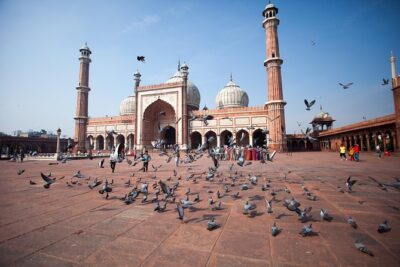
Old Delhi Street Food Tour – Explore Spices in Chandni Chowk
Read our review →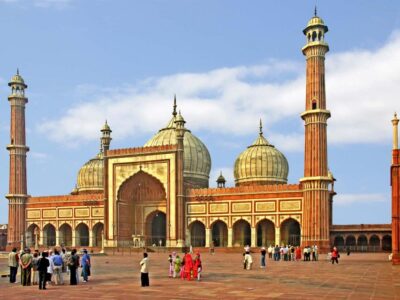
Delhi: Old Delhi City Tour with Tuk-Tuk Ride & Street Food
Read our review →
Old Delhi Cultural, Temples, Heritage Walking Street Food Tour
Read our review →
Customized Half Day and Full Day Delhi Shopping, Street Food Tour
Read our review →
Old Delhi: Guided Street Food Tour w/ Private Transportation
Read our review →The lists this tour appears in