
Review · NEW DELHI
Old Delhi Heritage and Street Food Walk with a Local
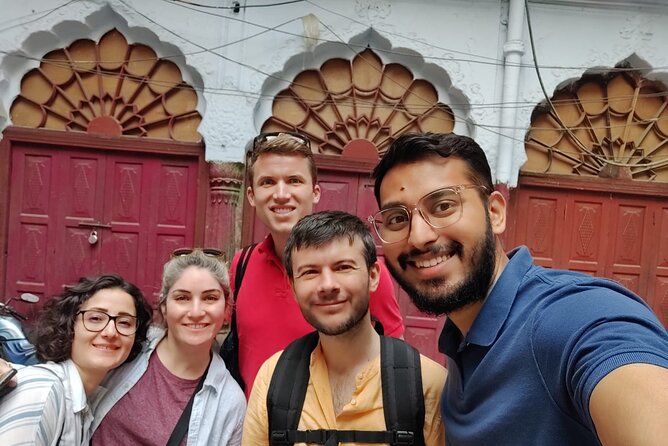
Old Delhi reveals itself best on foot, where a Mughal fort, a Jain temple, a Sikh shrine, a British church, and a famous mosque sit close together. Akshay Jain grew up in Chandni Chowk, and his childhood connection gives this walk more feeling than a standard sightseeing circuit. I especially like the personal stories and the way the route connects Mughal, Sikh, Jain, and British history in one compact outing.
I also like the small group limit of 12 and the clear start and finish. You begin across from the Red Fort and end near Jama Masjid Metro Station, so you can keep exploring afterward. The main drawback is pace: two and a half hours is short for six major stops, street food, and meaningful historical context. Entry fees for the Red Fort and Jama Masjid are not included.
Key points at a glance
- A local guide with a personal connection: Akshay Jain spent his childhood in Chandni Chowk and brings memories of its food, sounds, and streets.
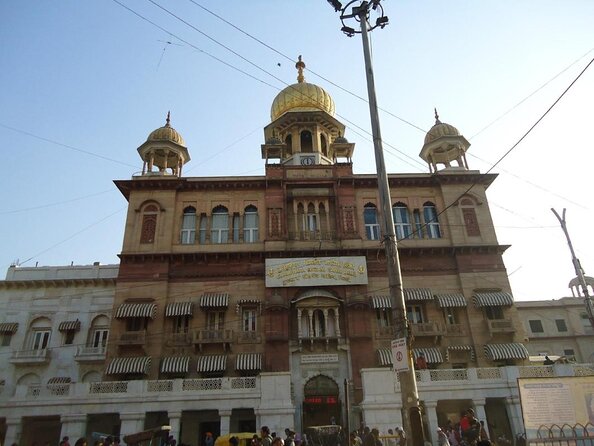
- Six contrasting landmarks: The route links the Red Fort, Jain temple, Begum Samru’s Palace, Gurudwara Sis Ganj Sahib, Central Baptist Church, and Jama Masjid.
- History across several eras: You move from Shah Jahan and the Mughal court to Sikh martyrdom, the East India Company, and the events of 1857.
- Street food with cultural context: Food is part of the experience, though the supplied route does not list fixed dishes or tastings.
- A practical short walk: The tour lasts about 2 hours and 30 minutes, with a maximum of 12 people.
- Extra costs to plan for: Admission to the Red Fort and Jama Masjid is not included, while the Jain temple, palace, gurdwara, and church are listed as free.
Why Akshay’s Chandni Chowk connection matters
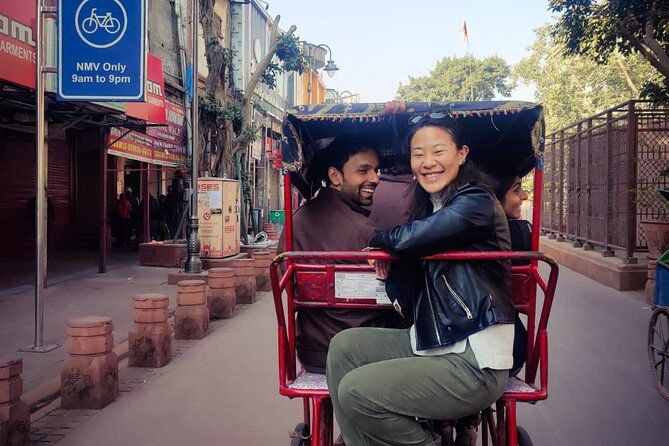
Old Delhi can feel confusing at first. Its lanes, landmarks, religious buildings, and food stalls are packed into a small area, but the connections between them are easy to miss if you walk alone. A local guide can give those connections a shape.
Akshay Jain grew up in Chandni Chowk before leaving Delhi at age 14 on an academic scholarship to Singapore. He later traveled through nearly 20 countries across three continents. That background matters because he can speak both as someone raised in the neighborhood and as someone used to explaining India to people from elsewhere.
His Jain identity also adds a personal angle to the first part of the route. At Sri Digambar Jain Lal Mandir, you hear not only how a Jain temple came to sit beside a Mughal fort, but also stories about Jainism and Akshay’s own childhood. That sort of detail can turn a religious building from a quick photo stop into part of a larger question about how different communities have shared Old Delhi for centuries.
The food side of the walk adds another layer. Chandni Chowk is known for local eating, and the tour is designed around the tastes and smells Akshay remembers from growing up there. Still, you should note that the supplied schedule names no specific food dishes, tasting count, or food budget. If you need a set list of included samples, confirm that before booking.
More Old Quarter and Medina Food Walks in New Delhi:
- Old Delhi Street Food Tour
★ 5.0 · 497 reviews - Delhi: Old Delhi Street Food Tour with Rickshaw Ride
★ 4.9 · 403 reviews - Old Delhi Street Food Tour – Explore Spices in Chandni Chowk
★ 5.0 · 334 reviews
Starting at the Red Fort and Jain temple
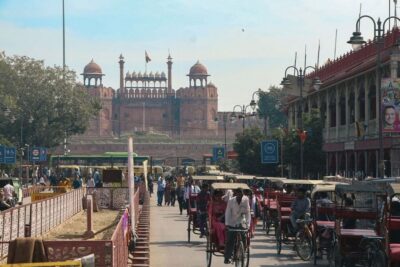
The walk begins at Shri Digambar Jain Atishay Kshetra Lal Mandir, across from the Red Fort on Netaji Subhash Marg. This is a useful meeting place because the Red Fort is one of the easiest Old Delhi landmarks to recognize.
Your first stop looks at the fort’s red sandstone walls and the decision by Shah Jahan to move his capital from Agra to Delhi. Shah Jahan is best known for the Taj Mahal, but this part of his story shows another side of his rule: the creation of a new imperial center in Delhi in 1648.
The scheduled time here is about 15 minutes, and admission is not included. That short stop suggests you will hear the fort’s political and architectural story from outside or around the entrance rather than take a full tour through the palace grounds. If entering the Red Fort is important to you, plan for a separate ticket and more time on another visit.
The nearby Jain temple offers a sharp contrast. The route asks why a Jain place of worship stands beside a fort built by a Muslim emperor. That question gives the walk an early focus on coexistence, power, and the way Delhi’s religious communities occupy the same streets.
The temple stop lasts about 10 minutes and is listed as free. Because it is an active religious site, you should be ready for a more respectful, observant visit rather than a long sightseeing session.
Begum Samru’s Palace and an overlooked power story
The next stop is Begum Samru’s Palace, with about 15 minutes set aside for it. Begum Samru was an 18th-century woman who rose from a nautch performer to a mercenary commander, provincial ruler, and diplomat in the Mughal court.
That story alone makes the stop worthwhile. Old Delhi history is often told through emperors and generals, while Begum Samru’s life brings in questions of gender, military power, social rank, and political skill. Her mansion was given to her by the Mughal emperor, which shows how far she had risen.
This is one of the route’s strongest choices because it moves beyond the most familiar monuments. You are not simply hearing that the Mughal Empire declined. You are meeting a person who found a place inside its complicated political system.
The time is limited, though. Fifteen minutes can introduce her story, but it cannot cover every stage of her career or explain the palace in great architectural detail. Think of this as a focused historical portrait rather than a full building visit.
Gurudwara Sis Ganj Sahib and the cost of Mughal power
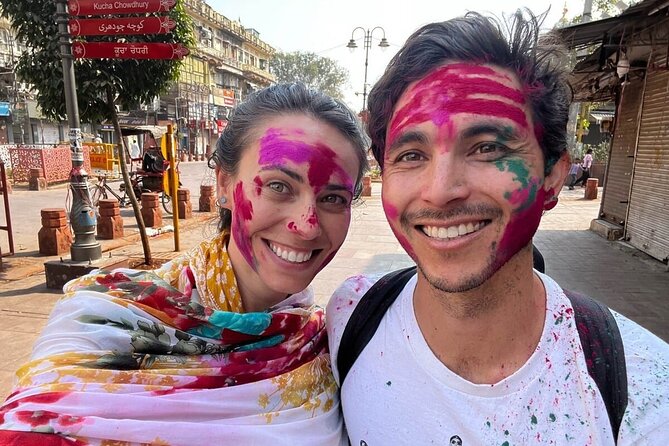
At Gurudwara Sis Ganj Sahib, the focus shifts to Sikh history and the Mughal succession. You will hear who followed Shah Jahan to the throne and why a Sikh guru was executed here along with his followers.
The stop lasts about 10 minutes. That may sound brief, but the subject is serious and central to understanding the political and religious tensions of the period. The story also marks the beginning of the Mughal Empire’s weakening, linking one act of persecution to a wider change in imperial authority.
A gurdwara is an active place of worship, so this stop works best if you approach it with patience and care. The value comes less from ticking off another landmark and more from hearing how Sikh memory, Mughal rule, and Old Delhi’s streets intersect.
The route’s religious variety is especially effective here. You have just heard a Jain perspective near the Red Fort, and now you are considering Sikh resistance and martyrdom. The walk does not reduce Delhi to one community or one version of its past.
Food walks with the history told around New Delhi:
- Old Delhi Cultural, Temples, Heritage Walking Street Food Tour
★ 5.0 · 57 reviews - 14 Days Golden Triangle with Wildlife Safari & Heritage Rajasthan
★ 5.0 · 37 reviews - Spice & Stories: 3-Hour Old Delhi Heritage Food Walk Guided Tour
★ 4.5 · 36 reviews - Old Delhi Temples, Cultural, Heritage Walking Street Food Tour
★ 5.0 · 19 reviews
Central Baptist Church and the upheaval of 1857
Central Baptist Church brings the walk into the era of British expansion. As Mughal authority weakened, the East India Company gained political control. The church becomes a setting for discussing the events of 1857, when India’s first war of independence shook the British position.
The scheduled stop is about 10 minutes. You will hear how the Company ultimately prevailed and how India became a British colony under Queen Victoria. This part of the route helps explain why Old Delhi is not only a Mughal city. Its streets also carry the marks of colonial rule and rebellion.
The church is an unusual choice for a short Old Delhi walk. Many visitors focus on forts, mosques, and markets, but a Christian building gives you another way to read the city’s changing power structure. It also keeps the historical story moving forward instead of stopping with the Mughals.
Again, the short timing sets limits. You will receive a compact explanation rather than a full account of 1857. If that period is a major interest, treat the stop as a starting point for further reading.
Ending at Jama Masjid
The walk ends at Jama Masjid, one of Old Delhi’s major landmarks. The scheduled visit lasts about 30 minutes, making it the longest stop on the route.
The mosque offers a calmer finish after the narrow lanes and busy movement of Chandni Chowk. You can take in the scale of Shah Jahan’s religious architecture and consider how the fort, mosque, markets, and surrounding neighborhoods formed one imperial city.
The adventurous can climb the minarets for broad views over Old Delhi. The admission fee is not included, so set aside extra money if you want to go up. The listing does not state the amount, so check locally or with the provider before counting on the climb.
Ending near Jama Masjid Metro Station is practical. You can continue sightseeing, find transport, or make your way back through central Delhi without returning to the starting point. That one-way design makes better use of your time than a route that circles back to the Red Fort.
What the food element adds
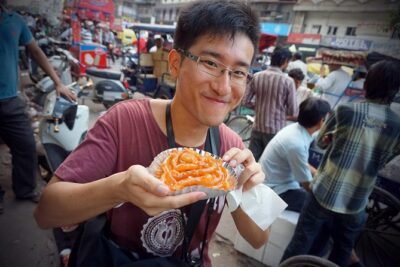
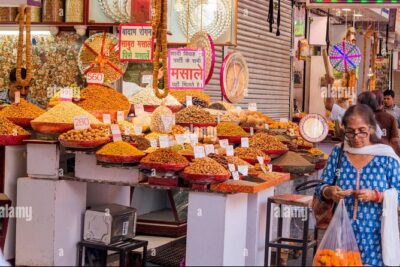
The name of the experience promises heritage and street food, and the Old Delhi setting is well suited to both. Akshay presents the neighborhood through tastes, smells, and memories from his childhood. That personal frame is more useful than a simple list of eating stops because it explains why food matters to Chandni Chowk’s identity.
The food experience does require a little caution. The published route gives exact times and subjects for the six heritage stops but does not name the food stalls, dishes, number of tastings, or whether food costs are included. You might find local specialties during the walk, but do not assume that every tasting is covered by the $28.80 price.
Some food references connected with the experience include malai sandwiches, and the walk is described as a way to experience local culinary traditions. If you have allergies, dietary restrictions, or strong preferences, ask for current food details before booking. The supplied information does not promise substitutions or a particular menu.
For me, the food element is most valuable when paired with the history. You are not just eating in Chandni Chowk. You are hearing how a local remembers the area and how daily life sits beside monuments and old political stories.
Is $28.80 a fair price?
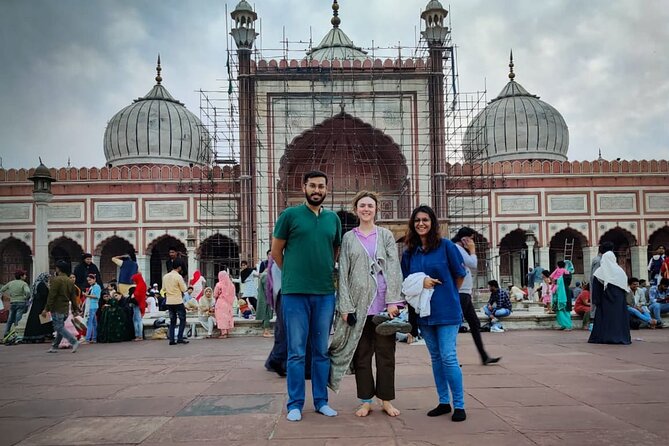
At $28.80 per person, the value depends on what you want from Old Delhi. You are paying for about two and a half hours with a local guide, a small group capped at 12 people, a carefully connected historical route, and a food-focused look at Chandni Chowk.
That is a fair price if you want orientation and interpretation rather than a private car or a full museum visit. Akshay’s background gives the walk a personal quality that a standard guidebook cannot provide. The route also covers several different religious and political traditions in one outing.
The price does not include Red Fort or Jama Masjid admission. It also does not clearly state which food tastings, if any, are included. Add those possible expenses when comparing this with other Old Delhi walks.
I would not choose this tour if your main goal is extensive time inside the Red Fort or Jama Masjid. The route gives you an introduction to both, but the schedule is built around storytelling and movement through the area.
Timing, group size, and practical fit
The walk lasts approximately 2 hours and 30 minutes. That makes it easy to fit into a Delhi sightseeing day, but the schedule is active: six stops, narrow Old Delhi lanes, food-related exploration, and a finish at a different location.
The group maximum of 12 is a useful middle ground. It is small enough for a more personal conversation, yet large enough that you are not paying private-tour prices. If you prefer a quiet, slow visit at each monument, the fixed schedule may feel brisk.
The route is near public transportation. It begins opposite the Red Fort and ends near Jama Masjid Metro Station, which simplifies arrival and departure. Confirmation is provided at booking, and most people can participate according to the supplied information.
Free cancellation is available if you cancel at least 24 hours before the local start time. Cancellations or changes made within 24 hours are not accepted for a refund.
Who should book this Old Delhi walk?
I would choose this for a first look at Old Delhi, especially if you want a guide who can connect monuments to personal memory. It suits people who enjoy history told through human stories, and it works well for anyone curious about how Jain, Muslim, Sikh, Christian, Mughal, and British threads meet in one neighborhood.
It is also a good fit for repeat visitors who have seen Delhi’s major sights but have not spent much time in Chandni Chowk. One of the useful insights here is that even people who live in Delhi can find a new way to understand Old Delhi through Akshay’s storytelling and personal links.
You may want a different option if you need a detailed food tour with a guaranteed menu, a private guide, or long interior visits at each monument. The experience is best understood as a compact heritage walk with food woven into the neighborhood experience, not as a full restaurant crawl or monument tour.
Should you book it?
Book this walk if you want personal storytelling, local food context, and a broad view of Old Delhi’s past in a short outing. Akshay Jain’s childhood connection to Chandni Chowk is the main reason to choose it, while the six-stop route gives you an unusually wide historical frame.
Before paying, confirm the current food tastings and budget separately for entry to the Red Fort and Jama Masjid. If you are comfortable with a brisk schedule and want to understand how the neighborhood’s communities and empires shaped one another, this is a strong-value introduction.
FAQ
How long is the Old Delhi Heritage and Street Food Walk?
The experience lasts approximately 2 hours and 30 minutes.
How much does the tour cost?
The listed price is $28.80 per person.
Who leads the walk?
The experience provider is Akshay Jain. He grew up in Chandni Chowk and shares personal memories of the neighborhood.
Where does the walk start?
It starts at Shri Digambar Jain Atishay Kshetra Lal Mandir, opposite the Red Fort on Netaji Subhash Marg in Chandni Chowk, Delhi.
Where does the walk end?
The walk ends at Jama Masjid in Old Delhi, near Jama Masjid Metro Station.
Are admission tickets included?
Admission to the Red Fort and Jama Masjid is not included. The Jain temple, Begum Samru’s Palace, Gurudwara Sis Ganj Sahib, and Central Baptist Church are listed as free stops.
How large is the group?
The activity has a maximum of 12 participants.
Is the tour near public transportation?
Yes. The walk starts opposite the Red Fort and ends near Jama Masjid Metro Station, and the activity is listed as being near public transportation.
What is the cancellation policy?
You can cancel at least 24 hours before the local start time for a full refund. Cancellations or changes made less than 24 hours before the start time are not accepted for a refund.
Newest street food walks around New Delhi
- Old and New Delhi Street Food Sampling★ 5.0 · 3 reviews
- Old Delhi Cultural, Temples, Heritage Walking Street Food Tour★ 5.0 · 57 reviews
- Old Delhi Tour by Tuk-Tuk Street Food and Shopping Experience★ 5.0 · 12 reviews
- Customized Half Day and Full Day Delhi Shopping, Street Food Tour★ 5.0 · 52 reviews
- Delhi: Street Food Crawl (2 Hours Guided Food Tasting Tour)★ 3.5 · 18 reviews
- Taste Famous & Best Street Food of Old Delhi (Jama Masjid)★ 3.0 · 2 reviews
- Spice & Stories: 3-Hour Old Delhi Heritage Food Walk Guided Tour★ 4.5 · 36 reviews
- Old Delhi Street Food and Spice Market Tour★ 5.0 · 81 reviews
New Delhi street food tours, side by side.
Delhi: Old Delhi Street Food Tour with Rickshaw Ride
Read our review →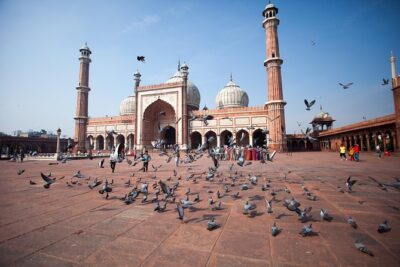
Old Delhi Street Food Tour – Explore Spices in Chandni Chowk
Read our review →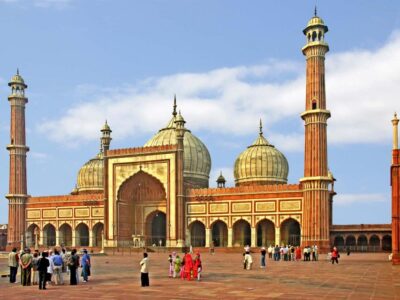
Delhi: Old Delhi City Tour with Tuk-Tuk Ride & Street Food
Read our review →
Old Delhi Cultural, Temples, Heritage Walking Street Food Tour
Read our review →
Customized Half Day and Full Day Delhi Shopping, Street Food Tour
Read our review →
Old Delhi: Guided Street Food Tour w/ Private Transportation
Read our review →The lists this tour appears in