
Review · MARRAKECH
Marrakech Street Food with +10Tasting & Tanjia Dinner|Guided Walk
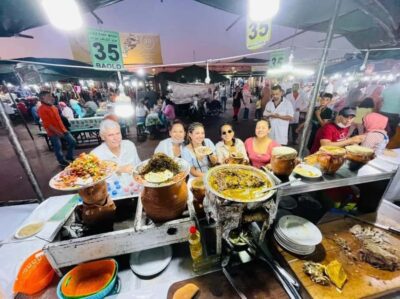
Marrakech’s best food lesson may be served from a paper plate, a hot griddle, or a clay pot rather than a restaurant table. This evening walk takes you from Jemaa el-Fnaa into the souks for more than 10 tastes, ending with slow-cooked tanjia, the city’s signature meat dish. I like the mix of eating and watching: you see sfenj dough shaped and fried, olives prepared, and msamen cooked before tasting them.
I also like that the tour gives you a way to enter the Medina without getting lost, then puts the food in its cultural setting. The main drawback is simple: come hungry. With soup, fried dough, pancakes, pastries, olives, tea, and a full tanjia serving in about two to three hours, this is not a light nibble tour.
Key points at a glance
- Ten or more tastings: Expect harira, olives, sfenj, Moroccan donuts, sardine balls, msamen, pastries, juice, salad, mint tea, and tanjia.
- A 6:00 pm start: The tour begins at Jemaa el-Fnaa and returns there after the Medina walk.
- Food preparation is part of the show: You can watch sfenj dough shaped and fried, and see how olive products are made.
- Tanjia finishes the meal: The dish is slow-cooked in a clay pot with saffron, garlic, cumin, and preserved lemon.
- A small group format: The maximum is 16 people, with a licensed local food guide leading the route.
- Good value for a full evening tasting: At $62.72 per person, the price covers the guide, food samples, mint tea, and the walking tour, but not hotel transfers.
Starting with harira at Jemaa el-Fnaa
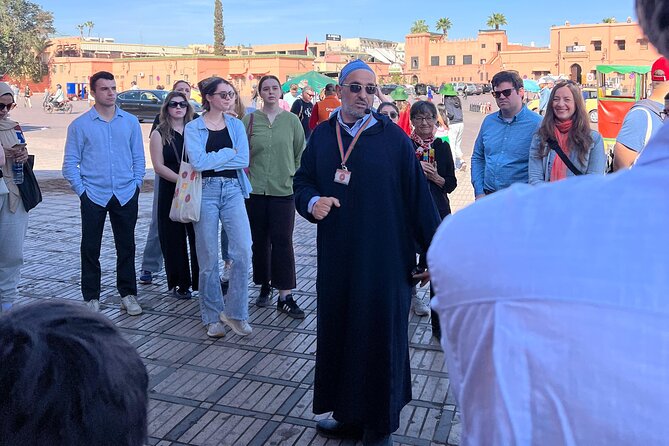
Meet at Jemaa el-Fnaa at 6:00 pm. This is the right place to begin because the square is Marrakech’s great public stage, and the tour quickly gets you focused on food rather than simply looking at the crowds and stalls.
Your first taste is harira, a tomato-based soup with lentils, chickpeas, and fragrant spices. It is filling without being heavy at the start, and it gives you an early sense of how Moroccan cooking builds flavor from pulses, herbs, tomatoes, and seasoning.
Harira is especially linked with Ramadan, when it is traditionally eaten to break the daily fast. That detail makes this more than a soup sample. It gives you a small window into the place food holds in Moroccan family and religious life.
You receive about 30 minutes at this first stop. Since the walk begins in a central square, it is also a practical meeting point. The activity uses a mobile ticket, and confirmation is provided when you book. You will need to arrange your own way to Jemaa el-Fnaa, as hotel pickup and drop-off are not included.
Dinners worth booking around Marrakech:
- Bangkok Food Tour by Tuk Tuk – Hotel-pickup & Dinner
★ 5.0 · 113 reviews - Da Nang By Night: Seafood dinner, night market and cruise trip
★ 5.0 · 38 reviews - Boat tour on Mekong river see the sunset, small canal, Vegan dinner, street food
★ 5.0 · 17 reviews
Tasting olives in Souk Semmarine
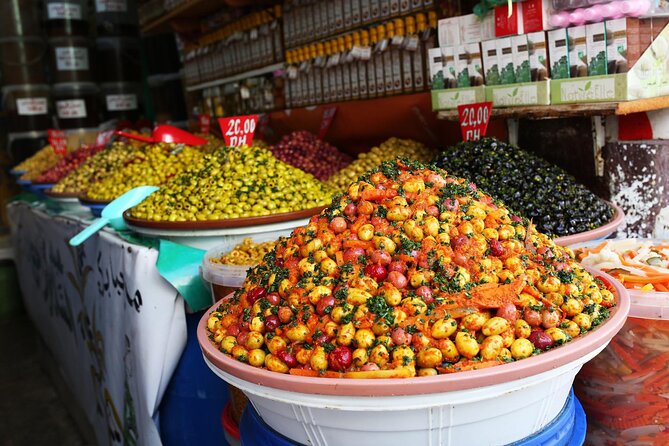
From the square, the route moves into Souk Semmarine for an olive tasting. Morocco is well known for its olive-growing traditions, and here the focus is on variety rather than a single standard snack.
You may sample spiced olives, preserved olives, and oil-cured olives while learning about olive farming and small-scale olive oils. The differences can be subtle at first, but the seasoning, texture, and curing method change the experience considerably.
The stop lasts about 20 minutes. That is long enough for an introduction, though not enough for a detailed agricultural lesson. I see this part as useful because it gives you a better eye for the jars and trays of olives you will find throughout Moroccan markets.
There is also a practical benefit. After tasting several kinds, you can make a more informed choice if you want to buy olives or olive products later in your trip. The tour is not only feeding you. It is showing you what to notice.
Watching sfenj being made in Derb Dabachi
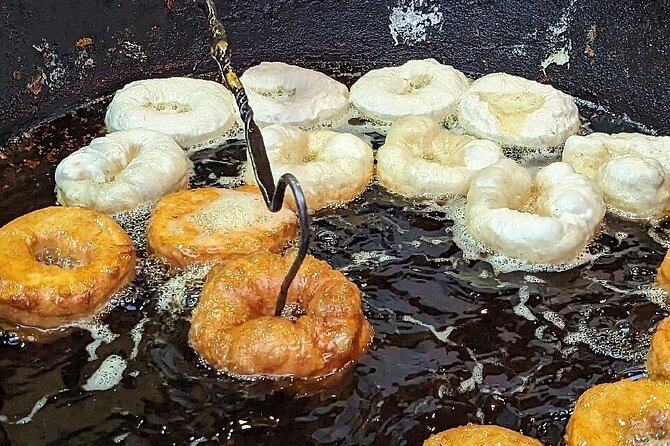
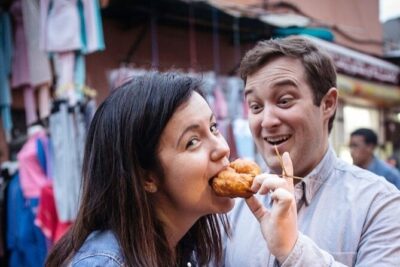
The food becomes more theatrical at Derb Dabachi, where you stop for sfenj. These Moroccan donuts are made from dough that is shaped by hand and dropped into hot oil. The preparation matters as much as the bite.
You can watch the vendor work the dough before tasting the finished sfenj. It may be served plain or with honey, depending on the preparation. Freshness is the point here. A donut eaten soon after frying has a different texture from one that has been sitting in a display case.
Sfenj is a useful introduction to Moroccan street food because it is simple, inexpensive, and made in front of you. It is also one of the stops most likely to fill you faster than expected. Pace yourself. The tour still has several foods to come.
The stop is planned for around 20 minutes. The Medina route includes narrow alleys and active market areas, so stay close to the guide, especially if you pause to watch the frying. One advantage of having a local guide is that you can concentrate on the food instead of trying to work out which turn comes next.
Eating hot msamen at Riad Sidi Ayoub
At Riad Sidi Ayoub, you try msamen, a square Moroccan pancake known for its flaky, layered texture. It can be served sweet with honey or in a savory style with soft cheese.
The interesting part is seeing the pancake made in a traditional bakery. Msamen is not just poured onto a griddle like a thin crepe. The dough is worked to create layers, then cooked until the outside takes on a light crispness while the inside stays tender.
This is one of the tour’s more satisfying stops because you can compare two very different uses of the same basic food. Honey makes it a sweet snack, while cheese gives it a more substantial, savory character.
Again, the planned visit lasts about 20 minutes. That keeps the group moving, but it also means you should treat each stop as a taste and demonstration rather than a long sit-down meal. The final tanjia course is still waiting.
Sit-down meals to book around Marrakech:
- Naples: Street Food Experience With 6 Stops
★ 4.7 · 392 reviews - Siem Reap: Street Food Experience by Tuk-Tuk
★ 4.9 · 310 reviews - Saigon at Sunset: Ultimate Street Food Experience
★ 4.7 · 153 reviews - Sorrento: Guided Walking Tour & Street Food Experience
★ 4.6 · 152 reviews
A second look at Moroccan donuts in Rahba Kedima Square
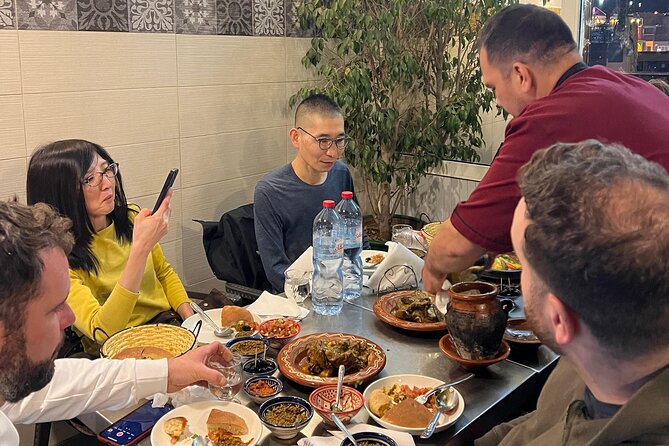
The Rahba Kedima Square stop returns to Moroccan donuts, including sfenj and beignets. You may find plain versions as well as pastries covered with honey.
At first, another fried-dough stop may seem repetitive. In practice, it lets you compare styles, textures, or toppings in a more relaxed setting. It also reinforces an important part of Marrakech food culture: snacks are often prepared quickly, served warm, and eaten as part of the rhythm of the street.
This is another reason not to eat a large meal before the tour. The food list is broad, but several items are substantial. Fried dough, pancakes, soup, and a meat dish add up.
The stop is scheduled for around 20 minutes. If you are watching your sugar or oil intake, you can treat this as a sampling stop rather than finishing everything offered. The value of the tour comes from trying different foods, not from forcing yourself to eat every portion.
More than sweets: sardine balls, pastries, salad, and juice
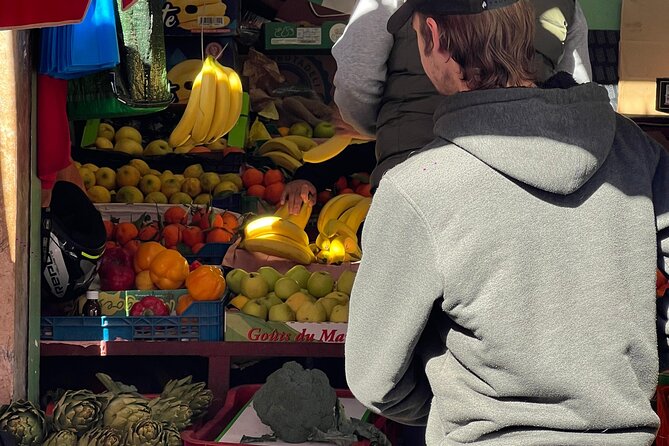
The advertised food selection includes more than the named itinerary stops. Along with harira, olives, sfenj, msamen, and tanjia, the tastings can include sardine balls, pastries, juice, salad, nuts, and Moroccan donuts or beignets.
These extra samples help round out the meal. Sardine balls bring a savory seafood note, while pastries and nuts move the tasting toward sweeter and crunchier textures. Salad and juice add some freshness between the heavier foods.
The exact order and serving details may vary because this is a street food walk, not a fixed restaurant menu. The core promise is clear: more than 10 Moroccan tastings, including the major dishes named in the experience details.
If you have dietary restrictions, ask before booking or at the start of the tour. The available information confirms the foods included, but it does not promise vegetarian, vegan, gluten-free, allergy-safe, or halal accommodations beyond the normal Moroccan food context.
Finishing with Marrakchi tanjia
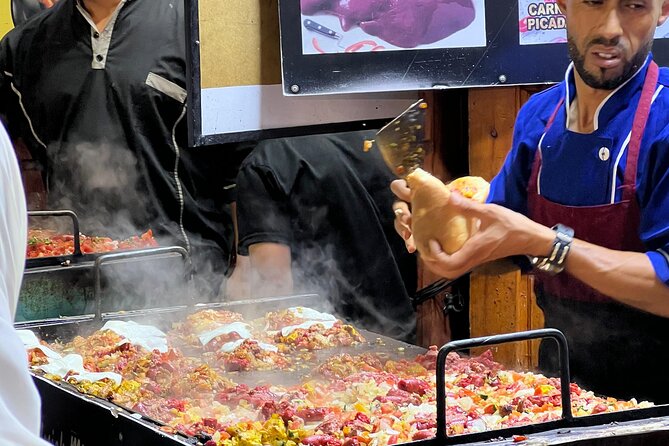
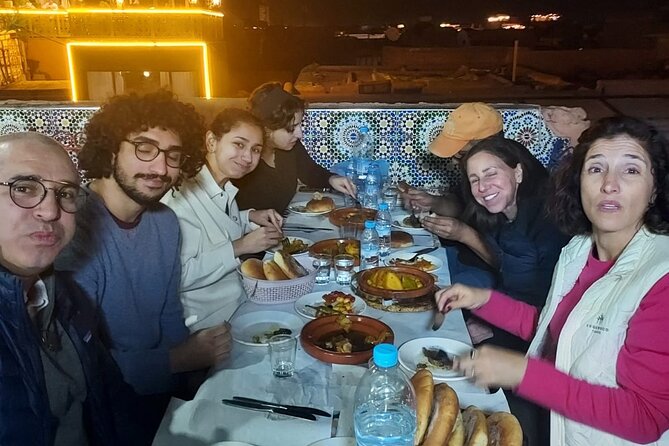
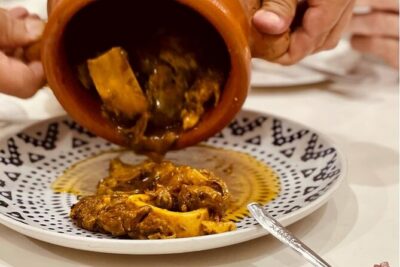
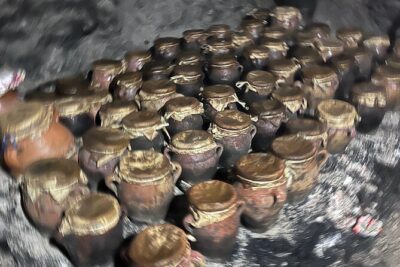
The evening ends with tanjia, a dish closely tied to Marrakech. This is not the same as tagine, though visitors often confuse the two. Tanjia is traditionally slow-cooked in a clay pot, with meat seasoned with saffron, garlic, cumin, and preserved lemon.
The dish is prepared slowly, traditionally underground or in the embers of a communal oven. That long cooking time gives the meat a tender texture and lets the seasonings work into the sauce.
You get about 30 minutes for this final food stop. After several snacks, tanjia gives the walk a proper finish rather than ending with another small pastry. It is the most substantial food on the route and the best chance to sit with one dish long enough to appreciate it.
The preserved lemon is especially important to notice. It brings a sharp, salty note that cuts through the richness of the meat. Saffron and cumin add warmth, while garlic helps give the dish its strong savory character.
Because tanjia is a local Marrakech specialty, this final stop gives the tour a clear sense of place. You are not simply eating generic Moroccan food. You are trying a dish associated with the city itself.
Mint tea in a traditional setting
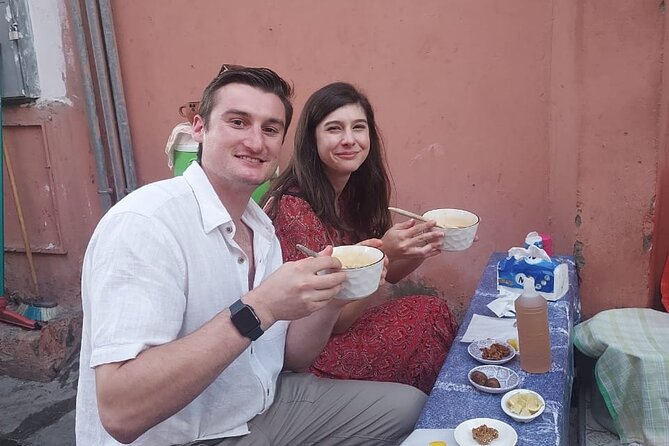
Mint tea is included and served in a traditional setting. It may appear between tastings or near the end, depending on how the guide runs the evening.
Tea matters here because it slows the pace after a run of quick snacks. Moroccan mint tea is also part of the country’s hospitality customs, so this is a fitting drink to accompany a food-focused walk.
The tea is not a separate workshop, and the information provided does not specify a tea ceremony or a particular venue. Still, it adds a useful pause and gives you a chance to settle after the tanjia.
What the $62.72 price covers
At $62.72 per person, the price is easier to justify if you treat this as both dinner and a guided Medina walk. You are paying for a licensed local guide, more than 10 tastings, mint tea, and a route through Jemaa el-Fnaa and the souks.
A comparable evening spent buying every item independently could be cheaper, especially if you choose small portions. But you would need to find the stops, decide what is worth trying, and manage the route through the Medina yourself. The guide adds structure and local context.
The value is strongest for a first visit to Marrakech, for anyone nervous about navigating the souks, or for people who want several tastes in one evening rather than one restaurant meal. It is less compelling for a confident food shopper who already knows the Medina and prefers choosing each snack alone.
Hotel transportation is not included. Since the starting point is Jemaa el-Fnaa and the tour ends back at the same meeting point, you should plan your route there and back before the evening begins.
Timing, group size, and walking comfort
The experience lasts roughly two to three hours. That is enough time for six main stops and additional tastes, but the pace will be active. You will be walking through the Medina, stopping to eat, and moving between food sellers and market areas.
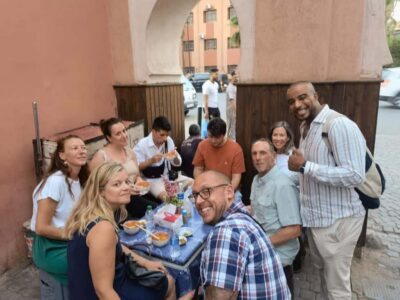
The maximum group size is 16 people. That is not a private tour, but it is small enough to keep the guide’s explanations manageable if everyone stays together. A group of this size can still take a little time to move through narrow lanes, so do not expect every stop to feel completely private.
Most people can take part, and the route is near public transportation. The activity data does not provide a detailed accessibility description, so anyone who needs specific assistance should confirm whether the walking route suits them before booking.
Wear comfortable shoes and avoid arriving after a full dinner. You will be on your feet and sampling food for much of the evening. The best practical tip is the simplest one: save your appetite.
Who will enjoy this food walk most
I would recommend this tour to first-time visitors who want an easy introduction to Marrakech food without spending an entire evening researching food stalls. It also fits couples, small groups, and curious eaters who enjoy seeing how dishes are prepared.
It is a good choice if you want local food with explanation rather than a silent tasting. The guide connects each dish with its preparation and use, from Ramadan harira to the city-specific tanjia.
Families may enjoy the variety, though parents should consider the late 6:00 pm start and the amount of walking. The food includes fried dough, sweets, meat, soup, olives, and other strong flavors, so picky eaters may not enjoy every stop.
You should look elsewhere if you want a polished restaurant dinner, a private guide, hotel transport, or a strictly fixed menu. This is a street food experience, and part of its appeal is the movement between working food stalls, bakeries, souks, and local tasting spots.
The experience currently carries a 5 out of 5 rating from 21 ratings, with 100 percent recommending it. Those figures point to strong satisfaction, especially for the combination of food and a guided walk. Still, the practical details matter more than the score: you need to like sampling many foods, walking in the Medina, and eating an early evening meal in stages.
Should you book Marrakech Street Food with Tanjia?
Book it if you want to taste widely in one evening, learn what you are eating, and finish with a proper Marrakech specialty. The combination of harira, olives, fresh sfenj, msamen, pastries, tea, and tanjia gives you a broad first look at Moroccan food.
Skip it if you have already explored the Medina’s food stalls on your own or prefer a slower meal at one table. The tour is active, the portions add up quickly, and hotel transfers are not part of the price.
For most first-time visitors, the strongest plan is to book with an empty stomach, meet at Jemaa el-Fnaa before 6:00 pm, and leave room for the tanjia at the end. Free cancellation is available if you cancel at least 24 hours before the start time. Inside that window, refunds are not provided.
FAQ
Where does the tour start and end?
The tour starts at Jemaa el-Fnaa in Marrakech at 6:00 pm and ends back at the same meeting point.
How long does the experience last?
The tour lasts approximately two to three hours.
How many people can join the group?
The maximum group size is 16 travelers.
What foods are included?
The experience includes more than 10 tastings, including tanjia, harira, sfenj, Moroccan donuts, olives, msamen, pastries, and other items such as sardine balls, nuts, juice, and salad.
Is mint tea included?
Yes. Moroccan mint tea is included and served in a traditional setting.
Is hotel pickup included?
No. Hotel pickup and drop-off are not included. You are responsible for reaching the Jemaa el-Fnaa meeting point.
Newest street food walks around Marrakech
- Marrakech Tasting Tour: Experience Local Street Food & Culture!★ 5.0 · 5 reviews
- Marrakech street food tour with a local★ 5.0 · 55 reviews
- Local Hidden Spots Street Food Tour in Medina Marrakech★ 5.0 · 30 reviews
- Marrakech: Street Food Tour by Night★ 4.5 · 42 reviews
- 3 Hours Private Tour Marrakech Night Market★ 5.0 · 2 reviews
- Marrakech Street food Tours★ 4.5 · 15 reviews
- Marrakech street Food Tour Eat like Locals★ 5.0 · 4 reviews
- Taste Marrakech Street food tour from Medina★ 5.0 · 34 reviews
Marrakech street food tours, side by side.
Marrakech Night Street Food Tour / Taste The Real Marrakech
Read our review →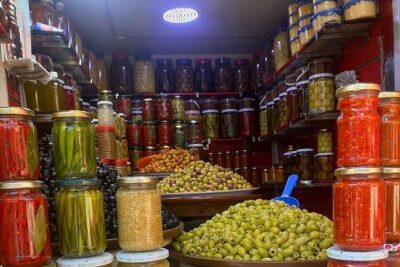
Local Hidden Spots Street Food Tour in Medina Marrakech
Read our review →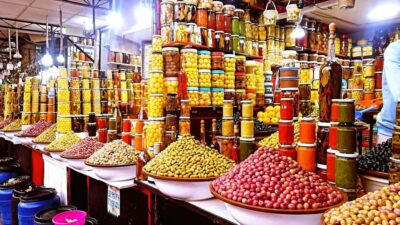
Medina Tasting Tour: Experience Local Street Food & Culture!
Read our review →The lists this tour appears in