
Review · ROMANIA
Street Food’n’Culture Tour
Bucharest makes the most sense when you eat your way through it. This 3.5-hour walking tour combines eight tastings at four venues with stories about royal Bucharest, communism, the 1989 Revolution, and today’s food scene. You might try bean hummus, sarmale, mici, cheese pastries, local sweets, and a glass of Romanian wine or beer.
I like two things right away: the generous food lineup gives you a proper introduction to Romanian flavors, and the walking route helps you get your bearings near the center. Guides such as Laura, Emma, Cristian, Larissa, and Sinziana are known for turning the meal into a conversation about everyday life, not just a list of dishes. The main consideration is the price, $153.65 per person, which is high for a food walk, though the large number of tastings and included drinks help explain it.
Key points at a glance

- Eight tastings at four venues: Expect appetizers, savory dishes, pastries, sweets, and local drinks rather than one large sit-down meal.
- A useful first-day activity: The route ends at the Romanian Athenaeum, within about 20 minutes on foot of Bucharest’s Old Town.
- Romanian food with modern touches: Traditional dishes appear alongside newer ideas, including unusual pastry and dessert combinations.
- Stories beyond the plate: Guides connect food to royal life, communist shortages, the 1989 Revolution, and present-day Bucharest.
- Come hungry: Portions can be substantial, and some food may be available to take home if you cannot finish.
- Small groups: Bookings are limited to 10 people, with the activity normally capped at 8 participants.
Why this food walk works as a Bucharest introduction
I would place this tour near the start of a Bucharest visit. You get a map in your head, a set of dishes to look for later, and practical suggestions for restaurants and places locals enjoy. The walk also introduces central streets and buildings that you might otherwise pass without understanding.
This is not simply a snack crawl. The food provides the structure, but the guide supplies the meaning. Emma, for example, has used old photographs to explain how streets looked during royal rule, communism, and the years after 1989. Cristian has connected everyday foods with the country’s political changes, while Laura has been praised for combining local stories with a warm, personal approach.
The format should suit you if you like asking questions. Small groups make it easier to talk about Romanian customs, eating habits, and the differences between traditional food and newer city cooking. It is less suitable if you want a fast march between famous landmarks or a formal restaurant tasting with precise culinary instruction.
More street food walks around the world:
- Dubai: Old Town, Creek, Museums, Souks, & Street Food Tour
★ 4.8 · 10,816 reviews - Ho Chi Minh City Street Food Tour & Sightseeing By Motorbike
★ 5.0 · 9,413 reviews - Medellin: Comuna 13 Graffiti Tour, Cable Car & Street Food
★ 4.8 · 9,046 reviews
Starting beside the Athénée Palace
The meeting point is the InterContinental Athénée Palace Bucharest by IHG, at Strada Episcopiei 1-3. This is a central location, close to the Romanian Athenaeum and within roughly 20 minutes walking distance of the Old Town.
Starting here makes practical sense. You are already near some of Bucharest’s grandest central architecture, and the walk can move outward through smaller streets, markets, shops, and food stops. Public transportation is nearby, but you should plan to arrive on foot or by taxi with enough time to find the hotel entrance.
The route ends at the Romanian Athenaeum on Strada Benjamin Franklin. That gives the tour a clear finish near a major cultural building, rather than leaving you at an unnamed restaurant. If you have an evening plan in the Old Town, you can walk there afterward, though allow time to finish the tour and make your way across central Bucharest.
The Romanian Athenaeum and the city’s grand center
The Romanian Athenaeum is a neoclassical concert hall and one of the city’s most recognizable buildings. The tour uses it as part of the architectural setting, giving you a chance to admire the building near the start or end of the route.
The building matters because Bucharest’s center can feel like a mix of grand facades, later repairs, communist-era changes, and busy modern streets. A guide helps you read those layers. You are not only looking at a pretty concert hall. You are learning how the city’s public spaces and cultural institutions fit together.
The tour does not include an advertised interior visit to the Athenaeum, so do not book it expecting a concert or a full building tour. Its role here is as a landmark and orientation point.
Amzei Market: a quick look at everyday produce
One stop is Platoul Piata Amzei, a small open-air market with fruit, vegetables, and flower shops. The listed visit lasts about five minutes, so think of it as a short introduction to local shopping rather than a long market expedition.
That brief pause still adds value. Food tours can become too focused on prepared dishes, but a produce market shows another side of how a city eats. You can see the kind of setting where locals buy basic ingredients, seasonal produce, and flowers.
The market stop also breaks up the larger tastings. Since the food portions may be generous, a short walk through an open-air market gives you a change of pace before the next venue. Do not expect a large farmers market or a long period for browsing. This is a compact stop within a larger city walk.
Same streets, a different set of bites:
- Dubai: Old Town, Souks, Street Food, Guided Tour & Abra Ride
★ 4.9 · 7,170 reviews - Naples: Street Food Walking Tour with Local Guide
★ 4.9 · 4,976 reviews - Small Group Hanoi Street Food Tour with a Real Foodie
★ 5.0 · 4,682 reviews - Rome: Street Food Tour with Local Guide
★ 4.8 · 4,077 reviews
Historic villas and the look of old Bucharest
The route includes a fully restored and refurbished historic villa. That detail is important because Bucharest’s architectural appeal often comes from smaller buildings rather than only its biggest monuments.
A restored villa gives the guide room to explain how residential Bucharest changed over time. The city’s past is not confined to museums. It appears in elegant houses, worn facades, restored interiors, and streets where different periods sit close together.
You should expect the guide to point out buildings and neighborhoods along the way, but the supplied plan does not promise entry into every historic property. The villa is part of the sightseeing route, not necessarily a private interior tour. Even so, it adds variety to a schedule that could otherwise feel like food, food, and more food.
What you are likely to eat

The food is the strongest reason to consider this tour. The included program describes eight tastings of dishes and sweets that reflect Bucharest’s current food culture, served at four venues.
Examples from the food lineup include:
- Balmos
- White bean hummus
- Vegetables
- Sarmale
- Mici
- Fried cheese pastries
- Placinta cu branza, a cheese pastry
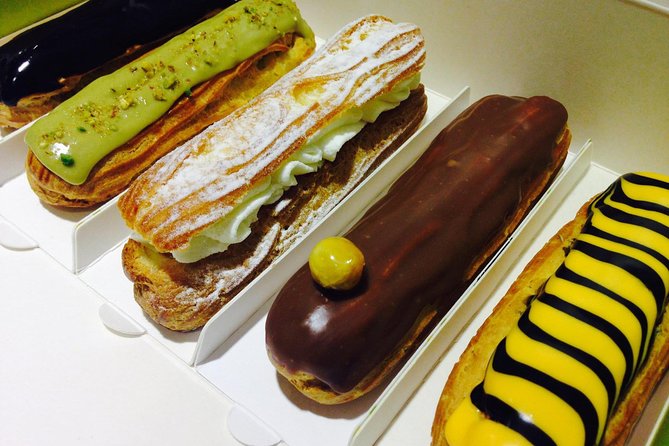
- Local sweets, including eclairs
- Romanian comfort cookies and snacks
- Fresh lemonade
- Coffee
- A glass of local wine or beer
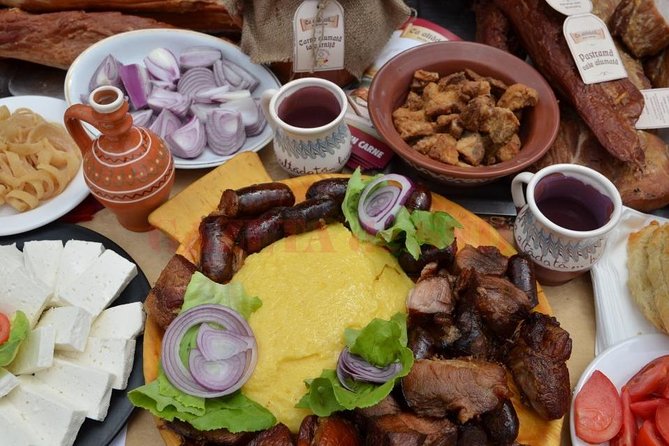
Sarmale, stuffed cabbage rolls, are a familiar Romanian classic. Mici are small grilled sausages, often treated as an everyday favorite rather than a fancy restaurant dish. These give you a useful base for understanding Romanian food.
Other tastings show a wider range. Bean hummus and vegetables provide a lighter opening, while cheese pastries and sweets bring in the bakery side of the city. The eclair mentioned on the tour combines the idea of a tart with an eclair, a playful example of how Bucharest’s food scene can borrow familiar forms and give them a local twist.
The exact order and portions can vary. The important point is that this is more than a token bite at each stop. Several people have found the quantity large enough to replace lunch, and some have had food left over to take home. I would eat only a light meal beforehand, or simply arrive hungry.
Four venues, four different moods
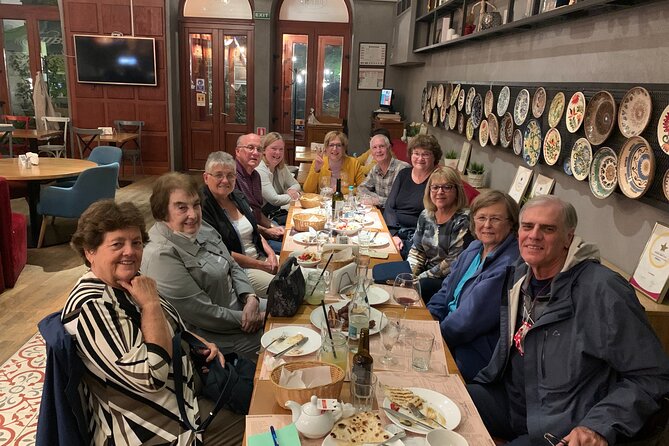
The four food stops help keep the experience from becoming one long seated meal. You might begin with small plates and vegetables, move to traditional savory food, stop for pastries or snacks, and finish with sweets and a drink.
That sequence gives you a sense of how Romanian eating works across different settings. You are not just sampling restaurant specialties. You may encounter food associated with home cooking, casual street eating, bakeries, and newer city businesses.
The plan does not name every venue in advance, so you should not expect to choose specific restaurants before booking. That is a minor drawback for anyone planning around a particular café or dietary need. In return, the guide can shape the stops around the route and the group.
The included fresh lemonade and local wine or beer make the cost easier to assess. The advertised details also list coffee and two drinks among the inclusions, while the food description specifies eight tastings. Extra cocktails, drinks, and souvenirs are not included.
The stories that make the food useful
Food alone can leave you with a full stomach but little sense of place. The better part of this tour is the way guides connect dishes with Bucharest’s past and present.
You may hear about the era of royalty, the communist period, and the 1989 Revolution. The guide can explain how political change affected buildings, neighborhoods, shopping, and daily meals. That context helps you understand why some dishes feel traditional, while others reflect a newer, more experimental Bucharest.
Emma has been especially effective at using photographs and dates to show how the city changed. Cristian has focused on recent Romanian history while walking between food stops. Laura has been praised for combining food, architecture, and personal conversation. Sinziana has been described as entertaining and well informed about both the route and the dishes.
Guides can vary, and the activity may be operated by a multilingual guide. Still, the format encourages conversation, which is useful if you want to ask about Romanian food beyond the planned tastings.
Price, group size, and what you receive
At $153.65 per person, this is not a budget snack walk. You are paying for roughly three and a half hours, four food venues, eight tastings, drinks, coffee, a walking route, and a guide who provides cultural context.
The value depends on how much you eat and how much you use the orientation. If you treat it as lunch plus a private-style city introduction, the price is easier to defend. If you mainly want a few cheap street snacks, you can find less expensive ways to eat in Bucharest.
The group limit helps. Bookings allow up to 10 people, while the activity itself has a maximum of 8 travelers. A small group means you can hear the guide, ask questions, and avoid the detached feeling of a large bus excursion. A minimum of two people is required, so solo visitors cannot book this experience alone under the stated conditions.
You can book in English. The minimum age is 8, and children must be accompanied by an adult. The minimum drinking age is 18, though the food remains the central part of the tour.
Dietary needs, weather, and walking pace
Vegetarian options are available, but you must state your needs when booking. You should also advise the provider about any other specific dietary requirements at that time. Do not wait until the meeting point, since the food stops may need advance planning.
The tour operates in all weather conditions, so wear comfortable shoes and bring suitable clothing. The activity requires good weather according to its cancellation terms, which means poor conditions can lead to a new date or a refund. The route is on foot, but the exact distance and pace are not specified, so anyone concerned about mobility should ask before booking.
The pace appears to be leisurely rather than rushed. That helps with conversation and allows time to eat, but it also means the tour will fill much of an afternoon or morning. Plan other activities around the full three-and-a-half-hour period, not just the food stops.
Who should book this experience
I would choose this tour if you want three things at once: a substantial meal, a central Bucharest walk, and a readable explanation of Romania’s recent past.
It is especially useful for:
- First-time visitors who want early orientation
- Curious eaters who enjoy trying several small dishes
- People who prefer local context to a checklist of monuments
- Families with children aged 8 or older
- Vegetarians who notify the provider in advance
- Small groups who value conversation with a guide
I would hesitate if you dislike eating a lot, need a tightly controlled menu, or want a low-cost food crawl. The number of tastings is a benefit for hungry eaters, but it can be too much if you have a small appetite.
Should you book the Bucharest Street Food’n’Culture Tour?
Book it if you want a full introduction to Bucharest through food, architecture, and recent history. The combination of generous portions, four different venues, a market, historic buildings, and guides such as Laura, Emma, and Cristian gives the experience more substance than a simple snack stop.
The price is the main question. At $153.65, it needs to replace a meal and provide real orientation to feel worthwhile. For many visitors, it will do exactly that, especially when booked early in a Bucharest stay. Come hungry, tell the provider about dietary needs, wear walking shoes, and leave room for the pastries.
FAQ
How long does the tour last?
The tour lasts approximately 3 hours and 30 minutes.
Where does the tour start?
It starts at the InterContinental Athénée Palace Bucharest by IHG, Strada Episcopiei 1-3, București 010292, Romania.
Where does the tour end?
It ends at the Romanian Athenaeum, Strada Benjamin Franklin 1-3, București 010287, Romania.
How far is the tour from Bucharest’s Old Town?
The ending point is located within about 20 minutes walking distance of the Old Town center.
How many food tastings are included?
The included food program lists eight tastings of dishes and sweets at four venues.
Are drinks included?
Yes. Fresh lemonade and one glass of local wine or beer are included. The tour information also lists coffee and two drinks among the inclusions. Additional beverages and cocktails cost extra.
Is a vegetarian option available?
Yes. A vegetarian option is available, but you must advise the provider when booking.
Can children join the tour?
Yes. The minimum age is 8, and children must be accompanied by an adult.
How many people can join the tour?
Bookings allow a maximum of 10 people, while the activity itself has a maximum of 8 participants.
What happens if I need to cancel?
You can receive a full refund if you cancel at least 24 hours before the experience begins. Cancellations or changes made less than 24 hours before the start time are not refunded or accepted.
Newest street food walks around the world
- Old Delhi Cultural, Temples, Heritage Walking Street Food Tour★ 5.0 · 57 reviews
- Old and New Delhi Street Food Sampling★ 5.0 · 3 reviews
- Old Delhi Tour by Tuk-Tuk Street Food and Shopping Experience★ 5.0 · 12 reviews
- Customized Half Day and Full Day Delhi Shopping, Street Food Tour★ 5.0 · 52 reviews
- Delhi: Street Food Crawl (2 Hours Guided Food Tasting Tour)★ 3.5 · 18 reviews
- Taste Famous & Best Street Food of Old Delhi (Jama Masjid)★ 3.0 · 2 reviews
- Spice & Stories: 3-Hour Old Delhi Heritage Food Walk Guided Tour★ 4.5 · 36 reviews
- Old Delhi Street Food and Spice Market Tour★ 5.0 · 81 reviews