
Review · BULGARIA
Sofia: Flea and Food Markets Tour
Sofia’s markets tell the city’s story better than a string of monuments. On this 3-kilometer walking tour, you move from flea-market trinkets to Ottoman-era foodways, Communist-era commerce, and today’s local shopping streets. Four food stops keep the history grounded in things you can taste.
I like the way the tour combines real city orientation with lunch-sized portions of Bulgarian food. I also like the guides’ personal touch: Ivo, Daniella, Theodora, Nesi, and others have been praised for explaining both cuisine and national history in clear, friendly English. The main consideration is pace and footing. You walk about two miles, the tour is not suitable for wheelchair users or people with mobility impairments, and one booking began later than expected.
Key points to know
- Four markets, four eras: The route links the Flea Market, Central Market Hall, Hali Market, and Women’s Market to Bulgaria’s postcommunist, Communist, Kingdom, and Ottoman periods.
- Four food stops: You receive local dishes and drinks along the way, plus a soft drink at the final stop.
- A useful first-day tour: The route passes major landmarks, helping you get your bearings in central Sofia.
- Guide quality matters: Guides named in feedback include Ivo, Daniella, Dany, Danny, Theodora, and Nesi.
- Bring practical shoes: Expect around 3 kilometers of walking with stops, city streets, and market surfaces.
- Good value at $50: The price covers the guide and four food stops, making it more than a simple sightseeing walk.
Why Sofia’s markets make a fine first-day introduction
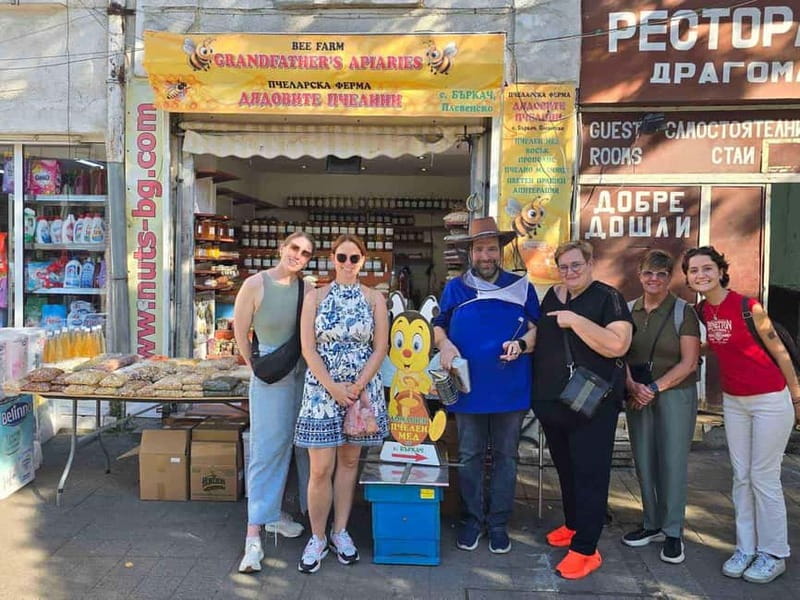
I like this tour because it gives you a working map of central Sofia while feeding you along the way. Instead of treating the city as a row of grand buildings, it shows how people shop, eat, trade, and adapt through different periods of Bulgarian history.
The route connects four markets with four chapters of the city’s past. The Flea Market points toward the postcommunist period and the informal trade that followed it. The Central Market Hall and Hali Market bring you closer to Communist-era and Kingdom-period commerce. The Women’s Market helps explain the city’s Ottoman influence and its long connection to regional trade.
That structure gives the day a clear purpose. You are not simply wandering from stall to stall. Your guide explains why each place looks and feels different, and how food can carry old customs forward.
This is especially useful on your first day in Sofia. The walk passes many of the city’s main sights, including Alexander Nevsky Cathedral, Saint Sofia Church, The Largo, Roman ruins, Banya Bashi Mosque, Sofia Synagogue, and Lion Bridge. You will not receive a full interior tour of each landmark, but you gain context and a sense of where everything sits.
More Food Market Tours in the world:
- Seoul Street Food Market Tour
★ 5.0 · 1,226 reviews - Athens: Food Market Visit and Cooking Class with Wine
★ 4.9 · 1,087 reviews - Seoul: Night Market Food Tour with Local Guide
★ 4.9 · 943 reviews
Starting at Crystal Park and meeting your guide
The meeting point is the Stefan Stambolov Monument in Crystal Park. It is a sculpture of a split head, an unusual landmark that should help you identify the spot. Plan to arrive 10 minutes early.
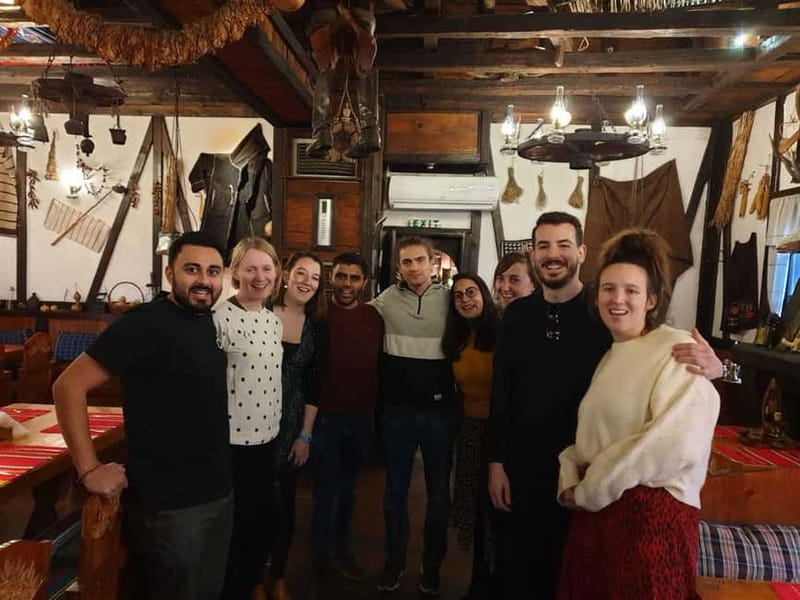
The tour is conducted in English with a live local guide. Guide assignments can vary, but named guides include Ivo, Daniella, Dany, Danny, Theodora, and Nesi. The most important quality to look for is not a fixed personality or script, but someone who can connect the food to the city’s past.
Ivo has been praised for being friendly and well informed, and for keeping the tour enjoyable even in rainy weather. Daniella has been singled out for answering questions, explaining Sofia’s past, and looking after her group. Theodora has been described as warm and easy to talk with, while Nesi brought together food, culture, and history for a first day in Bulgaria.
That personal approach matters. Market tours can feel flat if the guide only names dishes and buildings. Here, you should expect plenty of chances to ask about customs, Ottoman influence, Bulgarian yogurt, spring water, and the way Sofia developed over time.
The Flea Market and Sofia’s postcommunist side
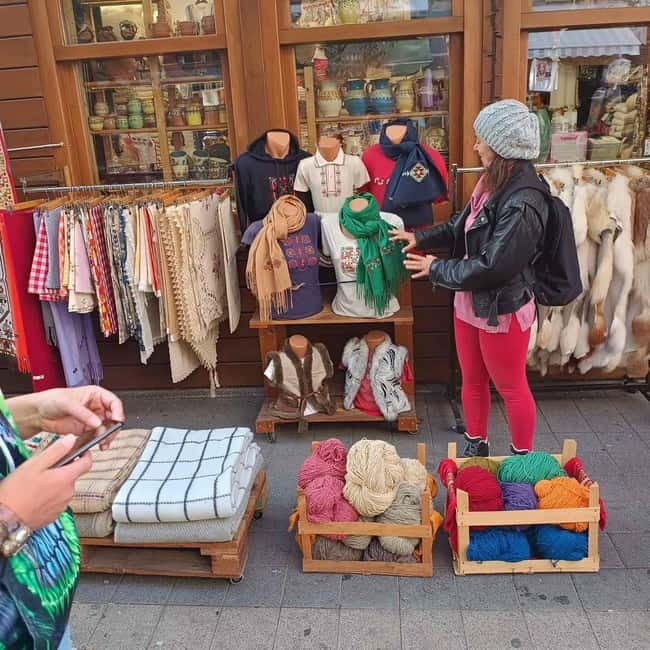
The Flea Market is the least polished stop, which is part of its appeal. You can browse objects, souvenirs, and possible antiques while your guide explains the market’s connection to the postcommunist period.
The useful thing here is freedom. You are not pushed through a shop with a sales pitch. You can look closely, ask what an object might be, or simply enjoy the odd mix of items. If you collect small souvenirs, this is the point where you may find something with more character than a standard airport purchase.
Do not arrive expecting a formal antiques appraisal. The supplied details promise the chance to peruse souvenirs and antiques, not a guarantee of rare or valuable finds. Treat the stop as a browse, not a buying mission.
This part also gives you a feel for how public trading can reflect social change. A market may show what people want to sell, what visitors want to take home, and how older goods remain in circulation. Your guide helps put that activity into a Bulgarian setting.
Central Market Hall and the city’s food backbone
The Central Market Hall offers a more structured market setting. Here, the tour shifts from loose displays and flea-market finds to a place associated with everyday food shopping.
This is where the food theme becomes easier to understand. Bulgaria’s cuisine is not just a restaurant subject. It lives in dairy products, bread, preserved foods, produce, drinks, and simple dishes that make sense in a market setting.
One detail that has surfaced repeatedly is the value of explanation. Your guide may discuss Bulgarian yogurt, spring water, and the way outside powers shaped local food traditions. These are small subjects, but they help you see how geography and history reach the table.
The market is also a useful place to ask questions. If you see an unfamiliar ingredient or food, ask about it. The tour is designed around local dishes, and your guide can explain what you are eating instead of leaving you to guess.
More street food walks around the world:
- Dubai: Old Town, Creek, Museums, Souks, & Street Food Tour
★ 4.8 · 10,816 reviews - Ho Chi Minh City Street Food Tour & Sightseeing By Motorbike
★ 5.0 · 9,413 reviews - Medellin: Comuna 13 Graffiti Tour, Cable Car & Street Food
★ 4.8 · 9,046 reviews - Dubai: Old Town, Souks, Street Food, Guided Tour & Abra Ride
★ 4.9 · 7,170 reviews
Hali Market and the Kingdom period
Hali Market represents another period in Sofia’s story, connected with the Kingdom era. The point is not to memorize a timeline. It is to notice how a city’s market spaces change as its political and social life changes.
Your guide may compare the building, trade patterns, and food culture here with the other markets. That comparison is the heart of the tour. One market may feel informal, another orderly, another tied to older regional customs. Taken together, they give you a more useful picture than any single stop could provide.
The food stop here is part of the $50 price. Four stops are included across the full tour, with local dishes and drinks, plus a soft drink at the final stop. The portions have been described as tasty and plentiful, so you should arrive ready to eat rather than plan a large meal immediately afterward.
A practical tip: tell your guide about food concerns early. The supplied details do not specify a vegetarian menu, allergies, or exact dishes, so do not assume every need can be handled unless you confirm it before booking.
The Women’s Market and Ottoman influence
The Women’s Market is tied to the Ottoman presence in Bulgaria and gives the food story a wider regional frame. Its name alone hints at older patterns of trade and daily life, though the tour’s main value is the explanation you receive on site.
This is a good place to pay attention to ingredients, preparation, and the movement of food traditions across borders. Bulgaria’s cuisine did not develop in isolation. Ottoman rule, neighboring cultures, and long-standing local habits all helped shape what people eat.
You may also find another chance to shop here, though the tour does not promise specific products or fixed shopping time. If you see something you want, ask whether there will be time to return or buy it. A walking tour with four food stops has a schedule to maintain.
The market also shows why a food tour can be more revealing than a standard monument walk. You learn about political change, but you also see how ordinary life continues through recipes, trade, and shared tastes.
Four food stops that turn history into lunch
The tour includes four food stops with local dishes and drinks. Exact dishes are not listed, so you should think of the food as a guided introduction rather than a fixed tasting menu you can plan in advance.
That uncertainty has a benefit. It leaves room for the guide to respond to what is available and to explain foods as they appear. Several guides have been praised for giving context about the origin and meaning of the dishes, not merely handing them over.
The included food also adds real value. At $50 per person, you are paying for a full day of guided walking, local interpretation, and four tastings. If you were going to visit the markets and eat at several stops on your own, the food alone would not be the whole cost. You would also spend time finding the places, choosing what to order, and working out what you are seeing.
The final stop includes a soft drink. Other drinks are described generally as part of the food stops, but the exact beverage list is not provided. If drinks are important to you, ask the guide or provider for the current details.
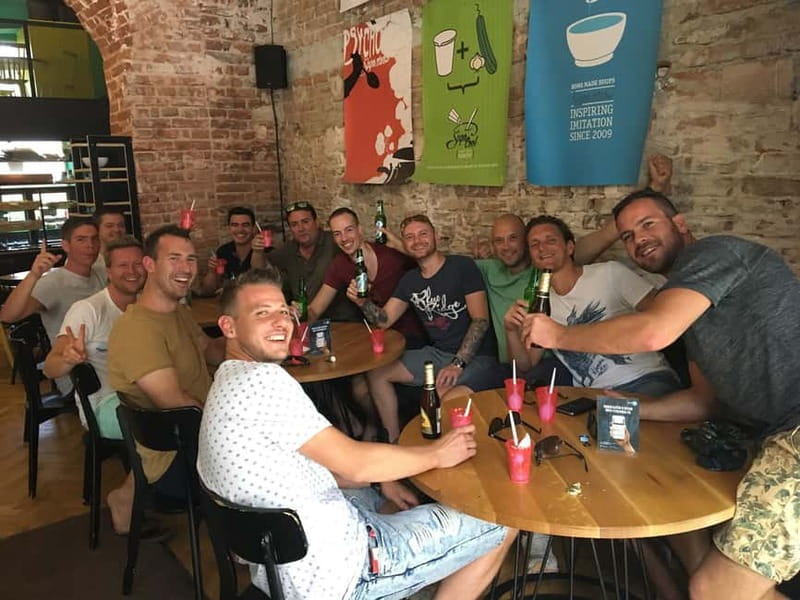
Come hungry, but not recklessly so. One young group found itself still full after the tour, and another booking described the food as plentiful. For many people, this will function as a substantial afternoon meal.
Sofia’s major sights along the walking route
The markets are the focus, but the route also passes important central landmarks.
Alexander Nevsky Cathedral gives you one of Sofia’s most recognizable views and a sense of the city’s national identity. Saint Sofia Church connects the modern capital with its early Christian past. Nearby The Largo and the Roman ruins show how much of Sofia’s older city lies below and around the present streets.
The route also includes Banya Bashi Mosque and Sofia Synagogue, two important reminders that Sofia’s religious and cultural story includes more than one tradition. Lion Bridge adds another city landmark as you continue toward the market areas.
Think of these sights as outdoor orientation points, not a substitute for a dedicated architecture or museum tour. The guide gives you historical background as you pass, but the tour’s time is divided among walking, markets, food, and conversation.
That balance suits me. You get enough context to decide what you want to revisit later, without spending the entire day inside one monument.
Walking distance, timing, and the tour’s practical limits
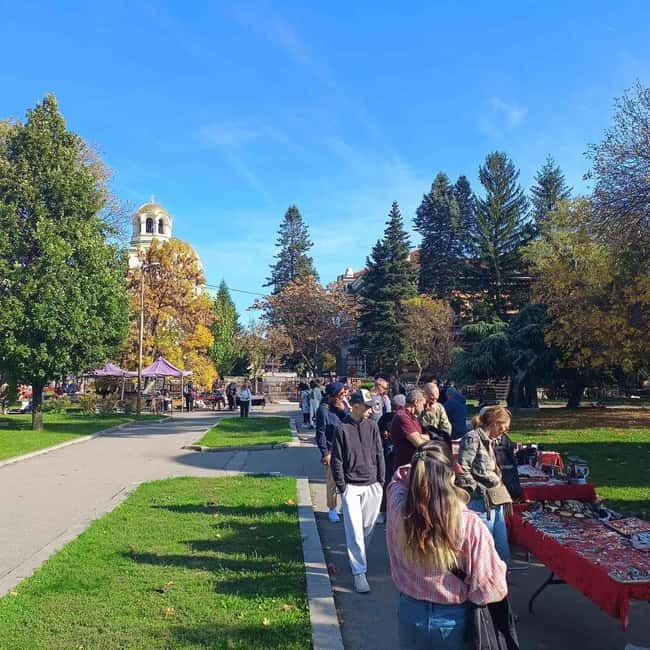
The tour involves about 3 kilometers, or 2 miles, of walking with stops. Comfortable shoes and comfortable clothes are essential. This is not a coach tour with short walks between parked vehicles.
The activity is not suitable for people with mobility impairments or wheelchair users. If you need frequent seating, step-free access, or a slower route, confirm the conditions before booking.
The advertised duration is one day, but the supplied details do not give a precise number of hours or a fixed start time. Check availability for the current starting times. One booking began much later than expected and finished late enough to disrupt evening plans, so leave some flexibility after the tour rather than scheduling a tight dinner or performance.
The route can still work in poor weather. Ivo’s group enjoyed the walk in rain, but your comfort will depend on clothing and shoes. Sofia’s weather can make ordinary city walking less pleasant, especially when you are stopping outdoors between markets.
Group size is not specified. Some bookings have been private or very small, including one tour operated just for two people, while other group sizes are not given. A small group can make questions and food explanations easier, but you should not assume a private tour unless your booking says so.
Is $50 a fair price for this Sofia tour?
At $50 per person, the tour offers a sensible package if you want food and orientation in one booking. You receive an English-speaking local guide, four food stops, local dishes, drinks, and a soft drink at the last stop.
The strongest value comes from the interpretation. Anyone can walk through a market, but it takes time and local understanding to connect four market areas with Bulgaria’s postcommunist, Communist, Kingdom, and Ottoman periods. The guide also saves you from spending your first day guessing which foods to try.
The price is less appealing if you want a short tasting walk or a focused antiques outing. This tour covers a lot of ground and includes major sights along the way, so it is best for someone who wants a broad introduction rather than a slow, detailed look at one market.
Free cancellation up to 24 hours before the activity and the option to reserve now and pay later make planning easier. Still, check the current time and meeting details before you commit your evening.
Who should book this market walk?
I would choose this tour for a first day in Sofia, especially if you want help getting oriented. It suits curious eaters, history-minded visitors, younger groups, and anyone who prefers local streets to a formal museum schedule.
It is also a good choice if you are unsure what Bulgarian food to try. Four stops give you several introductions, and the guide can explain the cultural setting behind them.
I would be more cautious if you have limited mobility, strict dietary requirements, or a tightly planned evening. The walking distance is manageable for many people, but the tour is not accessible for wheelchair users, and exact dishes are not specified.
Should you book the Sofia Flea and Food Markets Tour?
Book it if you want food, city orientation, and history in one day. The best part is the link between the markets and Sofia’s past, backed by guides such as Ivo, Daniella, Theodora, Nesi, Dany, and Danny who bring warmth and clear explanations to the route.
Skip it if your main goal is a short market visit, a formal antiques valuation, or an accessible route with guaranteed timing. For everyone else, $50 is a fair price for four food stops, a local guide, and a practical introduction to Sofia that you can use for the rest of your stay.
FAQ
Where does the Sofia Flea and Food Markets Tour begin?
Meet at the Stefan Stambolov Monument in Crystal Park. The monument is a sculpture of a split head. Arrive 10 minutes before the activity starts.
How much walking does the tour involve?
The tour involves about 3 kilometers, or 2 miles, of walking with stops.
How many food stops are included?
Four food stops with local dishes are included. A soft drink is included at the final food stop.
What markets does the tour visit?
The route includes the Flea Market, Central Market Hall, Hali Market, and the Women’s Market.
What language is the tour conducted in?
The tour is conducted in English with a live local guide.
Is the tour suitable for wheelchair users?
No. The activity is not suitable for wheelchair users or people with mobility impairments.
Can I cancel the booking for a full refund?
Yes. You can cancel up to 24 hours in advance for a full refund. You can also reserve now and pay later.
Newest street food walks around the world
- Old Delhi Cultural, Temples, Heritage Walking Street Food Tour★ 5.0 · 57 reviews
- Old and New Delhi Street Food Sampling★ 5.0 · 3 reviews
- Old Delhi Tour by Tuk-Tuk Street Food and Shopping Experience★ 5.0 · 12 reviews
- Customized Half Day and Full Day Delhi Shopping, Street Food Tour★ 5.0 · 52 reviews
- Delhi: Street Food Crawl (2 Hours Guided Food Tasting Tour)★ 3.5 · 18 reviews
- Taste Famous & Best Street Food of Old Delhi (Jama Masjid)★ 3.0 · 2 reviews
- Spice & Stories: 3-Hour Old Delhi Heritage Food Walk Guided Tour★ 4.5 · 36 reviews
- Old Delhi Street Food and Spice Market Tour★ 5.0 · 81 reviews