
Review · PORTUGAL
Lisbon: Portuguese street food cooking class with Drinks
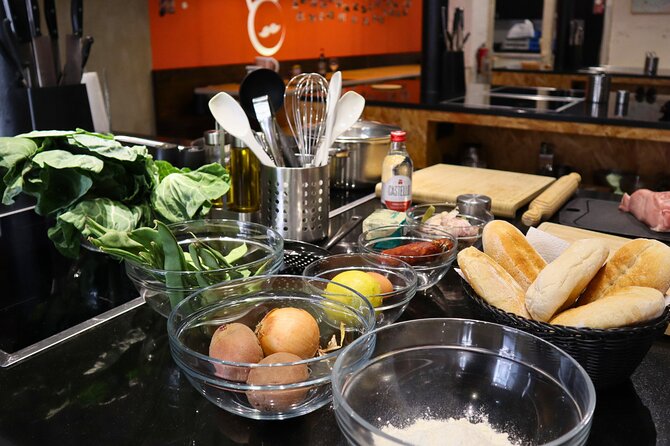
Portugal’s best food stories often begin with simple dishes, and this two-hour Lisbon cooking class makes that clear. You prepare bifana pork sandwiches, caldo verde soup, and peixinhos da horta, the battered green beans that helped inspire tempura. Then you sit down and eat what you made.
I like the mix of hands-on cooking and cultural context, since every recipe comes with a story about Portuguese daily life. I also like the social setup: Marta and Anna have been praised for keeping people involved, and the shared meal gives you an easy way to meet others. The main consideration is that the class is not suitable for wheelchair users, and extra drinks cost more than the included wine and ginja.
Key things to know before booking
- Three classic dishes: Make bifanas, caldo verde, and peixinhos da horta rather than only the usual pastel de nata.
- A full meal is included: The food you prepare becomes lunch or dinner, with one glass of red or white wine and a taste of ginja.
- No kitchen experience needed: The chef explains each step and gives everyone a role.
- English instruction: The class is taught in English at Compadre Cooking School.
- Good value at $55: Ingredients, instruction, drinks, and the shared meal are included.
- Plan for practical footwear: Wear comfortable clothes and shoes, arrive five minutes early, and request dietary changes in advance.
Starting with Portugal’s everyday food
This class focuses on food you might find at a local snack bar, festival, or family table, not just the dishes most often presented to visitors. That matters because Portuguese cooking can be understood through inexpensive, filling recipes as much as through famous pastries and seafood.
The opening introduction gives you the background before anyone starts chopping or stirring. You learn how the dishes fit into Portuguese life and why each one matters. I like this approach because the food makes more sense once you know its place in the culture.
The recipes are also practical. You do not leave with a complicated restaurant project that requires special equipment. The dishes are meant to be manageable at home, which makes the class useful after your time in Lisbon ends.
You work alongside the other people in the class rather than watching a chef do everything. Reviews of the experience repeatedly praise the clean, professional cooking area and the fact that participants have enough tasks to stay involved through much of the preparation.
More Street Food and Drinks Crawls in the world:
- Hungry Osaka Street Food Tour:15 Tastings & 3 Drinks with a Local
★ 5.0 · 1,727 reviews - Florence: Street Food Tour with Wine & Local Guide
★ 4.9 · 1,443 reviews - Naples: Guided Street Food Tour with Spritz
★ 4.9 · 1,212 reviews
Making bifana, Lisbon’s pork sandwich
The bifana is the class’s most obvious street-food star. It is a simple pork sandwich, but simple does not mean dull. Its appeal comes from the balance of seasoned meat, bread, and the kind of direct, satisfying flavor that suits a quick snack.
The chef guides you through the preparation, explaining the food’s place in Portuguese daily life as you work. You are not simply handed a finished sandwich at the end. The point is to understand the process and learn how to repeat it in your own kitchen.
This part should suit cooks of almost any level. If you are already comfortable in the kitchen, you can pay close attention to technique and seasoning. If you rarely cook, the shared work makes the process less intimidating.
The bifana also gives the class a useful connection to Lisbon outside the school. After learning the recipe, you can better appreciate the humble pork sandwiches sold around Portugal. It is an everyday dish, not a showpiece, and that is exactly why it belongs here.
Preparing caldo verde, the class favorite
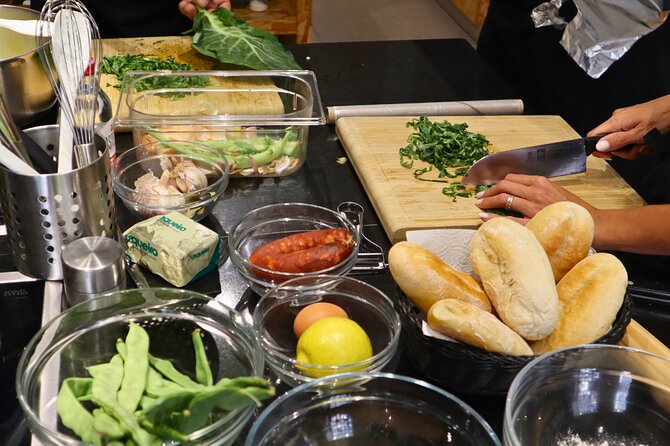
Caldo verde is a traditional soup made with potatoes and finely cut greens. It is one of the most familiar comfort foods in Portugal, and the class gives you a chance to see how a short ingredient list can produce a deeply satisfying meal.
This is the dish that several participants have singled out as their favorite. One particularly useful detail is that the soup is not treated as a quick demonstration. You take part in the preparation, learn about the ingredients, and later eat it as part of the shared meal.
I would pay close attention here if you want recipes that travel well beyond your holiday. Caldo verde is the sort of food you can make on a cold evening at home without hunting down a long list of unusual ingredients.
The soup also helps balance the meal. The bifana is hearty, while the greens bring a lighter, more traditional element. Together, the dishes give you a better sense of how Portuguese comfort food works than a single recipe would.
Trying peixinhos da horta, the tempura connection
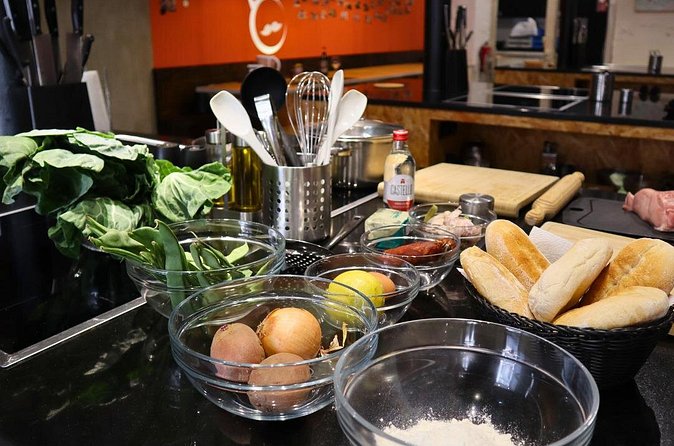
Peixinhos da horta translates roughly as little fish from the garden, though the dish contains vegetables rather than fish. Green beans are coated and fried, creating a crisp snack that is often linked to the origin of tempura.
That connection gives this portion of the class extra interest. You are not only learning another Portuguese snack. You are also seeing how a local preparation became part of a much wider food story.
The dish is especially useful for anyone who wants a meat-free recipe in the mix. It brings crunch to a meal otherwise centered on soup and pork. It is also easy to imagine serving at home as a starter or casual snack.
The class does not present these foods as museum pieces. You prepare them, taste them, and learn why people have continued making them. That practical link between food history and the plate is one of the strongest reasons to choose this experience.
More Cooking Classes in the world:
- Athens: Food Market Visit and Cooking Class with Wine
★ 4.9 · 1,087 reviews - Mexican Cooking Class with Food Market Visit in Mexico City
★ 5.0 · 506 reviews - Florence: Cooking Class with Local Food Market Tour
★ 4.9 · 407 reviews - Street Food Cooking Class
★ 5.0 · 125 reviews
Cooking together with Marta, Anna, or another local chef
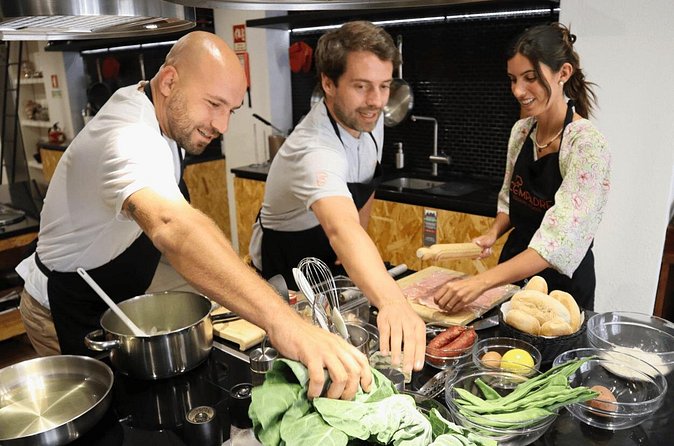
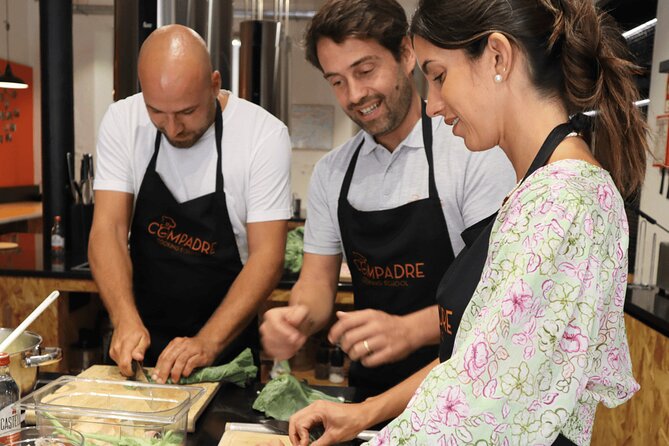
The class is taught in English, and the instruction is designed for people with no previous cooking experience. You work in a professional, spotless kitchen, with ingredients and equipment provided.
Marta and Anna have received particular praise for clear explanations, good energy, and making sure people take part. Another session names Roy for explaining drinks and production details. The exact instructor may vary, so book this for the format and food rather than expecting one specific chef.
The group setup is part of the experience. You work side by side, divide tasks, and share the results. This can be a plus if you are traveling alone or want a relaxed social activity. It can be less appealing if you prefer private instruction or want to cook every part of every dish yourself.
One fair criticism is that the balance between teaching and helping may vary by instructor. One participant felt that Anna was a little too hands-on at times. That is worth keeping in mind: the chef may step in to keep the meal moving, especially when several people are cooking together.
Still, the general format gives you more participation than a standard demonstration. Reports describe enough steps for everyone to stay active through most of the process, which is important for a class lasting only two hours.
Sitting down to eat what you made
Once the cooking is finished, everyone gathers around the table. The shared meal is not an optional extra. It is the natural payoff for the work, and it turns the lesson into a complete food experience.
You eat the bifanas, caldo verde, and peixinhos da horta together, with a glass of red or white wine. The meal creates time for conversation and gives you a chance to compare notes with the people who prepared the food beside you.
I like this part because it makes the class feel less rushed. Two hours is short, but the meal gives the experience a clear ending rather than stopping when the last pan comes off the heat.
A taste of ginja, Portugal’s traditional cherry liqueur, finishes the session. The portion is a tasting, not an open bar. Additional drinks are not included, so keep that distinction in mind if you want more wine or liqueur during the meal.
What $55 includes, and where the value lies
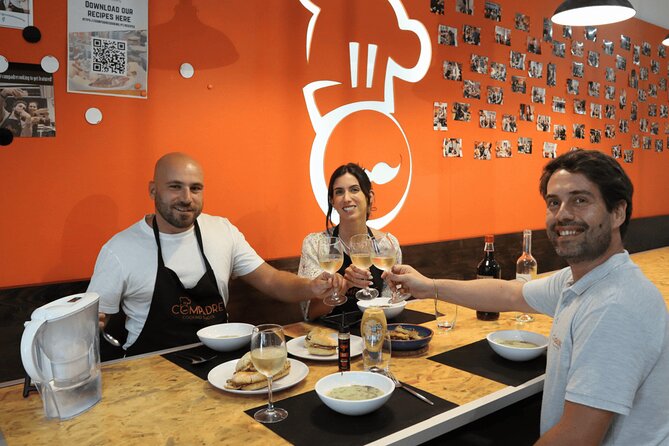
At $55 per person, the price covers expert guidance, all cooking ingredients, the shared meal, a glass of wine, and ginja. For a two-hour class, that is a solid package because you are paying for instruction and dinner rather than instruction alone.
The value is strongest if you want a meal that also teaches you something. A restaurant can serve these dishes, but it will not show you how to prepare them or explain their role in Portuguese culture. A cheaper food tasting might offer more samples, but probably less participation.
You should not choose this class expecting a long professional cooking course. Two hours allows for an introduction, preparation, cooking, eating, and drinks, but not an advanced lesson in Portuguese cuisine.
The price also does not include transportation to or from the kitchen. You need to make your own way to Compadre Cooking School and should arrive five minutes early. Comfortable clothing and shoes are sensible because you will be standing and working around a kitchen.
Dietary needs and practical limits
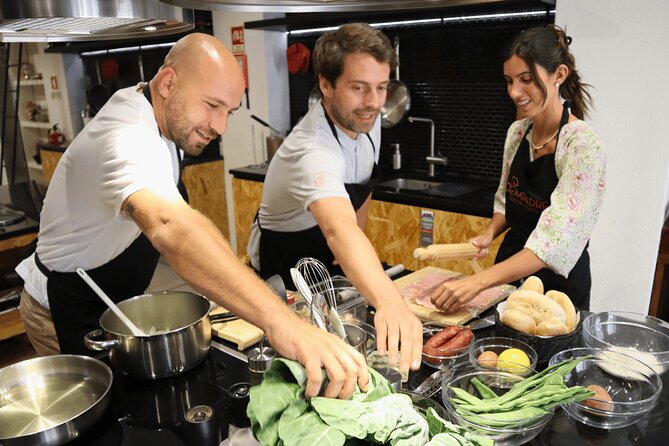
Specific dietary requirements can be accommodated if you contact the school. Do this before the class rather than waiting until you arrive, since recipe changes need planning.
The class is not suitable for wheelchair users. That is an important limitation, especially because the activity takes place in a working kitchen rather than a sightseeing venue designed around broad public access.
Smoking, alcohol, and drugs are not allowed during the activity. The included wine and ginja are served as part of the meal and tasting, while extra drinks are not covered.
The booking terms are flexible: you can cancel up to 24 hours in advance for a full refund, and a reserve-now, pay-later option is available. Check the available starting time when booking, since the precise session time is not fixed in the information provided.
Who will enjoy this Lisbon cooking class
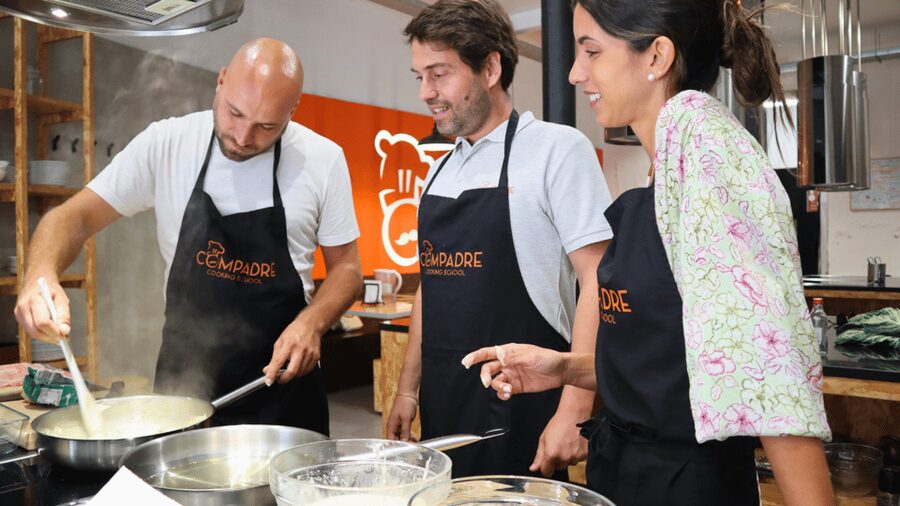
I would recommend this class to anyone who wants a food activity with real participation. It works particularly well for couples, solo visitors, friends, and families with older children who enjoy working in a group.
It is also a good choice if you have already sampled Portugal’s famous pastries and cod dishes and want something less predictable. The menu brings together a pork sandwich, a home-style soup, and a vegetable snack, so you get a broader look at Portuguese cooking.
Beginners should feel comfortable booking. The instruction is in English, no prior cooking experience is required, and the recipes are simple enough to recreate later.
You may want a different activity if you want a private class, a long technical lesson, or a menu centered on seafood and pastries. This is a social introduction to everyday Portuguese food, not an intensive chef-training session.
Should you book it?
Book this class if you want to cook a complete Portuguese meal, learn the stories behind three traditional dishes, and sit down with a glass of wine afterward. The bifana, caldo verde, and peixinhos da horta give you more variety than a class focused on one famous recipe.
At $55, the combination of food, instruction, wine, and ginja makes good sense. Just arrive early, wear comfortable shoes, request dietary adaptations in advance, and remember that the kitchen is not wheelchair accessible.
I would skip it only if you dislike group activities or want complete control over the cooking. For most food lovers, the chance to learn dishes that are both traditional and realistic to make at home makes this a worthwhile Lisbon afternoon or evening.
FAQ
How long does the Portuguese street food cooking class last?
The class lasts two hours, including the introduction, cooking, shared meal, wine, and ginja tasting.
Where does the class take place?
The activity takes place at the Compadre Cooking School kitchen in Lisbon District, Portugal.
What dishes will I prepare?
You will prepare bifana, a Portuguese pork sandwich; caldo verde, a traditional greens soup; and peixinhos da horta, a battered vegetable dish linked to the origins of tempura.
Is the cooking class taught in English?
Yes. The instructor language is English.
Do I need previous cooking experience?
No. The class is designed for beginners, and no prior cooking experience is required.
Is food and drink included in the price?
Yes. The price includes all cooking ingredients, the prepared shared meal, one glass of red or white wine, and a tasting of ginja. Additional drinks are not included.
Can dietary requirements be accommodated?
Yes. You should contact the school in advance if you have a specific dietary requirement so the recipes can be adapted.
What should I wear or bring?
Wear comfortable clothing and comfortable shoes suitable for cooking. Arrive five minutes early to settle in.
Is the class wheelchair accessible?
No. The activity is not suitable for wheelchair users.
Newest street food walks around the world
- Old Delhi Cultural, Temples, Heritage Walking Street Food Tour★ 5.0 · 57 reviews
- Old and New Delhi Street Food Sampling★ 5.0 · 3 reviews
- Old Delhi Tour by Tuk-Tuk Street Food and Shopping Experience★ 5.0 · 12 reviews
- Customized Half Day and Full Day Delhi Shopping, Street Food Tour★ 5.0 · 52 reviews
- Delhi: Street Food Crawl (2 Hours Guided Food Tasting Tour)★ 3.5 · 18 reviews
- Taste Famous & Best Street Food of Old Delhi (Jama Masjid)★ 3.0 · 2 reviews
- Spice & Stories: 3-Hour Old Delhi Heritage Food Walk Guided Tour★ 4.5 · 36 reviews
- Old Delhi Street Food and Spice Market Tour★ 5.0 · 81 reviews