
Review · HONG KONG
Hong Kong: Street Food Tour with Locals – Dim Sum and Wonton
Hong Kong’s food story is easiest to understand one bite at a time. This three-hour walk links Sheung Wan’s dried seafood shops, old cafés, noodle counters and dim sum stops with the city’s rise from an opium port and labor hub to a global financial center. You may taste 10 or more foods, from shrimp wontons and har gow to BBQ pork and egg tarts.
I like the local food stops, which include family-run eateries rather than polished international restaurants. I also like the way guides such as Michael, Jasmine, Stephen, Alice and Hody add childhood memories and dining customs to the meal. The main drawback is simple: this is not a flexible tour for vegetarians, halal diners or people with strict dietary limits.
Key points to know before you book
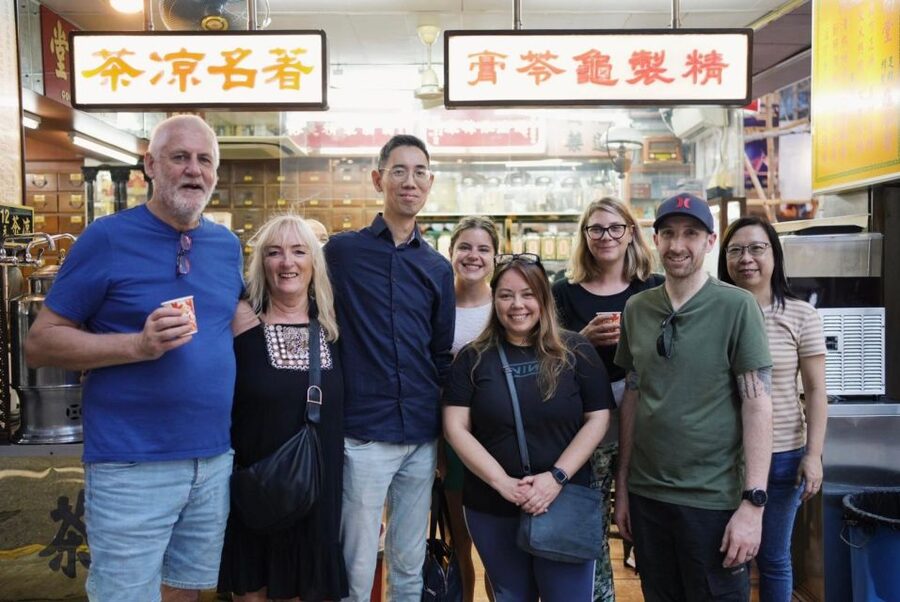
- Sheung Wan is the real setting: You walk through Wing Lok Street, dried seafood shops, old markets and local eating places.
- Ten or more tastes are included: Expect dim sum, wonton noodles, BBQ meats, egg tarts, egg waffles, tea and herbal drinks.
- Food comes with context: The guide explains how trade, migration, poverty and post-war life shaped Hong Kong cooking.
- The silk-stocking tea story is less odd than it sounds: The tea is strained through a cloth sack, not an actual stocking.
- Come hungry: The portions are small at many stops, but the total can replace lunch and dinner.
- Wear good shoes: The walking is moderate, with several food stops spread across Sheung Wan and Central.
Why this food walk is more than a meal
Many Hong Kong food tours take you from one famous dish to the next. This one works better when you think of it as a walking lesson with frequent snacks. You move through old commercial streets, hear why certain foods became popular, then taste the result.
The route begins at Sheung Wan MTR Station, Exit E2, and finishes at Central Market. That starting point matters. Exit E2 is on the platform level, and once you reach the main concourse, you cannot simply walk over to Exit E. Follow the signs before leaving the train.
The tour costs $51 per person and lasts three hours. I consider that a fair price if you value explanation as much as eating. You receive a substantial number of tastings, a guided walk through one of Hong Kong Island’s oldest districts and help ordering or understanding foods you might otherwise pass by.
This is also a useful first-day activity. You learn what different dishes are called, how locals eat them and where you might return later. Several people have found particular cafés and food counters worth revisiting after the tour.
More street food walks around the world:
- Dubai: Old Town, Creek, Museums, Souks, & Street Food Tour
★ 4.8 · 10,816 reviews - Ho Chi Minh City Street Food Tour & Sightseeing By Motorbike
★ 5.0 · 9,413 reviews - Medellin: Comuna 13 Graffiti Tour, Cable Car & Street Food
★ 4.8 · 9,046 reviews
Wing Lok Street and the trade behind the food
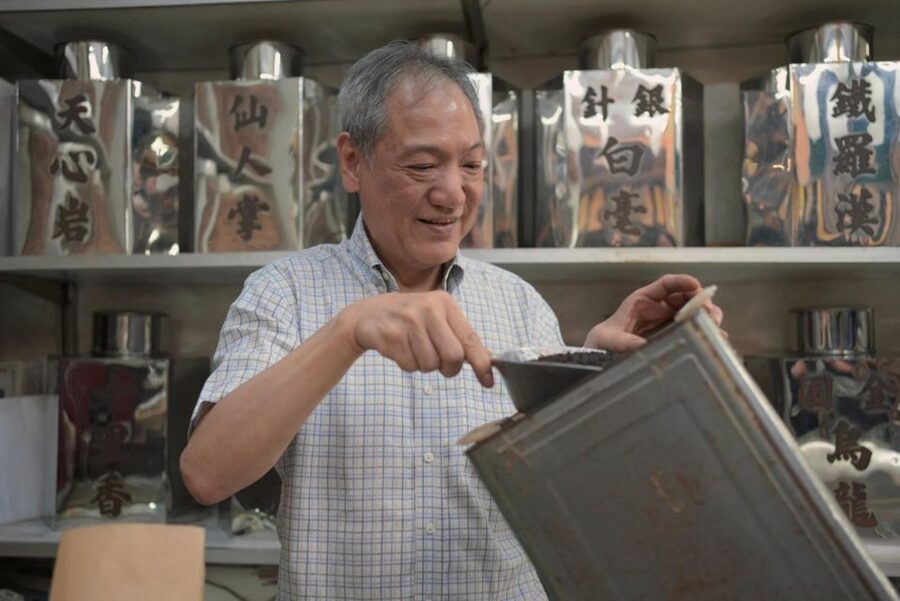
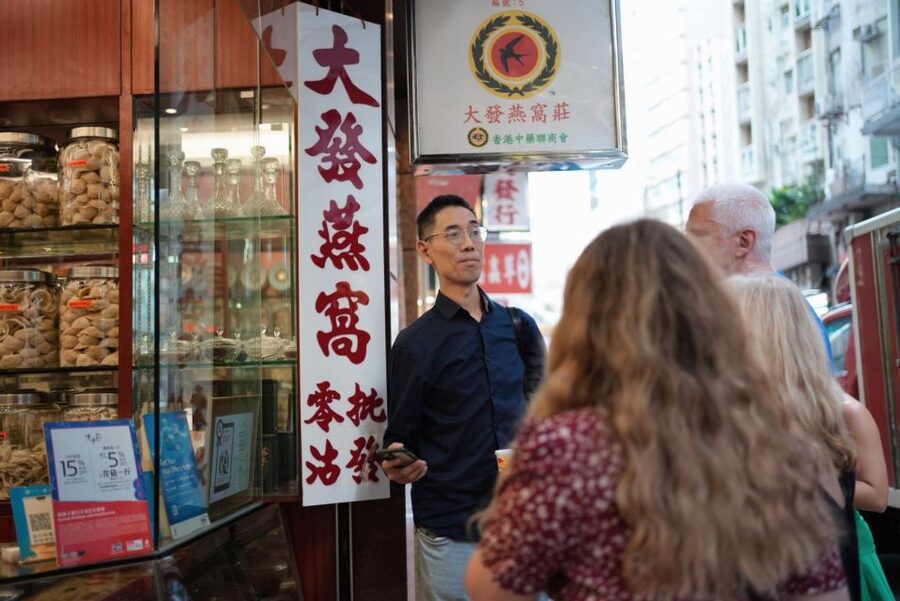
The first major stop is Wing Lok Street in Sheung Wan. Today, the area is known for dried seafood and Chinese medicinal goods. Shopfronts display items such as shark fin, bird’s nest and cordyceps, including rare cordyceps priced at around HKD 200,000 per catty.
You do not need to buy anything. The value here is learning why these goods matter. The guide explains how dried seafood became linked with Chinese luxury dining, gifting and celebration. The shops also show a side of Hong Kong that is easy to miss if you stay around shopping malls and office towers.
This part of the walk connects food with the movement of people and money. Sheung Wan grew through trade, including the opium business, and later helped send Chinese laborers overseas. Those workers supported industries abroad and sent money and stories back home. The city’s later rise as a commercial and financial center did not happen in isolation. It grew from ports, warehouses, migration and hard work.
The stop lasts about 40 minutes, including sightseeing and tasting. That is enough time to look closely without turning the shop visit into a rushed photo stop.
Sheung Wan Cultural Square and the city’s changing table
At Sheung Wan Cultural Square, the tour continues with another short food tasting and more local background. This is a good point to notice how old and new Hong Kong sit close together. Historic streets, modern development and small food businesses share the same limited space.
The guide may explain how dim sum changed from a refined style of eating into an everyday meal. The phrase originally connects with the idea of touching the heart through small portions. Over time, those small bites became part of ordinary life for workers, families and business people.
That history helps explain why dim sum is not just a list of dishes. Bamboo-steamed har gow, with its translucent wrapper and shrimp filling, is tied to the social habit of sharing many small plates. The tour can also reveal details that are easy to miss, such as what goes into the wrapper and why the texture matters.
The group keeps moving, so you should expect standing and short walks between stops rather than a long seated meal. If you prefer one restaurant and a quiet table, this format may feel busy. If you want to cover several parts of the food culture in one morning or afternoon, it makes good use of three hours.
Wonton noodles and Chiu Chow technique
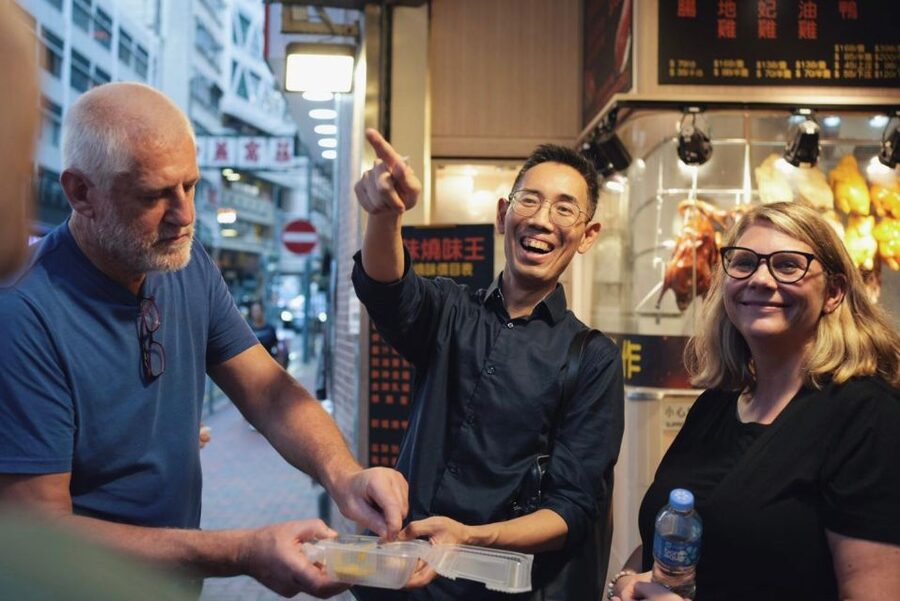
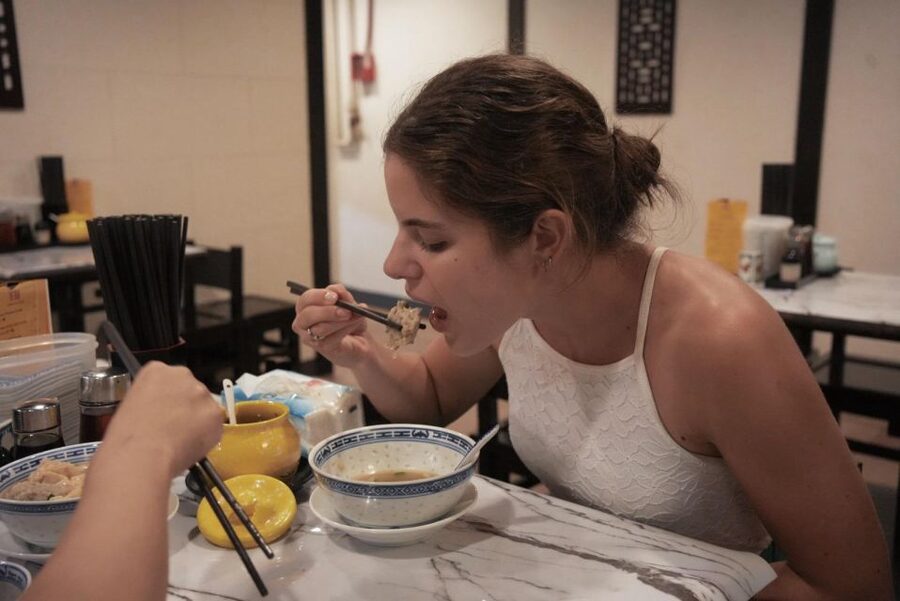
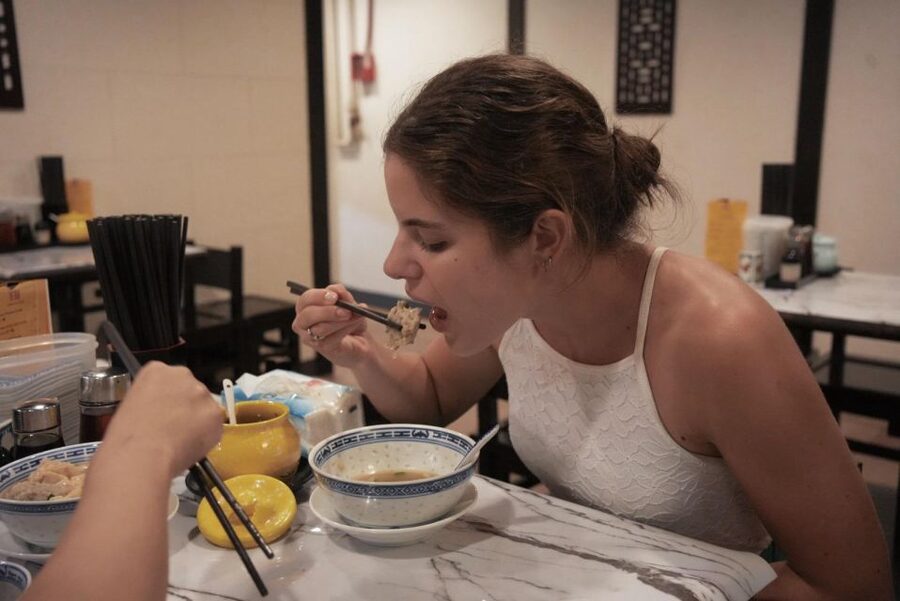
One of the most useful food lessons comes from the noodle stop. You may see Chiu Chow-style artisans prepare shrimp-stuffed wontons and learn about the flounder fish broth used for the soup.
Wonton noodles can look simple in a bowl. The appeal lies in the balance: thin noodles, a delicate wrapper, a firm shrimp filling and a broth that brings everything together. A local guide can point out the difference between simply eating the dish and noticing its texture, seasoning and preparation.
This is a dish that can be hard to judge from a photograph. The noodles may look plain, and the wonton may seem small. Once you taste the combination, the care becomes clearer. The stop is especially useful if you have seen wonton noodles on menus but have not known which version to order.
Some visitors have found this one of the strongest savory stops, along with the dim sum and BBQ meats. The portions vary, but the repeated advice is to arrive hungry. The food adds up quickly.
Same streets, a different set of bites:
- Dubai: Old Town, Souks, Street Food, Guided Tour & Abra Ride
★ 4.9 · 7,170 reviews - Naples: Street Food Walking Tour with Local Guide
★ 4.9 · 4,976 reviews - Small Group Hanoi Street Food Tour with a Real Foodie
★ 5.0 · 4,682 reviews - Rome: Street Food Tour with Local Guide
★ 4.8 · 4,077 reviews
Sun Yuen Restaurant and the old café tradition
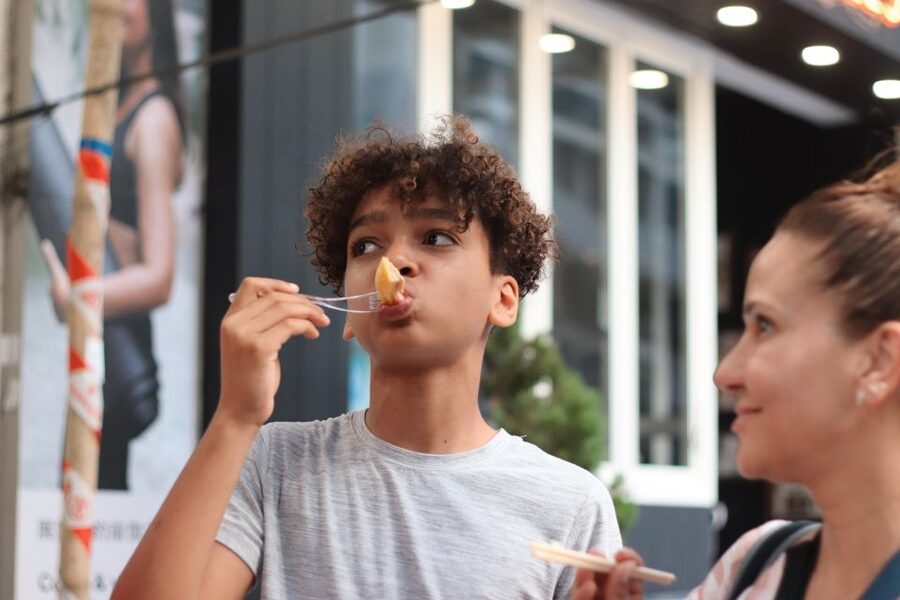
Sun Yuen Restaurant is one of the seated food stops, with about 15 minutes set aside for tasting. The tour also visits the cha chaan teng tradition, the Hong Kong café style that grew from post-war life and limited budgets.
Here you may try milk tea and crispy French toast. The French toast is not a European breakfast in the usual sense. In Hong Kong, it is a sweet, rich café snack, and its name tells you little about what arrives on the plate.
The milk tea comes with a useful bit of local theater. The tea is strained through a long cloth sack, which led to the English nickname silk-stocking tea. Despite the name, no one is making tea with a stocking. The cloth filter helps produce the drink’s smooth texture, and the guide explains the technique and the story behind the nickname.
This stop gives you a taste of ordinary Hong Kong rather than a banquet. Cha chaan tengs became practical social places where people could eat quickly and cheaply. Their food reflects adaptation: familiar ingredients, fast service and dishes shaped by both Chinese and outside influences.
Herbal tea, bitter flavors and local habits
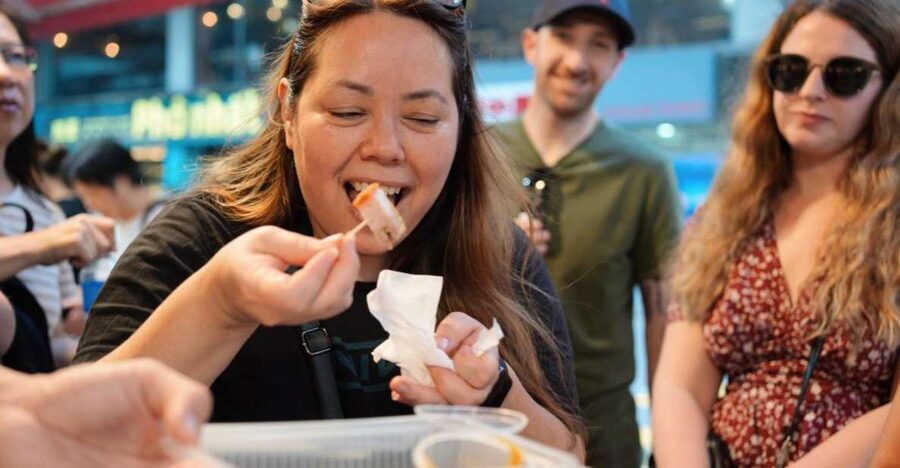
Another stop focuses on Chinese herbal drinks, including Five Flowers tea and the famously bitter 24 Flavors tea. You may not love every sip, and that is part of the point.
These drinks are not designed to taste like sweet fruit punch. They belong to a local tradition of choosing ingredients for perceived health benefits and drinking them despite strong flavors. The guide helps put the bitterness in context rather than treating it as a novelty challenge.
The tea portion lasts about 20 minutes and may include a guided explanation of the stall or shop. It is a welcome change from the heavier food stops. It also reminds you that Hong Kong’s food culture includes drinks, remedies and daily habits, not only restaurant dishes.
If you dislike bitter flavors, take a small taste first. The tour is built around trying, not forcing yourself to finish everything. Still, dietary and ingredient limits should be discussed before booking because the operator says the tour cannot accommodate dietary restrictions.
Queen’s Road Central and the sweet finish
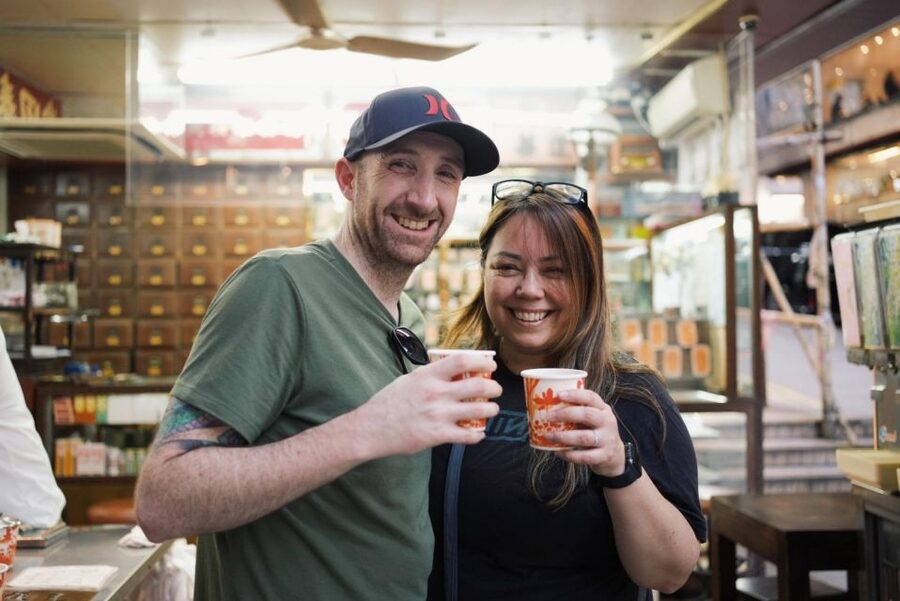
The longest food section takes place around Queen’s Road Central, with about 50 minutes for several tastings. You may try BBQ pork, roast pork, pork belly, egg tarts, egg waffles, local desserts and additional dim sum or noodles depending on availability.
BBQ pork is often a favorite because it gives you a direct taste of Cantonese roasting: tender meat, a sweet-savory glaze and crisp or caramelized edges. Roast pork and pork belly bring a different texture, with the contrast between meat and fat doing much of the work.
Egg tarts offer a gentler finish. The pastry and custard make them easy to like, but they also show the territory between Chinese and Western food traditions that developed in Hong Kong. Egg waffles, with their distinctive rounded shape, add another familiar local snack.
The menu can change. That is practical rather than alarming. Small shops sell what is available that day, and food quality is often better when a tour follows the local supply instead of promising a rigid menu. You should expect the broad categories to remain similar, but not every item to appear exactly as listed.
One drink mentioned along the route is Mandarin Duck, a Hong Kong mixture of tea and coffee. It is a good example of the city’s practical café culture: two familiar drinks combined into something stronger and more distinctive.
Central Market, the final stop and the walking pace
The walk ends at Central Market. By then, you will have crossed from old Sheung Wan into the wider Central area, carrying a clearer sense of how food and commerce connect across the city.
The route involves a moderate amount of walking. It is not a strenuous hike, but Hong Kong streets can be crowded, uneven and full of traffic. Wear comfortable shoes and stay close to the guide when crossing roads or moving between narrow shopfronts.
The tour is generally paced so you can eat without feeling hurried. Still, three hours covers seven or eight stops, so the schedule has a steady rhythm. You taste, listen, move on and taste again. If you need a long break between dishes, tell the guide early.
Weather can affect the experience. If poor conditions force a cancellation, you can choose another date or receive a full refund. The tour is in English, and the guide team includes local Hong Kong voices such as Hody, Jasmine, Michael, Stephen, Alice, Simeone, Summer, Wing and Isaac. The guide assigned to your departure may vary.
How much food will you actually eat?
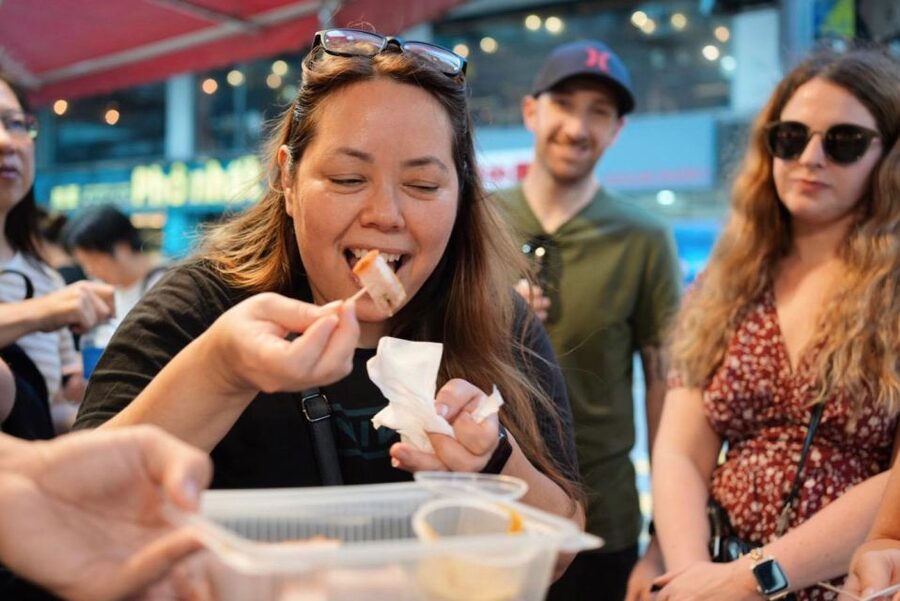
The promise of 10 or more bites is realistic as a total, but do not picture 10 full restaurant meals. You receive small tastes at several places, with some stops offering more generous portions.
The combined amount can still be substantial. Some people are full before the last option and skip dinner afterward. Others find the portions well judged, especially when the tour includes both savory and sweet foods.
My practical advice is to skip a large breakfast or lunch, but do not arrive weak or dehydrated. There is enough food to make this a main meal, and the mix of meat, noodles, pastry, rice-based foods, tea and sweets can feel heavy if you have eaten recently.
The tour is not suitable for vegetarians, and halal food is not provided. The stated policy says dietary restrictions cannot be accommodated. That is an important limitation, not a minor footnote. If you have allergies or strict food rules, this is probably not the right booking.
Guide quality and the value of local stories
The guide makes a large difference here because the route itself is easy to walk without explanation. A local guide turns shop signs, cooking methods and ordinary cafés into a connected story.
The strongest guide style for this tour is personal but not overbearing. Guides such as Michael have linked dishes to childhood memories, while Jasmine, Stephen, Alice, Hody and others have been praised for humor, patience and clear explanations. Wing has helped unsure eaters feel comfortable by explaining dishes before they try them and offering options when possible.
You should still remember that the guide roster changes. Do not book expecting one particular person unless the operator confirms that guide in advance. The consistent benefit is the local perspective and the chance to ask questions as you eat.
The social side is another plus. You walk and share food with the small group, which makes it easy to compare reactions and ask about dishes. Solo visitors may find this especially useful because the guide handles ordering and gives the group a reason to talk.
Who should book this Hong Kong food tour?
I would choose this tour if you are new to Hong Kong food, want a strong introduction in three hours or prefer small local shops to formal restaurants. It also suits anyone who likes history with lunch, since the trade and migration stories give the dishes a clear setting.
Families can enjoy it, and a 13-year-old has found the food and walking appealing. The route also works for people who want a practical list of places to return to later.
I would skip it if you need a fixed menu, vegetarian or halal food, very little walking or a quiet sit-down meal. You should also be prepared for flavors that may be unfamiliar, especially herbal teas and dried seafood displays.
At $51, the tour offers good value when you count the food, the local guidance and the time saved finding each stop. It is less useful if you only want to eat a few famous dishes and move on. For most first visits, the mix of dim sum, wonton noodles, BBQ meats, café food, tea and sweets makes the price reasonable.
Should you book it?
Yes, if you want to understand Hong Kong through everyday food rather than a checklist of landmarks. The best reason to book is the combination of 10 or more tastings and a walk through Sheung Wan’s trade history.
Book with care if you have dietary limits, because the tour cannot adjust to vegetarian or halal needs. Otherwise, arrive hungry, wear good shoes and save your evening meal for another day only if you are certain you can still eat after the final egg waffle.
FAQ
Where does the tour meet?
The meeting point is Sheung Wan MTR Station Exit E2. Look for the exit while you are still on the platform, because you cannot reach Exit E after entering the concourse for Exits A through D.
Where does the tour finish?
The tour finishes at Central Market.
How long does the experience last?
The walking and food tour lasts three hours. Starting times vary, so check availability when booking.
What food is included?
The tour includes 10 or more tastes, which may include dim sum, shrimp wontons, wonton noodles, BBQ pork, roast pork, pork belly, egg tarts, egg waffles, herbal tea, milk tea and other local snacks. The final menu depends on availability.
Is the tour suitable for vegetarians?
No. The tour is not suitable for vegetarians, and halal food is not provided.
How much walking is involved?
A moderate amount of walking is involved between food stops in Sheung Wan and Central. Comfortable shoes are recommended.
What happens if the weather is poor?
The tour may be canceled in poor weather. You will then be offered an alternative date or a full refund.
Newest street food walks around the world
- Old Delhi Cultural, Temples, Heritage Walking Street Food Tour★ 5.0 · 57 reviews
- Old and New Delhi Street Food Sampling★ 5.0 · 3 reviews
- Old Delhi Tour by Tuk-Tuk Street Food and Shopping Experience★ 5.0 · 12 reviews
- Customized Half Day and Full Day Delhi Shopping, Street Food Tour★ 5.0 · 52 reviews
- Delhi: Street Food Crawl (2 Hours Guided Food Tasting Tour)★ 3.5 · 18 reviews
- Spice & Stories: 3-Hour Old Delhi Heritage Food Walk Guided Tour★ 4.5 · 36 reviews
- Old Delhi Street Food and Spice Market Tour★ 5.0 · 81 reviews
- Taste Famous & Best Street Food of Old Delhi (Jama Masjid)★ 3.0 · 2 reviews
Hong Kong street food tours, side by side.
Small Group Kowloon Michelin Rated Street Food and Culture Tour
Read our review →
The 10 Tastings of Hong Kong With Locals: Private Street Food Tour
Read our review →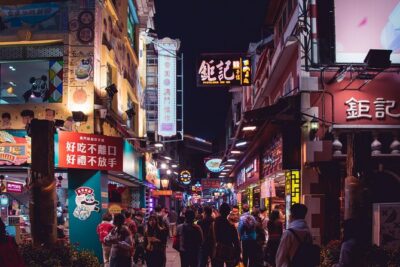
Kowloon Night Street Food Tour with a Local: Private & Customized
Read our review →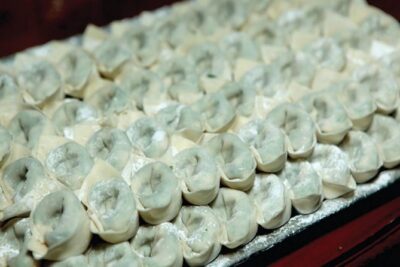
Private Kowloon Michelin Rated Street Food & Culture Tour
Read our review →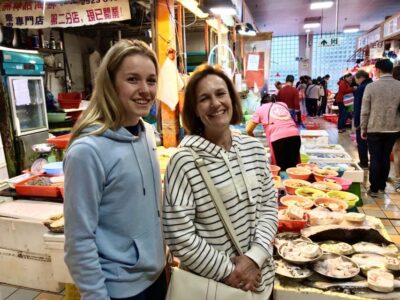
Hong Kong: Private Street Food Tour with a Local Insider
Read our review →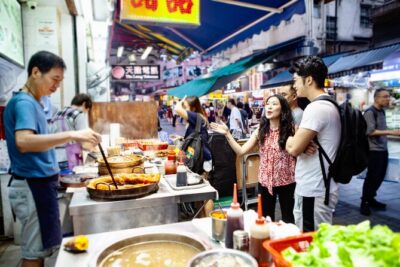
Kowloon Street Food Tour Private & Personalized with a Local
Read our review →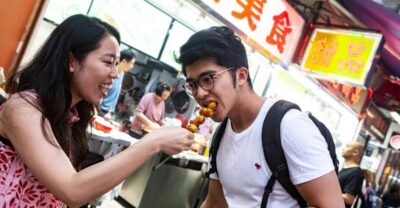
Kowloon: Private Night Markets & Street Food Experience
Read our review →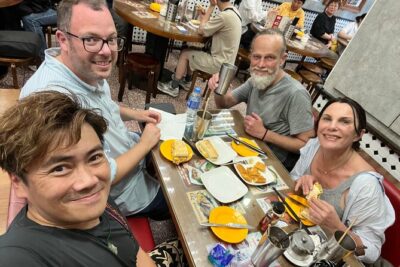
Hong Kong Private Food Tour with Michelin Street Food
Read our review →The lists this tour appears in