Review · CHIANG MAI
Chiang Mai: Evening Local Street Food Market Tour
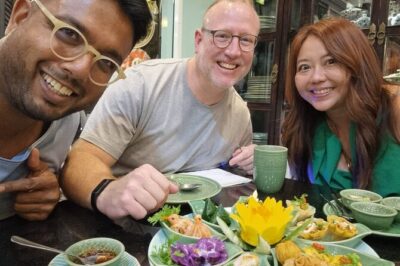
Chiang Mai’s best food lesson may happen beside a market stall, not in a restaurant. This 150-minute evening tour takes you through at least two night markets, where your guide orders a broad spread of dishes and explains what you are eating. Kanom jeen, northern Thai specialties, stewed pork leg, coconut dumplings, and sweets are all on the table.
I like the small group of no more than 10 people, which gives you room to ask about odd-looking ingredients and practice ordering in Thai. I also like the sheer amount of food: several people report trying more than 10 dishes, with some groups visiting three or four food stops rather than only two markets.
The main catch is simple: this is not a vegetarian or pescatarian tour, and the food can be too much if you arrive after dinner. Traffic can also eat into the evening, though the included hotel transport is clean, prompt, and convenient for city-center stays.
Key points at a glance
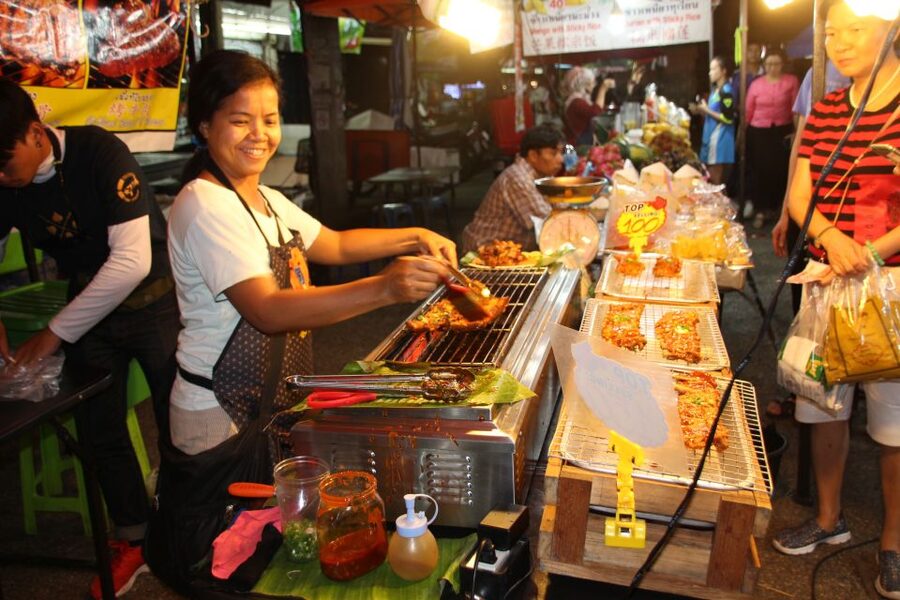
- Fourteen or more tastings are possible: Expect a wide spread of salads, soups, curries, main dishes, northern specialties, and desserts.
- Guide-led ordering: Guides such as Mr. Goal, Jay, Chai, and Tienchai help you choose food and explain Thai customs and ingredients.
- Two markets are promised, more may happen: Some evenings include three or four market or food-stall stops.
- Thai language practice is built in: You receive a leaflet with food notes and useful phrases for ordering later.
- Hotel transport is included: Pick-up and drop-off cover accommodations in Chiang Mai city center.
- Come hungry and wear comfortable shoes: Portions are generous, and you will be walking around markets and food stalls.
Why this Chiang Mai food tour works for first-time eaters
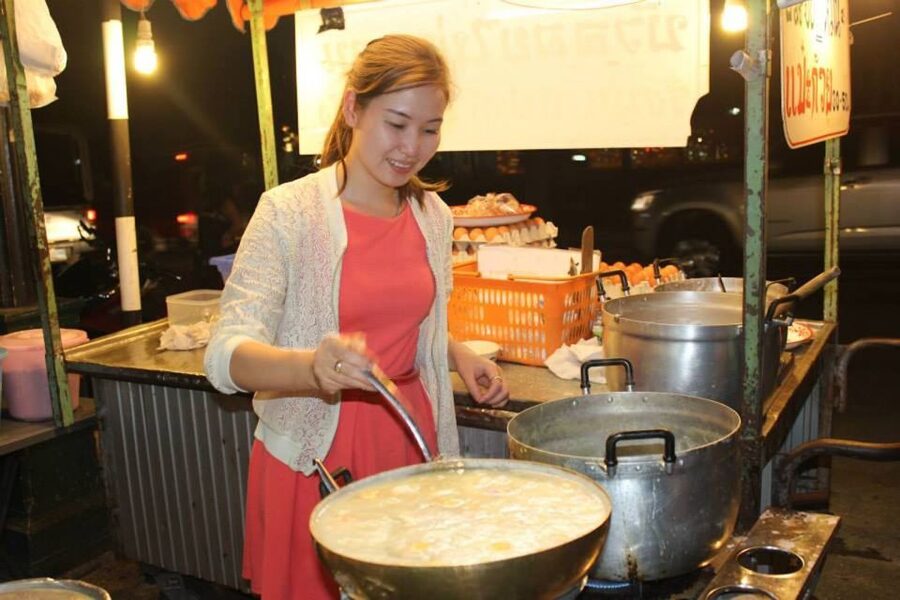
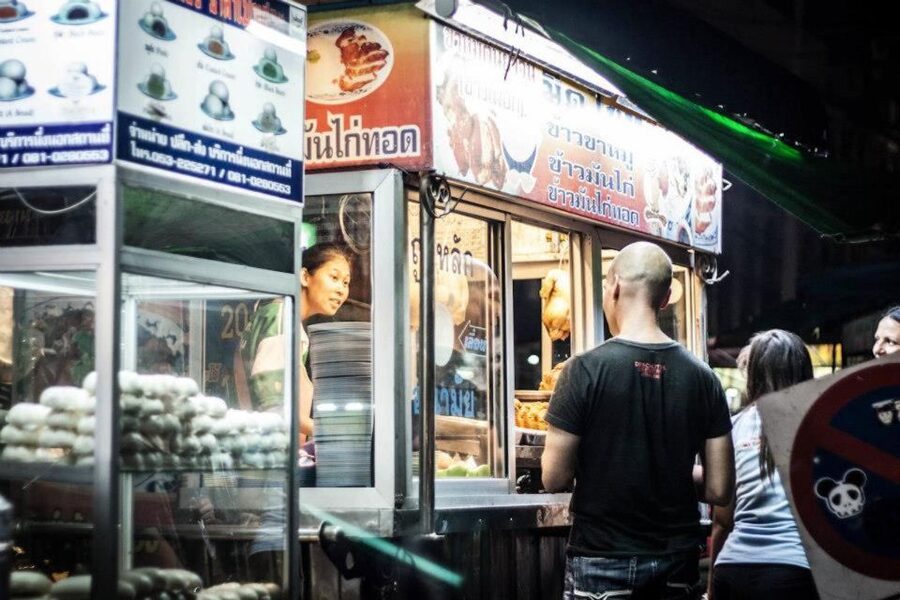
Street food is easy to admire and surprisingly hard to order when you cannot read the signs. You may recognize noodles or grilled meat, but not know what sauce comes with them, how spicy they are, or whether a dish is meant to be eaten with a spoon, chopsticks, or your fingers.
That is where this tour earns its keep. Your guide does more than point at food. The guide orders for the group, explains the dish, and shows you how to eat it. You can ask about ingredients before taking a bite, then use the new Thai phrases yourself at the next stall.
The guide changes by departure. Goal appears often in the feedback, along with Jay, Chai, Tee, Tienchai, and others. The strongest pattern is that the guide makes the evening feel relaxed and social while still teaching you something useful. English is offered alongside Thai, and the language ability of guides such as Goal, Jay, and Chai is described as very strong.
I would book this early in your Chiang Mai stay if you want help finding your way around local food. The leaflet becomes more useful after the tour, when you can look for familiar dish names at markets or restaurants.
More Evening and Night Food Tours in Thailand
- Small-Group Chiang Mai Evening Street Food Tour
★ 4.5 · 826 reviews - Bangkok Tuk-Tuk Tour by Night with Chinatown Street Food Meal
★ 5.0 · 635 reviews - Bangkok: E-Scooter Night Tour with Local Street Food
★ 4.8 · 488 reviews
Starting with hotel pick-up and a small group
Your evening begins at your Chiang Mai accommodation. You should be in the lobby 10 minutes before pick-up, then meet the rest of the group and set off with your guide.
The group limit is 10 people. That matters here. At a market, a large group can split up, block a stall, or leave you waiting while someone else asks questions. A smaller group lets the guide order several dishes for sharing and keep track of different comfort levels with spice.
The van transport is included for hotels in Chiang Mai city center. Several detailed accounts describe the vehicle as comfortable, clean, prompt, and safe. That is especially handy when the evening includes more than one market and you do not want to arrange separate rides between them.
There is one practical limitation. Heavy traffic can mean extra time in the vehicle, particularly if the route crosses several parts of town. The tour is not a private taxi service, so the schedule depends on road conditions and the movement of the whole group.
Hotels outside the city area may still be served for a small extra charge, but you need to contact the operator about that before booking.
First market stop: learning how to eat kanom jeen
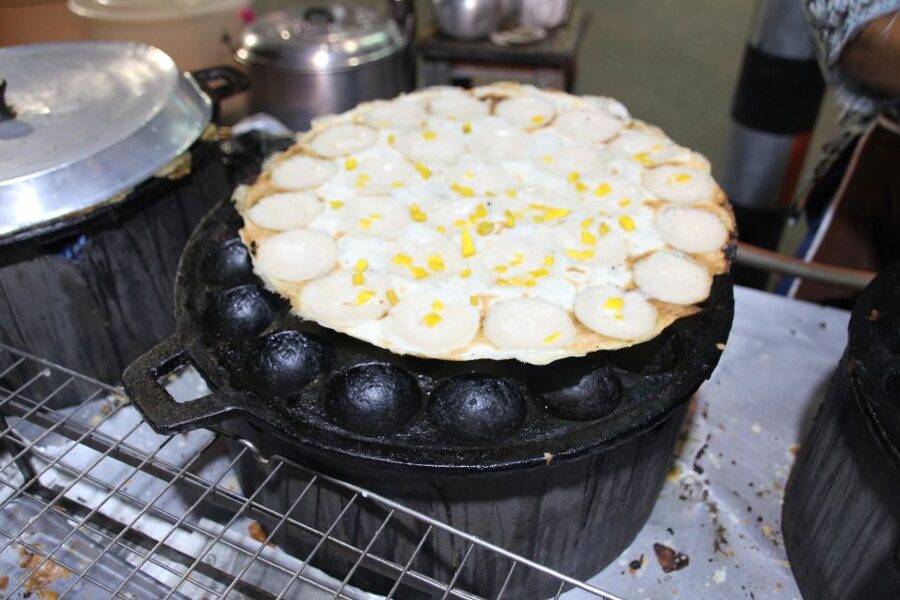
One of the named highlights is kanom jeen, sometimes written as khanom chin or kanom jin. These are soft fermented rice noodles served with a curry or sauce, often with herbs and vegetables added to the bowl.
The value of trying this with a guide is not just the noodles. A local guide can explain which parts go together and how the textures and sauces are meant to work. If this is your first contact with northern Thai food, the dish gives you a useful starting point before the more unfamiliar plates arrive.
The exact market route and dishes vary from night to night. You should not expect a fixed restaurant-style menu. One group may get a certain curry or salad, while another sees a different selection based on what is being prepared at the market that evening.
That change is part of the appeal, but it also means you should treat the listed dishes as examples rather than guarantees. The tour promises a broad tasting experience, not one exact sequence.
Northern Thai dishes beyond familiar pad Thai
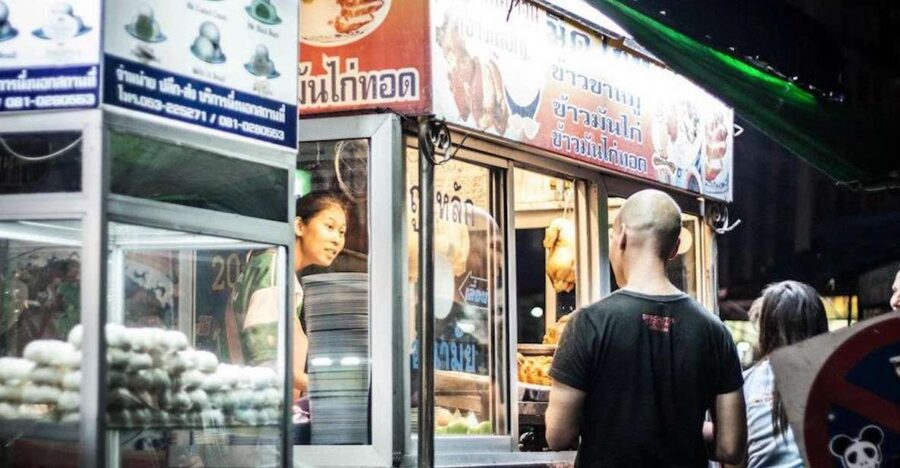
Chiang Mai food has its own character, and this tour is designed to move beyond the usual tourist favorites. You may taste northern Thai specialties, salads, soups, curries, and other main dishes selected by the guide.
The most useful part is the explanation of where dishes come from and how food connects to Thai culture. You can ask why a dish is eaten in a certain way, what an unfamiliar spice does, or how northern cooking differs from food in other parts of Thailand.
Some of the food may be quite different from what you order at home. That is a good reason to have a guide present. You can try a small serving without committing to a full plate, and you can ask what something is before it arrives.
Spice levels vary. The tour includes both spicy and milder food, and the guide can help you understand what you are choosing. Still, this is a food adventure rather than a carefully controlled tasting menu. If you have a very low tolerance for chili, say so clearly at the start.
More Food Market Tours in Thailand
- Takua Pa: Food Market, Tsunami Museum, Temple, & Old Town
★ 4.9 · 165 reviews - Phuket City Tour with Night Market Visit & Elephant Feeding
★ 4.4 · 50 reviews - Tsunami Museum + Temple + Old Town + Street Food Market
★ 5.0 · 24 reviews - Phuket: Fully Customized Night Market Tour
★ 4.2 · 18 reviews
Stewed pork leg, coconut dumplings, and dessert
Stewed pork leg is another named tasting. It is a comforting, rich dish, and it gives the meal a different texture from noodles, salads, and curries. Sharing several dishes lets you compare the softer stewed food with sharper, hotter, or herb-heavy flavors from other stalls.
Coconut dumplings provide a sweeter change of pace. The tour may finish with Thai desserts and sweets if the group still has room, and judging by the amount of food served, that last phrase matters. You may need to pace yourself early.
Some groups describe eating four different desserts after a long run of savory dishes. Others count 14 different salads and main courses before reaching the sweet course. The exact number changes, but the message is consistent: do not eat a heavy meal before pick-up.
I would also bring water only if you prefer having your own bottle, though water is included. Other drinks, including alcohol, are not included, so budget separately if you want beer, soft drinks, or anything beyond the provided water.
A food tour that teaches you to order alone
The practical lesson continues after the final market. You receive a leaflet describing what you tried and listing Thai phrases useful for ordering food.
That small paper can be more valuable than a long talk about cuisine. It gives you dish names to look for and language you can use the next day. You may not become fluent, but you can point to a name, ask for a dish, or show more confidence at a food stall.
I like this part because the tour is not only about being fed. It helps you handle Chiang Mai’s food scene on your own. A solo visitor may also find the group ordering useful, since buying many dishes alone can be expensive and wasteful.
The social side has value, too. You are sharing food with up to nine other people, and the group setting makes it easier to try something unusual. Several accounts describe the evening as feeling like eating with friends, rather than being marched from one stop to another.
What the 150-minute schedule feels like
Two and a half hours is enough time for several tastings without taking over your entire night. The route includes the transfer from your hotel, visits to the markets, explanations, eating, and the return trip.
Do not read the duration as two and a half hours of continuous eating. Some time is spent getting between areas, especially when traffic is slow. One account specifically notes that traffic took up a fair amount of time, although that was treated as an unavoidable part of getting between good food stops.
The route may cover different sides of Chiang Mai. One evening included stops around the west, north, and south parts of the city. That can give you a wider view of local food life, but it also makes the transport element more important.
The benefit is variety. The drawback is less time at each market than you would have if you visited one place on your own. You are choosing guided range over a long, unhurried wander through a single market.
Price and value at $40 per person
At $40 per person, this is not the cheapest way to buy dinner in Chiang Mai. Local markets let you eat for far less if you already know what you want and are comfortable ordering without help.
The value comes from what is bundled into the price. You get all listed food tastings, water, a local guide, the language and food leaflet, and round-trip city-center hotel transport. You are also sharing many dishes, which lets you sample more than you would sensibly order for yourself.
The generous portions are a major part of the calculation. Several people report leaving extremely full, and one person had to stop eating partway through because there was simply too much food. If you count this as both dinner and a guided introduction to Chiang Mai cuisine, the price is easier to justify.
I would not book it for a light snack or a quick market walk. I would book it if you want to sample many dishes in one evening, need help with ordering, or are nervous about trying unfamiliar food on your own.
Who should book, and who should skip it
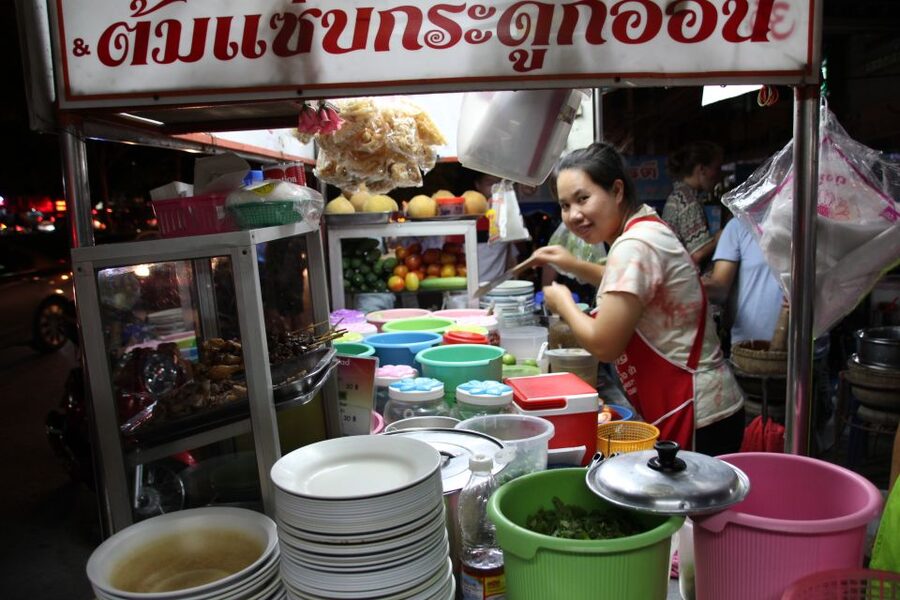
This suits adventurous eaters, first-time visitors, solo diners, couples, and small groups who want a food orientation. It is also useful for anyone who wants to learn Thai food vocabulary before spending more time in Chiang Mai.
Families with older children may enjoy it, but children under eight are not suitable for the tour. A few accounts describe guides taking care with fussy eaters and people who do not like spice, but the operator states that vegetarians and pescatarians cannot be accommodated.
You should skip this if you need a fully vegetarian menu, dislike shared tastings, or prefer to choose every dish yourself. You may also want another type of food tour if you want a calm sit-down dinner, since this experience is built around markets, stalls, movement, and a large amount of food.
Wear comfortable shoes. You will be moving around markets rather than sitting in one place for the whole evening.
Cancellation and planning notes
You can cancel up to 24 hours before the tour for a full refund, and the reserve-now, pay-later option keeps your plans flexible. Check the available starting times when you book, since the exact departure time is not fixed in the tour details.
The tour is offered in Thai and English. Hotel pick-up is included only within Chiang Mai city center unless you arrange and pay for an outside-area transfer.
Because the dishes change from night to night, do not book this expecting every named item to appear. Book it for the wider promise: a guided evening of local market food, with plenty of tasting and useful instruction.
Should you book the Chiang Mai Evening Local Street Food Market Tour?
I would book this for your first or second night in Chiang Mai, especially if you want a friendly push into the local food scene. The strongest reasons are the small group, the guide-led ordering, the amount of food, and the chance to taste northern dishes you might not identify on your own.
The best guides, including Goal, Jay, and Chai, appear to bring humor, clear English, and real interest in the food. The included transport removes some evening hassle, while the leaflet gives you something practical to use after the tour.
Skip it if you are vegetarian, pescatarian, under eight, or looking for a quiet meal with a fixed menu. For everyone else, come very hungry, keep an open mind, and leave room for coconut dumplings and Thai sweets.
FAQ
How long does the Chiang Mai street food tour last?
The tour lasts 150 minutes, including the market visits, food tastings, guide explanations, and return transport to your accommodation.
How many markets will the tour visit?
The tour includes visits to at least two evening street food markets. Depending on the route and evening, the group may visit three or more markets or food stops.
What food will I try?
Named examples include kanom jeen, northern Thai specialties, stewed pork leg, coconut dumplings, Thai desserts, and sweets. The full selection varies from night to night.
Is hotel pick-up included?
Round-trip hotel transport is included for accommodations in Chiang Mai city center. Pick-up and drop-off outside the city area may be arranged for a small extra charge.
What languages does the guide speak?
The tour is offered in Thai and English.
Is the tour suitable for vegetarians?
No. The activity information states that vegetarians and pescatarians cannot be accommodated.
Are drinks included?
Water is included. Other drinks, including alcoholic beverages, are not included.
What should I bring?
Wear comfortable shoes for moving around the evening markets. You should also arrive hungry, since the tour includes a large number of tastings.
Newest street food walks around Thailand
- Round Trip to Chillva Night Market★ 3.5 · 2 reviews
- Thai Street Food & Morning Market Walking Tour in Hua Hin★ 5.0 · 46 reviews
- Chiang Mai – Doi Suthep Temple and Street Food Tour★ 5.0 · 17 reviews
- Chiang Rai Food & Night Market Walking Tour with Local Host★ 5.0 · 5 reviews
- Private Half-Day Tour The Old Chiang Mai City With Street Foods★ 5.0 · 3 reviews
- Michelin Guided Street Food Tour in Chiangmai: Thai Food Tour★ 5.0 · 11 reviews
- Taste of Chiang Mai: Michelin Guide Street Food Small Group 2Hr★ 5.0 · 19 reviews
- Chiang Mai Street Food Tour by Tuk Tuk with Pick Up★ 5.0 · 7 reviews
Chiang Mai street food tours, side by side.
Small-Group Chiang Mai Evening Street Food Tour
Read our review →
The 10 Tastings of Chiang Mai With Locals: Private Street Food Tour
Read our review →
Taste of Chiang Mai: Michelin Guide & Street Food Tour
Read our review →
Chiang Mai: Tuk-Tuk Evening Tour with Temples & Street Foods
Read our review →
Taste of Chiang Mai: Michelin Guide Street Food Small Group 2Hr
Read our review →
Chiang Mai – Doi Suthep Temple and Street Food Tour
Read our review →