
Review · GERMANY
Beyond Currywurst: Berlin’s Hidden Street Food & Culture Tour
Berlin’s food story is not just currywurst and pretzels. This small-group walk through Prenzlauer Berg connects flatbreads, tacos, an East Berliner snack, dessert, and other bites to the people who have shaped the city. You eat your way through a neighborhood that changed dramatically after the Berlin Wall fell.
I like two things especially: the food comes with useful cultural context, and the group is capped at 10 people, so the walk should feel personal rather than factory-made. Guides such as Alex, Laura, Joseph, Irem, and Rafael are praised for mixing history with personal insight. The main drawback is that the tour is mostly outdoors, and some food stops may have little or no shelter in cold weather.
Key points to know before booking
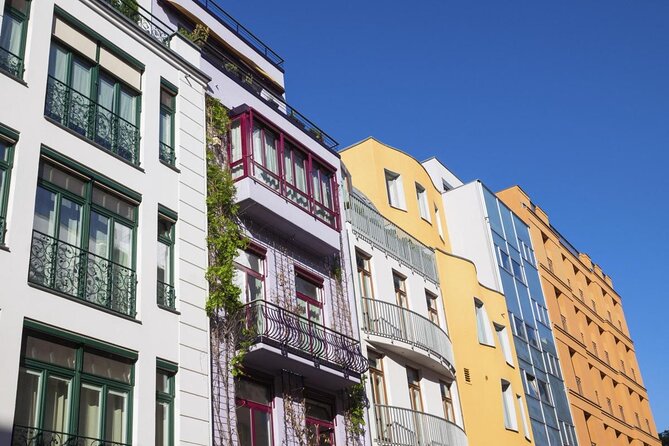
- Prenzlauer Berg is the setting: You explore a fashionable former East Berlin neighborhood known for restaurants, bars, street art, and changing local culture.
- Four to five tastings fill the afternoon: The food includes traditional flatbreads, street tacos, an East Berliner snack, and dessert, with vegetarian and vegan options.
- The history is part of the meal: You learn how migration and the former East German experience shaped Berlin’s modern food scene.
- Gethsemanekirche adds a powerful historical stop: This late-19th-century church played a role in the peaceful opposition movement during the Cold War.
- Two drinks are included: You can receive Berliner beer, water, or a non-alcoholic drink.
- Come hungry, but dress for Berlin weather: One tasting may be bread-heavy, and the walking route is not designed around indoor seating.
Why Prenzlauer Berg makes a good food tour setting
Prenzlauer Berg gives you a useful introduction to Berlin because it contains several layers of the city in a compact area. It was part of East Berlin, then became known for artists, changing social groups, cafés, bars, and international restaurants. This tour uses food to explain those changes instead of treating history as a separate lecture.
That approach works well for me. You are not simply told that Berlin is multicultural. You see the idea in the restaurants and taste it in the food. Traditional local items sit alongside dishes shaped by migration and newer Berlin cooking.
The route also takes you along one of the neighborhood’s main restaurant and bar strips. You can expect an urban walk with street art, side streets, and corners that are easy to miss when you explore alone. The goal is not a grand tour of Berlin’s famous sights. It is a close look at one neighborhood and the people, habits, and businesses that give it character.
The tour lasts about two and a half hours, though the main Prenzlauer Berg portion is described as roughly two hours, followed by a short visit to Gethsemanekirche. That is long enough for several food stops without taking up your whole day.
More Hidden Food Spots in the world:
- Hanoi: Street Food Tour with Train Street & Hidden Alleyways
★ 5.0 · 2,831 reviews - Mexico City: Hidden Markets, Street Food & Salsa-Making Tour
★ 5.0 · 310 reviews - Saigon’s Hidden Flavors – Private Street Food Walk with Local Students
★ 5.0 · 301 reviews
What you eat during the 4 to 5 tasting stops
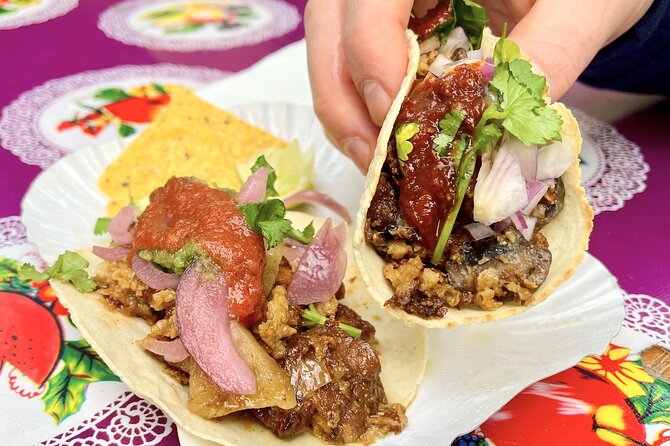
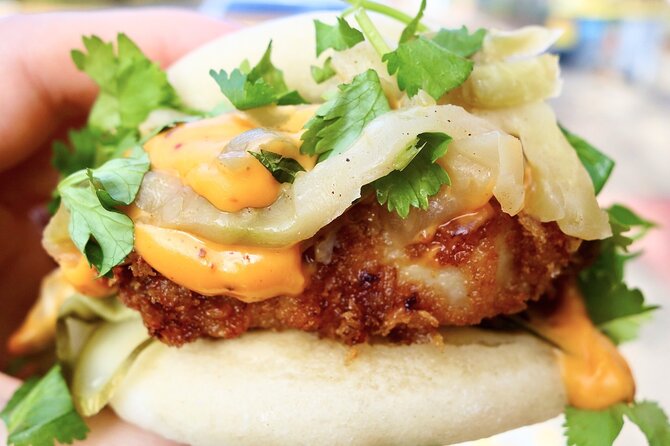
The food is the main reason to book this experience, but the variety matters more than any single dish. You can expect four to five tastings, including dessert, with traditional flatbreads, street tacos, an East Berliner snack, and other local or international bites.
The exact restaurants and dishes can vary, so you should not book expecting a fixed menu. That flexibility can be an advantage. The guide can explain what you are eating and connect it to the neighborhood rather than handing you a standard plate at every stop.
Two drinks are included. These may be Berliner beer, water, or a non-alcoholic beverage. Additional food and drinks cost extra, so the included drinks help keep the total price easier to judge.
You should arrive hungry. Several people have found the portions generous enough to finish the tour full, and one account specifically warns you not to eat lunch first. At the same time, one useful criticism is that the food can lean heavily toward bread. If you prefer plenty of vegetables, keep your expectations flexible. The tour includes vegetarian and vegan choices, but it is not presented as a vegetable-focused meal.
The vegetarian and vegan provision sounds particularly strong. A vegan taco has been singled out as a surprisingly satisfying stop, even by someone who usually does not seek out vegan food. Vegetarians have also been well accommodated at each stop in at least one detailed experience.
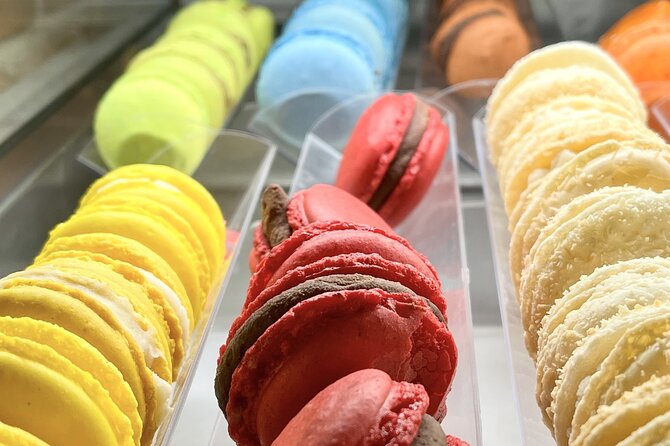
Dessert is not an afterthought. The final sweet may be artisanal ice cream, and Hokey Pokey ice cream has become a favorite recommendation from the tour team. If you have a sweet tooth, this last stop may be one of the tour’s most memorable details.
There is one firm food restriction: gluten-free diets cannot be accommodated. If you avoid gluten, this is not the right food tour for you. Vegetarian and vegan guests should still mention their needs when booking, even though those choices are available.
The history behind the food
The strongest part of the tour is the connection between food and Berlin’s past. Prenzlauer Berg is not presented as a frozen East German quarter. It is a neighborhood shaped by the former divided city, the fall of the Wall, immigration, new businesses, and changing tastes.
Your guide explains Berlin’s migration story through its food scene. That gives you a practical way to understand multiculturalism. Instead of memorizing dates, you see how different traditions become part of daily life in restaurants and street food stalls.
The historical material also reaches beyond the neighborhood. Guides have discussed East Germany, the changes since reunification, cultural shifts, and personal experiences of Berlin. Alex, Laura, Joseph, Irem, and Rafael have all been praised for making this balance work in different ways.
Laura is especially associated with explanations of Stolpersteine, the small memorial stones placed in city sidewalks for people persecuted and murdered by the Nazis. That detail shows how the walk can move from food to memory without losing its focus on the neighborhood.
I also like that the guides seem to explain rather than perform. Alex is noted for speaking clearly and offering personal insight. Irem has been praised for answering questions and suggesting things to do during the rest of a Berlin visit. Joseph is described as enthusiastic about both the food and local culture. These details matter because a food tour depends heavily on the person leading it.
Your guide may not be one of these specific names, since the tour uses several guides. Still, the repeated emphasis on clear explanations, enthusiasm, humor, and local knowledge gives you a good idea of the intended experience.
Street art and the everyday side of Berlin
The walking route includes famous street art and lesser-known corners of Prenzlauer Berg. This is a useful addition because the tour is not only a sequence of restaurant visits. You move through the streets between tastings and get a sense of how people use the neighborhood.
Do not expect a dedicated street-art tour. The art is part of the route, not the central subject. That is good if you want food and culture together, but less suitable if murals and graffiti are your main interest.
The walk also gives you a chance to notice how restaurants and bars fit into an older neighborhood. The food stops help you look at local businesses as part of Berlin’s social change, rather than as isolated places to eat.
Because the group is limited to 10 people, you should have more opportunity to hear the guide and ask questions than you would on a large bus or general city walk. Most people can take part, and the starting point is near public transportation. Service animals are allowed.
More street food walks around the world:
- Dubai: Old Town, Creek, Museums, Souks, & Street Food Tour
★ 4.8 · 10,816 reviews - Ho Chi Minh City Street Food Tour & Sightseeing By Motorbike
★ 5.0 · 9,413 reviews - Medellin: Comuna 13 Graffiti Tour, Cable Car & Street Food
★ 4.8 · 9,046 reviews - Dubai: Old Town, Souks, Street Food, Guided Tour & Abra Ride
★ 4.9 · 7,170 reviews
Gethsemanekirche and the peaceful revolution
The short stop at Gethsemanekirche lasts about five minutes, but it adds real weight to the route. The church was built in the late 19th century in a neo-Romanesque style, with a large dome and detailed exterior.
Its more important role came during the Cold War. Gethsemanekirche became a meeting place for East German opposition groups, including people involved in the peaceful movement that pushed for change. The church is closely linked to the democratic protests that helped bring the old East German system to an end.
You will not spend a long time inside or around the church, so think of this as a focused historical pause rather than a full church visit. It works because the subject connects directly to the neighborhood’s East Berlin identity.
One guide also helped a group find its way to the S-Bahn after the tour, which shows the practical side of this experience. The official end point is back at the starting location, but the area is near public transportation, so it should be easy to continue exploring.
Guides, group size, and the pace
The guide is central to the value of this tour. Food tastings alone rarely justify a high price, but a good guide can help you understand why the food is there, how the neighborhood changed, and where to eat next.
The guides named in the feedback include Alex, Laura, Joseph, Irem, Rafael, Paula, and Iram. Several are praised for enthusiasm and humor, while others are noted for clear speaking and strong personal stories. That range suggests the tour has a friendly, conversational tone rather than a formal lecture.
The pace is described as relaxed. You walk between restaurants, stop for food, hear local history, and continue through the neighborhood. This should suit you if you enjoy talking, sampling smaller portions, and pausing to look around.
It may not suit you if you want a tightly timed sightseeing schedule or a large number of major attractions. The experience stays mainly within Prenzlauer Berg and focuses on depth in one district.
The 10-person maximum is another plus. Small groups make it easier to hear the guide in a busy street and easier to ask about food preferences, Berlin history, or plans for the rest of your visit.
Weather, seating, and practical comfort
This is an outdoor walking tour, and that affects your comfort. Some food stops may not have sheltered seating. A cold wind has made the experience less comfortable for at least one person, even though the food and guide were well received.
Dress for the forecast, especially from autumn through winter. Bring a warm layer and comfortable shoes. Berlin weather can change quickly, and a tour that feels pleasant in mild weather may feel very different in cold rain or wind.
You should also expect a mix of standing, walking, and eating in casual settings. The route is not designed as a sit-down restaurant meal. That is part of its charm, but it is worth knowing before you book.
The starting point is Pappelallee 2, 10437 Berlin, Germany. The tour ends back at the meeting point. A mobile ticket is provided, the activity is offered in English, and most people can participate.
Is $143.92 a fair price?
At $143.92 per person, this is not a bargain food crawl. The price includes four to five tastings, dessert, two drinks, a two-and-a-half-hour guided walk, and cultural context. You are also paying for a small group and for the guide’s recommendations about the rest of Berlin.
The value is strongest if you are new to Berlin and want help deciding where to eat and what to see next. Irem, for example, has been praised for offering useful suggestions for the days after the tour. That kind of advice can save you from spending the rest of your trip in tourist-oriented restaurants.
The price is harder to justify if you mainly want a cheap lunch. You could certainly spend less on street food by exploring independently. You would not receive the same explanation of East Berlin, the migration story, street art, or Gethsemanekirche, but you would keep more money in your pocket.
For me, the key question is how much you value interpretation. If you want food plus a neighborhood introduction, the package is reasonable for a premium small-group tour. If you measure value only by the amount of food, it may feel expensive.
The tour is often booked about 31 days ahead. That suggests you should reserve early if your Berlin dates are fixed, particularly if you want a small group and a specific time.
Who should book this Prenzlauer Berg food walk?
I would recommend it to first-time visitors who want an easy introduction to Berlin’s food and modern history. It is also a good fit for couples, families with older children, and solo visitors who prefer exploring with a guide.
Vegetarians and vegans should find useful options, including vegan food at some stops. Picky eaters may also do well, though the exact menu can change. Tell the provider about your needs before booking.
You should skip it if you need gluten-free food, dislike walking between stops, or want indoor seating throughout. It is also not the best choice for someone seeking a classic list of Berlin landmarks. The tour is local and focused, not a citywide sightseeing circuit.
Free cancellation is available up to 24 hours before the start time. Changes or cancellations made less than 24 hours ahead are not accepted for a refund.
Should you book it?
Book this tour if you want to understand Berlin through food, especially the link between migration, East Berlin, and today’s Prenzlauer Berg. The combination of four to five tastings, two drinks, street art, Gethsemanekirche, and practical restaurant tips gives you more than a simple lunch walk.
I would book it early if you are visiting for the first time, and I would schedule it near the start of your stay so you can use the guide’s recommendations afterward. Come hungry, wear good walking shoes, and dress for the weather. Skip it only if the price feels too high for a meal, you need gluten-free food, or you prefer a fully indoor experience.
FAQ
Where does the Berlin street food tour start?
The tour starts at Pappelallee 2, 10437 Berlin, Germany.
Where does the tour end?
The activity ends back at the meeting point.
How long does the tour last?
The experience lasts approximately two hours and 30 minutes. The Prenzlauer Berg portion takes about two hours, followed by a roughly five-minute stop at Gethsemanekirche.
How many people can join the tour?
The maximum group size is 10 people.
What food and drinks are included?
You receive four to five food tastings, including dessert, plus two drinks. Drink choices include Berliner beer, water, or non-alcoholic beverages.
Are vegetarian and vegan options available?
Yes. Vegetarian and vegan options are available. The tour cannot accommodate gluten-free diets.
Can I cancel for a full refund?
Yes, if you cancel at least 24 hours before the experience start time. Cancellations made less than 24 hours in advance are not refundable.
Newest street food walks around the world
- Old Delhi Cultural, Temples, Heritage Walking Street Food Tour★ 5.0 · 57 reviews
- Old and New Delhi Street Food Sampling★ 5.0 · 3 reviews
- Old Delhi Tour by Tuk-Tuk Street Food and Shopping Experience★ 5.0 · 12 reviews
- Customized Half Day and Full Day Delhi Shopping, Street Food Tour★ 5.0 · 52 reviews
- Delhi: Street Food Crawl (2 Hours Guided Food Tasting Tour)★ 3.5 · 18 reviews
- Taste Famous & Best Street Food of Old Delhi (Jama Masjid)★ 3.0 · 2 reviews
- Spice & Stories: 3-Hour Old Delhi Heritage Food Walk Guided Tour★ 4.5 · 36 reviews
- Old Delhi Street Food and Spice Market Tour★ 5.0 · 81 reviews
Germany street food tours, side by side.
Private Berlin Bites & Historical Highlights – 2,5hrs
Read our review →
Berlin: Guided Street Food & Cultural Walking Tour
Read our review →
The lists this tour appears in