
Review · BANGKOK
Bangkok: Chinatown Food Tour with Michelin Food Stalls
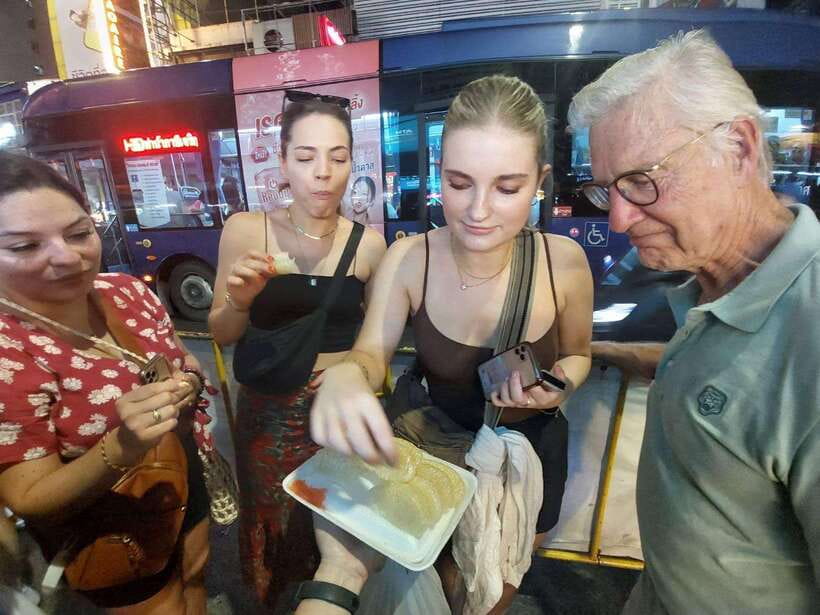
Bangkok’s Chinatown is best understood one bite at a time, and this three-hour Yaowarat food walk gives you a well-planned route through its crowded evening streets. You’ll try more than 10 dishes, visit a Michelin-recognized food stall, and finish near the Chinatown Gate.
I like two things here. First, the small maximum of eight keeps the group personal, which matters when crossing busy streets and ordering food. Second, guides such as Peak, Eve, Na, and Sunday do more than point at plates. They explain Thai-Chinese customs, help with unfamiliar dishes, and keep the pace comfortable.
The main drawback is simple: this is not a tour for every diet or every body. Vegetarians and vegans are not accepted, children under 10 are excluded, and wheelchair users may find the moderate walking distance and tight streets difficult.
Key points to know before you book
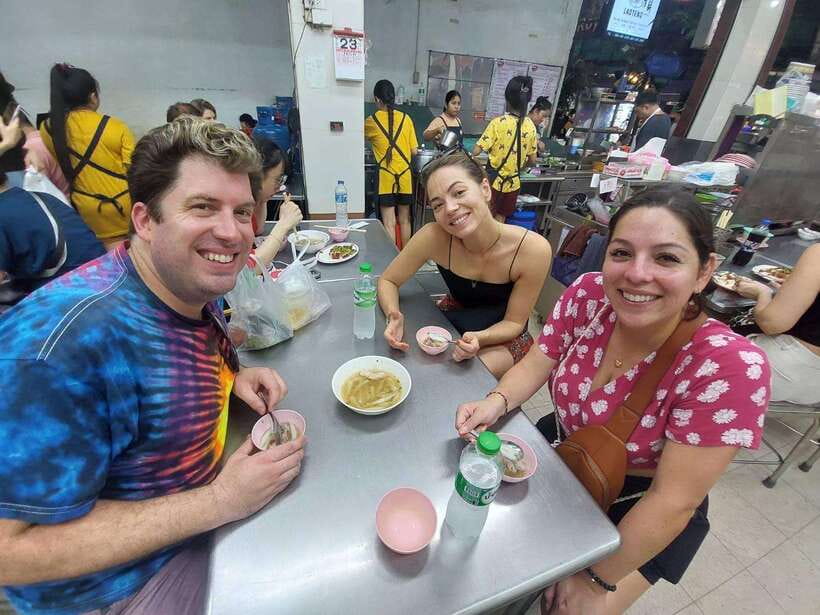
- Over 10 tastings: Expect a full evening of small dishes, drinks, desserts, and savory food from many stops.
- Two Michelin-recognized stops may be included: The experience is built around food stalls and small eateries with strong local reputations.
- Wat Mangkon is the starting point: Meet near Wat Mangkon Kamalawat, also called Wat Leng Noei Yi.
- The Chinatown Gate is the finish: You end in a useful spot for continuing your evening in Yaowarat.
- Small groups matter: With a maximum of eight people, guides can check dietary needs and keep everyone together.
- Come hungry: Several people finished completely full, and some tastings were generous rather than bite-sized.
Starting at Wat Mangkon in the evening
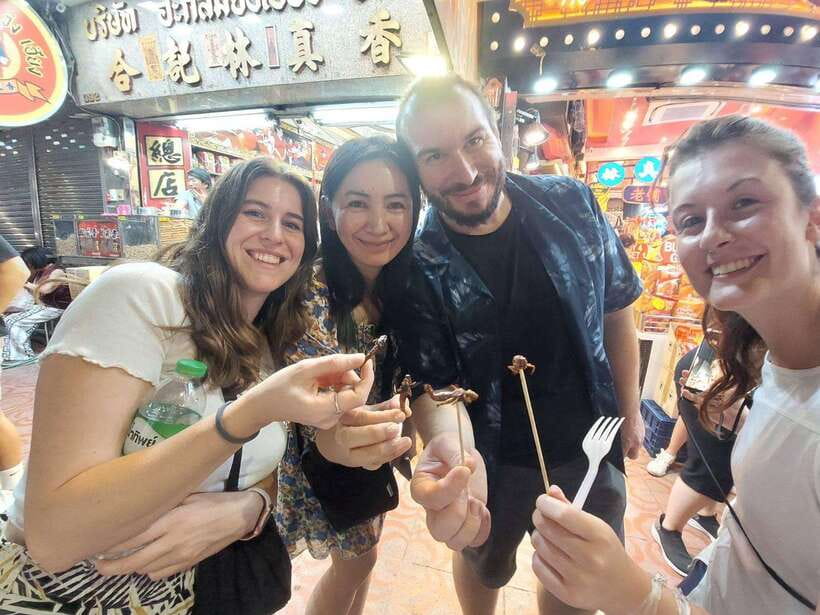
The tour begins at Wat Mangkon Kamalawat, one of Chinatown’s best-known Chinese Buddhist temples. The meeting point gives the outing a fitting start, since Yaowarat’s food culture is closely tied to Bangkok’s Chinese community.
From here, you move into the streets and lanes around Chinatown as the evening trade gets going. Neon signs, carts, shopfront kitchens, and tightly packed tables create a setting that can feel confusing at first. That is where the guide earns the fee. You do not have to spend your first hour guessing which stall looks safe, busy, or worth the wait.
Your guide may be Peak, Eve, Na, Sunday, K, Biga, Ne, or another member of the team. The names vary by departure, but the strongest pattern in the feedback is clear: guides are valued for their energy, humor, care with the group, and ability to explain what is on the plate.
The group size is especially useful here. Eight people can still move through a narrow lane without becoming a parade, and the guide can answer questions without shouting across a crowd. Several guides also make a point of checking that no one is left behind. That sounds basic, but it matters in Yaowarat, where traffic, pedestrians, and food carts all compete for space.
Wear shoes you can walk in for three hours. Bring a camera if you want photographs, but keep your hands free when possible. Bottled water is included, and you should still arrive ready to drink more in Bangkok’s warm evening air.
More Michelin Street Food Tours in Bangkok:
- Bangkok: Michelin Guide Street Food Tour by Tuk Tuk
★ 4.4 · 1,274 reviews - Bangkok: Michelin Guide Street Food Tour by Tuk Tuk
★ 4.5 · 56 reviews - Small Group: Michelin and Local Hawker Food Tour with 9 tastings
★ 5.0 · 1,890 reviews
Thai-Chinese street food, one stop at a time
The food is the main event, but the value comes from the range. Instead of ordering one large meal at one restaurant, you sample across the neighborhood. That lets you compare textures, cooking methods, and Chinese influences without having to decode every menu yourself.
The planned tastings can include crispy spring rolls, barbecued meats, steamed dumplings, stir-fried dishes, noodle soups, spicy seafood, traditional Chinese snacks, and sweet treats. The exact menu can change, so do not treat the food list as a fixed promise. The useful point is the variety: you should get a broad look at Yaowarat’s street-food style rather than a single specialty.
The guide orders or introduces each item, then explains what you are eating and how it fits into local food culture. If you are not used to Thai flavors, this helps you notice the difference between sweet, salty, sour, spicy, smoky, and fragrant dishes. It also takes pressure off ordering. You can try foods you might have skipped when facing a Thai menu alone.
Portions appear generous for a tasting tour. Several people described eating more than 10 dishes, with some counting 13 or even 15 different items and drinks. That means you should not plan a full dinner before the meeting point. A light lunch and late afternoon snack make more sense if you want to enjoy the whole route.
One honest point: the food is varied, but it may not all feel daring. One participant found the dishes delicious without finding them especially unusual. This tour is better for sampling a broad range of Chinatown classics than for chasing extreme spice or rare ingredients.
What the Michelin-recognized stop really adds
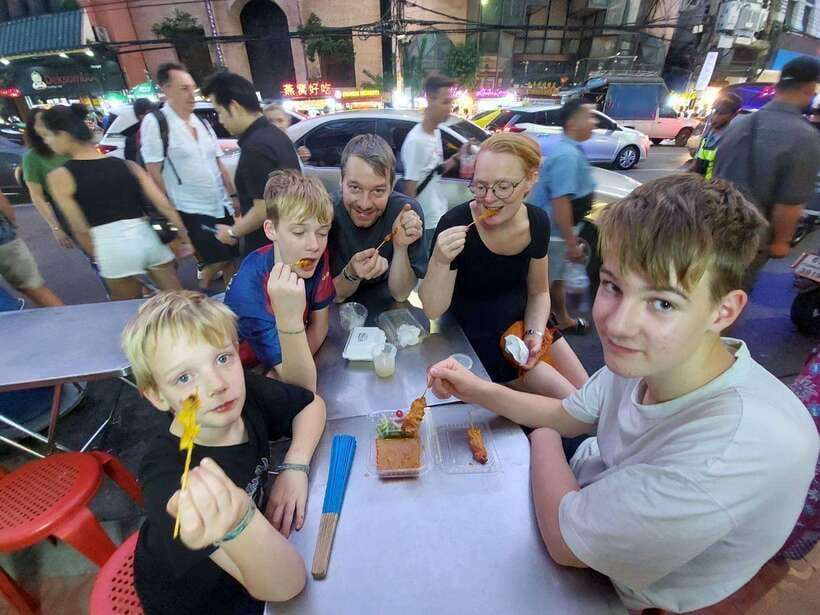
The Michelin connection gives the route a clear high point, but it is worth understanding what that means. You are visiting a Michelin-recognized food stall or small restaurant, not joining a formal fine-dining meal.
The setting remains casual and street-based. You may eat food that has earned outside recognition while standing near the same busy lanes and food carts that define Yaowarat. That contrast is part of the appeal. The tour shows how a modest stall can build a serious reputation through one excellent specialty.
Some departures include two Michelin-recognized vendors or restaurants, while the main description promises at least one such stop. If this distinction matters to you, ask about the exact route when booking. The tour is not solely a Michelin checklist, and not every stop is presented as Michelin-rated.
The best reason to value this stop is access. A guide can help you understand why a dish matters, order it efficiently, and place it within the wider food scene. You are not simply ticking off an award. You are seeing how local street cooking can gain international attention without losing its everyday character.
The food you might never order alone
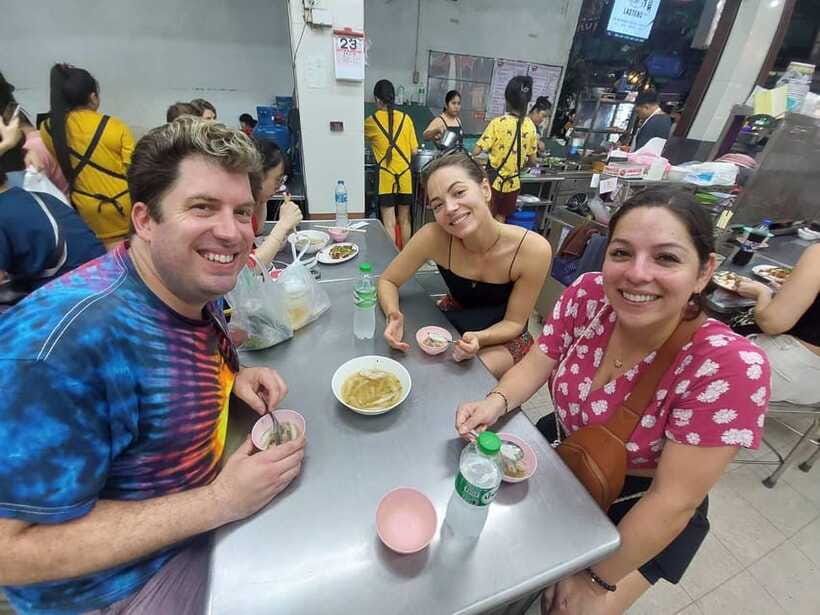
The most useful part of the route may be the stops that are not famous. Yaowarat has countless vendors, and a first visit can leave you choosing at random. A guided route gives you a starting point and lets you spend your attention on the food, not on deciding where to eat.
The itinerary includes lesser-known local places serving fragrant noodle soups, seafood, dumplings, grilled food, and stir-fries. The guides also explain the businesses and the people behind some dishes, giving the neighborhood a human scale.
This is where the small group helps again. If one dish is not for you, the guide can often discuss alternatives or adjust the order when dietary needs were given in advance. The tour is not suitable for vegans or vegetarians, but pescatarians may still have some choices. One pescatarian found the experience worthwhile despite not eating everything. Gluten-free needs may also be manageable with advance notice, as one guide was able to help identify suitable food.
Do not assume every stop will be fully tailored to you. The route is built around a shared tasting experience, so severe allergies or strict restrictions require a careful conversation before booking. The supplied information confirms that dietary restrictions can be accommodated with advance notice, but it does not promise a separate menu at every stop.
More Chinatown Food Tours in Bangkok:
- Bangkok Tuk-Tuk Tour by Night with Chinatown Street Food Meal
★ 5.0 · 635 reviews - Bangkok Tuk-Tuk by Night with Chinatown Street Food Meal
★ 4.6 · 263 reviews - Night Street Food Tour of Bangkok’s Chinatown
★ 5.0 · 173 reviews - Bangkok Hidden Gems: Talad Noi, Chinatown & Street Food Tour
★ 4.5 · 53 reviews
Chinese influence in Bangkok’s food culture
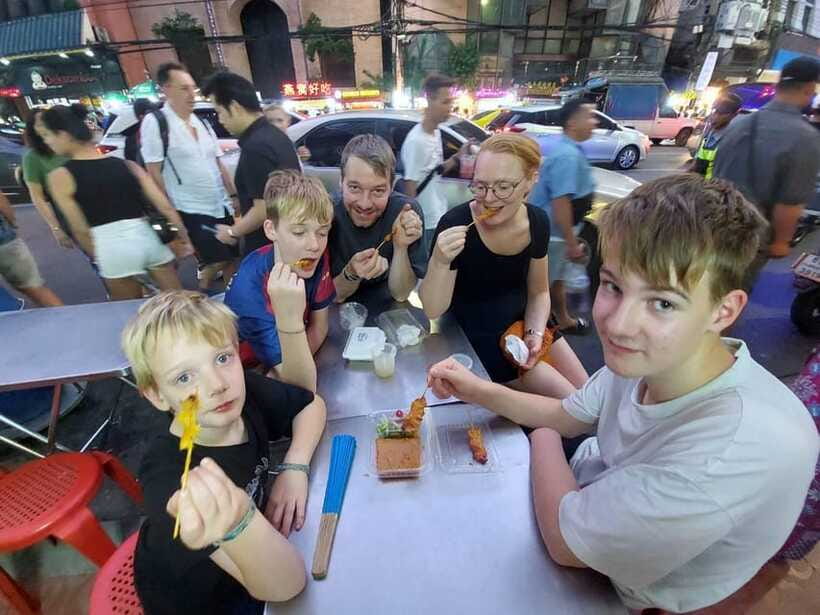
The guide’s history talk adds welcome context between meals. You learn how Chinese immigrants shaped Bangkok’s food scene and how Chinese cooking traditions changed as they met Thai ingredients, tastes, and habits.
That influence shows up in the food itself. Dumplings, noodles, roasted meats, buns, tea, and Chinese-style desserts sit beside Thai spice, seafood, herbs, and sauces. Yaowarat is not simply a Chinese quarter serving food from somewhere else. It is a Bangkok food culture formed through exchange over time.
I like this part because it keeps the tour from becoming a list of dishes. The same spring roll or bowl of noodles means more when you understand its place in the neighborhood. Guides also explain the food clearly and answer questions, which is helpful if you want more than a quick photograph of your dinner.
The history portion is not a long museum lecture. Expect short explanations as you walk and eat. That format suits the setting. You stay connected to the streets instead of sitting through a formal presentation.
Desserts, tea, and the Chinatown Gate
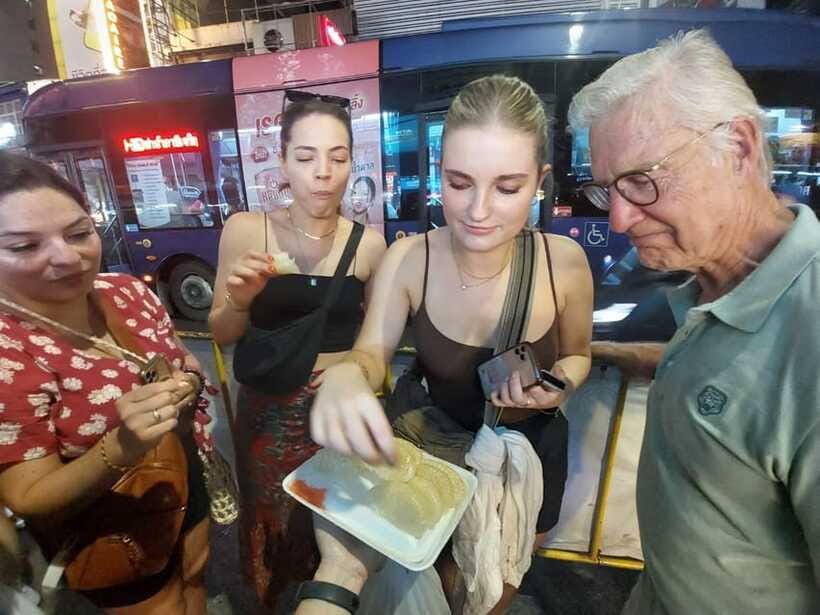
The final part turns sweet. Traditional Chinese desserts and snacks may include freshly made buns or local-style pancakes, followed by a refreshing drink from a classic Chinatown tea stall. Mango sticky rice has also been a favorite ending on some routes.
A sweet finish is welcome after spicy seafood, grilled meats, soup, and fried food. It also gives you a chance to slow down and compare flavors before the tour ends. The tea stop adds another small look at Chinatown’s Chinese influence without requiring a separate restaurant visit.
The tour finishes at the Chinatown Gate, a practical endpoint for the rest of your evening. You can remain in Yaowarat, continue exploring the food streets, or arrange transport from there. Hotel pickup and drop-off are not included, so plan your return before you set off. One guide has helped people arrange transport after the tour, but that should be treated as personal assistance rather than a promised service.
The route can run a little over three hours, depending on crowds and the pace of the group. That is not necessarily a problem, but do not schedule a tight appointment immediately afterward.
Why the $36 price can make sense
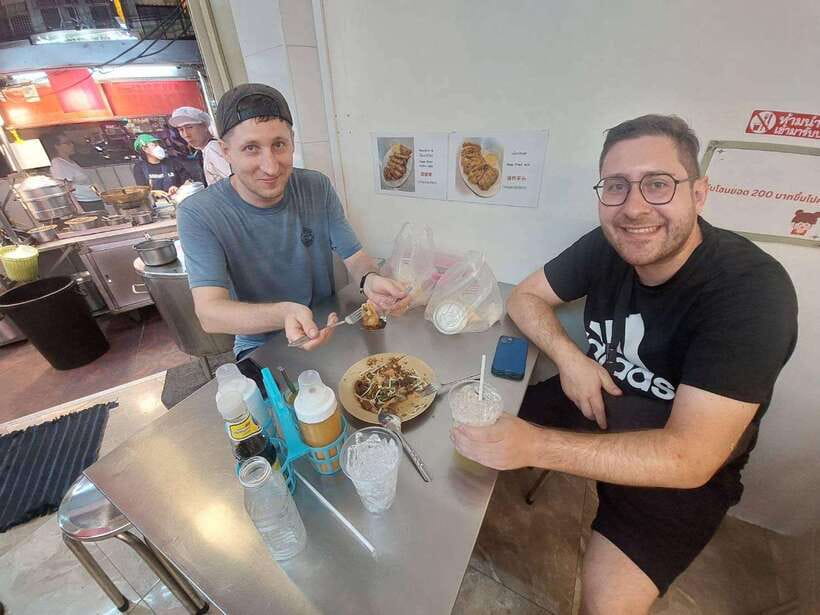
At $36 per person, this is not the cheapest way to eat in Bangkok. You could spend far less by choosing one or two street dishes on your own. The comparison is not really one meal against another.
The fee covers a small-group guide, 10 or more tastings, bottled water, a planned route, and the work of selecting and ordering at multiple stops. You also get help crossing the neighborhood, understanding the food, and managing the pace. If you are new to Bangkok, that structure can prevent a lot of wasted time and uncertain choices.
The value is strongest if you want to taste widely and would otherwise hesitate at unfamiliar stalls. It is also useful for solo visitors, who may struggle to order enough different dishes without wasting food. One person specifically appreciated being able to try many items that would have been impractical alone.
The value is weaker if you already know Yaowarat well, prefer to eat at your own speed, or want a quiet sit-down meal. You are paying for variety and guidance, not privacy. Food is shared or ordered for the group, and the streets can be noisy and crowded.
With a reported rating of 4.8 from 226 bookings, the experience has a strong record. The most consistent praise goes to the guides rather than to one single dish. That is important because the guide controls the pace, explanations, group care, and response to dietary needs.
Who should book this Yaowarat food walk
I would choose this tour for a first Bangkok visit, especially if Chinatown feels intimidating. It suits people who want a social evening, enjoy trying many foods, and prefer a guide to handle the ordering.
It is also a good fit for solo visitors and couples who want more range than they could manage alone. The small group makes it easier to meet other people without the outing feeling like a large bus excursion.
You should think twice if you are vegetarian, vegan, under 10, or use a wheelchair. The activity is specifically listed as unsuitable for those groups. The moderate walking distance and crowded streets may also be hard if you have mobility concerns.
Bring an open appetite, comfortable walking shoes, and a camera. Give advance notice about dietary restrictions. Avoid booking it on the same evening as another large dinner, because you are likely to finish full.
Should you book it?
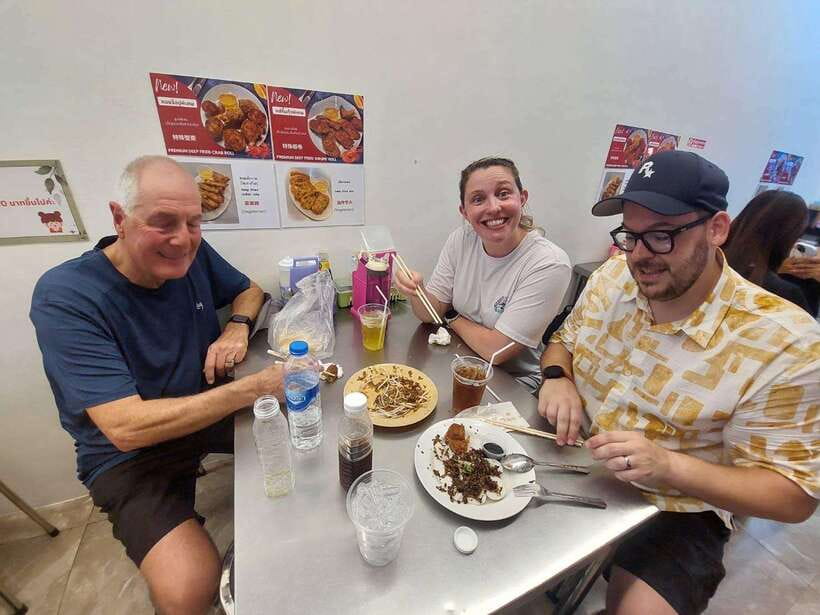
Book this tour if you want a guided introduction to Yaowarat that combines food, local stories, and the lively evening setting. The Michelin-recognized stop is a nice bonus, but the real strength is the range of tastings and the care provided by guides such as Peak, Eve, Na, and Sunday.
Skip it if you want complete control over every dish, a quiet meal, or a vegetarian route. For everyone else, $36 is a fair price for a well-organized food crawl with a maximum of eight people. Arrive hungry, allow extra time after the finish, and treat the tour as your orientation to Chinatown rather than your final meal in Bangkok.
FAQ
Where does the food tour start?
The tour starts at Wat Mangkon Kamalawat, also known as Wat Leng Noei Yi, in Bangkok’s Chinatown.
Where does the tour finish?
The tour finishes at the Chinatown Gate.
How long does the experience last?
The scheduled duration is three hours. The tour can run slightly over three hours depending on the pace and conditions.
How many food tastings are included?
You can expect more than 10 food tastings. Some departures have included around 13 to 15 different dishes and drinks.
Does the tour visit a Michelin-recognized food stall?
Yes. The experience includes at least one Michelin-recognized food stall, and some routes have included two Michelin-recognized vendors or restaurants.
What language is the tour offered in?
The tour is conducted in English with a live English-speaking guide.
How large is the group?
The group is limited to a maximum of eight participants.
Can dietary restrictions be accommodated?
Dietary restrictions can be accommodated with advance notice. The tour is not suitable for vegans or vegetarians, and some food may be shared across the group.
Is hotel pickup included?
No. Hotel pickup and drop-off are not included. You meet at Wat Mangkon and finish at the Chinatown Gate.
What should I bring?
Bring comfortable walking shoes and a camera. Bottled water is included, and pets are not allowed.
Newest street food walks around Bangkok
- Bangkok 3-in-1 Tour: Longtail Boat,TukTuk & Street Food Adventure★ 5.0 · 73 reviews
- 4-Hour Hidden Bangkok TukTuk Street Food Guided Tour★ 5.0 · 23 reviews
- Famous Thai Street Food Tasting Experience!★ 5.0 · 4 reviews
- LR-01 TaLad NangLerng, ride along the old town and try local street foods★ 4.5 · 13 reviews
- Private Tour : Bangkok Night Private Tuk Tuk Tour and Street food★ 4.5 · 5 reviews
- Street Food at China Town★ 4.5 · 4 reviews
- Authentic Street Food Tour in China Town Bangkok★ 5.0 · 25 reviews
- Private – STREET FOOD TOUR THONBURI incl. dinner★ 4.5 · 5 reviews
Bangkok street food tours, side by side.
Bangkok: Michelin Guide Street Food Tour by Tuk Tuk
Read our review →
Bangkok Tuk-Tuk Tour by Night with Chinatown Street Food Meal
Read our review →
Bangkok: E-Scooter Night Tour with Local Street Food
Read our review →Bangkok Food Tour by Tuk Tuk – Hotel-pickup & Dinner
Read our review →
Bangkok Street Food Variety Cultures Local Tasty
Read our review →
Bangkok 3-in-1 Tour: Longtail Boat,TukTuk & Street Food Adventure
Read our review →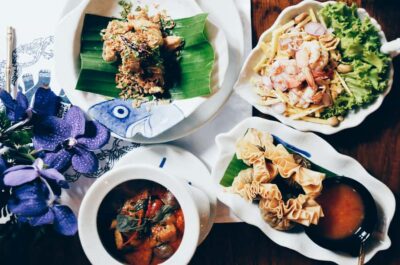
Bangkok: Street Art and Street Food Walking Tour
Read our review →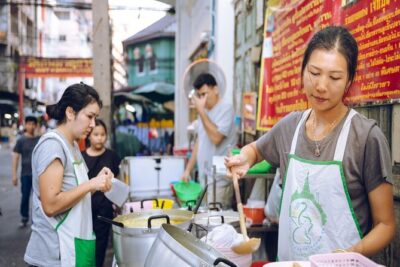
Bangkok Hidden Gems: Talad Noi, Chinatown & Street Food Tour
Read our review →The lists this tour appears in