
Review · MYANMAR
Yangon Evening Street Food and Market Walking Tour
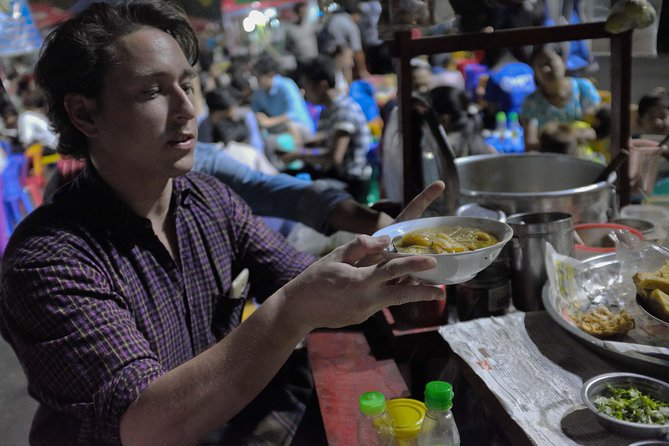
Yangon’s best dinner may be a moving one. This three-hour walk takes you from Mahabandoola Park through Little India and Chinatown, with stops for mohinga, tea-leaf salad, faloodah, Shan noodles, fried snacks, and BBQ fish. Guides such as Mark, Marc, and Myo add the food stories and neighborhood context that are hard to pick up on your own.
I like the small maximum group of seven, which keeps the evening personal, and I like the range of communities packed into a short walk. You also get bottled water and more than 10 tastings, so the $62.65 price covers a full dinner rather than a few sample bites.
The main catch is simple: this is a lot of food over about 2.5 kilometers. Pace yourself, wear comfortable shoes, and tell the operator about vegetarian needs when booking. Alcohol is not included, and the tour runs in rain as well as clear weather.
Key points to know before you book
- Start at 5:00 pm near Pansodan Street: Meet at Sa Ba Street Food Tours, on the third floor of Pansodan Scene.
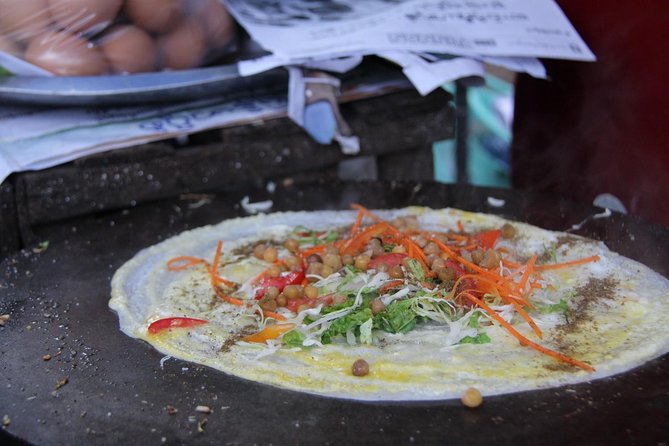
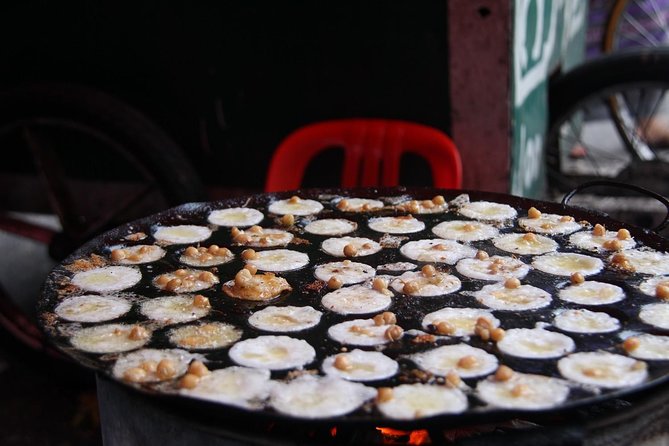
- Taste 10 or more dishes and snacks: The menu may include mohinga, Shan noodles, laphet thoke, faloodah, fried insects, and BBQ fish.
- Walk through three distinct areas: The route links downtown, Little India, and Chinatown, with food and religious sites along the way.
- Finish on 19th Street: The evening ends at a Chinatown BBQ spot, where fish and beer are available.
- Small group, moderate walking: No more than seven people join the tour, and the route covers about 2.5 kilometers.
- Vegetarian food is available by request: Mention it when booking, rather than waiting until the evening begins.
Why this Yangon food walk works so well
Yangon’s food culture reflects its people. Burmese, Indian, Chinese, Shan, and other traditions meet in the old downtown streets, and this tour uses dinner as a way to introduce you to those connections.
That makes the experience more useful than a simple list of food stops. You are not just eating a bowl of noodles, you are learning why a dish belongs to a certain community, how it is eaten, and how the surrounding neighborhood shaped it.
The route also gives you a look at Yangon after the workday. Side streets fill with food sellers, produce stalls, and families stopping for dinner. Street lighting can be improvised, and some areas are atmospheric rather than polished. That is part of the appeal, but you should expect a real city walk, not a staged food show.
The company keeps the group to seven people at most. That matters in narrow lanes and at small family-run eateries, where a large group could overwhelm the space. It also gives you a better chance to ask questions or tell your guide if you need to slow down.
More Evening and Night Food Tours in the world:
- Saigon By Night and Street Food By Motorbike | Opt: Ao Dai Riders
★ 5.0 · 4,066 reviews - Private Street Food Evening Walking Tour in Ho Chi Minh City
★ 5.0 · 3,175 reviews - Marrakech: Street Food Tour by Night
★ 4.8 · 2,838 reviews
Starting at Mahabandoola Park at 5:00 pm
The meeting point is Sa Ba Street Food Tours at Pansodan Scene, 144 Pansodan Street. Go through the grey doors, take the stairs to the third floor, and look for the office next to Ali Ba Ba amusements.
The tour starts at 5:00 pm, near Mahabandoola Park. This is a practical starting point because you move quickly from a familiar public space into the smaller lanes of downtown.
I like the timing. You begin while there is still some light, then watch the city shift into its evening rhythm. The later stops become more atmospheric as food stalls use candles and makeshift lights.
Bring comfortable walking shoes. The distance is only about 2.5 kilometers, but the route includes side alleys and market areas where you will want steady footing. During the June to September rainy season, carry an umbrella and dress for wet conditions. The tour operates in all weather.
Mohinga, Myanmar’s everyday bowl
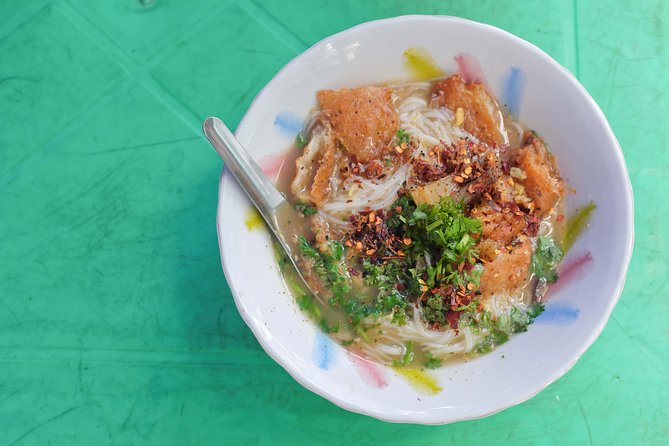
One early highlight is mohinga, a fish-based noodle soup often treated as an all-day staple in Myanmar. Here, it comes with gourd tempura at a neighborhood spot.
The combination is worth noticing. The soup gives you a warm, savory base, while the crisp gourd adds texture. Your guide explains the dish as you eat, helping you understand why it is so central to daily food life rather than presenting it as a special-occasion plate.
This is also a good reason not to arrive full. The tour does not treat mohinga as a single sample and move on. It builds a meal through many small servings, and this first bowl sets the pace for the evening.
Little India and the colorful faloodah stop
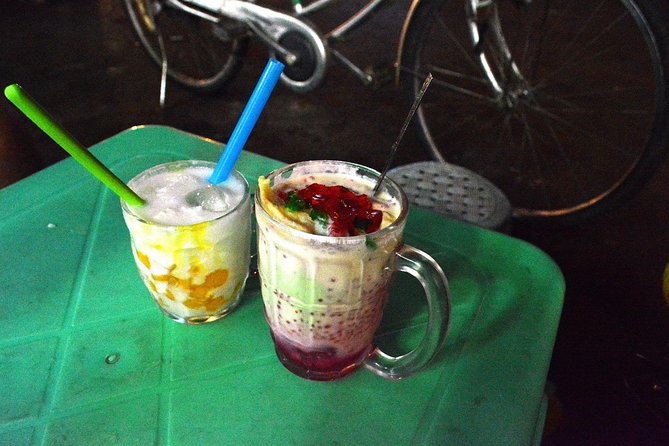
The Indian quarter brings a different set of flavors and food habits. One of the more striking tastings is faloodah, a yogurt-based drink described as visually impressive as well as tasty.
For you, this stop offers a useful break from savory foods. After soup and other snacks, a cold, sweet drink gives your palate a reset. It also shows how Yangon’s food traditions are not kept in separate boxes. Indian influences have become part of the city’s wider eating culture.
The neighborhood itself is part of the experience. Along the route, you may pass Buddhist pagodas, churches, mosques, Hindu temples, and Chinese Buddhist temples close to one another. The tour uses these surroundings to explain Yangon’s mix of communities without turning the evening into a formal history lecture.
More street food walks around the world:
- Dubai: Old Town, Creek, Museums, Souks, & Street Food Tour
★ 4.8 · 10,816 reviews - Ho Chi Minh City Street Food Tour & Sightseeing By Motorbike
★ 5.0 · 9,413 reviews - Medellin: Comuna 13 Graffiti Tour, Cable Car & Street Food
★ 4.8 · 9,046 reviews - Dubai: Old Town, Souks, Street Food, Guided Tour & Abra Ride
★ 4.9 · 7,170 reviews
The candlelit produce market
The market portion may be the most distinctive part of the walk. It is away from the main tourist route and lit with candles or improvised lamps, with stalls selling many kinds of food produce.
This is not a polished market designed for sightseeing. You get a working neighborhood food scene, where the interest comes from what is being sold and how the space functions after dark.
Your guide helps make sense of unfamiliar ingredients and connects them to the dishes you taste later. That context matters. A market can be confusing when you do not know what you are looking at, but a guide can point out the ingredients that appear in everyday Myanmar cooking.
There is a practical downside. Lighting may be limited, and the walking surface can be uneven. Keep your phone and belongings secure, stay close to the group, and avoid wearing shoes you do not want splashed or dusty.
Shan noodles with chicken or pork
The route includes a sticky rice noodle dish associated with the Shan people of eastern Myanmar. It comes with chicken or pork in a tomato-based sauce, then gets finished with crushed peanuts and herbs.
The guide pays attention to the correct mix of ingredients, which is useful because the dish is meant to be combined rather than eaten in isolated bites. The tomato sauce, meat, noodles, peanuts, and herbs give you several textures and flavors in one small serving.
You may be offered a choice between chicken and pork, but the supplied details do not guarantee that both options are available every night. If you have dietary restrictions, explain them before the tour begins.
This stop is one reason the experience suits curious eaters. You are not limited to the familiar dishes most visitors find in hotel dining rooms. At the same time, the guide is there to explain what you are trying, so you are less likely to feel lost when a dish is unfamiliar.
Laphet thoke, the tea-leaf salad
Myanmar’s tea-leaf salad, laphet thoke, is another important tasting. Pickled tea leaves are mixed with crunchy beans and seeds, local peanut oil, and other salad ingredients.
The result is not a mild side salad. It has a sharp, earthy flavor with plenty of crunch. The tea leaves also contain caffeine, making this a lively little dish despite its modest size.
I consider this one of the most valuable tastings because it shows how different Myanmar food can be from the usual Southeast Asian dishes found abroad. You get no large portion, just a concentrated example of local flavor and texture.
If you are sensitive to caffeine or strong pickled flavors, take a small portion first. The tour includes plenty of food, so there is no need to force down every bite.
Chinatown and the 19th Street finale
The final stretch leads into Chinatown and ends on 19th Street, one of Yangon’s best-known areas for evening BBQ. The tour finishes at a favorite BBQ joint, with fresh fish and the option to buy a cold Myanmar beer.
Alcohol is not included in the price, so budget separately if you want a drink. Bottled water is provided, and coffee or tea is also included as part of the food experience.
The final stop has a social feel. You can eat, watch people passing, and compare the evening’s dishes with your guide. It is a fitting ending because the focus shifts from small tastings to a more relaxed dinner setting.
The end point is not your hotel. You finish on 19th Street in Chinatown, so plan your onward transport before the tour or arrange it at the end. Hotel pickup and drop-off are not included.
Should you try the fried insects?
Fried insects are offered as an optional beer snack. No one forces you to try them, and that is exactly the right approach.
If you are curious, this is a low-pressure chance to taste something outside your normal menu. If not, there are plenty of other dishes, and skipping one item will not reduce the value of the evening.
The important point is that the tour allows choice. You can be adventurous without feeling that you have signed up for a food challenge. The goal is to understand Yangon’s eating habits, not to prove how brave you are.
What the $62.65 price includes
At $62.65 per person, this is not the cheapest way to eat in Yangon. But it includes dinner, snacks, food tastings, bottled water, coffee or tea, and an English-speaking local guide.
The amount of food is a major part of the value. You are not paying for one restaurant meal. You are sampling more than 10 dishes and snacks at several stops, while also getting an introduction to neighborhoods that can be difficult to read on your own.
The guide is the other key part of the price. Mark has been praised for explaining both food and local communities, while Myo has been described as flexible and attentive to individual needs. Marc is also among the guides associated with the experience. Guide assignments can vary, but the evening depends heavily on the person leading it.
For a solo participant, the minimum booking requirement of two people may be inconvenient. The child rate applies only when a child shares with two paying adults. Most people can take part, but the walking distance and food-heavy format are worth considering for young children.
Who will get the most from this tour
I would choose this tour if you want an easy introduction to Yangon’s food culture and prefer small local stops to a single sit-down meal.
It is especially well suited to:
- First-time visitors who want help choosing unfamiliar food
- People interested in Yangon’s Indian, Chinese, Burmese, and Shan influences
- Eaters who enjoy trying several small dishes
- Couples and small groups who prefer a guide-led evening
- Anyone who wants a neighborhood walk after dark without planning every stop
I would be more cautious if you need a slow pace, dislike crowded food areas, or prefer complete control over ingredients. The tour covers many tastes in three hours, and the guide cannot guarantee that every dish will suit every diet.
Vegetarians can be accommodated, but you must request that option when booking. The available information does not specify a vegan menu or list every ingredient, so people with serious allergies should ask for details before paying.
Practical details that make the evening easier
The tour requires a minimum of two people per booking and accepts a maximum of seven participants. Confirmation is sent within 48 hours, subject to availability.
Free cancellation is available if you cancel at least 24 hours before the 5:00 pm start time. Cancellations or changes made inside that window are not refunded or accepted.
You should eat lightly beforehand, but do not arrive starving. The quantity is substantial, and one of the clearest practical tips from the experience is to pace yourself. Bring an umbrella during the wet season, wear shoes suited to 2.5 kilometers of city walking, and carry a little extra money for alcohol at the final stop.
My recommendation
I would book the Yangon Evening Street Food and Market Walking Tour if you want food, local neighborhoods, and cultural context in one compact evening. The strongest parts are the small group, the wide range of tastings, and the route through Little India, Chinatown, and a market most independent visitors could easily miss.
The $62.65 cost is fair for a full dinner with more than 10 tastings and a guide, though it is higher than simply eating on your own. Book it early in your Yangon stay if you can, since it can help you identify dishes and neighborhoods for later exploration.
Skip it only if you want a quiet restaurant meal, cannot manage moderate walking, or prefer not to eat unfamiliar ingredients. For everyone else, this is a practical and flavorful way to get your bearings in Yangon after dark.
FAQ
How long does the Yangon evening food tour last?
The tour lasts approximately three hours.
What time does the tour start?
The tour starts at 5:00 pm.
Where does the tour begin?
It begins at Sa Ba Street Food Tours in Pansodan Scene, on the third floor at 144 Pansodan Street in Yangon. Enter through the grey doors and go up the staircase. The office is next to Ali Ba Ba amusements.
Where does the tour finish?
The tour finishes on 19th Street in Chinatown, Yangon, at a BBQ area with food and people watching.
How much walking is involved?
The tour includes approximately 2.5 kilometers of walking through downtown Yangon, Little India, Chinatown, side alleys, markets, and food streets.
Is vegetarian food available?
Yes. A vegetarian option is available, but you should request it when booking.
Are drinks included?
Bottled water, coffee, and tea are included. Alcoholic drinks are not included, but they are available to purchase at the final stop.
What happens if it rains?
The tour operates in all weather conditions. You should dress appropriately and bring an umbrella during the June to September rainy season.
Newest street food walks around the world
- Old Delhi Cultural, Temples, Heritage Walking Street Food Tour★ 5.0 · 57 reviews
- Old and New Delhi Street Food Sampling★ 5.0 · 3 reviews
- Old Delhi Tour by Tuk-Tuk Street Food and Shopping Experience★ 5.0 · 12 reviews
- Customized Half Day and Full Day Delhi Shopping, Street Food Tour★ 5.0 · 52 reviews
- Delhi: Street Food Crawl (2 Hours Guided Food Tasting Tour)★ 3.5 · 18 reviews
- Spice & Stories: 3-Hour Old Delhi Heritage Food Walk Guided Tour★ 4.5 · 36 reviews
- Old Delhi Street Food and Spice Market Tour★ 5.0 · 81 reviews
- Taste Famous & Best Street Food of Old Delhi (Jama Masjid)★ 3.0 · 2 reviews