
Review · USA
New York City Food Cart Walking Tour
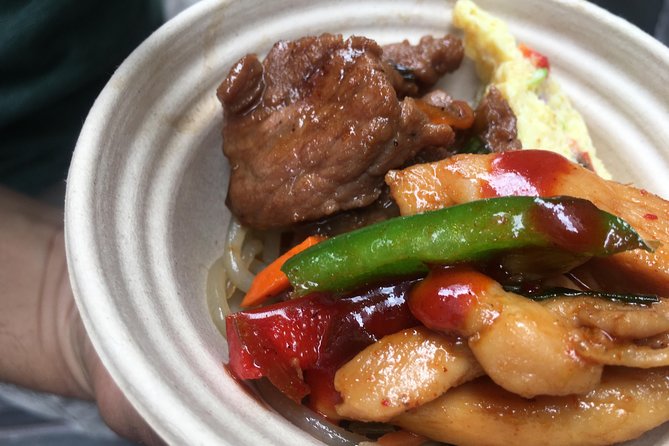
New York’s best street food is often served from a small cart, not a famous restaurant. This two-hour walk takes you to five of them, with food ranging from Middle Eastern falafel and Pakistani curry to Greek souvlaki, Korean short ribs, soul food, and Belgian waffles. You get a filling lunch while learning how this city’s mobile food trade works.
I like the small-group limit of 12, which gives the guide room to answer questions and keep the walk personal. I also like the generous spread of dishes, since you can try food you might otherwise pass by. The main drawback is that carts move, so the exact stops can change, and two hours may feel short if you want to linger at every one.
Key points to know before booking
- Five food-cart stops provide enough samples to add up to a generous lunch.
- Two Manhattan routes let you choose between Midtown and the Financial District.
- Guides such as Brian, Bryan, Amanda, Sarah, and Doug bring in food history, city stories, and practical background on cart regulations.
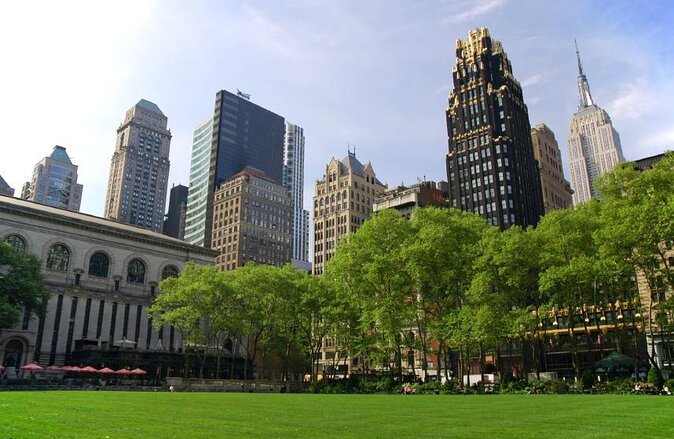
- Bryant Park and Sixth Avenue anchor the Midtown route, with much of the food aimed at office workers.
- The food mix changes, but expect multicultural and fusion dishes, plus dessert.
- The $60 price includes five tastings, bottled water, and the guide, but not hotel transfers.
Why this tour gets you past the usual New York meal
A food-cart tour works best when you want more than a list of famous restaurants. New York’s carts serve office workers, commuters, residents, and curious visitors, often in places that look ordinary until someone points out what is worth ordering.
That is the useful role of this tour. You are not left to guess which cart has a safe line, a good menu, or something different from what you can find at home. Your guide brings you to five stops and explains what makes each one worth your time.
The food also gives the walk a clear purpose. You move through Midtown or the Financial District, stop to eat, then continue with a little more context about the streets around you. The result is part lunch, part neighborhood walk, and part lesson in how New York feeds people quickly.
I especially like the cultural range. One stop may feature falafel or another Middle Eastern dish, while later tastings can shift to Pakistani curry, Korean short ribs, Greek souvlaki, jerk chicken, soul food, or a Belgian waffle. You are not ordering five versions of the same hot dog or pretzel.
More street food walks around the USA:
- Charleston Upper King Street Food Tour
★ 4.5 · 200 reviews - Portland Food Carts, Pods & Patios Tour
★ 5.0 · 166 reviews - Mexican Street Food: Tijuana Day Trip from San Diego
★ 4.5 · 158 reviews
Choosing Midtown or the Financial District
The tour offers two Manhattan itineraries. Midtown is the natural choice if you want to combine food with Bryant Park, Sixth Avenue, and the city’s office district.
The Financial District route puts the food in a different setting, surrounded by New York’s oldest commercial streets and major business landmarks. Guides have also used the walk to explain the area’s past, so this option can work well if you want local history along with lunch.
You choose your route when booking, but the food-cart business is mobile. Carts can shift location from day to day, and the exact lineup is not fixed. That flexibility is practical, but it also means you should not book this expecting a precise menu or a guaranteed named vendor.
If one particular dish is your main reason for booking, ask about current stops before committing. The tour promises a broad mix rather than a fixed menu. That is a fair trade for a street-food experience, but it is worth understanding.
Bryant Park brings the first taste
The Midtown itinerary begins around Bryant Park, where the group samples waffles and hears about one of New York’s successful street-vending businesses. The park gives you an easy, pleasant place to begin, with room to orient yourself before the walk gets busier.
A waffle is a smart opening sample. It is familiar enough to please cautious eaters, but a good street version can still feel special. It also gives the guide a way to introduce the business side of food carts before you move into more varied savory dishes.
The Bryant Park stop lasts about 15 minutes. That is enough time to eat and listen, but not enough for a relaxed café-style break. Bring your appetite, not the expectation of sitting down for a full meal at each stop.
Sixth Avenue shows the weekday food trade
The Midtown portion continues around Sixth Avenue, an area where carts largely serve office workers. This detail matters because the food is built around speed, value, and substantial portions.
You get to see the practical side of New York street dining. A cart has to feed people during a short lunch break, often while handling a line and working in a tight space. Your guide explains how the industry operates, including rules, food safety, and the problems vendors face.
That background adds value to the meal. You begin to see the cart as a small business with its own pressures, not just a convenient box of food. Several guides have used old photographs and stories about the city’s food-cart trade to make that history easier to picture.
The route itself is not a major sightseeing walk in the usual sense. You are not being led from one famous landmark to another. Instead, you are noticing service alleys, office corners, public spaces, and ordinary blocks that become more interesting when you know how people use them.
Same streets, a different set of bites:
- No Diet Club – Best street food tour in Brooklyn ! (NYC)
★ 4.9 · 39 reviews - No Diet Club – Best street food tour in San Francisco !
★ 5.0 · 38 reviews - Denver Downtown 16th Street Food Tour
★ 5.0 · 29 reviews - Little Havana Street Food Tour with Enthusiastic Guide
★ 4.0 · 21 reviews
Five stops, five kinds of food
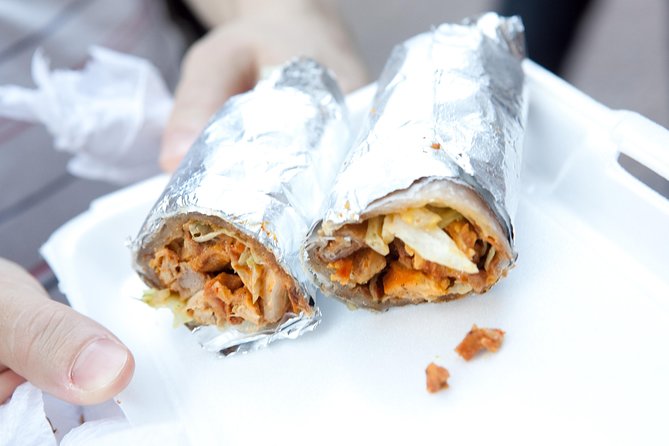
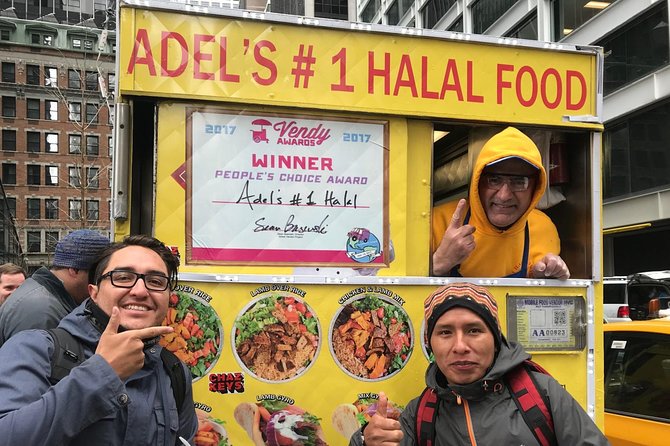
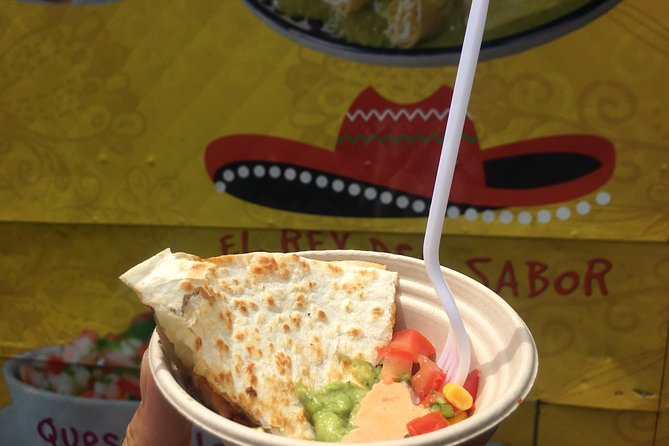
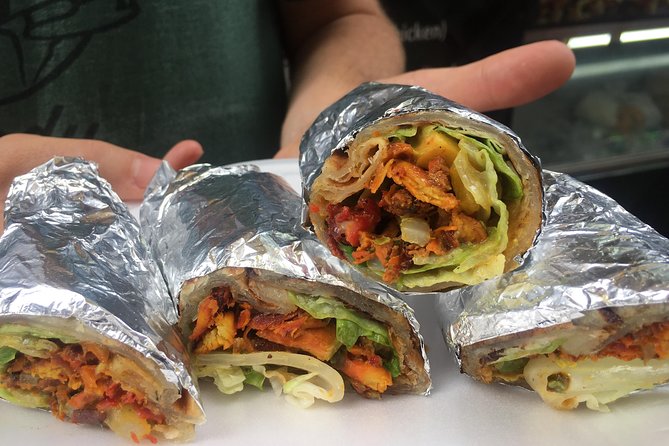
The exact food depends on the day, but the tour is designed around contrast. One stop may serve halal food, another soul food, and another a dish shaped by Korean, Pakistani, Greek, Middle Eastern, or Belgian cooking.
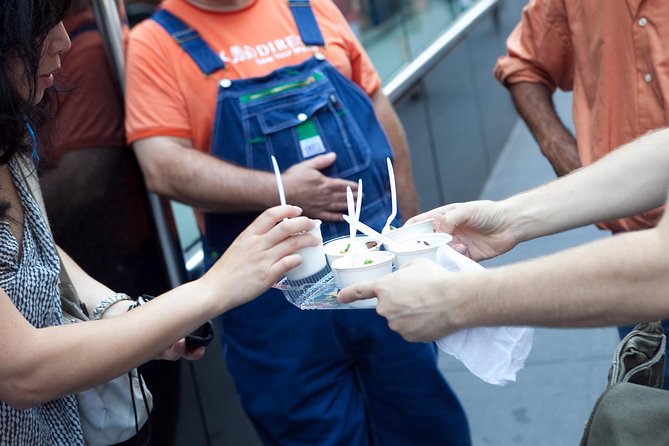
That range is the strongest reason to choose this experience. You can test flavors and dishes that you might not order on your own, without paying for five separate meals. The portions are intended as tastings, yet the combined amount is usually enough for a generous lunch.
One especially well-liked savory option has been Veronica’s jerk chicken. It is the sort of stop that shows why a guide helps: you might walk past a cart without knowing what to try, then end up with one of the meal’s best bites.
Dessert is part of the appeal too. The Belgian waffle stop can arrive as a cheerful finish, especially if the earlier food has been savory or spicy. The waffle stop also adds a small international surprise to the route, since menus and names may reflect the vendor’s own background.
Do not expect a restaurant tasting menu with polished plates and a fixed order. This is street food. You may eat standing up, find a place nearby to shelter, or keep moving between stops. That informal style is part of the point, but people who need a quiet, seated lunch should choose a conventional food tour instead.
The guides add the real depth
The guide’s personality matters more here than it would on a simple sightseeing route. A good guide needs to keep the group moving, explain unfamiliar foods, manage timing at busy carts, and make the city stories useful rather than overwhelming.
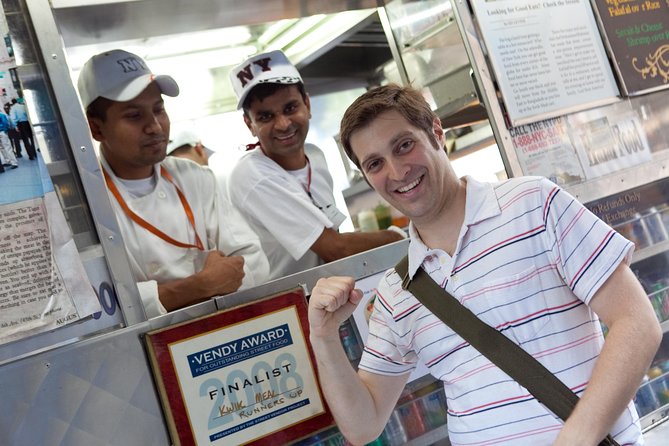
Brian and Bryan have led tours praised for their clear explanations of food-cart culture, New York history, regulations, and vendor traditions. Amanda has also led a food-focused walk that paired filling portions with cultural background. Sarah has handled difficult weather by finding places where the group could eat and take shelter, while Doug has led smaller groups with plenty of individual attention.
Names and assignments can change, so you should not book on the assumption that one particular guide will lead your date. Still, the range of feedback points to a consistent strength: this is not meant to be a silent procession from cart to cart.
You can ask about ingredients, food traditions, and the rules that shape mobile dining. The guides also encourage conversation with vendors, which makes the stops feel less like a transaction and more like a meeting with the people behind the food.
One sensible caution: not every historical detail will be perfectly exact. One account noted that some information differed from what local residents had heard. Treat the stories as engaging context, not as an academic lecture. The guide’s job is to make the food and streets come alive, not to provide a footnoted history of every cart.
What the two-hour pace feels like
The tour begins at noon and ends back at the meeting point. Two hours is a good length for a lunch activity, especially if you have other plans in the afternoon.
The schedule is active. You meet the guide, walk to a cart, eat, hear the explanation, and then move to the next stop. The group limit of 12 helps keep this manageable, and smaller groups may receive even more direct attention.
The short format also creates a tradeoff. You will sample several foods, but you will not have much time to browse menus, take a long break, or return to a favorite cart. One stop can easily run longer if a line forms or the guide has an especially good story.
Wear comfortable shoes. This is a walking tour, not a stationary tasting. Nearness to public transportation makes the start and finish easier to fit into a day of sightseeing, but hotel pickup and drop-off are not included.
Weather and comfort considerations
The tour operates in all weather, so dress for the forecast. That is not a minor detail when you are eating outdoors and walking between stops.
Rain and snow do not automatically ruin the activity. Guides have found places where groups could take cover while eating, but you should still bring suitable clothing and shoes. A wet day may make the experience less relaxed, particularly if you prefer to sit down for every tasting.
The mobile format has one comfort advantage: you are not tied to a single outdoor table. The guide can adjust where the group pauses, depending on conditions and the needs of the group. Still, plan for outdoor city conditions rather than restaurant comfort.
Most people can participate, and service animals are allowed. The tour is near public transportation, and a mobile ticket makes it easy to keep the booking on your phone.
Is $60 a fair price?
At $60 per person, the tour is not the cheapest way to eat in Manhattan. You could buy a single cart meal for much less.
The value comes from the combination of five tastings, a local guide, bottled water, and the time saved by knowing where to go. If you tried to find five worthwhile carts on your own, you would need to research menus, locations, opening hours, and ordering customs. You would also miss the explanations about the food-cart trade and the neighborhoods.
For someone who wants only a full plate of food, the price may feel high. For someone who wants a guided lunch and an introduction to New York’s street-food culture, it is more reasonable. The tastings are substantial enough that you may not need another full meal right away.
The small group improves the value. With no more than 12 people, the guide can answer questions and keep the group together without making every stop feel like a crowd scene.
Who should book this experience?
I would recommend it to first-time New York visitors who want a meal tied to the city itself, rather than another restaurant reservation. It also suits repeat visitors looking for a different way to see Midtown or the Financial District.
It is a good match if you:
- Enjoy trying food from several cultures in one sitting.
- Like learning how local businesses work.
- Are willing to eat casually and adapt to changing cart locations.
- Want a filling lunch without planning every stop yourself.
- Prefer a small group to a large coach-style tour.
It may not suit you if you need a fixed menu, a seated meal, or a precise route. It is also less useful for someone who already knows New York’s food carts well and wants a specialist tour built around one cuisine.
Food allergies and dietary needs deserve attention before booking. The available information does not promise a specific accommodation policy or menu. Since the carts and dishes can change, contact the provider before the tour if ingredients are important to your safety.
Practical details for a smoother visit
Arrive ready to eat at noon, but do not skip breakfast entirely if you are prone to low energy. The tour includes several tastings, yet the first stop may not be enough to carry you through the whole walk if you start hungry.
Keep your phone charged for the mobile ticket, and wear shoes suited to city walking. Dress for rain, snow, or heat because the tour runs in all weather.
The experience ends where it begins, which simplifies your plans. You will need to arrange your own way to and from the meeting point, since hotel pickup and drop-off are not included.
Free cancellation is available when you cancel at least 24 hours before the local start time. Changes or cancellations inside that window are not accepted for a refund.
Should you book the New York City Food Cart Walking Tour?
Book it if you want a hands-on introduction to New York street food and enjoy a guide who can connect each bite to the city’s people, rules, and working life. The food variety, small groups, and generous portions make the $60 easier to justify than a simple cart meal.
Choose the Midtown route for Bryant Park, office-district food, and a central setting. Choose the Financial District route if you want the food paired with stories about one of Manhattan’s oldest business areas.
Skip it if you need a fixed menu, indoor seating, or a carefully controlled schedule. Otherwise, this is a smart way to eat lunch, learn a lot, and see New York from the sidewalk level.
FAQ
How long does the New York City Food Cart Walking Tour last?
The tour lasts approximately two hours and begins at 12:00 pm.
How many food tastings are included?
Five food tastings are included, along with bottled water and a local guide.
Can I choose between different tour areas?
Yes. You can choose between a Midtown Manhattan itinerary and a Financial District itinerary.
Will the tour visit the same carts every day?
Not necessarily. Food carts can change location, so the exact stops vary from day to day.
How large is the group?
The tour has a maximum of 12 participants.
What happens if the weather is bad?
The tour operates in all weather conditions, so you should dress appropriately. Service animals are allowed, and most people can participate.
Newest street food walks around the USA
- Little Havana Street Food Tour with Enthusiastic Guide★ 4.0 · 21 reviews
- Taste of Little Havana: Miami Cuban Food & Culture Tour★ 5.0 · 3 reviews
- Key West Street Food Private Local Guided Tour★ 3.5 · 2 reviews
- Japanese Street Food Class in Beech Grove★ 5.0 · 9 reviews
- Denver Downtown 16th Street Food Tour★ 5.0 · 29 reviews
- Austin Street Art and Street Food Tour with Local Guide★ 5.0 · 4 reviews
- Seattle: Street Food Guided Walking Tour of South Lake Union★ 5.0 · 5 reviews
- Portland: Food Carts, Pods, & Patios Tour★ 4.8 · 17 reviews
USA street food tours, side by side.
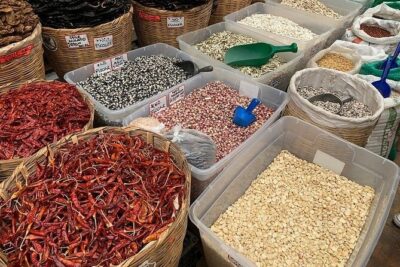
Mexican Street Food: Tijuana Day Trip from San Diego
Read our review →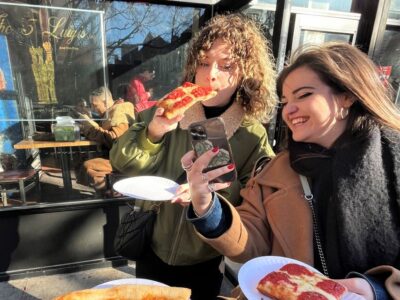
No Diet Club – Best street food tour in Brooklyn ! (NYC)
Read our review →
No Diet Club – Best street food tour in San Francisco !
Read our review →
Little Havana Street Food Tour with Enthusiastic Guide
Read our review →
The lists this tour appears in