
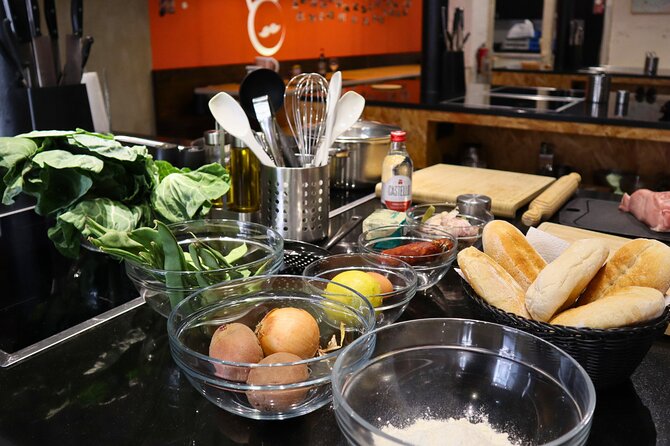
Review · PORTUGAL
Lisbon: Portuguese street food cooking class with Drinks
Lisbon’s best food lesson may be the one that sends you home with a pork sandwich recipe. In this two-hour cooking class, you prepare bifana, caldo verde, and peixinhos da horta, then sit down to eat what you made with wine and a little ginginha.
I like the small maximum of 12 people, which gives the chefs room to help rather than simply demonstrate. I also like the food choices: they are everyday Portuguese dishes, not fancy restaurant projects, so you can make them again at home. The main thing to consider is the short format. You get a lively introduction and a light meal, but not a full culinary course.
Key points
- Make three Portuguese staples: Prepare bifana, caldo verde, and peixinhos da horta from start to finish.
- Learn the story behind the food: The opening talk connects each dish to Portuguese daily life and culinary tradition.
- Small-group attention: The class is capped at 12 people, with local chefs guiding the work.
- Drinks are part of the meal: You receive coffee or tea, one glass of red or white wine, and a taste of ginginha.
- Easy recipes for home: The dishes are designed to be simple enough to repeat in your own kitchen.
- Convenient Lisbon meeting point: Start and finish at Rua Heliodoro Salgado 14, near public transportation.
Three Portuguese dishes in two hours
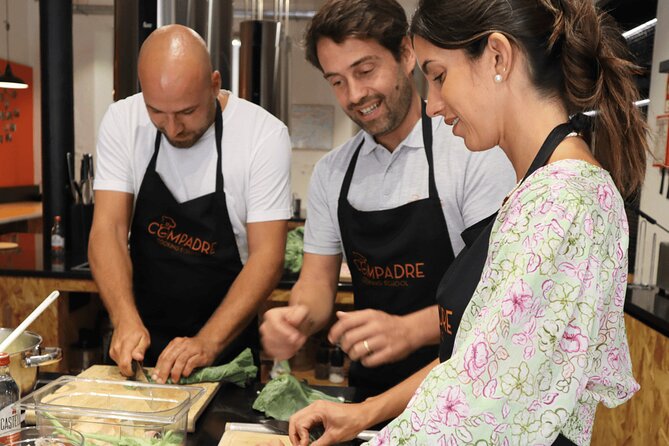
This class works because the menu is compact and purposeful. You do not spend the afternoon making one elaborate dish. Instead, you move through three foods that show different sides of Portuguese cooking: soup, sandwich, and vegetable fritter.
The recipes are also approachable. Caldo verde uses collard greens, bifana centers on pork loin, and peixinhos da horta turns green beans into crisp fritters. You get a useful lesson in local flavors without being asked to master difficult techniques.
The class begins with a short introduction to the dishes and their place in Portuguese culture. That opening matters. It gives you a reason to care about the food beyond its ingredients, and it helps connect what you cook to ordinary life in Portugal.
The experience is offered in English and Portuguese. A licensed or certified guide leads the activity, and chefs provide direction as you work. If you are not confident in the kitchen, the format is meant to be suitable for every skill level.
More Street Food and Drinks Crawls in the world:
- Hungry Osaka Street Food Tour:15 Tastings & 3 Drinks with a Local
★ 5.0 · 1,727 reviews - Florence: Street Food Tour with Wine & Local Guide
★ 4.9 · 1,443 reviews - Naples: Guided Street Food Tour with Spritz
★ 4.9 · 1,212 reviews
Caldo verde, a simple soup with a clear Portuguese identity
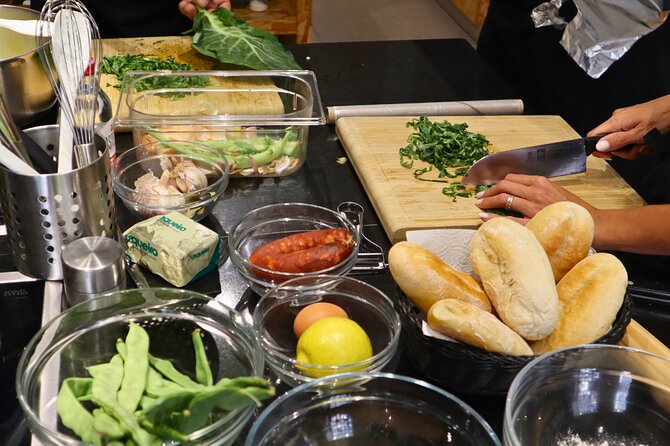
The first dish is caldo verde, a soup made with collard greens. It is a useful place to begin because it introduces a familiar style of Portuguese comfort food without making the lesson too technical.
You learn how the ingredients come together, then eat the soup as part of the light lunch prepared during class. The recipe is practical for home cooks. It is the sort of dish you can make on a cool evening after returning home, using techniques that do not require specialist equipment.
I also like the order of the menu. Starting with soup gives the group time to settle in, listen to the introduction, and get comfortable working together. It is a gentler beginning than starting with frying or assembling sandwiches.
The class does not promise a full restaurant-sized meal. Think of the food as a tasting lunch made from your own work. If you arrive very hungry, you should know that the included meal is described as light.
Bifana brings the street-food lesson home
The main dish is bifana, a Portuguese pork sandwich made with pork loin. This is the recipe most likely to become a favorite after you leave, since it is quick to understand and easy to picture in your own kitchen.
The sandwich also shows why a cooking class can add something that a food tour cannot. You do not just taste a finished bifana. You learn how the parts are prepared and how a simple sandwich becomes a familiar Portuguese street food.
The pork sandwich has strong appeal for families and mixed-age groups. One family with teenagers found the class a highlight of a three-week trip, and the recipes became a lasting reminder of the holiday. That detail points to the class’s strongest quality: it gives you something to do together, not just something to photograph.
You should still keep your expectations sensible. The class lasts around two hours, so the chefs cannot cover every regional variation of bifana or every detail of Portuguese cooking. What you receive is a focused introduction to one much-loved sandwich, with a recipe you can repeat.
Peixinhos da horta and the story of tempura
The third dish is peixinhos da horta, green beans coated and fried in a style often described as Portuguese vegetable tempura. The name and the cooking method make this the most distinctive part of the menu.
You learn about a dish that connects Portuguese cooking with a wider food story. It is a nice reminder that recipes travel, change, and take on new meaning in different places. The class presents peixinhos da horta as the dish that inspired the world-famous tempura tradition.
This recipe adds contrast to the menu. Caldo verde is a soup, bifana is a sandwich, and peixinhos da horta is a crisp fried bite. You get three different textures and formats in a short session, which keeps the class from feeling repetitive.
There is also a practical benefit. Vegetable fritters are flexible, social food. They work well as a starter or snack, and the recipe is simple enough to try at home. The class does not claim to teach professional frying, but it gives you a clear introduction to an appealing Portuguese preparation.
More Cooking Classes in the world:
- Athens: Food Market Visit and Cooking Class with Wine
★ 4.9 · 1,087 reviews - Mexican Cooking Class with Food Market Visit in Mexico City
★ 5.0 · 506 reviews - Florence: Cooking Class with Local Food Market Tour
★ 4.9 · 407 reviews - Street Food Cooking Class
★ 5.0 · 125 reviews
Local chefs keep the class personal
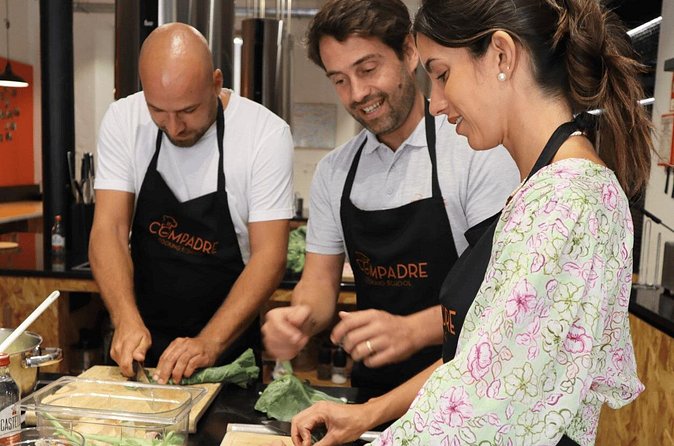
A group limit of 12 makes a real difference here. With that number, you are more likely to receive direct help when you need it, ask questions without interrupting a large crowd, and take part instead of standing at the edge of a demonstration.
Marta and Anna have been named as chefs who bring warmth and cultural context to the class. Their role is not only to explain steps. They also help connect the food to Portuguese comfort and daily life, which is the part that turns a recipe lesson into a place-based experience.
You may be cooking alongside solo visitors, couples, or families. The format is designed for all three. A couple can treat it as an easy social activity, while a family can divide up the work and share the finished dishes.
The relaxed atmosphere is helped by the drinks. You receive one glass of white or red wine and a taste of ginginha, the Portuguese cherry liqueur. Coffee or tea is also included. These are modest servings, but they fit the purpose: the meal feels social without becoming a formal tasting.
Soda and bottled water are not included. If you want water or a soft drink, plan to handle that separately.
What the two hours feel like
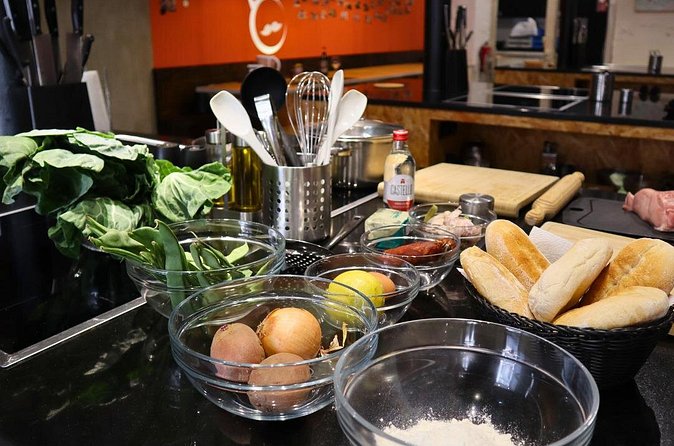
The exact minute-by-minute order is not specified, but the experience follows a clear shape. You arrive, receive a welcome and cultural introduction, work through the three dishes with guidance, and eat the food prepared during the session.
That structure suits Lisbon sightseeing. You can fit it into a morning or afternoon without giving up an entire day. It also makes a useful rainy-day plan. A cooking class gives you an indoor activity with a clear purpose, rather than simply waiting for the weather to improve.
The class is conducted in English, with Portuguese also available. That removes much of the stress for English-speaking visitors while preserving a local connection. You can ask about ingredients, methods, and food customs without relying only on gestures or translation.
The activity finishes where it starts. The meeting point is R. Heliodoro Salgado 14, 1170-374 Lisboa, Portugal, and the location is near public transportation. Private transportation is not included, so you will need to make your own way there and back.
Is the $60.21 price good value?
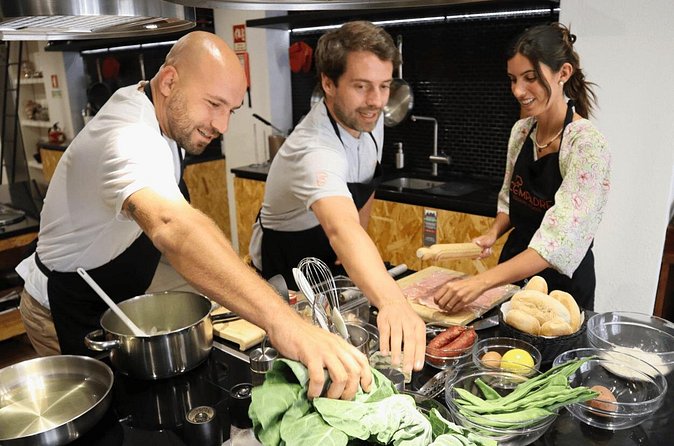
At $60.21 per person, the price is fair if you want more than a meal. You are paying for instruction, ingredients, a light lunch, coffee or tea, wine, and ginginha, plus the chance to ask questions and cook with a small group.
It is less compelling if your only goal is to eat Portuguese food cheaply. Lisbon has less expensive ways to buy a sandwich or soup. This experience earns its price through participation and the recipes you take home, not through the quantity of food.
The value is strongest for people who enjoy food as a way to understand a place. You get three dishes, a short cultural talk, and a shared meal in about two hours. That is a useful amount of time for a holiday schedule.
The maximum group size also supports the price. A class of 12 is not private, but it is small enough to feel more personal than a large demonstration. If having one-on-one instruction is important to you, this is not advertised as a private class, so you should choose it for the group setting.
Who will enjoy this Lisbon food class
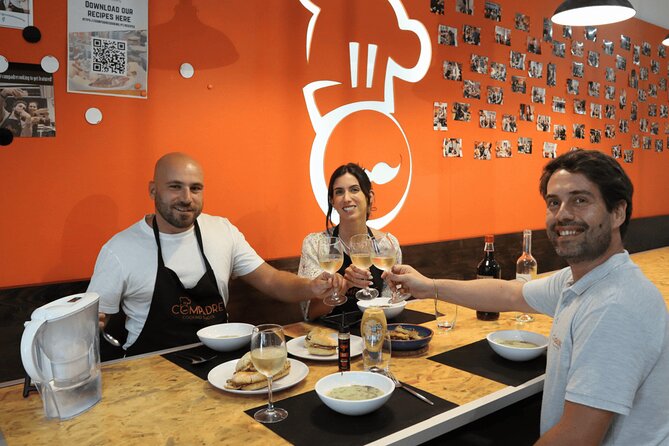
I would recommend it to first-time visitors who want a direct introduction to Portuguese food without committing to a full-day course. The recipes are familiar in form but clearly local in character, which makes them easy to understand.
Families should give it serious consideration. The work is hands-on, the recipes are straightforward, and the meal creates a shared memory. Teenagers may also prefer making a bifana or frying green beans to sitting through a long lecture about food.
Couples and solo visitors can enjoy it for the social side. The drinks help break the ice, and the small group encourages conversation. It is also a sensible choice for a rainy Saturday afternoon.
You should think twice if you dislike pork, fried food, or group activities. The central menu includes pork loin in the bifana, and peixinhos da horta is fried. No dietary substitutions are provided in the information available, so ask the provider before booking if you have allergies or dietary restrictions.
It may also disappoint anyone seeking advanced culinary training. The emphasis is on simple, traditional street food and cultural context, not knife skills, professional kitchen methods, or a long series of recipes.
Booking details worth knowing
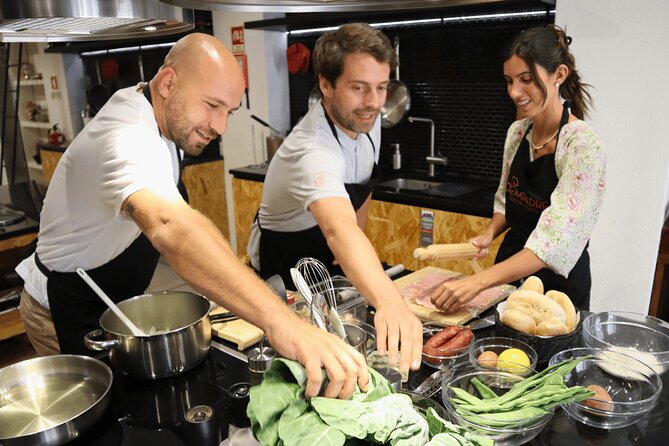
Confirmation is provided at booking, and the activity is available in English and Portuguese. It is often reserved about 19 days ahead, so booking early is sensible if your Lisbon dates are fixed.
The experience requires a minimum number of people. If that minimum is not met and the class is canceled, you are offered another date or experience, or a full refund.
You can cancel for a full refund up to 24 hours before the start time. Changes or cancellations made inside that 24-hour window are not accepted for a refund, and the cut-off uses Lisbon local time.
The activity begins and ends at the same address. Since private transportation is not included, check your route to Rua Heliodoro Salgado before the day of the class, especially if you are fitting it between other plans.
Should you book it?
Book this class if you want to cook ordinary Portuguese food, learn why it matters, and leave with recipes you can use at home. The best reasons to choose it are the small group, the friendly guidance from chefs such as Marta and Anna, the relaxed drinks, and the menu’s mix of soup, sandwich, and fritter.
Skip it if you want a large meal, a private lesson, or advanced training. For most people seeking a practical Lisbon food experience, though, $60.21 buys more than lunch. It gives you a hands-on afternoon, a taste of local culture, and three useful recipes that can keep the trip alive in your own kitchen.
FAQ
How long does the Portuguese street food cooking class last?
The class lasts approximately two hours.
Where does the class begin and end?
It begins at R. Heliodoro Salgado 14, 1170-374 Lisboa, Portugal, and ends back at the same meeting point.
What dishes will I make?
You will prepare caldo verde, a collard greens soup; bifana, a pork loin sandwich; and peixinhos da horta, green bean fritters.
Is the class suitable for beginners?
Yes. The format is designed for all cooking skill levels, including people with little cooking experience.
What drinks are included?
The class includes coffee or tea, one glass of white or red wine, and a taste of ginginha, a Portuguese cherry liqueur.
Is a meal included?
Yes. A light lunch made from the recipes prepared during the class is included.
What languages are available?
The experience is offered in English and Portuguese.
How large is the group?
The maximum group size is 12 people.
Is transportation included?
No. Private transportation is not included, though the meeting point is near public transportation.
Can I cancel for a full refund?
Yes. You can cancel at least 24 hours before the experience start time for a full refund. Cancellations or changes made less than 24 hours before the start time are not accepted for a refund.
Newest street food walks around the world
- Old Delhi Cultural, Temples, Heritage Walking Street Food Tour★ 5.0 · 57 reviews
- Old and New Delhi Street Food Sampling★ 5.0 · 3 reviews
- Old Delhi Tour by Tuk-Tuk Street Food and Shopping Experience★ 5.0 · 12 reviews
- Customized Half Day and Full Day Delhi Shopping, Street Food Tour★ 5.0 · 52 reviews
- Delhi: Street Food Crawl (2 Hours Guided Food Tasting Tour)★ 3.5 · 18 reviews
- Taste Famous & Best Street Food of Old Delhi (Jama Masjid)★ 3.0 · 2 reviews
- Spice & Stories: 3-Hour Old Delhi Heritage Food Walk Guided Tour★ 4.5 · 36 reviews
- Old Delhi Street Food and Spice Market Tour★ 5.0 · 81 reviews