
Review · BANGKOK
Bangkok Hidden Gems: Talad Noi, Chinatown & Street Food Tour
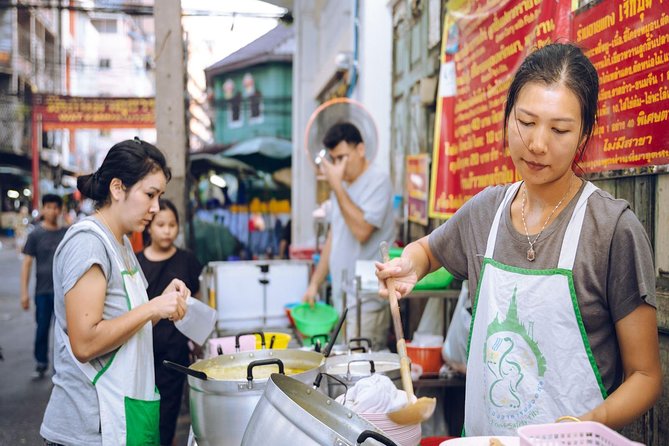
Bangkok’s old Chinese quarter is best understood on foot, one narrow lane and one snack at a time. This small-group walk through Talat Noi and Chinatown links a Gothic church, a 200-year-old shrine, street art, old Chinese homes, and food stalls that are easy to miss when you explore alone.
I like the mix of Thai, Chinese, and fusion food, all included in the price. I also like the personal scale: groups are capped at 12, and guides such as Nana, Pam, Gof, Dong, Joe, and Nop have been praised for warmth, local stories, and extra help. The main drawback is that the advertised 2.5 hours can feel short for such a busy area, and some people find the walking and repeated market streets tiring.
Key points to know before booking
- Food comes in several small samples: Expect turnip cake, chwee kueh, duck noodle soup, and pad Thai, rather than one formal meal.
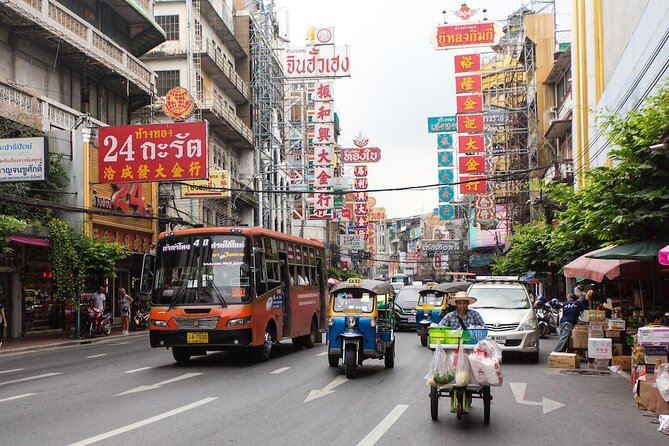
- Talat Noi is the real prize: Its narrow lanes, Chinese roots, old buildings, and street art feel less polished than central Bangkok.
- The tour begins at River City: Meet at Gate 1, in front of Starbucks on the first floor, at 4 pm.
- You walk about 2 km: The distance is modest, but standing, heat, crowds, and uneven city pavement can make it feel longer.
- The group is limited to 12: That matters in Chinatown, where a good guide can keep everyone together and explain what you are seeing.
- Vegetarian food is available with notice: Other dietary needs cannot be accommodated according to the tour details.
Starting at River City Bangkok at 4 pm
The meeting point is River City Bangkok, at Gate 1 on the first floor, near Starbucks. It is beside Si Phraya Pier, making the Chao Phraya Express Boat a useful way to reach the start. The tour ends around Chinatown, near Wat Mangkon, with directions back toward the city center.
That start and finish are worth noting. You do not simply return to the place where you began. The walk carries you east through old neighborhoods and finishes closer to the MRT at Wat Mangkon. Ask your guide how to continue before the group breaks up.
The 4 pm departure is well chosen for Bangkok’s heat. You begin in late afternoon, then reach Chinatown as the streets gain energy after dark. Still, Bangkok weather can change quickly. Bring water, wear shoes suited to pavement, and carry rain protection. Guides have helped groups through heavy rain before, even buying simple ponchos when conditions turned rough.
More Chinatown Food Tours in Bangkok:
- Bangkok Tuk-Tuk Tour by Night with Chinatown Street Food Meal
★ 5.0 · 635 reviews - Bangkok Tuk-Tuk by Night with Chinatown Street Food Meal
★ 4.6 · 263 reviews - Bangkok: Chinatown Food Tour with Michelin Food Stalls
★ 4.8 · 226 reviews
Talat Noi, where old Bangkok feels close
Talat Noi is the strongest part of the route. Chinese communities have lived here for more than 300 years, and the neighborhood still feels like a working district rather than a set of preserved sights. The lanes are narrow, the buildings sit close together, and daily life unfolds right beside old shrines, workshops, cafes, and painted walls.
This is where a guide adds real value. You can walk through Talat Noi alone, but you may pass its small details without knowing what they mean. A good guide points out the Chinese influence, explains how the area developed, and helps you move through lanes that can feel confusing on a first visit.
The street art gives the walk a modern edge. It is not a separate gallery stop with a long explanation. Instead, murals and painted walls appear as part of the neighborhood, alongside weathered homes and market activity. I like that contrast. Talat Noi does not present Bangkok as a tidy museum. It shows old and new living side by side.
The route also includes Sol Heng Tai Mansion, one of the last remaining traditional Chinese houses in Bangkok. The timing listed for this stop is not precise, so treat it as a brief look rather than a long house tour. The value is in seeing how Chinese domestic architecture fits into the tight lanes around it.
Holy Rosary Church and a different side of Bangkok
Holy Rosary Church is an unexpected stop in a Chinese neighborhood. Founded in 1787, it was built in a European Gothic Revival style by Portuguese settlers. Its presence reflects the many communities that shaped Bangkok along the river.
The visit is short, about 15 minutes. That is enough to pause, look at the exterior and interior if open, and hear the basic story without turning the tour into a church-focused excursion. If you enjoy architecture, this stop gives the route welcome variety after the lanes of Talat Noi.
Site access can change. If a location is closed for reasons outside the operator’s control, the guide may replace it with another stop. That flexibility matters in Bangkok, where renovations, ceremonies, weather, and local events can alter a walking route.
The first food stops: turnip cake, chwee kueh, and duck noodles
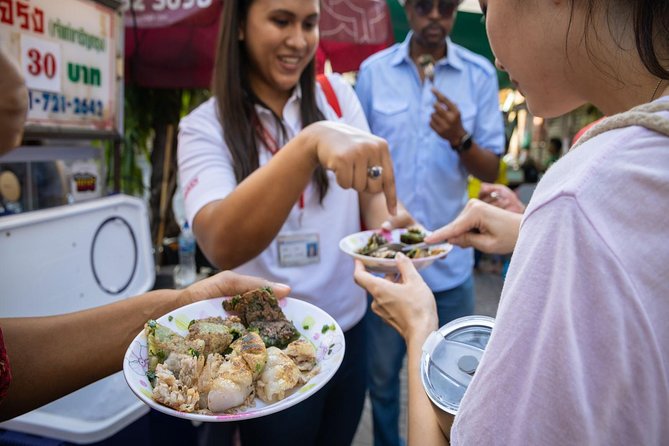
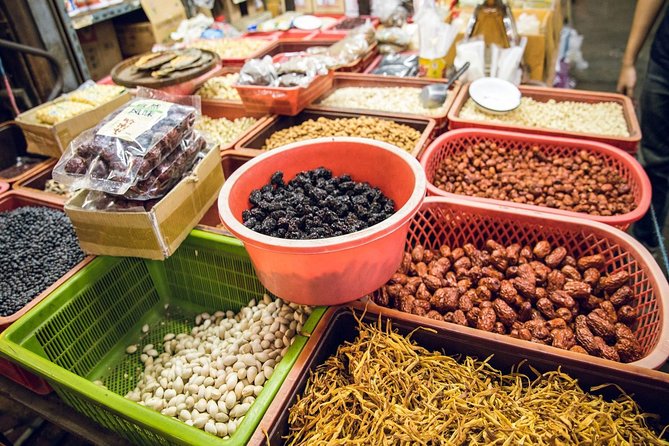
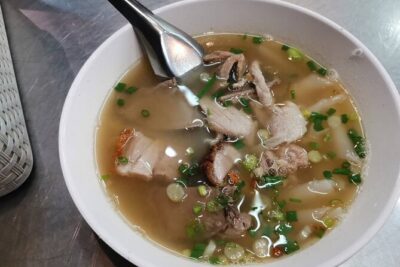
Food is not saved for the end. Along the Talat Noi section, you stop for local Chinese and Thai tastes, with some samples served at a cafe beside the Chao Phraya River. The food list includes turnip cake, chwee kueh, duck noodle soup, and Uncle Pom’s pad Thai.
Turnip cake is a savory Chinese dim sum dish. Chwee kueh is a steamed rice cake topped with preserved radish. These are useful introductions to Southeast Asian Chinese food because they are not the standard dishes many visitors already know.
The samples are included, which makes the $42.48 price easier to assess. You can try unfamiliar dishes without ordering full portions or guessing at a menu. At the same time, do not book this expecting a large dinner with unlimited food. It is a tasting walk, and the portions are designed to let you sample several things.
Food availability can change if a stall or cafe is closed. The guide can choose another place, which is practical in a neighborhood where small businesses do not always keep fixed schedules. The food experience also depends on the group. Some people eat nearly everything; others skip dishes they do not fancy.
Vegetarians can be accommodated if you provide notice at least 24 hours before the tour. The operator does not list support for other dietary requirements, so you should not assume that gluten-free, vegan, halal, allergy-safe, or other special meals can be arranged.
More Hidden Food Spots in Bangkok:
- Bangkok: Talad Noi Hidden Gems & Street Food Adventure
★ 4.6 · 29 reviews - 4-Hour Hidden Bangkok TukTuk Street Food Guided Tour
★ 5.0 · 23 reviews - Hanoi: Street Food Tour with Train Street & Hidden Alleyways
★ 5.0 · 2,831 reviews - Mexico City: Hidden Markets, Street Food & Salsa-Making Tour
★ 5.0 · 310 reviews
Chow Sue Kong Shrine and Chinese spiritual life
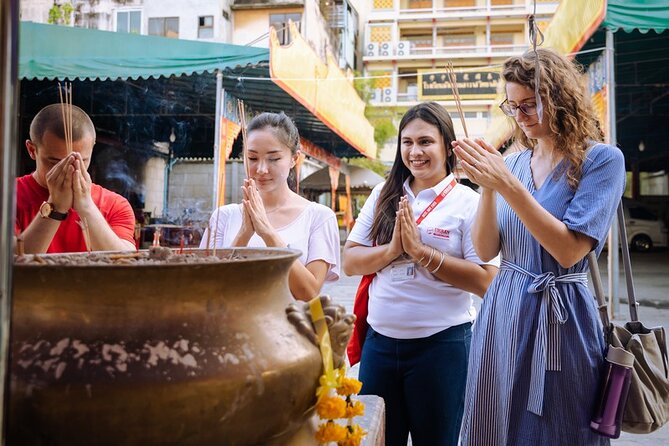
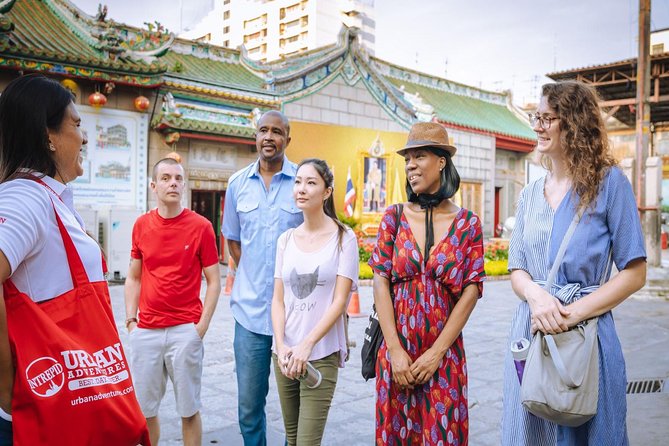
After the food stops, the route reaches Chow Sue Kong Shrine, a Hokkien shrine more than 200 years old. It is a quieter counterpoint to the traffic and shopping streets. You can ask for blessings for well-being, protection, and guidance, while your guide explains the role of the shrine in the neighborhood.
The scheduled visit lasts about 15 minutes. That is enough for a respectful look, but not enough for a detailed religious tour. Dress and behave with care, follow local instructions, and remember that this is an active place of worship rather than a backdrop for quick photos.
This is one of the tour’s better choices because it adds meaning to the food and architecture. Chinatown is not just a market district. It is also a place where family, faith, business, and community remain connected.
Hong Sieng Kong and the riverside pause
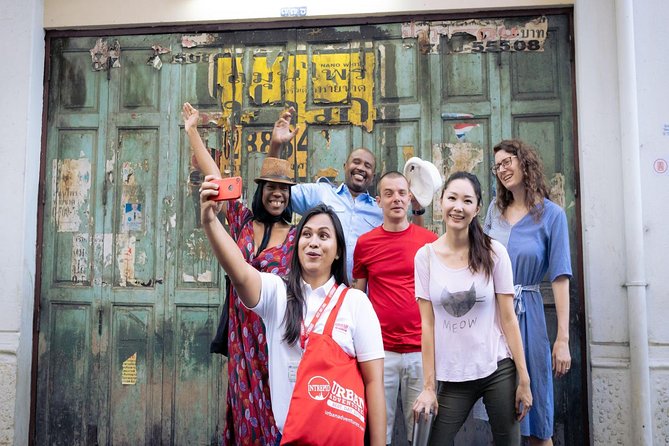
The walk then shifts toward Hong Sieng Kong, a local art space and cafe in a historic building dating to the reign of King Rama II and the Rattanakosin era. You stop for coffee or tea beside the Chao Phraya River, with about 30 minutes assigned to this part of the route.
I like this pause because a walking tour needs a change of pace. After close lanes and food tastings, a drink by the river gives you time to sit, ask questions, and take in the setting. The gallery adds another link between old Bangkok and its present-day creative side.
Do not expect a major museum visit. This is a gallery and cafe stop, not a full cultural institution. Its appeal comes from the building, the river setting, and the chance to see how older spaces are being used now.
Entering Chinatown as the streets get louder
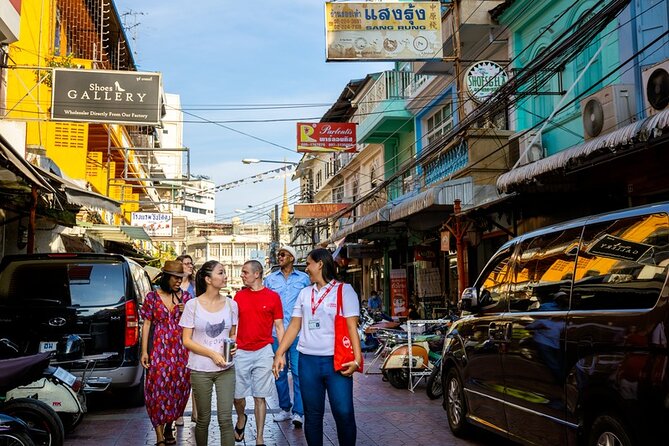
The final main section crosses into Bangkok’s Chinatown. Here, the mood changes quickly. The lanes become more crowded, shops and food stalls press in around you, and modern businesses operate inside one of the city’s oldest Chinese districts.
A guide is especially useful at this point. Chinatown can be easy to enter but harder to understand. You may see the same types of shops and crowded streets more than once, and some people feel they move too quickly to browse stalls properly. This is a walking introduction, not a shopping expedition.
If you want time to buy gifts, spices, or general goods, tell your guide early. The group has a schedule, and the route is designed to keep moving. The small group helps, but it cannot remove the crowds, especially during festivals or major public events.
The tour finishes near Wat Mangkon, one of the key Chinatown transport points. The listed final stop is brief, about five minutes, with the guide helping you return toward the city center. Depending on the exact route and conditions, the experience may also include extra market or temple views, but the core plan centers on Talat Noi, the church, the shrine, the riverside cafe, and Chinatown.
What the $42.48 price really buys
At $42.48 per person, this is not the cheapest way to eat in Bangkok. You could buy plenty of street food for less. The price pays for more than the snacks: it covers an English-speaking guide, route planning, cultural context, included tastings, and help navigating a complicated part of the city.
The value is strongest if this is your first visit to Talat Noi and Chinatown. A guide can reduce the uncertainty of choosing unfamiliar foods, find alternatives when a stall is closed, and explain why a church, shrine, mansion, and cafe belong in the same walk.
The value is weaker if you already know Chinatown well or mainly want free time to shop. One low-rated experience described the route as repetitive, while another found the meeting point inconvenient. Those are fair concerns. The tour has a fixed pace, and a local guide cannot make every market lane feel new.
A small group improves the deal. With only four or five people, past groups have received close attention, and solo participants have sometimes had something close to a private walk. The maximum is 12, so ask at the start if you need help with food choices or the route.
How much walking and standing should you expect?
The official distance is about 2 km, or 1.2 miles. That sounds easy, but city walking is not measured only by distance. You will move through narrow lanes, pause at food stops, stand in markets, and deal with heat, rain, crowds, and uneven pavement.
If you have trouble walking or standing for long periods, this may not be the right outing. Some past routes have lasted longer than the stated 2.5 hours when conditions or added stops changed the pace. The advertised duration is a useful guide, not a guarantee down to the minute.
The minimum age is 8. Most people can take part, but children should be comfortable with unfamiliar food, city crowds, and a steady walking pace. The afternoon timing helps with heat, though Bangkok can still feel warm well after sunset.
Guide quality can shape the whole evening
The clearest strength of this experience is the guide. Several named guides have been praised for friendly conversation, clear local explanations, care with food choices, and practical help when the weather turned bad. Nana was described as entertaining and attentive to what each person could eat. Pam has been praised for clear English and careful explanations. Gof, Dong, Joe, and Nop have also been associated with warm and helpful guiding.
English ability can vary by guide, and communication has not always been perfect. Even so, the small group gives you a better chance to ask questions than a large coach tour would. If your guide speaks too quickly or you need a food explanation repeated, ask directly.
The guide can also give advice for the rest of your Bangkok stay. Use the last few minutes to ask what else to eat, see, or do nearby. That practical local knowledge can be worth more than one extra photo stop.
Who should book this Bangkok food walk?
I would choose this tour if you want a first look at two old Bangkok districts without handling the route alone. It suits curious eaters, solo visitors, couples, and small groups who enjoy stories, architecture, and several modest food samples in one evening.
It is also a good fit if you prefer local neighborhoods to major monuments. Talat Noi provides the quieter start, while Chinatown supplies the noise, crowds, shops, and food energy. The contrast gives you a useful picture of Bangkok in a short time.
I would hesitate if you want a full dinner, extensive shopping time, a gentle stroll, or a carefully controlled food menu. People with strict dietary needs should also look elsewhere unless vegetarian options meet their needs.
FAQ
Where does the tour begin?
It begins at River City Bangkok, at Gate 1 on the first floor in front of Starbucks, near Si Phraya Pier.
What time does the tour start?
The start time is 4 pm.
How long is the tour?
The stated duration is approximately 2 hours and 30 minutes.
How much walking is involved?
The tour covers about 2 km, or 1.2 miles, through Talat Noi and Chinatown.
What food is included?
Samples may include turnip cake, chwee kueh, duck noodle soup, and Uncle Pom’s pad Thai. Local Thai and Chinese food samples are included.
Can vegetarians join?
Yes. Vegetarian requirements can be accommodated if you provide the information at least 24 hours before the tour. Other dietary requirements are not listed as available.
What happens if a stop is closed?
The guide may replace a closed site with another location. If a planned food stall is unavailable, another food stop can be selected.
Should you book it?
Book this walk if you want a compact, guided introduction to Talat Noi and Chinatown, with food doing as much teaching as the buildings. The included samples, small groups, riverside pause, Holy Rosary Church, and Chow Sue Kong Shrine give the evening a good range.
Skip it if you prefer to roam at your own speed or want a substantial meal and long shopping stops. For first-time visitors who want context, local snacks, and a route through Bangkok’s older Chinese neighborhoods, $42.48 is a reasonable price, especially when a caring guide such as Nana or Pam turns a maze of lanes into a readable part of the city.
Newest street food walks around Bangkok
- Bangkok 3-in-1 Tour: Longtail Boat,TukTuk & Street Food Adventure★ 5.0 · 73 reviews
- Famous Thai Street Food Tasting Experience!★ 5.0 · 4 reviews
- 4-Hour Hidden Bangkok TukTuk Street Food Guided Tour★ 5.0 · 23 reviews
- LR-01 TaLad NangLerng, ride along the old town and try local street foods★ 4.5 · 13 reviews
- Private Tour : Bangkok Night Private Tuk Tuk Tour and Street food★ 4.5 · 5 reviews
- Street Food at China Town★ 4.5 · 4 reviews
- Authentic Street Food Tour in China Town Bangkok★ 5.0 · 25 reviews
- Private – STREET FOOD TOUR THONBURI incl. dinner★ 4.5 · 5 reviews
Bangkok street food tours, side by side.
Bangkok: Michelin Guide Street Food Tour by Tuk Tuk
Read our review →
Bangkok Tuk-Tuk Tour by Night with Chinatown Street Food Meal
Read our review →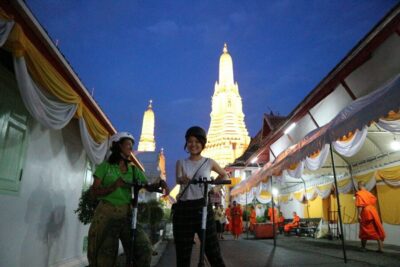
Bangkok: E-Scooter Night Tour with Local Street Food
Read our review →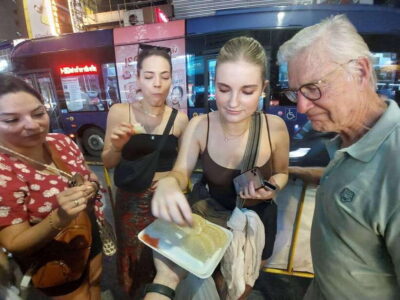
Bangkok: Chinatown Food Tour with Michelin Food Stalls
Read our review →Bangkok Food Tour by Tuk Tuk – Hotel-pickup & Dinner
Read our review →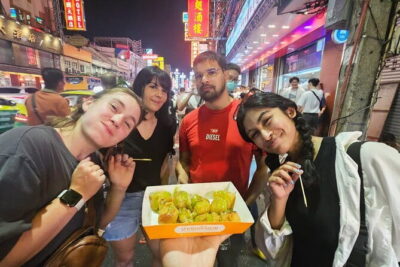
Bangkok Street Food Variety Cultures Local Tasty
Read our review →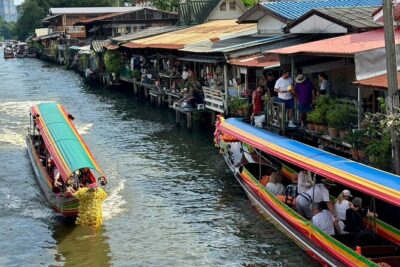
Bangkok 3-in-1 Tour: Longtail Boat,TukTuk & Street Food Adventure
Read our review →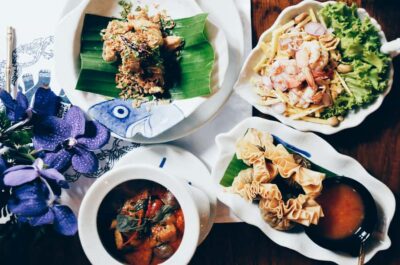
Bangkok: Street Art and Street Food Walking Tour
Read our review →The lists this tour appears in